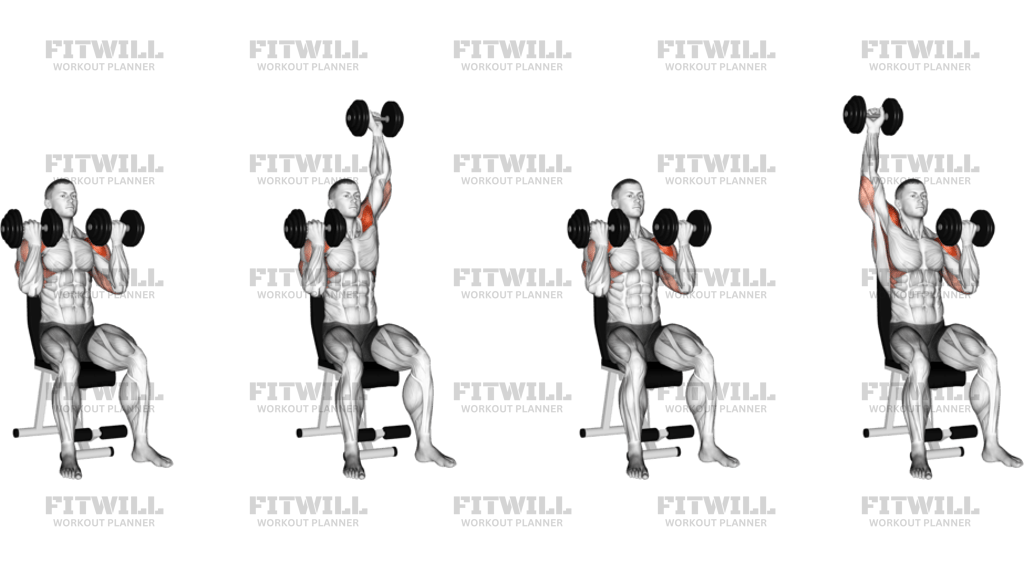
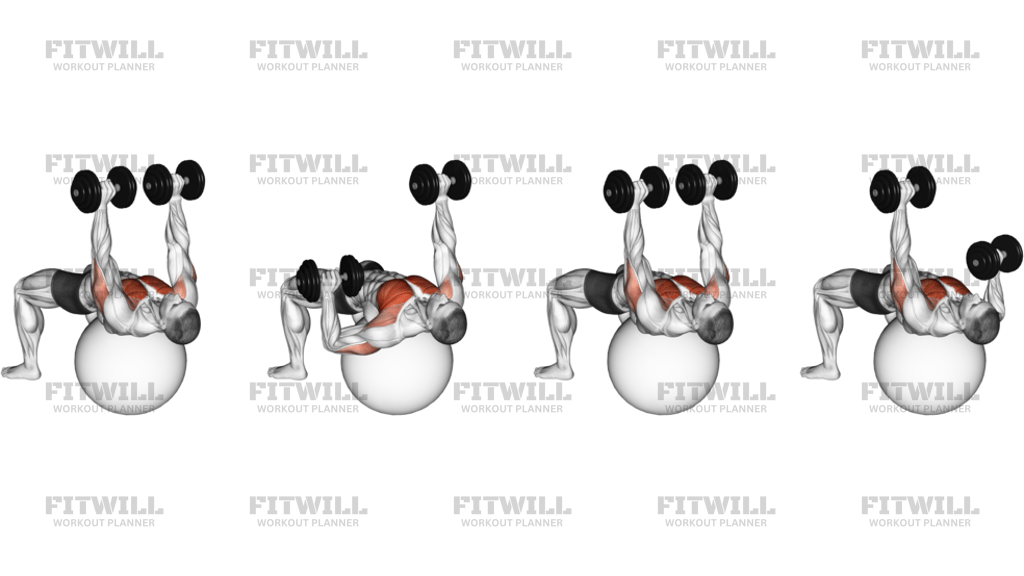
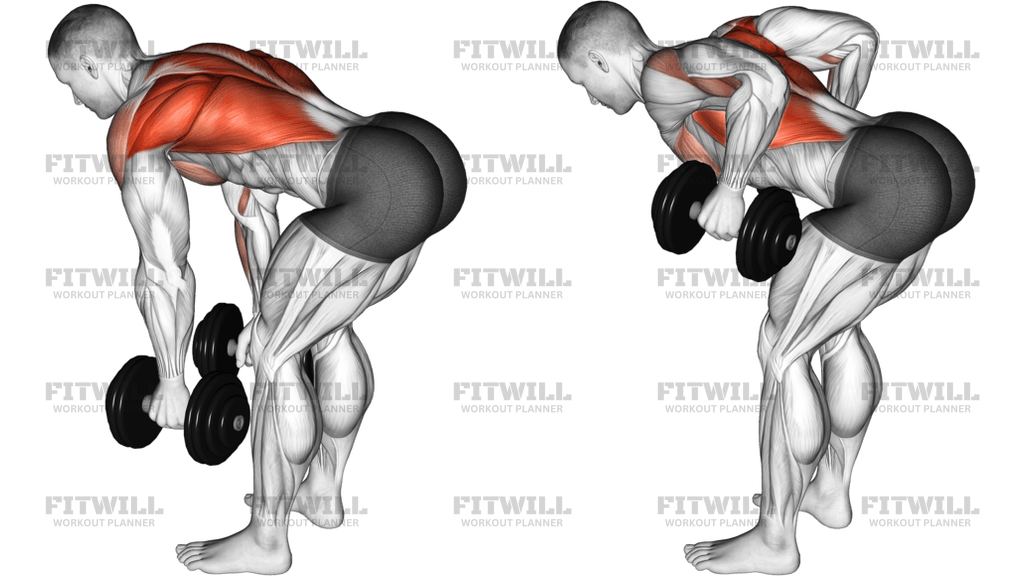
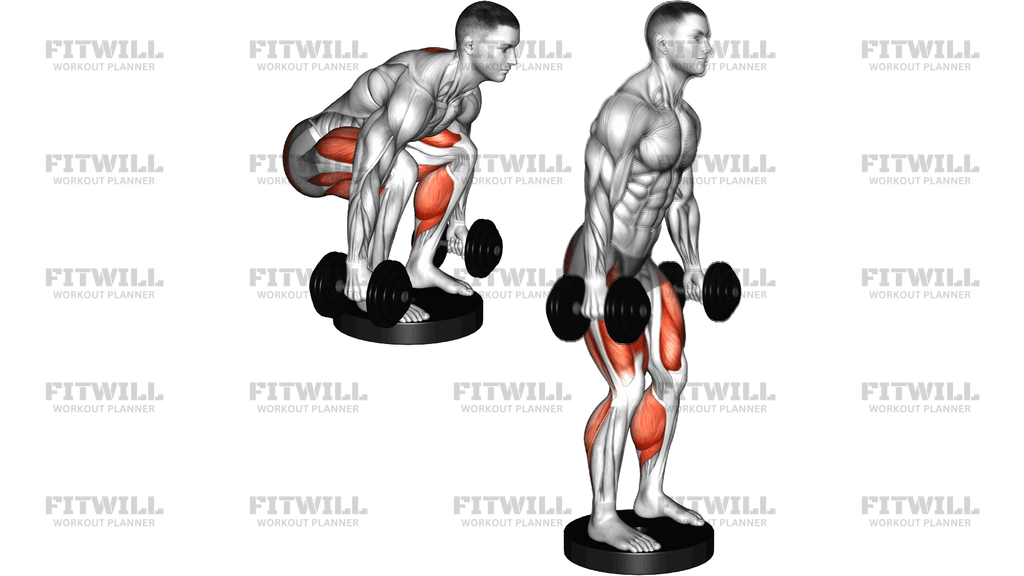
Dumbbell Standing Biceps Curl To Shoulder Press
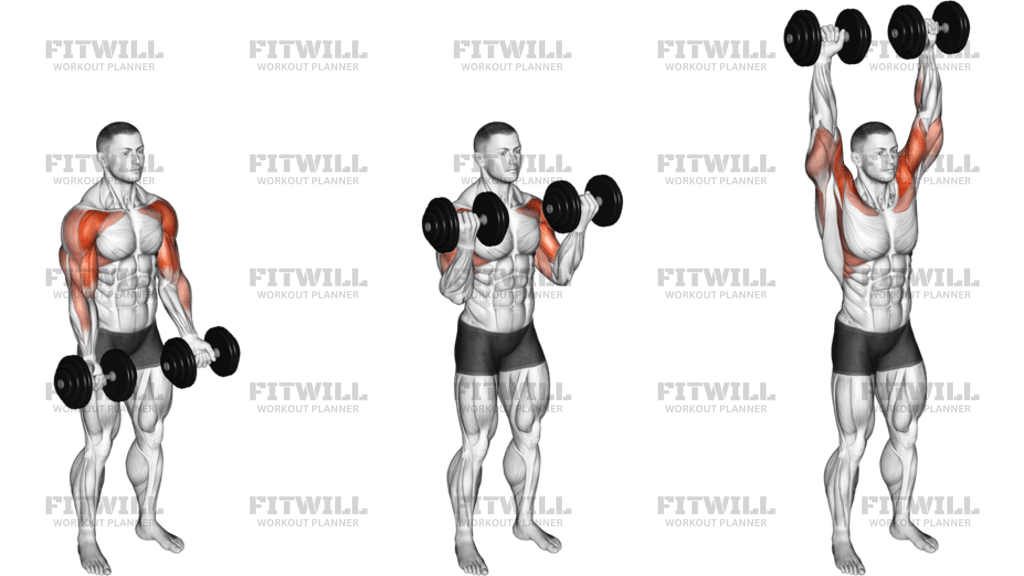
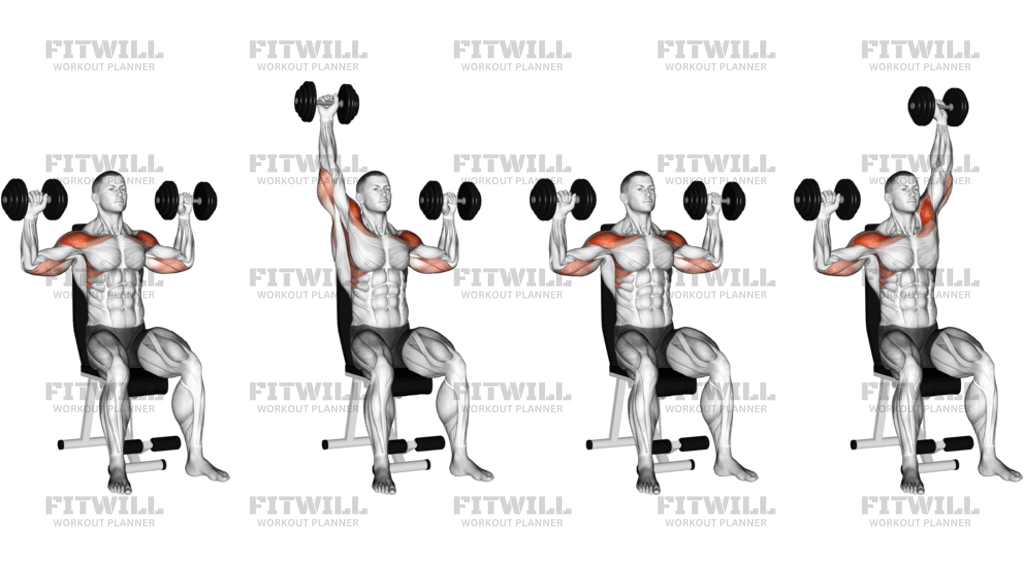
Dumbbell Standing Biceps Curl to Shoulder Press is a standing two-part dumbbell movement that combines an arm curl with an overhead press. You start with the weights hanging by your sides, curl them up to the front of the shoulders, and then press them overhead. That makes it useful when you want a single exercise that trains the biceps, front delts, triceps, and upper-body stability together.
The setup matters because the curl and press each place the joints in a different position, and sloppy alignment shows up quickly as body sway or over-arching through the lower back. Stand tall with the ribs stacked over the pelvis, feet about hip-width apart, and the dumbbells held close to the thighs. From there, each rep should stay smooth: curl without swinging the torso, finish the curl at shoulder height, then press the weights to a stable overhead lockout before lowering with control.
This is not a momentum exercise. The curl phase should stay close to the body, with the elbows controlled rather than drifting forward, and the press should finish with the biceps near the ears instead of the dumbbells drifting in front of the head. When the dumbbells come back down, return through the same path: lower from overhead to the shoulders, then extend the elbows and let the arms settle by the sides before starting the next rep. Breathing should stay deliberate, with a solid exhale through the pressing portion and no breath-holding that forces the torso to lean back.
It fits well as accessory work in upper-body, full-body, or metabolic training sessions, especially when you want to challenge coordination and shoulder stability at the same time as arm strength. Because the movement stacks two actions in one rep, the load usually needs to be lighter than a strict curl or a strict shoulder press done alone. That makes exercise quality, shoulder comfort, and trunk control more important than chasing heavy weight.
Use a lighter pair of dumbbells than you would for either component by itself, and stop the set if the curl turns into a hip drive or the press turns into a lean-back. If the shoulders feel pinchy at the top, shorten the range slightly and keep the dumbbells in the scapular plane instead of forcing them straight out to the sides. Done well, this exercise is a clean way to build upper-body control, pressing strength, and arm endurance in one standing pattern.
[ Workout Log & Planner ]
Put your next workout in Fitwill
Keep your plan and training log ready when you are.


Instructions
- Stand tall with feet about hip-width apart and hold a dumbbell in each hand with the arms straight and the weights beside the thighs.
- Stack the ribs over the pelvis, soften the knees, and keep the palms facing forward or slightly inward so the shoulders can move comfortably.
- Brace the midsection before the first rep and keep the chest tall without leaning back.
- Curl both dumbbells up together by bending the elbows and keeping the upper arms close to the sides.
- Bring the dumbbells to shoulder height with the wrists straight and the elbows under control.
- Press the dumbbells overhead in one smooth path until the arms are nearly straight and the biceps are beside the ears.
- Lower the dumbbells back to the shoulders under control, then continue lowering them to the sides without dropping the weight.
- Reset the torso before the next rep and repeat for the planned number of repetitions.
Tips & Tricks
- Choose lighter dumbbells than you would for a strict curl or a strict overhead press alone.
- Keep the elbows from drifting far in front of the body on the curl, or the rep turns into a front-delt swing.
- Do not use hip drive to launch the weights upward; the torso should stay stacked from start to finish.
- Press slightly in front of the face and finish with the arms in line with the shoulders, not behind the head.
- Lower the dumbbells slowly from overhead so the shoulders and biceps stay under tension longer.
- If your lower back arches during the press, reduce the load and shorten the overhead range a little.
- Keep the wrists straight through both halves of the rep so the dumbbells do not fold backward into the forearms.
- Exhale through the press and avoid holding your breath so long that the ribs flare up.
- If one arm starts to lead the other, slow the rep down and match the curl and press height on both sides.
Frequently Asked Questions
What muscles does Dumbbell Standing Biceps Curl to Shoulder Press work?
It combines a biceps curl with an overhead press, so the biceps, front delts, triceps, and upper-back stabilizers all contribute.
Should I curl first or press first?
Curl first, then press. The dumbbells should come to shoulder height before you drive them overhead.
How heavy should the dumbbells be for this exercise?
Use a load that lets you keep the torso still during the curl and prevents a lower-back lean during the press.
Can beginners do the standing curl to shoulder press?
Yes, as long as they start light and learn to keep the ribs stacked over the pelvis instead of swinging the body.
Why do my elbows drift forward when I curl the dumbbells?
That usually means the load is too heavy or the rep is being rushed. Keep the upper arms close to the sides and slow the lift down.
Is it normal to feel this in my shoulders as well as my arms?
Yes. The curl loads the biceps, and the press shifts the effort to the shoulders and triceps while the core stabilizes the torso.
Can I do this seated instead of standing?
Yes, seated reps reduce body swing and make the curl-to-press easier to control if your lower back tends to arch.
What is the most common form mistake?
The biggest mistake is turning the movement into a full-body heave, which usually shows up as hip drive and lower-back extension on the press.