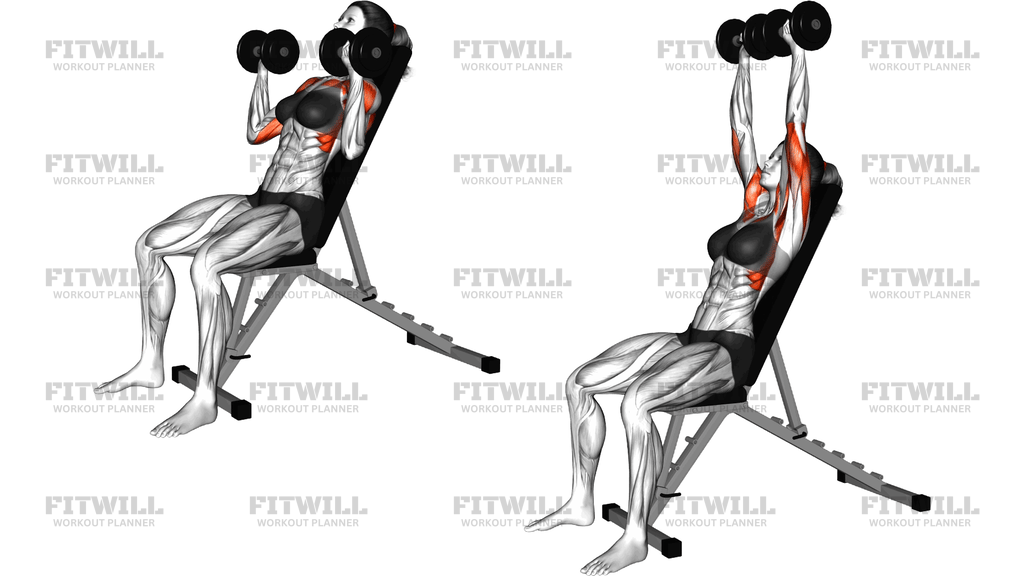
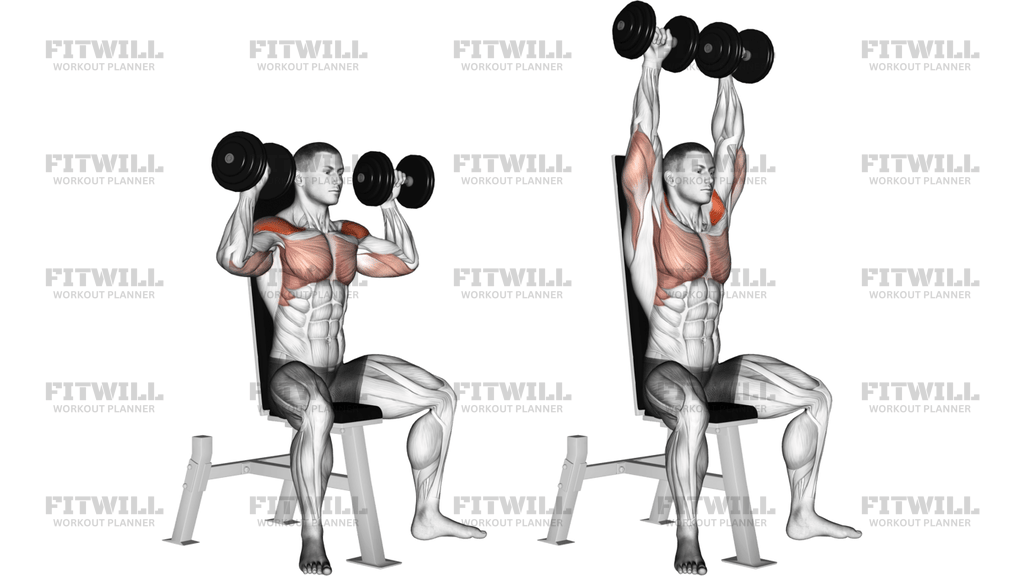
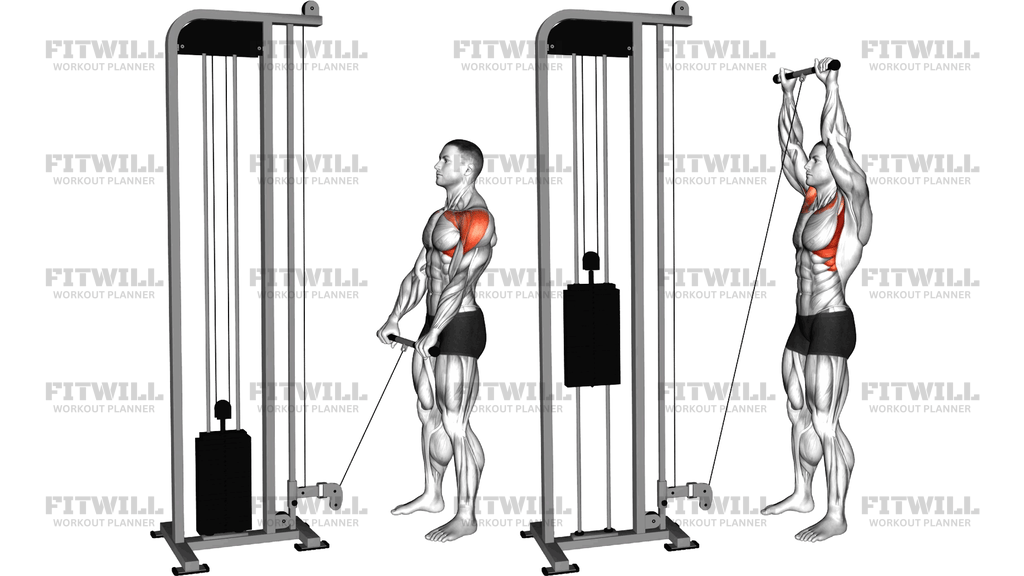
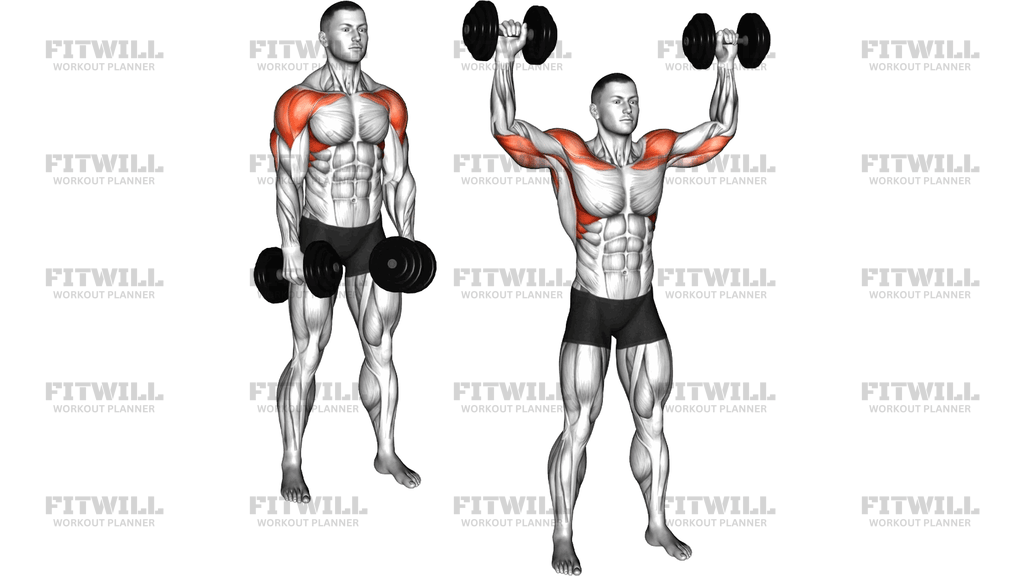
Dumbbell Lateral To Front Raise
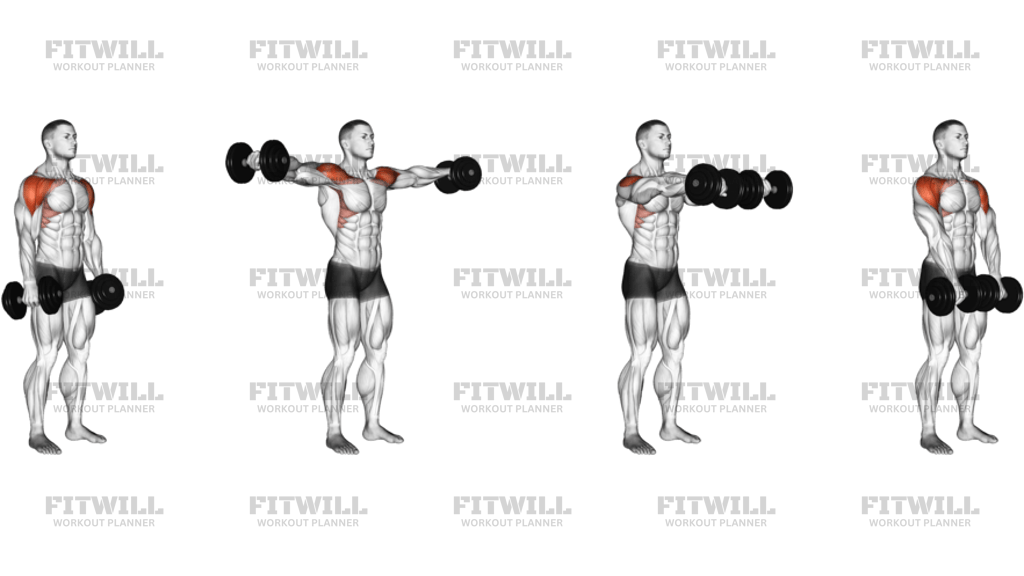
Dumbbell Lateral to Front Raise is a standing shoulder accessory that combines a lateral raise with a front raise. It is designed to challenge the delts through two different shoulder angles in one controlled rep, with the medial and anterior delts doing most of the work and the upper traps, rhomboids, and grip helping to stabilize the path.
The setup matters because the movement is easy to turn into a swing. Stand tall with the dumbbells resting by your thighs, feet about hip-width apart, chest quiet, and ribs stacked over the pelvis. Keep a soft bend in the elbows and let the shoulders sit down instead of creeping toward the ears before the first rep begins.
From there, raise the dumbbells out to your sides until the upper arms are near shoulder height, then continue the motion forward into the front-raise position. The path should look smooth and deliberate, not jerky. Lower the weights back along the same route under control so each rep keeps the same line and tension on the shoulders.
This exercise works best as a light-to-moderate accessory movement after heavier pressing or rowing work. It can help build shoulder size, control, and endurance, but only if the load is light enough to keep the torso still and the range honest. If you feel pinching at the top, shorten the range slightly and keep the hands no higher than shoulder level.
Treat the exercise as a strict shoulder drill rather than a momentum lift. Clean reps should feel like the delts are guiding the dumbbells through a side-to-front arc while the rest of the body stays quiet. That makes the movement more useful for shoulder development and easier to progress without irritating the joint.
[ Workout Log & Planner ]
Put your next workout in Fitwill
Keep your plan and training log ready when you are.


Instructions
- Stand tall with a dumbbell in each hand, feet about hip-width apart, and the weights resting by your thighs.
- Set your shoulders down and back slightly, keep a soft bend in the elbows, and brace without leaning forward.
- Start with the palms facing your body or slightly inward and the dumbbells hanging still.
- Raise the dumbbells out to the sides in a smooth arc until your upper arms reach about shoulder height.
- Continue the same rep by sweeping the dumbbells forward to the front-raise position at shoulder height.
- Pause briefly at the top without shrugging or letting the wrists bend back.
- Lower the dumbbells slowly along the same path, first back out to the sides and then down to your thighs.
- Keep the torso quiet and repeat for the next rep without bouncing or using momentum.
Tips & Tricks
- Choose a lighter dumbbell than you would use for a pure lateral raise, because the side-to-front transition adds leverage.
- Think about lifting with the elbows slightly ahead of the hands so the delts stay loaded instead of the wrists.
- Keep the shrug out of the top position; if your traps take over, the load is too heavy or the rep is too high.
- Stop the raise at shoulder height or just below it if the front of the shoulder starts to pinch.
- Move slowly through the change from side raise to front raise so the dumbbells do not swing through the middle.
- Keep the ribs down and the chest from flaring when the weights move forward.
- Use a mirror or side view if needed to check that your torso is not leaning back to finish the rep.
- Lower the dumbbells with the same side-to-front path instead of dropping them straight down.
Frequently Asked Questions
What muscles does Dumbbell Lateral to Front Raise work?
It mainly targets the medial and anterior delts. The upper traps, rhomboids, and forearms help stabilize the movement while you control the dumbbells through the arc.
Is Dumbbell Lateral to Front Raise good for beginners?
Yes, as long as you keep the weight light and the range strict. Beginners usually need to stay conservative because the side-to-front path gets hard quickly.
Should I keep my palms facing forward the whole time?
No. Start with a neutral or slightly inward palm position and let the dumbbells travel naturally with the shoulder path instead of forcing a fixed wrist angle.
What is the most common mistake in Dumbbell Lateral to Front Raise?
Using too much weight and turning the transition into a swing. That usually makes the torso lean back and shifts the work away from the delts.
Do I need to go higher than shoulder height?
No. Shoulder height is enough for most lifters, and going higher often adds shrugging or a pinchy feeling in the front of the shoulder.
Can I do this seated on a bench?
Yes. Sitting upright on a bench can reduce body swing and make it easier to keep the side-to-front path strict.
How should the dumbbells move on the way down?
Lower them along the same route you used to lift them: back out from the front to the side, then down to your thighs with control.
What should I do if my traps take over?
Reduce the load, shorten the range slightly, and keep the shoulders packed down at the top. If that still fails, the set is too heavy for clean shoulder work.