Dumbbell Lying One-Arm Rear Lateral Raise
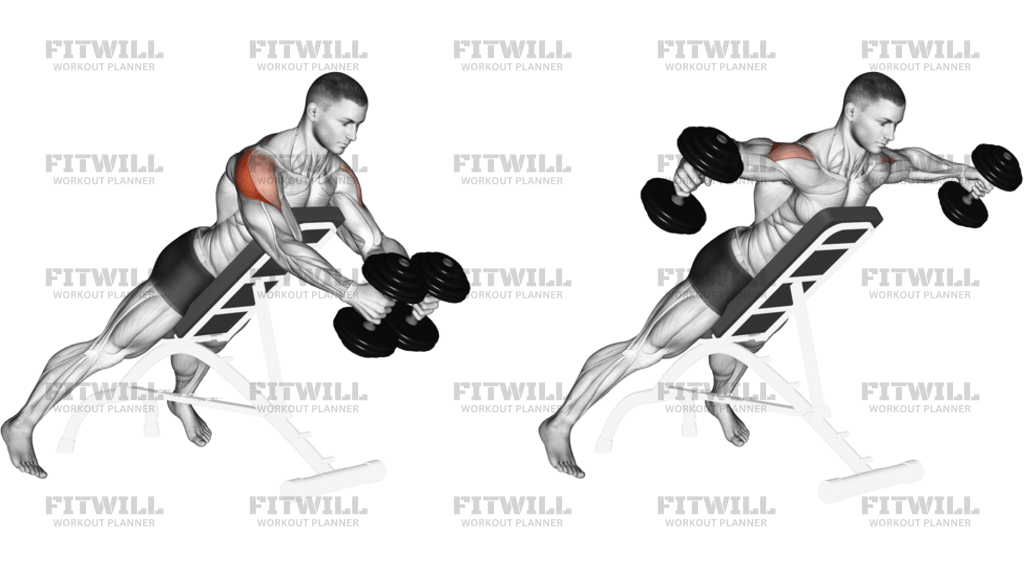
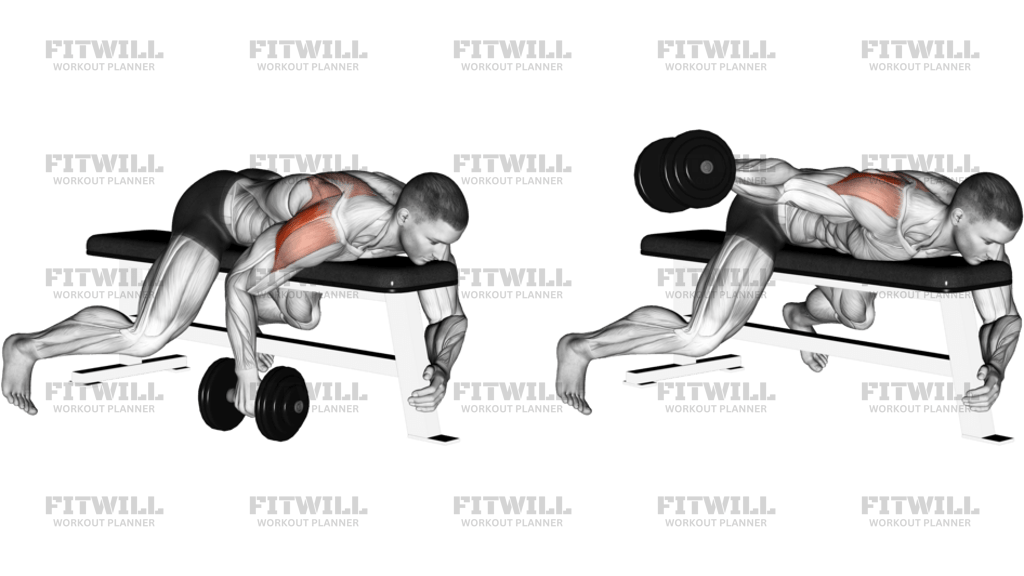
Dumbbell Lying One-Arm Rear Lateral Raise is a chest-supported rear-delt raise done with one dumbbell at a time. Lying face down on a bench removes most of the body swing and lets the rear shoulder do the work, while the upper back and rotator cuff help guide the arm through a controlled arc. It is a useful accessory when you want cleaner rear-delt isolation than a standing reverse fly usually allows.
The bench setup matters because it changes the line of pull. With your torso supported, the dumbbell hangs straight down and the working shoulder can move out and slightly back without turning the rep into a row or a twist. That support also makes it easier to keep the neck relaxed, the ribs quiet, and the pelvis heavy on the bench instead of arching to finish the lift.
This exercise is especially helpful for lifters who want more rear-delt volume after pressing or rowing, or for anyone trying to balance out a lot of front-delt and chest work. Because the load is small and the range is fairly short, the movement should feel precise rather than heavy. The best reps come from a clean shoulder arc, not from jerking the dumbbell or shrugging the shoulder toward the ear.
Set the bench high enough that your chest is fully supported and your working arm can hang freely. A slight elbow bend is enough; if you bend and straighten the elbow during the rep, the triceps and momentum will take over. Keep the path smooth, pause briefly near the top if you can do so without shrugging, and lower under control so the rear delt stays under tension through the whole rep.
Use a lighter dumbbell than you would for most standing lateral raises. If your torso twists, your neck tightens, or the dumbbell starts drifting behind your body with a yank, the load is too heavy or the bench position is off. Done well, Dumbbell Lying One-Arm Rear Lateral Raise is a strict shoulder accessory that builds rear-delt shape, shoulder balance, and better control around the shoulder blade.
[ Workout Log & Planner ]
Put your next workout in Fitwill
Keep your plan and training log ready when you are.


Instructions
- Lie face down on a flat bench with your chest and stomach supported, your feet planted behind you, and one dumbbell hanging straight down from the working side.
- Brace your torso, keep your neck long, and use the free hand to hold the bench frame, edge, or leg so your body stays square.
- Hold the dumbbell with a neutral grip and keep a soft bend in the elbow before the first rep starts.
- Let the working arm hang still under the shoulder until the weight is dead quiet.
- Lift the dumbbell out and slightly back in a wide arc, leading with the elbow instead of the hand.
- Stop the lift when the rear shoulder contracts and the upper arm reaches about torso height or slightly below shoulder height.
- Pause briefly at the top without shrugging or twisting the torso.
- Lower the dumbbell along the same arc until the arm hangs vertical again.
- Keep the same elbow angle on every rep and breathe out as you lift, then inhale as you lower.
- Set the dumbbell down carefully and release the bench support before getting off the bench.
Tips & Tricks
- Keep your chest glued to the bench; if your ribs lift, the rep turns into a twist instead of a rear-delt raise.
- Choose a lighter dumbbell than you think you need, because the bench removes momentum and makes the small rear delt do the work.
- Turn the hand slightly thumb-up if the top position makes your shoulder pinch or your upper trap take over.
- Do not chase height; once the upper arm reaches torso level, more range usually turns into shrugging.
- Keep the elbow angle nearly fixed so the triceps do not turn the movement into a bent-arm pull.
- If the dumbbell brushes the floor or bench, slide your chest a little farther forward so the arm can hang freely.
- Hold the top for a beat only if you can keep the shoulder away from the ear.
- If the free side cannot stay on the bench frame without slipping, widen your stance behind the bench before increasing weight.
Frequently Asked Questions
What muscles does Dumbbell Lying One-Arm Rear Lateral Raise work?
Dumbbell Lying One-Arm Rear Lateral Raise mainly targets the rear delts, with help from the upper back, traps, and rotator cuff. The chest-supported position also makes the shoulder stabilizers work harder to keep the path clean.
Is Dumbbell Lying One-Arm Rear Lateral Raise good for beginners?
Yes, if you start with a very light dumbbell and keep your chest fixed on the bench. The support makes it easier to learn than a standing rear delt raise, but the load still needs to stay small.
Why do I need to lie on a bench for Dumbbell Lying One-Arm Rear Lateral Raise?
The bench removes most of the body swing and keeps the movement centered on the shoulder. That makes it easier to isolate the rear delt and avoid turning the rep into a row.
How high should the dumbbell go in Dumbbell Lying One-Arm Rear Lateral Raise?
Lift only until the upper arm reaches about torso height or slightly below shoulder height. Going higher usually shifts tension into the traps and creates a shrug.
Should I keep my elbow straight in Dumbbell Lying One-Arm Rear Lateral Raise?
No. Keep a soft, fixed bend in the elbow so the rear delt moves the arm instead of the triceps or a swinging forearm.
What is the most common mistake in Dumbbell Lying One-Arm Rear Lateral Raise?
The most common mistake is shrugging the shoulder or twisting the torso to get the dumbbell higher. Keep the chest pinned to the bench and stop the rep before that happens.
Can I use Dumbbell Lying One-Arm Rear Lateral Raise instead of a cable reverse fly?
Yes, if you want a simple free-weight option with strict support. A cable reverse fly gives steadier tension, but this version is easier to set up and harder to cheat.
What should I do if Dumbbell Lying One-Arm Rear Lateral Raise bothers my shoulder?
Shorten the range, turn the thumb slightly up, and use a lighter dumbbell. If the shoulder still pinches, skip the rep and switch to a pain-free rear-delt variation.