Dumbbell Lying Rear Lateral Raise
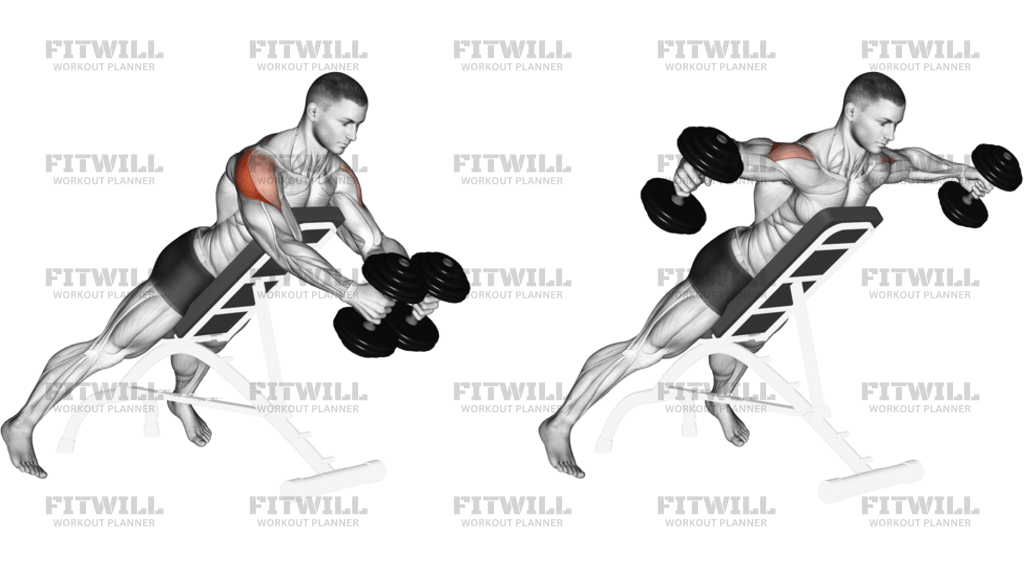
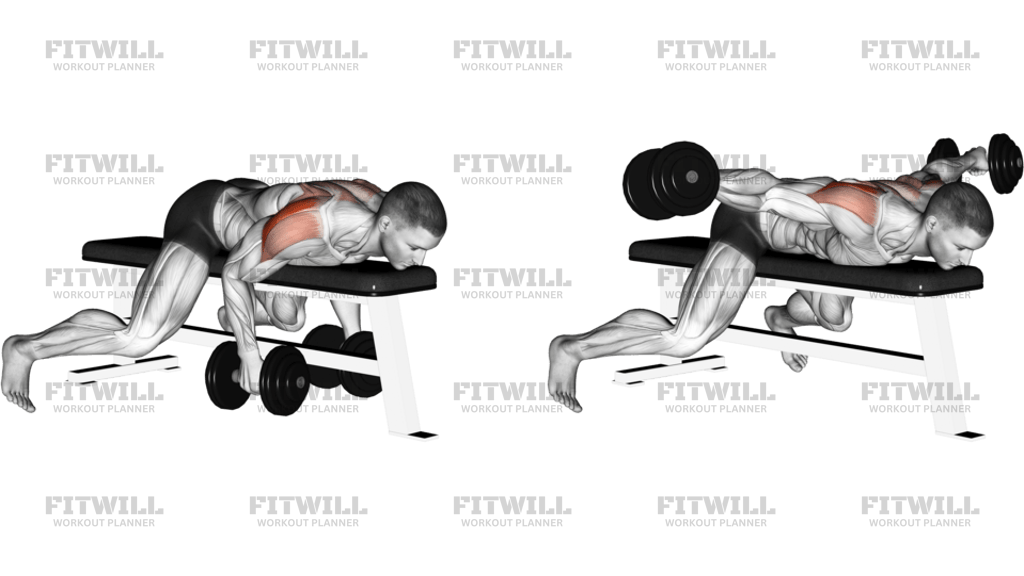
Dumbbell Lying Rear Lateral Raise is a chest-supported rear delt isolation exercise performed with one dumbbell in each hand while lying face down on a bench. The incline support takes the lower back and most of the torso out of the lift so the shoulders can work through a cleaner arc, making it a useful choice for building rear-delt size, improving shoulder balance, and strengthening the upper back without turning the movement into a full-body swing.
The setup matters because the bench changes the line of pull. When your chest stays supported and your shoulders start in a slightly protracted, relaxed position, the dumbbells can travel out in a wide arc instead of getting yanked up by the traps. That makes the rear delts do more of the work and keeps the reps honest, especially when fatigue starts to creep in.
Use a modest incline and let the dumbbells hang straight down under the shoulders before each rep. Keep a soft bend in the elbows, neutral wrists, and a long neck. From there, drive the upper arms out and slightly back until they are in line with the torso or just below shoulder height. The lift should feel like the back of the shoulders opening, not the upper traps shrugging the weight upward.
Lower the dumbbells under control along the same path and avoid bouncing off the bottom. Breathing should stay calm and predictable, with an exhale as the arms lift and an inhale on the way down. If your chest lifts off the pad, your shoulders creep toward your ears, or the weights start to swing, the load is too heavy or the bench angle is too steep.
This exercise is most useful as an accessory after pressing or rowing work, or any time you want direct rear-delt volume without a lot of spinal loading. Keep the reps smooth, the pause brief, and the range consistent so the shoulders, not the momentum, determine the quality of the set.
[ Workout Log & Planner ]
Put your next workout in Fitwill
Keep your plan and training log ready when you are.


Instructions
- Set an incline bench so your chest is supported face down, then lie with your upper chest and sternum on the pad and let both dumbbells hang straight under the shoulders.
- Plant your toes or feet for balance, keep your head neutral, and let the neck stay long instead of craning forward.
- Hold the dumbbells with a neutral grip and keep a small bend in both elbows so the arms stay in a fixed arc.
- Before the first rep, pull the shoulders down away from the ears and brace the abdomen against the bench.
- Raise both dumbbells out and slightly back in a wide semicircle until the upper arms reach roughly shoulder level or a little lower.
- Lead the movement with the elbows and rear delts, not the hands or upper traps.
- Pause briefly at the top without letting the shoulders shrug or the ribs leave the pad.
- Lower the dumbbells slowly along the same arc until the arms hang straight down again, then reset before the next rep.
Tips & Tricks
- Use a light pair of dumbbells; this movement usually fails from trap takeover before it fails from raw strength.
- Set the incline low enough that your chest stays planted, because a very steep bench turns the raise into a higher-trap shrug.
- Keep the pinky edge of each dumbbell slightly higher than the thumb if it helps you keep the rear delts involved.
- Think about reaching the elbows wide instead of lifting the hands high.
- Stop the rep when the upper arms are in line with the torso; extra height often adds shrugging instead of more rear-delt work.
- Keep the wrists stacked and quiet so the dumbbells do not drift backward or twist in your hands.
- If your lower back starts helping, slow the tempo and press your sternum into the bench before the next rep.
- A short pause at the top is useful only if the shoulders stay down and the neck stays relaxed.
Frequently Asked Questions
What muscles does Dumbbell Lying Rear Lateral Raise work?
It mainly targets the rear delts, with help from the rhomboids, mid traps, and rotator cuff. The chest-supported setup reduces momentum so the shoulder muscles have to control the arc.
Is Dumbbell Lying Rear Lateral Raise beginner-friendly?
Yes, if you keep the bench angle modest and start with very light dumbbells. Beginners usually do best when they can keep the chest on the pad and avoid shrugging.
How high should the dumbbells come up?
Bring the upper arms to about shoulder height or just below it. Higher than that usually turns the lift into a trap-dominant shrug.
Should I keep my elbows straight or bent?
Keep a soft bend and hold that angle through the rep. Straightening the elbows too much makes the lever longer and can pull the movement out of the rear delts.
Why use a bench instead of doing rear raises bent over?
The bench removes a lot of torso movement and lower-back cheating. That makes it easier to keep tension on the rear delts and repeat the same path on every rep.
What grip works best on the dumbbells?
A neutral grip is usually the cleanest option, though a slight thumb-up position can feel better on some shoulders. Use the grip that lets you keep the wrists quiet and the shoulders down.
What if I feel my upper traps more than my rear delts?
Lower the weight, reduce the bench angle, and shorten the range slightly. If the shoulders keep creeping toward the ears, the load is too heavy or the setup is too steep.
Can I use this as a shoulder health exercise?
It can support shoulder balance by training the rear delts and upper back, but it is still a loaded exercise. Keep the motion smooth and stop if the shoulder joint feels pinchy or unstable.