Dumbbell One-Arm Shoulder Press
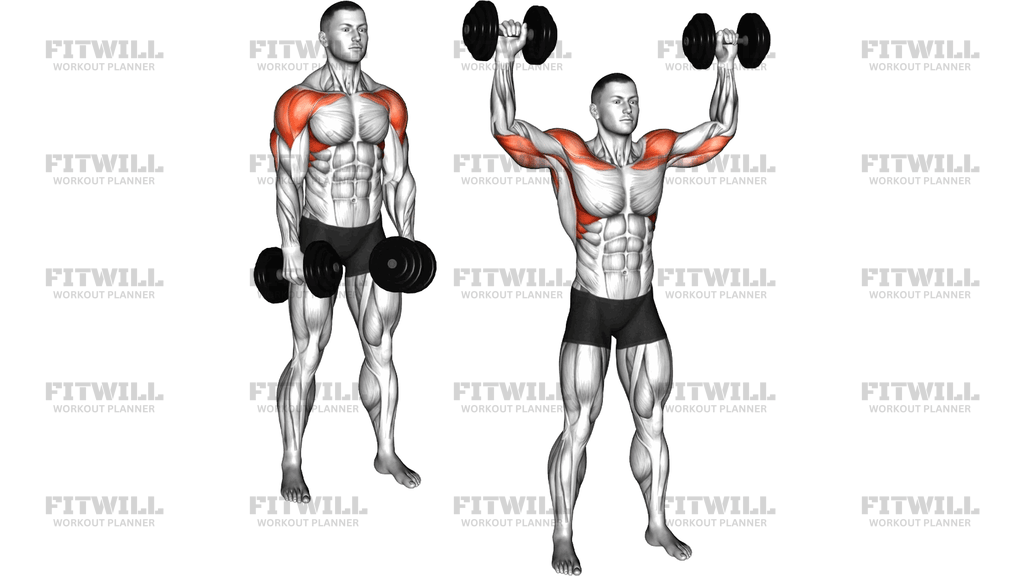
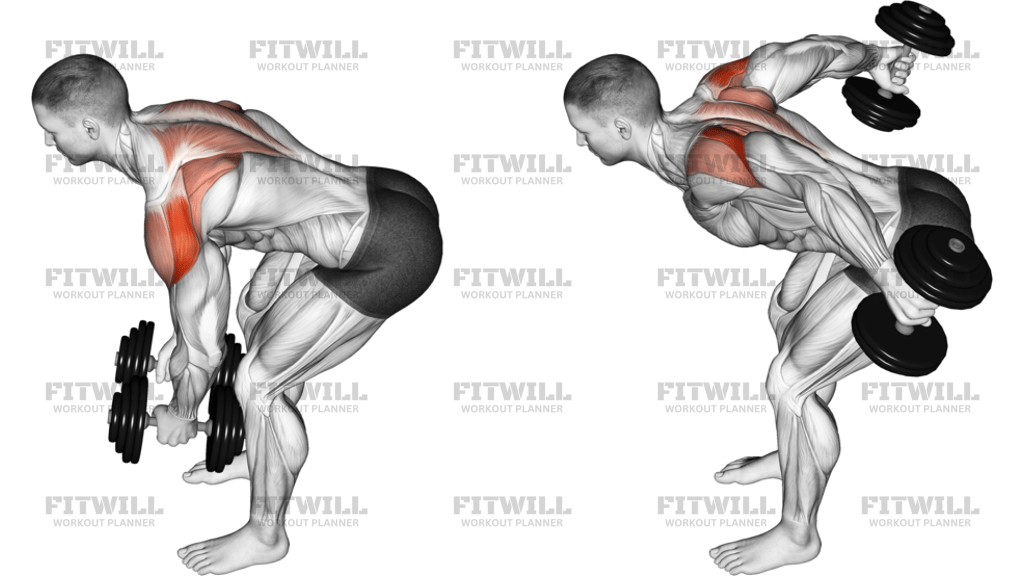
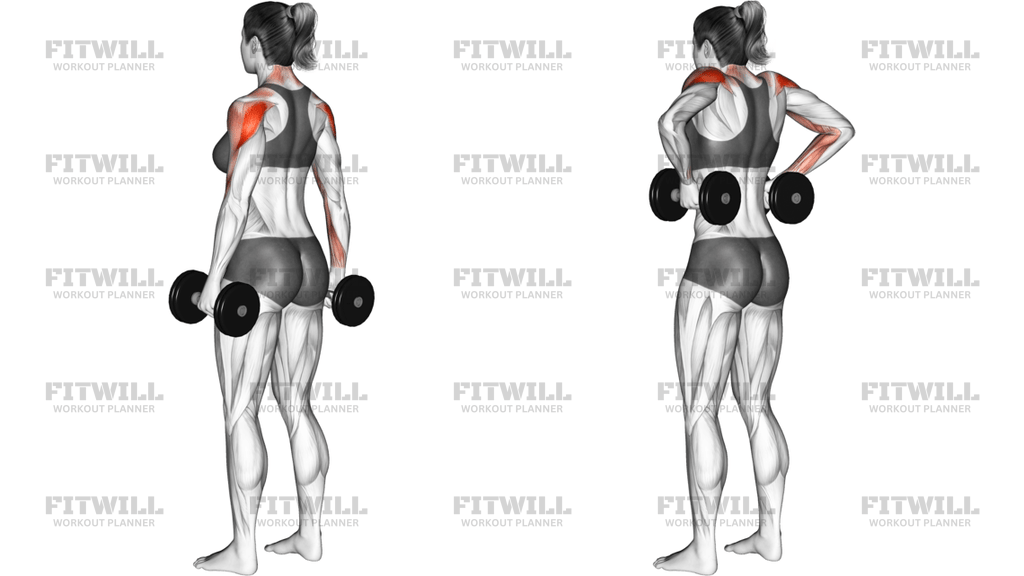
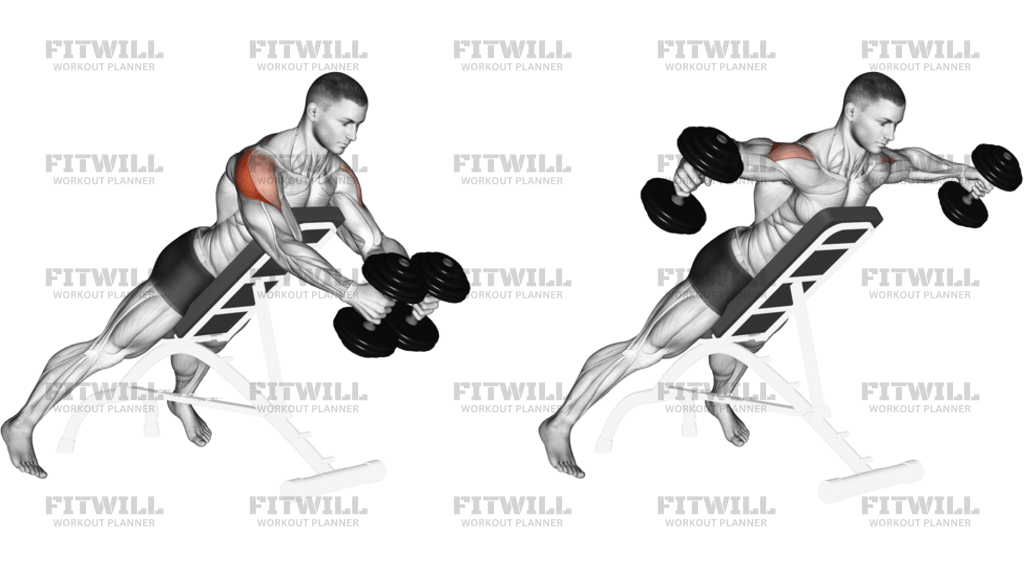
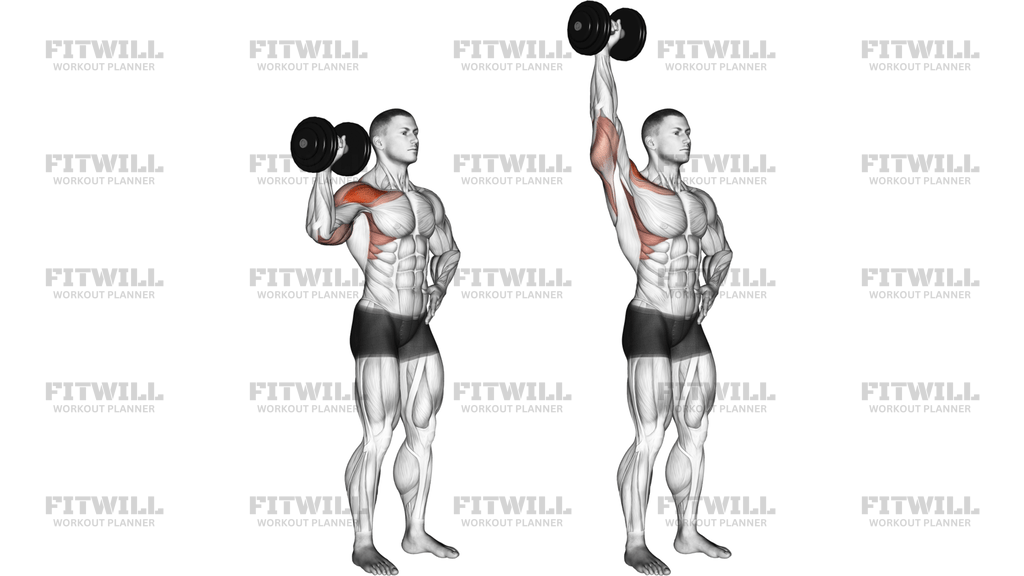
Dumbbell One-Arm Shoulder Press is a standing unilateral pressing exercise that trains the shoulder girdle to produce force while the trunk resists side-bending and twisting. The image shows a single dumbbell held at shoulder height with the other hand free at the hip, which makes this a strict overhead press rather than a push press or a supported bench variation.
The main movers are the deltoids, especially the front and middle fibers, with the triceps finishing the press and the upper traps and serratus helping the shoulder blade rotate upward. The obliques and deep trunk stabilizers work hard to keep the rib cage stacked over the pelvis so the weight goes up without a lean or a turn.
The setup matters more than it does in many bilateral presses. Stand tall with feet about hip-width apart, squeeze the glutes lightly, and hold the dumbbell just outside the shoulder with the elbow slightly in front of the torso. The wrist should stay stacked over the elbow, and the forearm should stay vertical so the load sits directly over the shoulder before the press starts.
Press the dumbbell in a near-vertical line until the arm is overhead and the biceps are close to the ear without forcing the shoulder up toward the neck. The head can move slightly back to clear the path, then return under the dumbbell at the top. Lower the weight slowly to the same rack position and keep the torso quiet on every rep.
Use this exercise when you want unilateral shoulder strength, better left-right balance, or a pressing movement that exposes weak trunk control. It is useful in upper-body strength work, hypertrophy sessions, and accessory training after a main overhead press. If the body starts to sway, the rib cage flares, or the dumbbell drifts forward, lower the load and clean up the path before adding more weight.
Fitwill
Log Workouts, Track Progress & Build Strength.
Achieve more with Fitwill: explore over 9600 exercises with images and videos, access built-in and custom workouts, perfect for both gym and home sessions, and see real results.
Start your journey. Download today!




Instructions
- Stand tall with feet about hip-width apart and hold one dumbbell at shoulder height on the working side.
- Keep the elbow slightly in front of the torso and the forearm vertical so the dumbbell sits over the shoulder.
- Place the free hand on the hip or let it hang naturally to help you stay balanced without leaning.
- Brace the abs and glutes so the ribs stay stacked over the pelvis before the first press.
- Press the dumbbell straight up in a near-vertical line while keeping the wrist stacked over the elbow.
- As the dumbbell passes eye level, let the head move slightly back so the weight can travel cleanly overhead.
- Finish with the arm overhead, the biceps near the ear, and the shoulder controlled rather than shrugged hard.
- Lower the dumbbell under control back to shoulder height along the same path.
- Complete all reps on one side, then switch sides and match the same range and tempo.
Tips & Tricks
- If your lower back arches to get the dumbbell overhead, the load is too heavy for strict pressing.
- Keep the dumbbell slightly in front of the shoulder at the start; starting too far out to the side usually irritates the joint and makes the press wobblier.
- Think about reaching up and slightly back at the top, not driving the weight forward in front of your face.
- A small head tuck under the dumbbell at lockout usually helps the press finish in a better line.
- Do not let the working shoulder shrug up before the arm is fully extended; keep the neck long and finish the rep with control.
- A slower lowering phase exposes side-to-side differences and makes the movement harder without needing more weight.
- If the dumbbell drifts backward behind the head, shorten the range and clean up the path before continuing.
- Use the free hand on the hip or rib cage as a posture check if you tend to twist or flare the torso.
Frequently Asked Questions
What muscles does Dumbbell One-Arm Shoulder Press work?
It mainly works the deltoids and triceps, with the upper traps, serratus, and core helping stabilize the press. The unilateral stance also challenges the obliques and the muscles that keep your torso from leaning.
Is Dumbbell One-Arm Shoulder Press beginner-friendly?
Yes, if you keep the dumbbell light enough to press without arching, twisting, or shrugging. Beginners usually do best with a strict standing rep before trying heavier loads or more explosive variations.
How should I position the dumbbell before I press?
Hold it just outside shoulder height with the elbow slightly in front of the torso and the forearm vertical. That stack gives you a cleaner start position and makes it easier to press in a straight line.
What mistake should I avoid?
Avoid leaning away from the working arm, flaring the ribs, or letting the dumbbell drift forward. Those compensations turn the press into a whole-body heave instead of a shoulder-driven rep.
Why does the free hand stay on the hip in the image?
The free hand on the hip helps you stay organized and makes torso rotation easier to notice. It is not required, but it gives a useful cue for keeping the trunk quiet.
Should I press straight up or slightly in front of my head?
Press in a near-vertical line. The dumbbell should clear the face by letting the head move slightly back, then finish stacked over the shoulder rather than drifting far forward.
Can I use this as a core exercise too?
Yes. The anti-rotation and anti-side-bend demand is a major part of the lift, especially if you keep the stance narrow and the rib cage stacked.
How do I know if the range of motion is too deep or too high?
At the bottom, stop when the dumbbell is at shoulder height and the elbow is in a comfortable rack position. At the top, finish when the arm is overhead and aligned without losing neck or rib position.