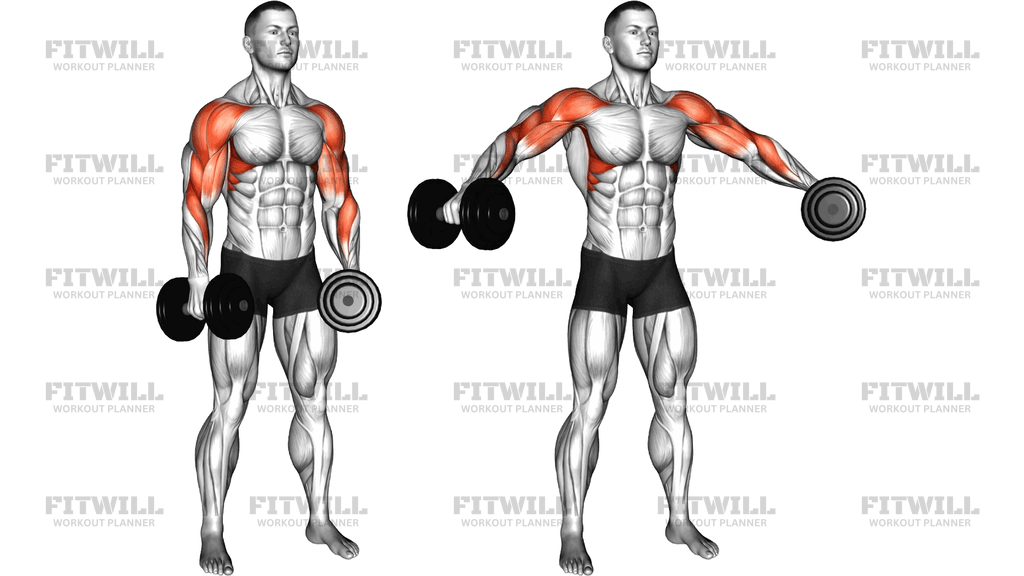
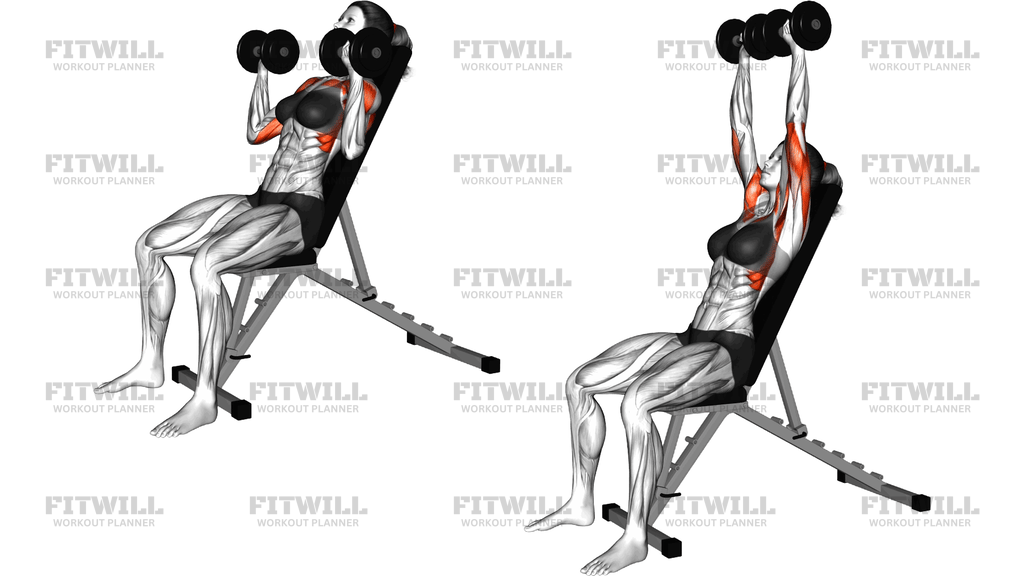
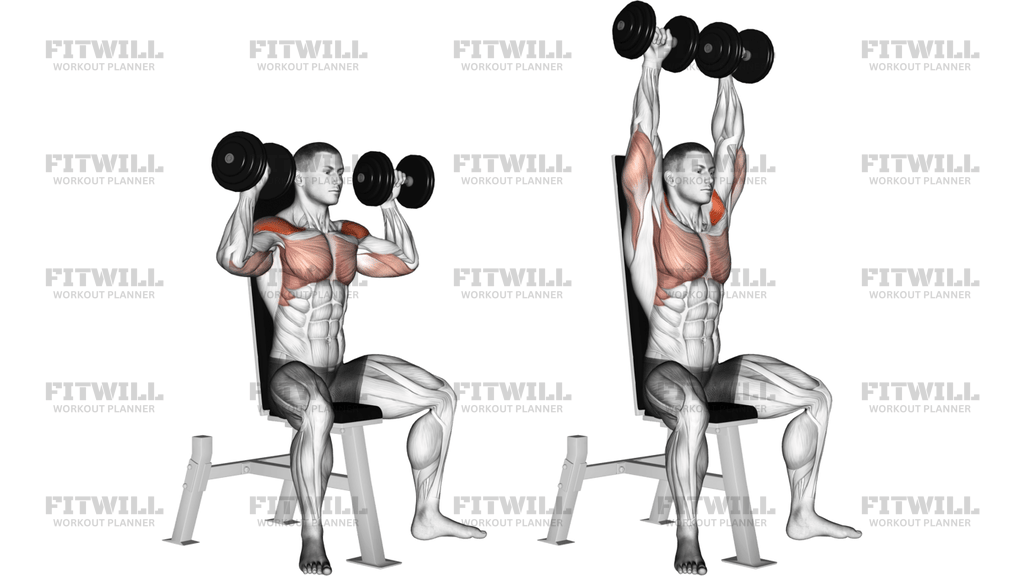
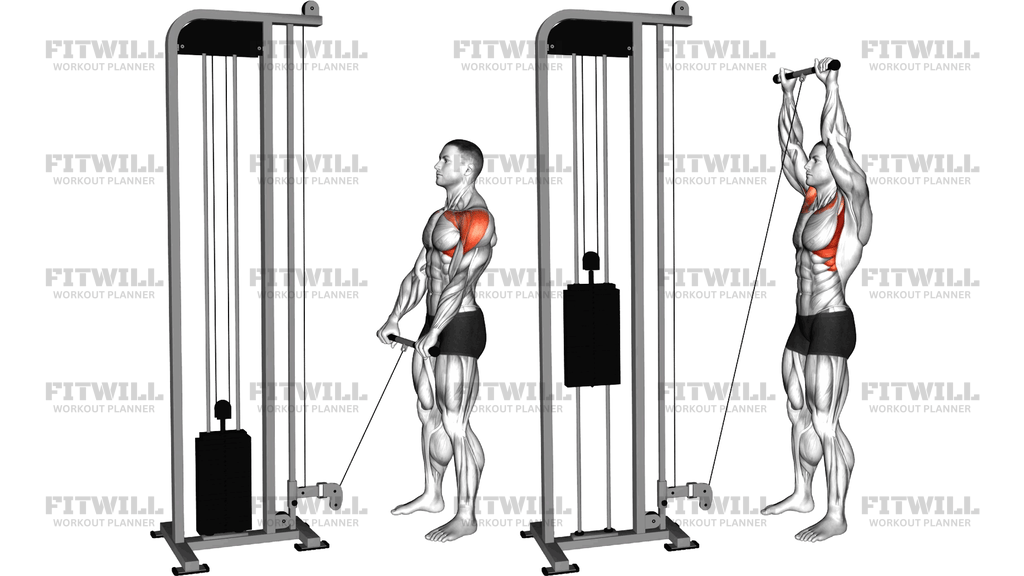
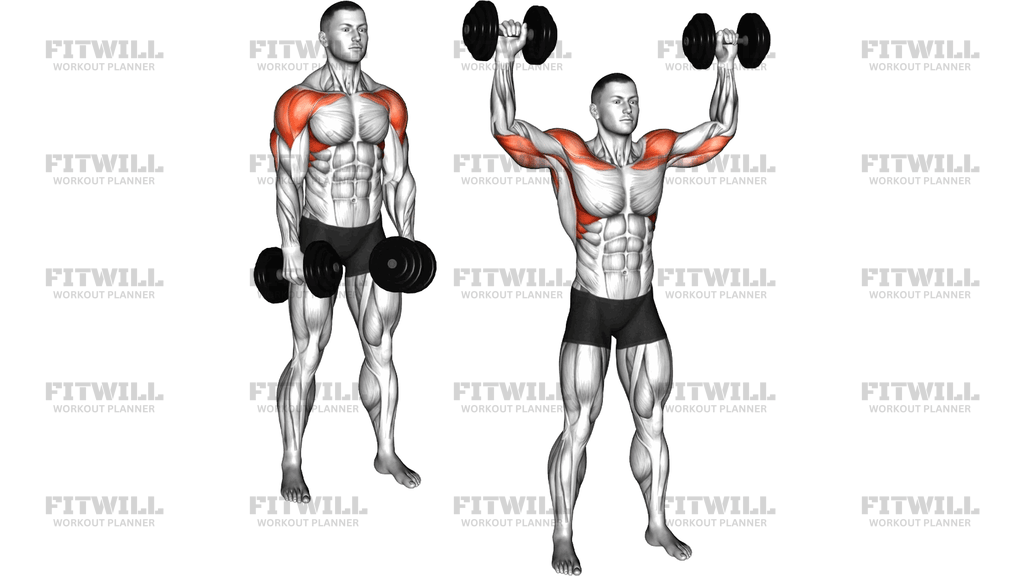
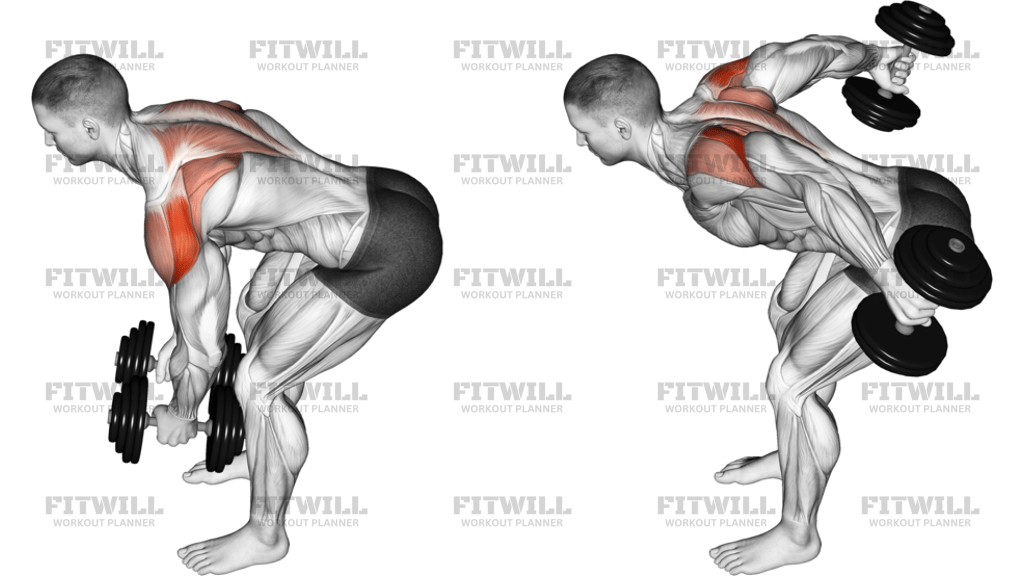
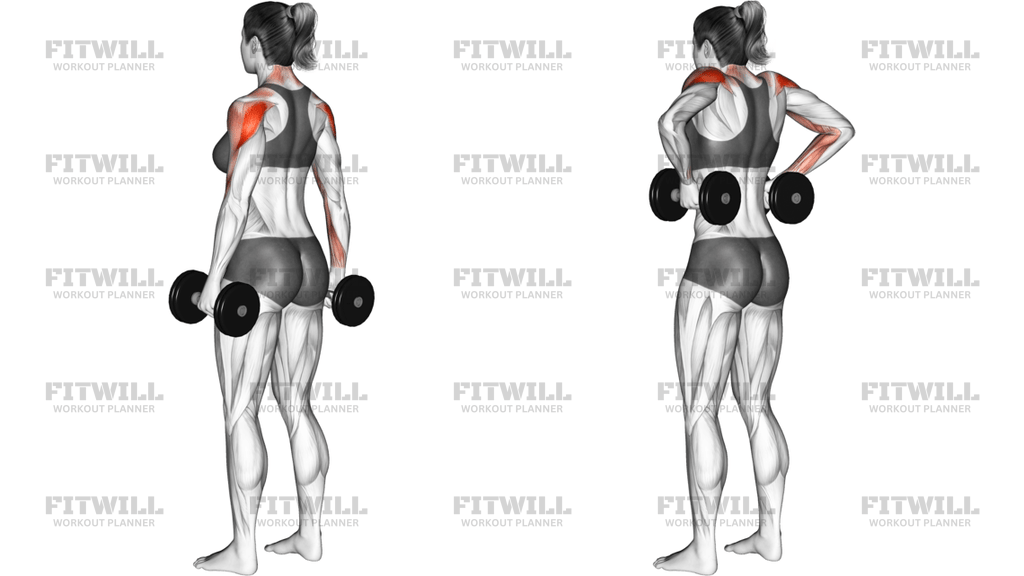
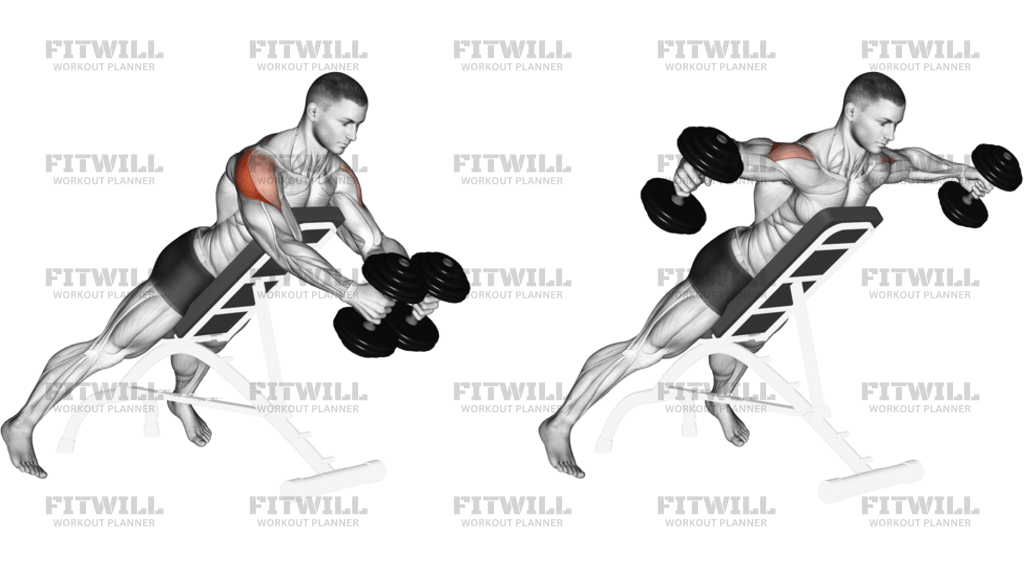
Dumbbell One-Arm Shoulder Press
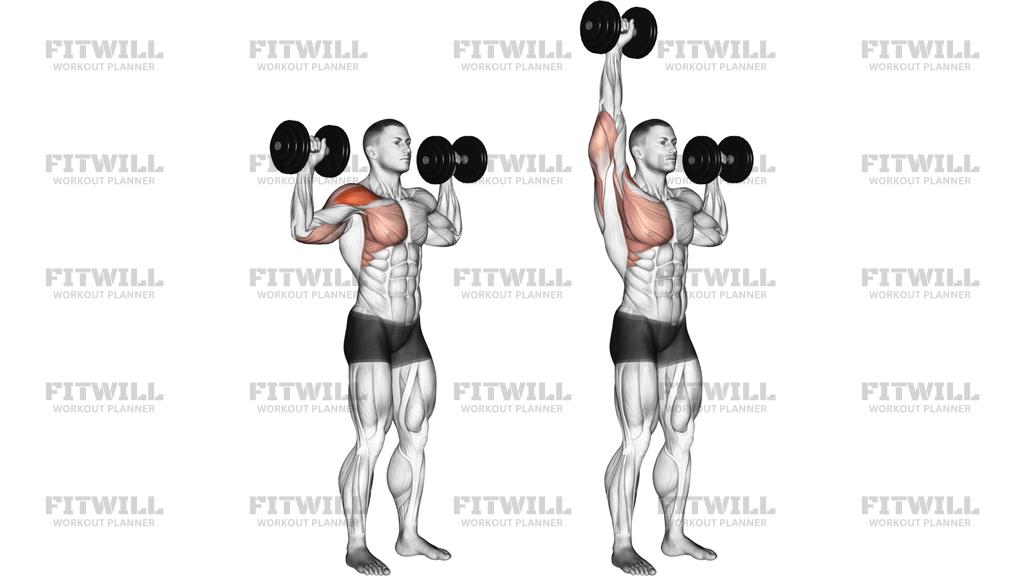
Dumbbell One-Arm Shoulder Press is a standing unilateral press that builds shoulder strength while challenging the trunk to stay tall and square. The working arm drives a dumbbell from shoulder height to full overhead lockout, so the delts do most of the work while the triceps finish the rep and the core resists side bending or twisting. It is a simple pattern on paper, but the details of stance, rib position, and dumbbell path decide whether the lift trains the shoulder well or turns into a lean-and-heave movement.
The main training effect is on the delts, especially the front and side heads, with support from the triceps, upper chest, serratus, and upper-back stabilizers. Because the movement is done one arm at a time, the torso has to organize itself under an uneven load. That makes the exercise useful for building shoulder strength, identifying left-right differences, and teaching clean overhead mechanics without the distraction of both arms pressing together.
Set up in a stable stance with the feet about hip-width apart and the ribs stacked over the pelvis. Bring the dumbbell to shoulder height with the wrist straight, the elbow slightly in front of the body, and the forearm close to vertical. The nonworking side should stay quiet instead of flaring or reaching to help. A tall chest is fine, but avoid over-arching the low back to “make room” for the press.
Press the dumbbell up and slightly back so it finishes over the shoulder, not drifting far in front of the body. At the top, the arm should be straight without shrugging the shoulder into the ear. Lower the weight on the same path until it returns to the shoulder under control. Smooth breathing helps: brace before the press, exhale as the dumbbell passes the hardest point, and reset the trunk before each new rep.
Use this press as a main shoulder accessory or as a unilateral strength drill after heavier bilateral pressing work. It is especially useful when one side tends to rotate, overextend, or lose stack under load. Keep the reps crisp and stop the set when the torso starts to lean, the elbow collapses too far behind the wrist, or the dumbbell path turns into a forward swing instead of a controlled overhead line.
[ Workout Log & Planner ]
Put your next workout in Fitwill
Keep your plan and training log ready when you are.


Instructions
- Stand with your feet about hip-width apart and hold one dumbbell at shoulder height on the working side.
- Stack the wrist over the elbow and keep the elbow slightly in front of the torso.
- Brace your midsection and keep your ribs from flaring as you prepare to press.
- Drive the dumbbell upward and slightly back so it finishes over the shoulder.
- Keep the nonworking side quiet so the torso does not rotate toward the dumbbell.
- Reach full lockout without shrugging the shoulder into the ear.
- Lower the dumbbell along the same path until it returns to shoulder height.
- Reset your brace at the bottom before starting the next rep.
- Complete all reps on one side before switching, or alternate sides if that is how the set is programmed.
Tips & Tricks
- Set the dumbbell at shoulder height before you press; starting too low encourages a sloppy first rep.
- Keep the forearm vertical at the bottom so the wrist, elbow, and shoulder stay stacked under the load.
- Press in a slight arc back toward the ear instead of straight forward so the dumbbell ends over the shoulder joint.
- Squeeze the glute on the working side if you tend to arch your low back to finish the rep.
- Do not let the rib cage flare as the dumbbell passes eye level; that is usually the first sign the load is too heavy.
- Lower the weight slowly enough that you can feel the shoulder working on the way down, not just at lockout.
- If the shoulder feels pinchy overhead, shorten the range slightly and keep the elbow a bit farther in front of the body.
- Use a lighter load if the torso starts leaning away from the working arm or the free shoulder hikes upward.
- Match the rep quality side to side before chasing heavier dumbbells.
Frequently Asked Questions
What muscles does Dumbbell One-Arm Shoulder Press work?
It mainly trains the delts, with help from the triceps and upper chest. The core and upper back work hard to keep the torso from leaning or rotating under the one-sided load.
Is Dumbbell One-Arm Shoulder Press beginner-friendly?
Yes, if you start light and keep the dumbbell path clean. Beginners should press only through a range they can control without arching the low back or shrugging the shoulder.
How should the dumbbell travel during the press?
It should move up and slightly back so it finishes over the shoulder. A straight-forward path usually turns the rep into a front-raise pattern instead of a true overhead press.
What is the most common mistake in this press?
Leaning away from the dumbbell or arching the lower back to get the weight overhead. If the torso moves more than the shoulder, the set is too heavy or the brace is not set.
Should my elbow stay in line with my shoulder?
At the bottom, the elbow should be slightly in front of the torso rather than flared hard to the side. That position usually keeps the shoulder stacked and makes the first press smoother.
Can I alternate sides rep by rep?
Yes, if the workout calls for it and you can keep the trunk stable on each rep. Some lifters do better finishing all reps on one side first so fatigue does not change the torso position mid-set.
What should I do if the top position feels crowded?
Try a slightly lighter dumbbell and finish with the arm over the shoulder rather than forced directly beside the head. A small change in path often reduces shoulder pinch.
How do I make the exercise harder without cheating?
Use a slower lowering phase, cleaner pauses at shoulder height, or a small load increase while keeping the torso perfectly still.