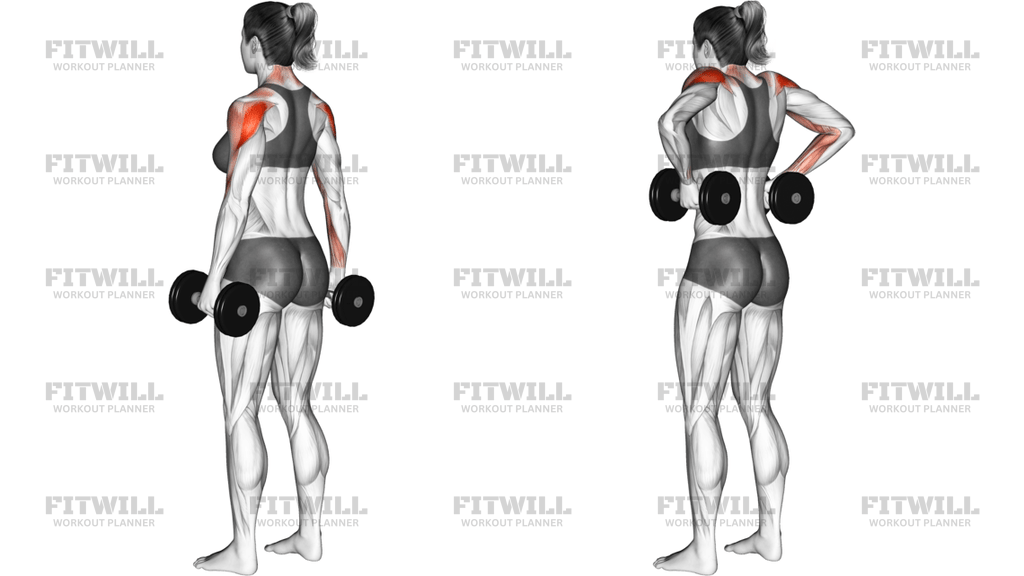
Dumbbell One-Arm Upright Row
Dumbbell One-Arm Upright Row is a standing single-arm shoulder exercise that uses one dumbbell to train the delts, upper traps, and the upper back in a controlled vertical pull. The free hand is often kept on the hip for balance, which makes it easier to notice whether the working side is doing the lifting or whether the torso is starting to help.
This variation is useful when you want to compare left and right shoulder mechanics or keep the load light enough to focus on path and position. Because only one arm is working, it is easier to see if the dumbbell drifts away from the body, if the elbow rises too high, or if the shoulder starts to shrug early. Those details matter more here than simply moving a heavier weight.
Set up by standing tall with the dumbbell hanging in front of the working thigh, palm facing the body, and the wrist straight. Keep the chest tall, ribs stacked, and the shoulder blade settled rather than jammed upward. A quiet setup makes the pull smoother and keeps the movement centered on the shoulder instead of the lower back or momentum.
As you pull, lead with the elbow and keep the dumbbell close to the front of the body. The weight should travel upward in a short, clean line until the upper arm approaches shoulder height or the point just before the shoulder feels crowded. The opposite hand can stay on the hip to help you stay upright without twisting toward the working side.
Lower the dumbbell slowly along the same path and let the shoulder reset before the next rep. A small pause at the bottom helps prevent bouncing off the bottom of the range and keeps each side honest. If the top position causes pinching, shorten the range, lighten the dumbbell, or switch to a shoulder-friendly row or raise that lets you keep better control.
Dumbbell One-Arm Upright Row fits well in shoulder or upper-body accessory work when you want a simple unilateral pull that challenges the side delts and upper traps without needing a machine. The best results come from keeping the dumbbell path tidy, the torso still, and the range of motion limited to what the shoulder can handle comfortably.
[ Workout Log & Planner ]
Put your next workout in Fitwill
Keep your plan and training log ready when you are.


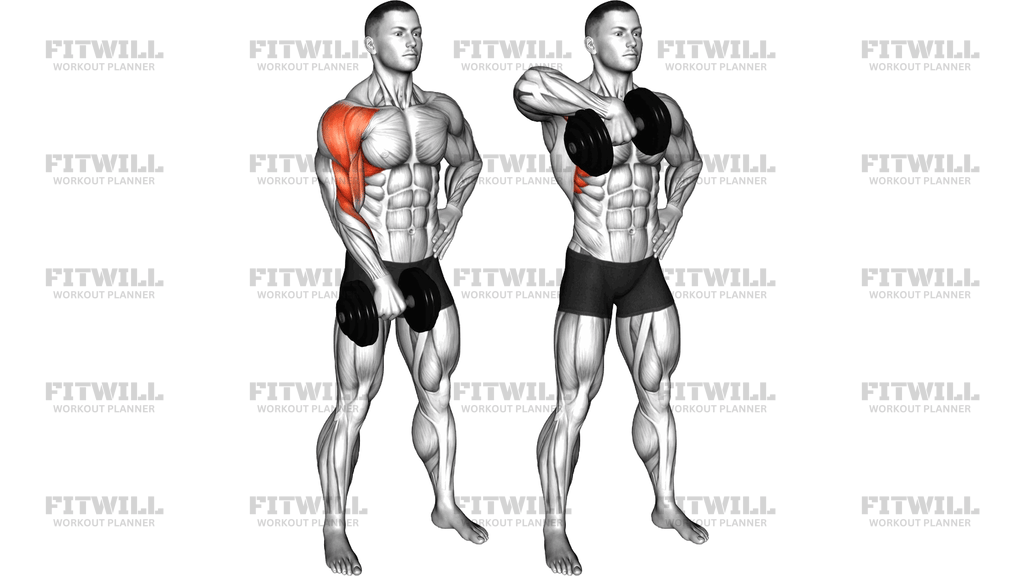
Instructions
- Stand tall with your feet about hip-width apart and hold one dumbbell in front of the working thigh.
- Keep the free hand on your hip or relaxed by your side, and face the palm of the working hand toward your body.
- Set the shoulder down and back slightly, keep the wrist straight, and let the dumbbell hang still before the first rep.
- Brace your midsection so your torso stays upright instead of drifting toward the working side.
- Pull the elbow out and up while keeping the dumbbell close to the front of your body.
- Raise the weight until the upper arm reaches about shoulder height, or stop sooner if the shoulder starts to pinch.
- Pause briefly at the top without jerking the shoulder higher or leaning backward.
- Lower the dumbbell slowly along the same path until the arm is fully extended again.
- Reset at the bottom, keep the same body position, and complete all reps before switching arms.
Tips & Tricks
- Keep the dumbbell close to your shirt seam; if it drifts forward, the trap takeover usually happens faster.
- Think about lifting the elbow, not the hand. The wrist should stay under control instead of leading the pull.
- Stop before the upper arm climbs much higher than shoulder level, especially if the front of the shoulder feels crowded.
- A slight hip brace is enough here; if you have to rock the torso to finish the rep, the load is too heavy.
- Keep the opposite hand parked on the hip so you do not rotate or lean toward the working side.
- Use a slower lowering phase than lifting phase to keep tension on the delts instead of bouncing out of the bottom.
- If the wrist bends back, reduce the load and keep the knuckles stacked under the forearm.
- A small range with clean shoulder position is better than forcing a high pull that changes the line of motion.
Frequently Asked Questions
What muscles does Dumbbell One-Arm Upright Row work?
Dumbbell One-Arm Upright Row mainly works the delts, upper traps, and upper back, with the arm and core helping stabilize the load. The single-arm setup also makes left-to-right differences easier to notice.
How high should the dumbbell go in Dumbbell One-Arm Upright Row?
Usually only to shoulder height or slightly below it. If you have to pull higher to feel the rep, the load is probably too heavy or your shoulder position is drifting.
Should my free hand stay on my hip during Dumbbell One-Arm Upright Row?
Yes, that is a useful setup cue because it helps keep the torso from twisting toward the working arm. If the free side starts helping, the rep usually becomes less strict.
Why does Dumbbell One-Arm Upright Row bother my shoulder?
The top of the pull can crowd the shoulder if the elbow climbs too high or the dumbbell travels too far away from the body. Shorten the range and lighten the load before changing anything else.
Can beginners do Dumbbell One-Arm Upright Row?
Yes, as long as they use a light dumbbell, keep the wrist straight, and stop well before the shoulder feels pinched. The one-arm version is easier to learn when the range stays modest.
What is the main mistake to avoid with the dumbbell path?
Do not let the dumbbell swing away from the thigh and out in front of the body. Keeping it close to the torso is what makes the pull feel controlled and shoulder-led.
Is Dumbbell One-Arm Upright Row a trap exercise or a shoulder exercise?
It is both, but the delts usually do most of the visible work while the upper traps assist near the top. If you shrug aggressively, the traps will take over and the shoulder position gets messier.
What should I do if the rep feels better on one side?
Match the same dumbbell path, tempo, and range on both sides, then use the weaker side as the limiter. If one side still feels much different, lower the load and keep the movement strict.