Dumbbell Over Bench Neutral Wrist Curl
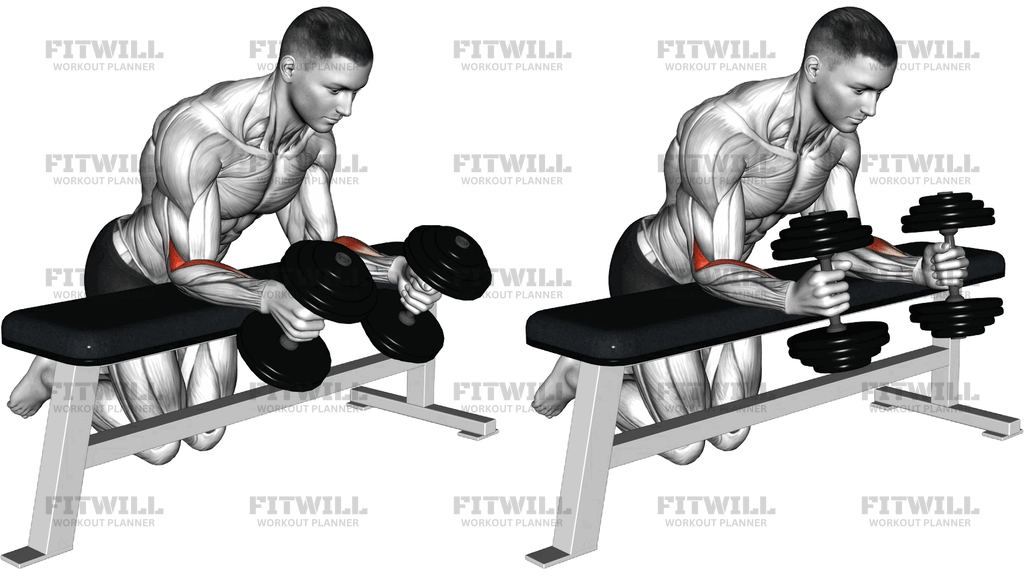
Dumbbell Over Bench Neutral Wrist Curl is a bench-supported forearm exercise that isolates wrist flexion while your hands stay in a neutral grip. It is useful when you want to build stronger forearms and a more resilient grip without needing a cable stack or specialty handle. The bench support removes most body sway, so the wrist has to do the work instead of the shoulders or trunk.
The exercise mainly trains the forearm flexors and grip, while the brachioradialis and biceps help stabilize the forearm and elbow position. Because the dumbbells hang below the bench edge, the bottom position gives you a clear stretch through the wrist and fingers. That stretch is useful, but it should stay controlled rather than collapsing into the joint.
The setup matters more than it looks. Kneel beside a flat bench, drape your forearms across the pad, and let the hands and dumbbells hang just off the edge so the wrists can move freely. Keep the elbows and forearms planted in the same place, then close the hands around the dumbbells with the palms facing each other. A steady bench position and a light load make the motion clean and easier to repeat on both sides.
Each rep should be a small, deliberate curl at the wrist. Lift the dumbbells by flexing the wrists upward toward the forearms, then pause briefly before lowering under control until the plates or handles are back near the start. The movement should feel like the forearm is folding the hand inward, not like the whole arm is lifting the weight. If the elbows shift, the shoulders rock, or the dumbbells bounce, the load is too heavy or the range is too large.
Dumbbell Over Bench Neutral Wrist Curl fits well at the end of upper-body sessions, during forearm-focused work, or as part of grip training for pressing and pulling athletes. It is also a practical option when you want direct wrist work without setting up a machine. Use it conservatively at first, because the forearm flexors and wrist tendons often respond better to crisp reps and moderate volume than to aggressive loading.
[ Workout Log & Planner ]
Put your next workout in Fitwill
Keep your plan and training log ready when you are.


Instructions
- Kneel beside a flat bench and place both forearms across the pad with your elbows and wrists near the edge.
- Hold a dumbbell in each hand with the palms facing each other and the dumbbells hanging just below the bench.
- Plant your forearms firmly so only the wrists can move and keep your shoulders quiet.
- Let the wrists extend slightly so the dumbbells drop into a controlled start position.
- Curl the weights upward by closing the wrists toward the forearms without lifting the elbows off the bench.
- Squeeze briefly at the top when the dumbbells are closest to the forearms.
- Lower the dumbbells slowly until the wrists are back near full stretch and the plates clear the bench edge.
- Reset the forearms on the bench before the next rep and switch sides or repeat evenly if you work one arm at a time.
Tips & Tricks
- Let the bench edge support the forearms, not the wrists; the hands should be the only part hanging free.
- Use a load that lets you pause at the top without shaking through the forearm.
- Keep the palms facing each other the whole set; turning the dumbbells into a full curl changes the exercise.
- If your elbows slide forward, widen your base on the bench and shorten the rep slightly.
- Lower for a slow count so the wrist flexors stay loaded on the way back down.
- Stop the rep before the dumbbell crashes into the floor or bench edge at the bottom.
- Keep the knuckles stacked over the forearm instead of letting the wrist bend sideways.
- Use smaller dumbbells if the fingers start opening before the wrists finish curling.
Frequently Asked Questions
What muscles does Dumbbell Over Bench Neutral Wrist Curl train?
It mainly targets the forearm flexors and grip, with the brachioradialis and biceps helping steady the forearm while the wrists move.
Why do I kneel with my forearms on the bench for Dumbbell Over Bench Neutral Wrist Curl?
The bench takes the shoulders and torso out of the lift so the wrists have to curl the dumbbells instead of the whole arm helping.
Should my palms stay facing each other the whole time?
Yes. The neutral grip is part of the exercise, and rotating into a palm-up curl changes the load and makes the movement less specific.
How much range of motion should I use?
Use the range that lets the dumbbells hang below the bench edge and then curl up without your forearms lifting or your wrists collapsing sideways.
Is Dumbbell Over Bench Neutral Wrist Curl good for beginners?
Yes, if you start very light and keep the elbows pinned to the bench. The movement is small, but the forearm tendons can still get irritated by too much load too soon.
What if I feel it more in my shoulders than my forearms?
Reset with your chest closer to the bench, let the forearms stay heavy on the pad, and shorten the rep until the wrists do the work cleanly.
Can I do this one arm at a time?
Yes. Single-arm reps can make it easier to keep the forearm planted and compare sides, especially if one wrist is weaker or less coordinated.
How should I progress Dumbbell Over Bench Neutral Wrist Curl?
Add reps first, then increase the dumbbell in small jumps. Clean wrist motion and a controlled lowering phase matter more here than chasing heavy weight.