Dumbbell Rear Delt Fly
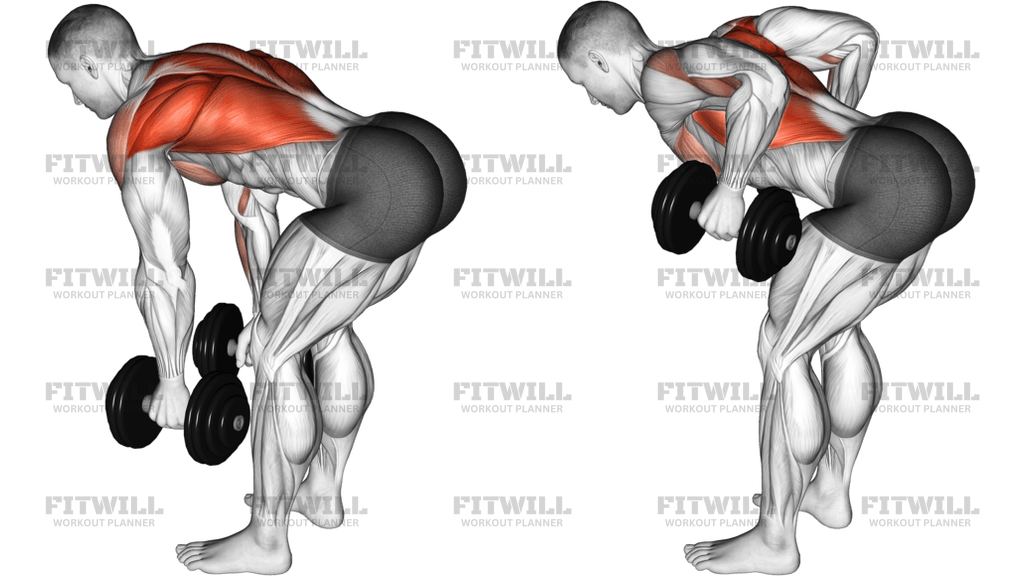
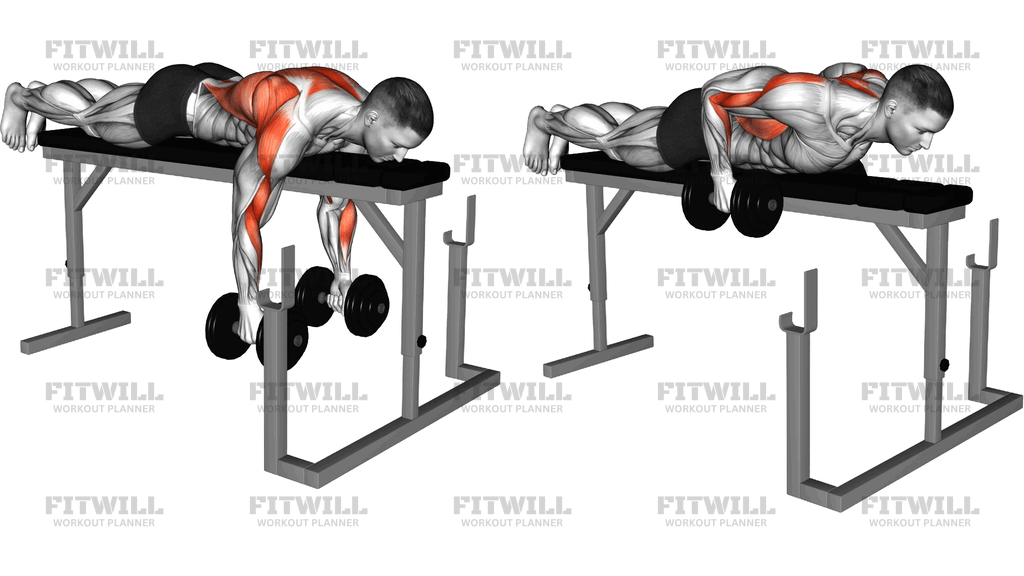
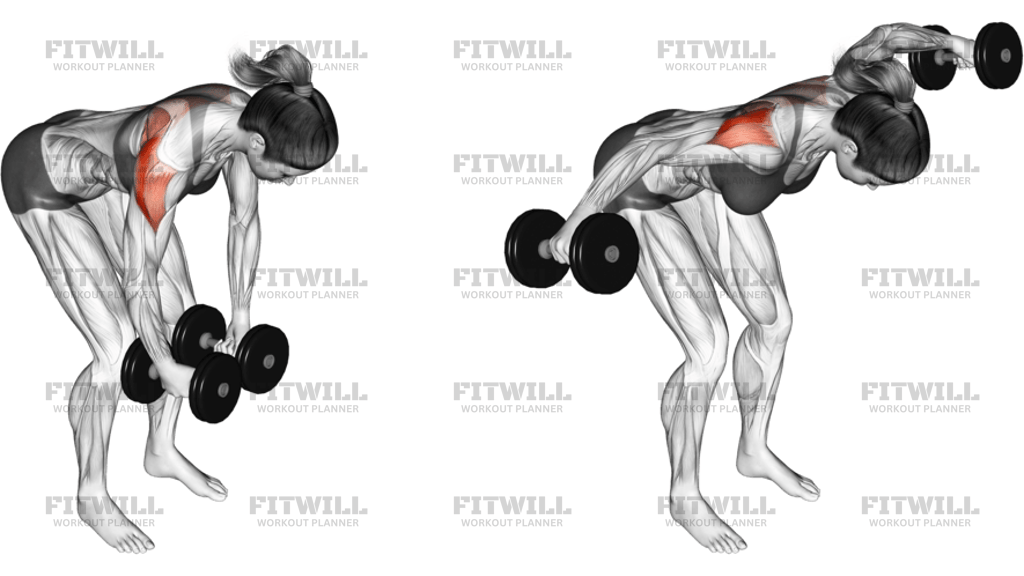
Dumbbell Rear Delt Fly is a bent-over isolation exercise for the back of the shoulders, with help from the upper back and the muscles that stabilize the torso in the hinge position. In the image, the lifter is folded at the hips with a flat back, the dumbbells hanging under the shoulders, and the arms sweeping out to the sides. That setup is the whole point of the movement: it takes the body out of a standing press pattern and lets the rear delts do the main work.
The exercise is most useful when you want to build shoulder balance, improve posture-related strength, or give the rear delts direct work that rows and presses do not always provide. Because the torso stays bent over, the lower back and midsection have to hold position while the shoulder blades and upper arms move. The load should feel light enough that you can keep the hinge, neck, and ribcage quiet while the arms travel through a controlled arc.
Good execution starts before the first rep. Hinge forward until your chest is near parallel to the floor, keep a soft bend in the knees, and let the dumbbells hang with the palms facing one another. From there, the movement is a wide sweep outward with only a small bend in the elbows, stopping around shoulder height or slightly below if that is where you can stay strict. The return should be slow enough that the shoulders do not shrug or roll forward.
The exercise works best as accessory work, posture-focused training, or a rear-delt finisher after pressing and pulling. It is usually best performed with moderate to high reps and very modest load, because momentum and grip fatigue show up quickly if the dumbbells are too heavy. If the lower back starts taking over, reduce the load, shorten the range slightly, or use a bench-supported variation so the rear delts can stay the focus.
This is not a power exercise and it should not turn into a swing. The goal is a repeatable hinge, a stable torso, and a clean outward path that keeps tension on the rear shoulders through the whole set. When those pieces stay in place, the movement becomes one of the simplest ways to train the back of the shoulder directly and safely.
[ Workout Log & Planner ]
Put your next workout in Fitwill
Keep your plan and training log ready when you are.


Instructions
- Stand with your feet about hip-width apart and hold a dumbbell in each hand with your arms hanging under your shoulders.
- Hinge at the hips until your torso is close to parallel with the floor, keep a soft bend in both knees, and keep your neck in line with your spine.
- Let the dumbbells hang below your chest with your palms facing each other and your elbows slightly bent.
- Brace your midsection so your ribs stay down and your lower back does not round as you lift.
- Raise both arms out and slightly back in a wide arc until the dumbbells are near shoulder height or the highest strict position you can control.
- Keep the movement coming from the rear shoulders, not from shrugging the traps or swinging the torso.
- Pause briefly at the top while keeping the shoulder blades controlled and the neck relaxed.
- Lower the dumbbells slowly along the same arc until they return under your shoulders without dropping or losing the hinge.
- Breathe out as you lift and breathe in as you lower, then reset your hinge before the next rep if your posture changes.
Tips & Tricks
- Use a very light load at first; this exercise becomes sloppy fast when the dumbbells are too heavy for the hinge position.
- Think about moving the upper arms out to the sides rather than lifting the hands high; that keeps the rear delts doing the work.
- Keep a slight elbow bend and hold that angle steady so the movement does not turn into a triceps-driven row.
- Stop the rep when the shoulders reach roughly the same line as the torso; forcing extra height usually turns into shrugging.
- Keep your head in line with your spine instead of looking forward, which helps prevent neck tension and body sway.
- If your lower back starts to fatigue before your shoulders do, shorten the set or switch to a chest-supported version.
- Move the dumbbells on a controlled outward path, not straight up and down; the wide arc is what biases the rear delts.
- Lower the weights slower than you raise them to keep tension on the back of the shoulders through the full rep.
Frequently Asked Questions
What muscles does Dumbbell Rear Delt Fly train?
It mainly targets the rear deltoids, with the upper back and the muscles that hold the bent-over position helping to stabilize the set.
Why do I need to hinge forward for this exercise?
The hinge positions the dumbbells below the shoulders and lets the arms sweep out to the sides without turning the movement into a shrug or upright raise.
Should my elbows stay straight?
No. Keep a small, fixed bend in the elbows so the shoulder joint drives the movement while the arm stays organized.
How high should I raise the dumbbells?
Raise them to about shoulder height or slightly below if that is the highest point you can reach without shrugging or twisting the torso.
What is the most common mistake with rear delt flys?
The biggest error is using momentum from the hips or lower back instead of keeping the torso still and lifting with the rear shoulders.
Can beginners do Dumbbell Rear Delt Fly?
Yes, but only with very light dumbbells and a controlled hinge. Beginners often need to shorten the range a little to keep the position clean.
Can I do this on a bench instead of free-hanging?
Yes. A chest-supported bench variation is a good substitute if you want to reduce lower-back fatigue and keep the rear delts more isolated.
How do I know if the weight is too heavy?
If you have to jerk the dumbbells up, lose the hinge, or shrug hard at the top, the load is too heavy for strict rear-delt work.