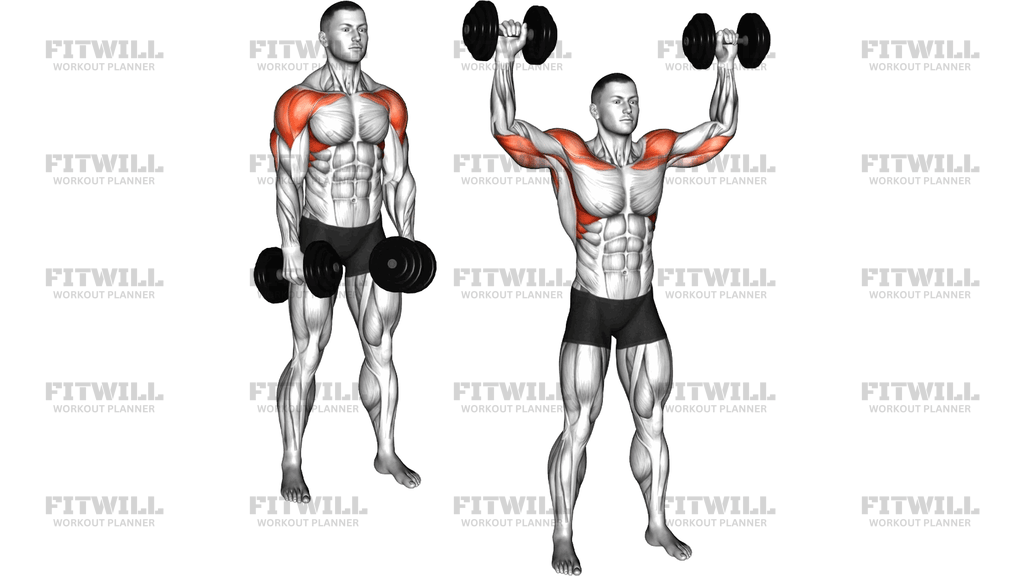
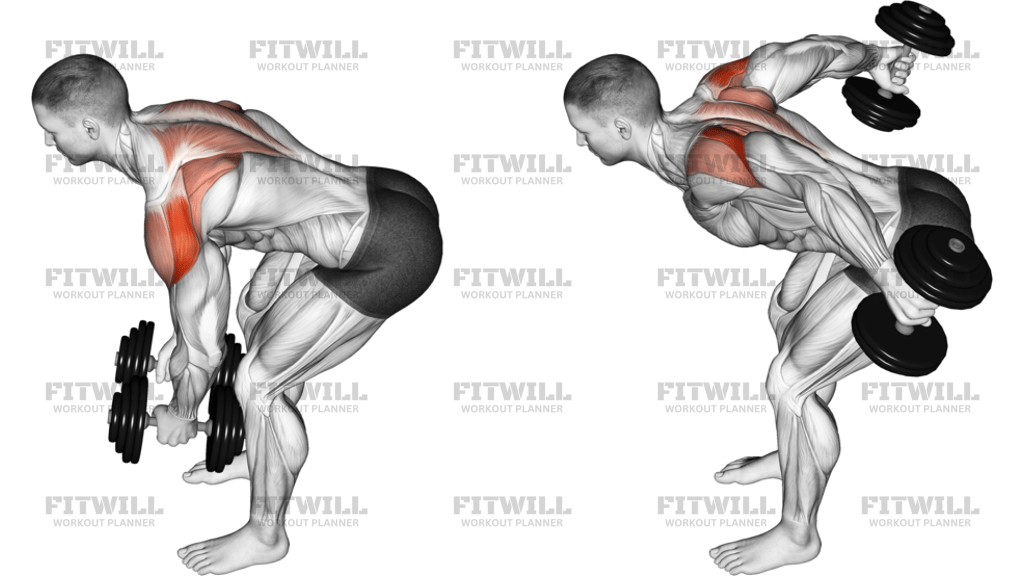
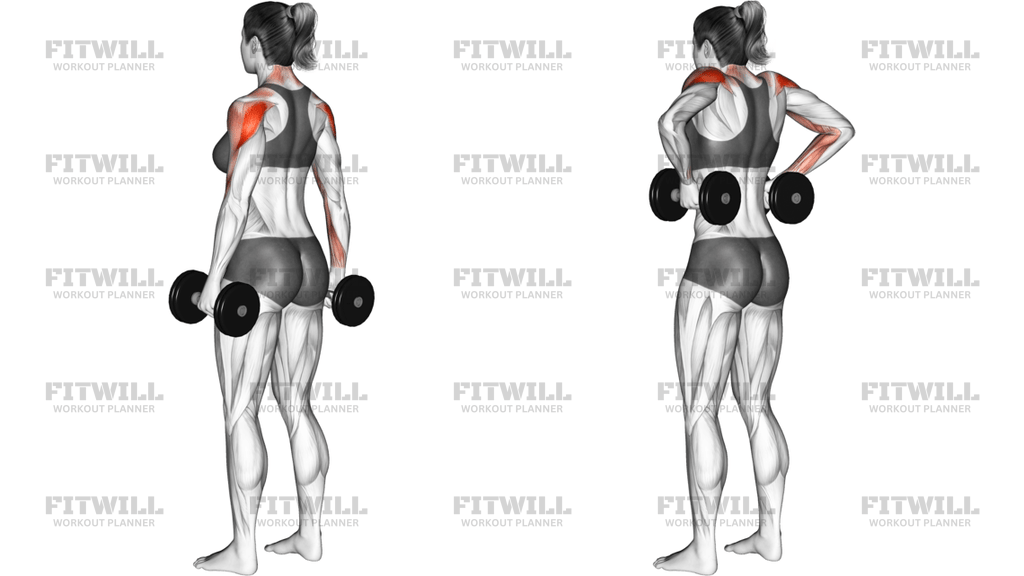
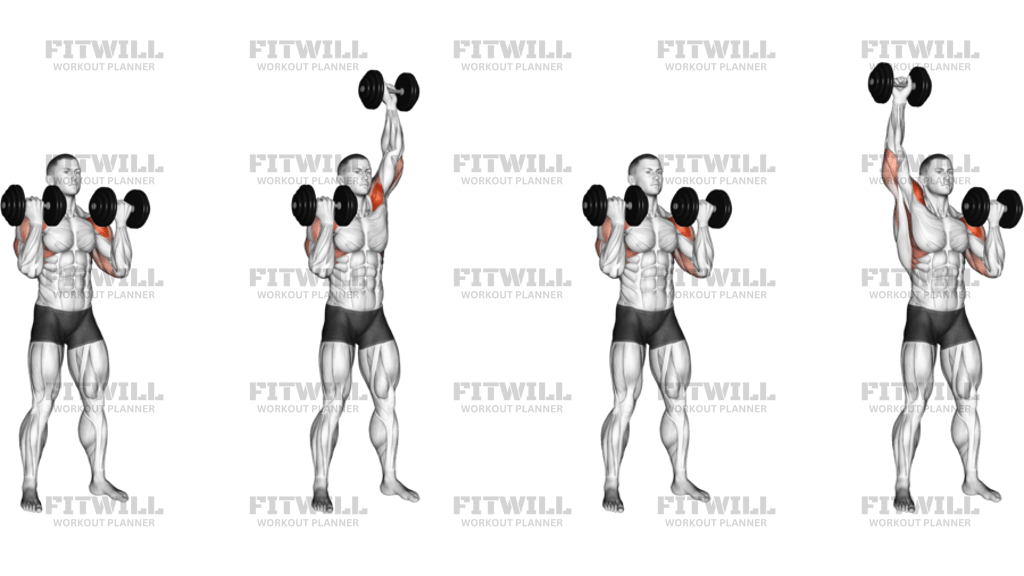
Dumbbell Reverse Fly
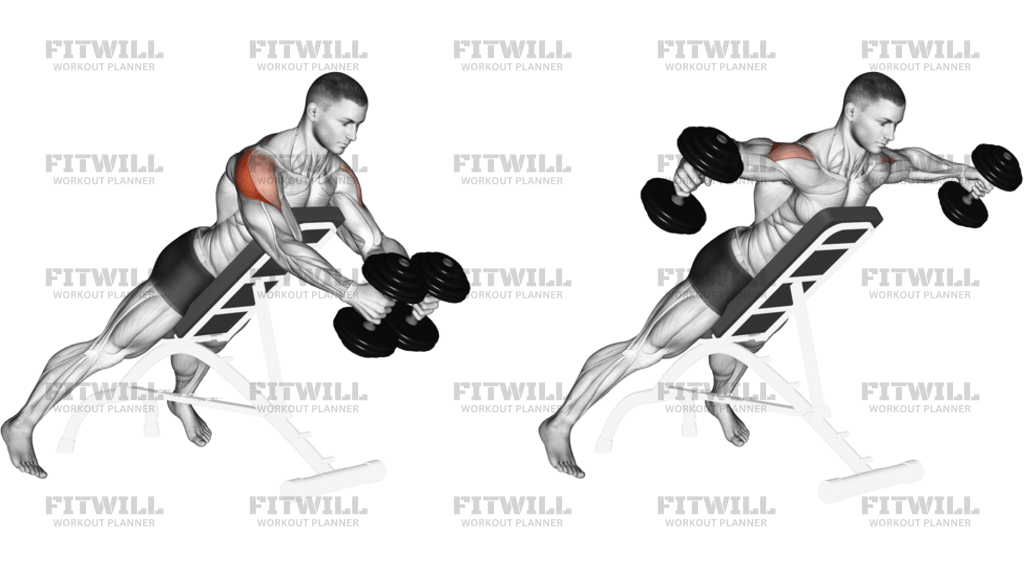
Dumbbell Reverse Fly is a chest-supported rear-delt isolation exercise that uses a pair of dumbbells and an incline bench to train the back of the shoulders, the upper back, and the smaller scapular stabilizers. In the image, the torso is braced against the bench so the hips and lower back do not have to hold the body up, which lets the shoulders do the work. That support is the main difference between this version and a bent-over reverse fly: it reduces cheating, limits torso swing, and makes the arm path easier to control.
This movement is most useful when you want cleaner rear-delt work than you can get from a standing hinge. The supported position keeps the chest anchored while the arms travel out to the sides in a wide arc. If the bench angle is too low, the exercise can start to feel more like a row; if it is too steep, the traps can take over. A moderate incline usually gives the best balance of support and rear-delt tension.
The setup matters because the dumbbells should begin hanging below the shoulders with a soft elbow bend and neutral wrists. From there, the hands travel out and slightly back until the upper arms line up close to shoulder height. The goal is not to fling the weights behind the body. It is to spread the dumbbells apart with the rear shoulders while keeping the chest planted on the pad and the neck long.
Use controlled speed and a small pause near the top if you want better rear-delt recruitment. The lowering phase should be smooth and deliberate, with the shoulders staying down instead of shrugging up toward the ears. Light to moderate dumbbells are usually enough; once the weight gets too heavy, the upper traps, momentum, and lumbar compensation will usually show up before the rear delts stop working.
Dumbbell Reverse Fly fits well in shoulder, upper-back, or posture-focused sessions, especially as accessory work after presses or pulls. It is also a good choice for lifters who need a simple way to build balanced shoulder volume without loading the spine heavily. Keep the reps honest, keep the bench contact steady, and let the rear delts move the load instead of the torso.
[ Workout Log & Planner ]
Put your next workout in Fitwill
Keep your plan and training log ready when you are.


Instructions
- Set an incline bench to a moderate angle and lie chest-down with your sternum and upper ribs supported.
- Hold a dumbbell in each hand with your arms hanging straight down from the shoulders and your palms facing each other.
- Plant your toes on the floor, brace your midsection, and keep your neck long against the bench.
- Set your shoulders down away from your ears before the first rep.
- Lift both arms out in a wide arc until your upper arms are near shoulder height.
- Keep a soft bend in the elbows and let the dumbbells travel slightly forward rather than behind your torso.
- Pause briefly at the top without shrugging or arching your low back.
- Lower the dumbbells slowly to the start and keep the same chest contact on the bench.
- Reset each rep if the bench contact, shoulder position, or arm path changes.
Tips & Tricks
- A lower dumbbell weight is usually better because the chest-supported setup removes most of the body English.
- Think about moving the elbows out and slightly up, not pinching the shoulder blades together like a row.
- If the upper traps light up first, lower the load and keep the shoulders pressed down on the bench.
- A slight elbow bend should stay almost fixed from the first rep to the last.
- Stop the lift around shoulder height if going higher makes the traps take over or the neck tense up.
- Use a controlled 2- to 3-second lowering phase to keep tension on the rear delts.
- Keep the wrists neutral so the dumbbells do not roll or torque the forearms.
- A moderate incline is usually better than a steep bench because it keeps the rear delts as the main mover.
- If your low back is arching to finish the rep, shorten the range and reduce the weight.
Frequently Asked Questions
What muscles does Dumbbell Reverse Fly work?
It mainly works the rear delts, with help from the rhomboids, mid traps, and other upper-back stabilizers. The chest-supported setup also makes the smaller shoulder stabilizers work harder to control the dumbbells.
Is Dumbbell Reverse Fly beginner-friendly?
Yes, as long as you keep the bench angle moderate and start very light. The support from the bench makes it easier to learn than a free-standing bent-over version.
How should I set the incline bench for this reverse fly?
Use a moderate incline so your chest is supported but your arms can still travel out to shoulder height. Too steep usually shifts the effort toward the traps.
Where should the dumbbells travel in the top position?
They should move out and slightly back in a wide arc, finishing close to shoulder height without drifting far behind the torso.
What mistake should I avoid on the bench?
Do not use your low back to swing the dumbbells up. If your chest leaves the pad or your ribs flare hard, the load is too heavy.
Should I squeeze my shoulder blades together hard?
Not aggressively. Let the arms move out and the shoulder blades follow naturally; over-squeezing often turns the exercise into a row.
Why use a chest-supported reverse fly instead of standing?
The bench removes a lot of torso cheating, so the rear delts get a cleaner stimulus and the set is easier to control rep to rep.
How do I know the weight is too heavy?
If your traps shrug, your neck tightens, or the dumbbells stop following the same arc each rep, the load is too high.
Can I use this for shoulder health work?
Yes, if you keep the range smooth and pain-free. It is commonly used to build rear-delt and upper-back balance around pressing work.