Dumbbell Seated Biceps Curl On Stability Ball
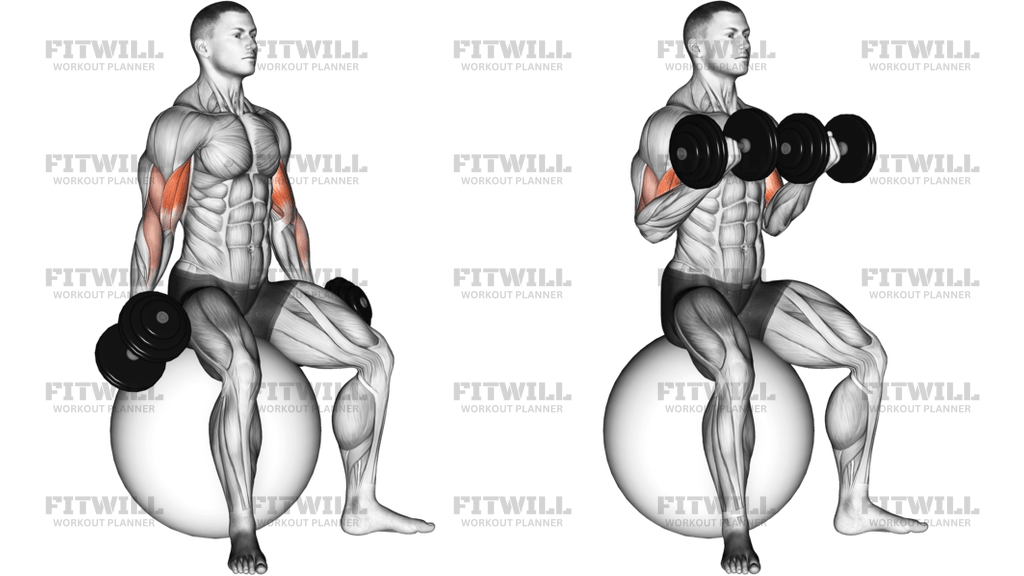
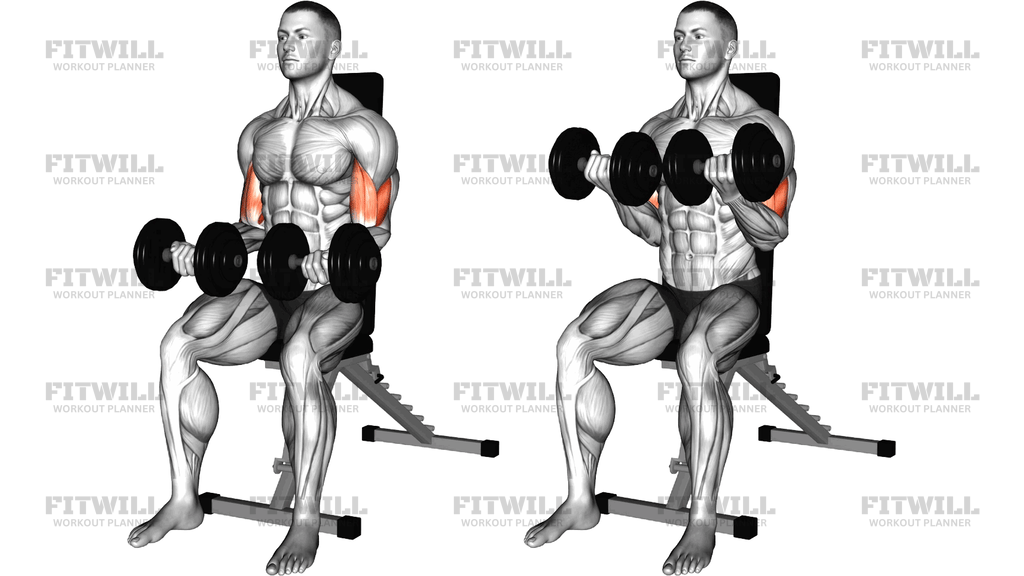
Dumbbell Seated Biceps Curl On Stability Ball is a seated arm-flexion exercise that trains the biceps while also asking your trunk and hips to stay steady on the ball. Because you are balancing on an unstable surface, the curl works best when the torso, shoulders, and wrists stay quiet and the elbows do all of the moving.
This variation is primarily a biceps builder, but it also loads the brachialis, brachioradialis, and forearm flexors. The stability ball does not make the curl more effective by itself; it mainly adds a balance demand that rewards clean posture, controlled tempo, and even left-to-right execution.
Set the ball so you can sit upright with both feet planted firmly and your knees bent near 90 degrees. Keep your ribs down, chest tall, and shoulders stacked over your hips before you start curling. The dumbbells should hang beside the thighs with neutral wrists and the upper arms close to the sides. That setup gives you a stable base and keeps the load centered on the elbow joint.
During the rep, curl both dumbbells by bending the elbows and bringing the weights toward the front of the shoulders without letting the elbows drift forward or the torso sway backward. Squeeze briefly near the top, then lower the dumbbells slowly until the arms are almost straight again. A controlled lowering phase matters here because the ball makes it easy to cheat if you rush the return.
Use this exercise when you want direct arm work with a small balance challenge, or as an accessory movement after heavier pulling work. It is especially useful when you want to compare sides, clean up curling mechanics, or keep the shoulders honest while the biceps do the work. If the ball starts rolling, the chest opens excessively, or the wrists collapse, the load is too heavy or the tempo is too fast.
[ Workout Log & Planner ]
Put your next workout in Fitwill
Keep your plan and training log ready when you are.


Instructions
- Sit on a stability ball with both feet flat, knees bent, and your hips centered so you can stay balanced without wobbling.
- Hold a dumbbell in each hand with your arms straight, palms facing forward, wrists neutral, and shoulders stacked over your hips.
- Brace your abdomen lightly and keep your chest tall before the first rep.
- Curl both dumbbells by bending the elbows and bringing the weights up toward the front of your shoulders.
- Keep your upper arms close to your ribs so the elbows do not travel forward.
- Pause for a moment near the top without leaning back or shrugging your shoulders.
- Lower the dumbbells slowly until your arms are almost straight again.
- Reset the ball position if you drift, then continue with the same controlled path.
Tips & Tricks
- Keep both sit bones planted on the ball; if you slide forward, the curl turns into a balance rescue.
- The elbows should stay close to the torso, not drift in front of the ribs as the dumbbells rise.
- Use a weight that lets the ball stay still; if the ball rolls, the load is too heavy for this variation.
- Keep the wrists straight so the dumbbells sit over the forearms instead of bending the hands back.
- A short pause at the top helps keep the shoulders from taking over the rep.
- Lowering should be slower than lifting because the return is where people usually lose position.
- Match both dumbbells so one arm does not start cheating to keep up with the other.
- If your lower back arches hard, sit slightly taller and reduce the load before continuing.
Frequently Asked Questions
What muscles does Dumbbell Seated Biceps Curl On Stability Ball work?
It mainly works the biceps, with help from the brachialis, brachioradialis, and forearm flexors. The abdominals and hip stabilizers also work to keep you balanced on the ball.
Is Dumbbell Seated Biceps Curl On Stability Ball beginner-friendly?
Yes, as long as you start light and can keep the ball still while curling. Beginners should prioritize balance and clean elbow motion over heavier dumbbells.
Should I curl both dumbbells at the same time or one arm at a time?
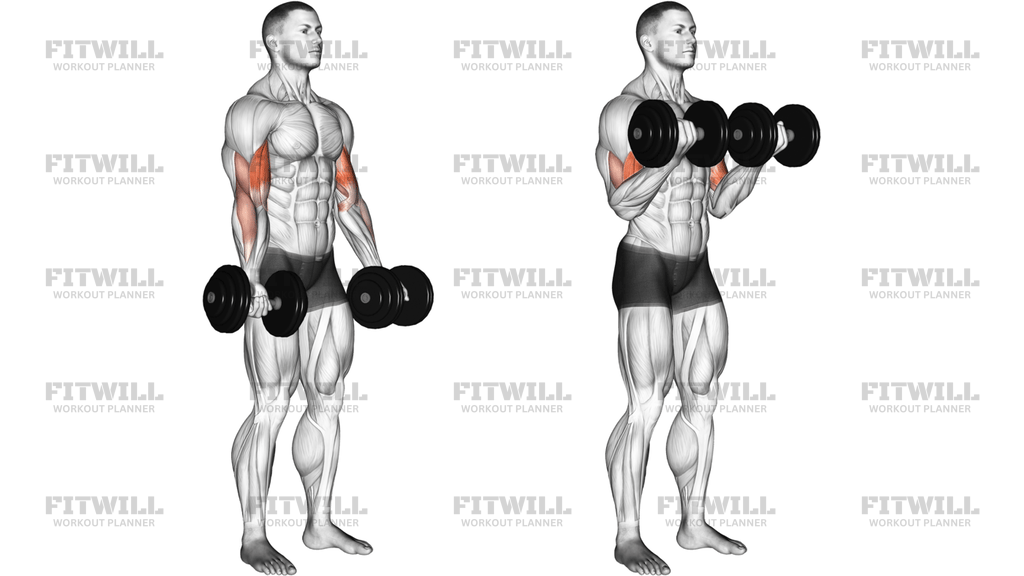
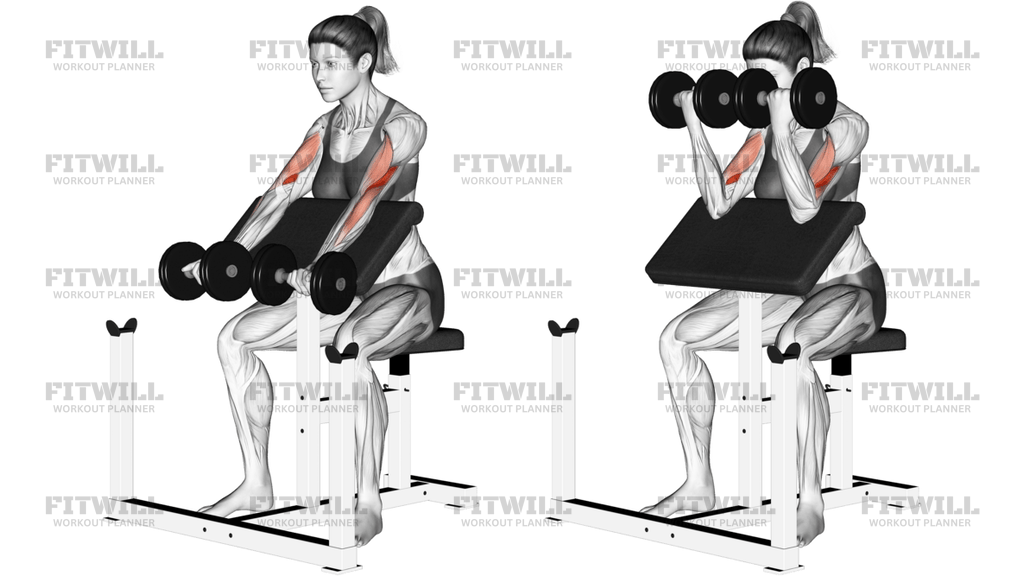
The image shows both arms curling together, which is the cleanest match for this exercise. If one side is dominating, you can switch to alternating reps to keep the shoulders from twisting.
How do I keep from wobbling on the stability ball?
Plant both feet flat, keep your hips centered on the top half of the ball, and avoid leaning back as the dumbbells rise. A smaller range and lighter load also make the ball easier to control.
Where should the dumbbells travel?
They should move in a smooth arc from your sides toward the front of your shoulders. Do not swing them across your body or let the elbows drift far ahead of your ribs.
What is the most common form mistake?
The biggest mistake is using the ball for momentum by leaning back and heaving the dumbbells up. That usually means the weight is too heavy or the tempo is too fast.
Can I use this as a forearm exercise too?
Yes, the forearms work hard to hold the wrist position and control the dumbbell. If you want more forearm emphasis, keep the wrists very neutral and lower the weight more slowly.
How should my shoulders feel during the set?
They should stay down and quiet, not shrug forward at the top of the curl. If your shoulders are taking over, lighten the load and keep the upper arms pinned closer to your sides.