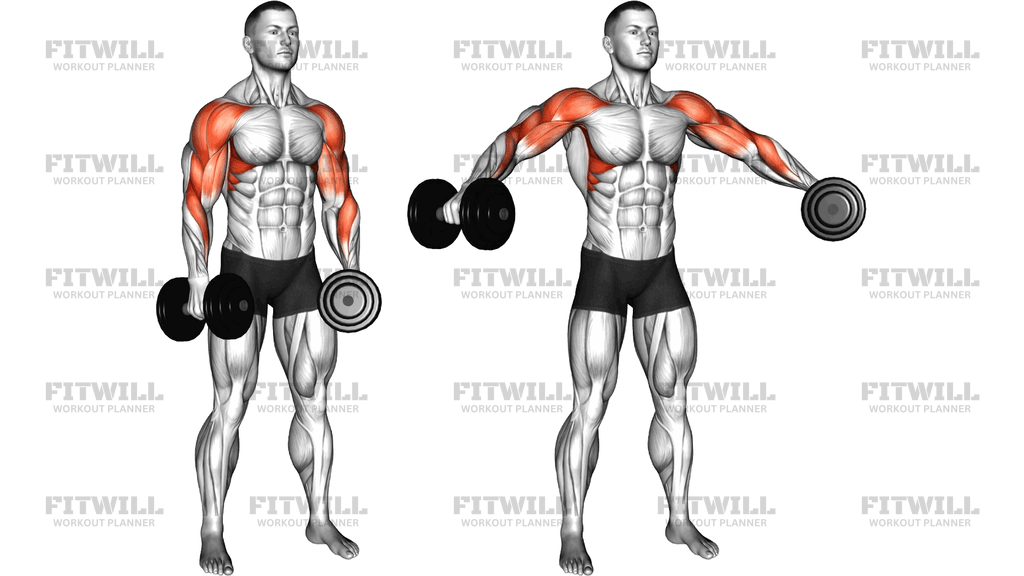
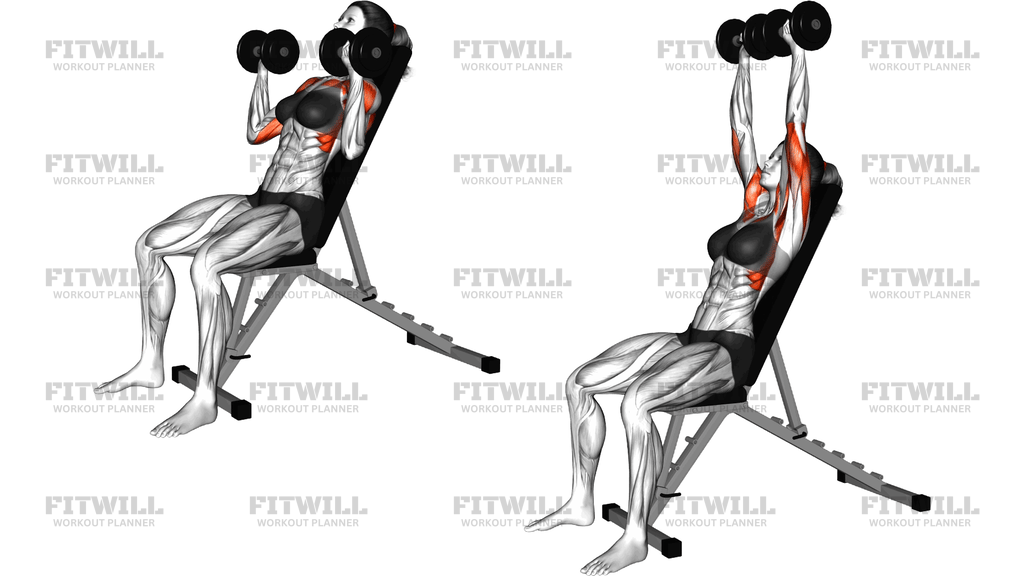
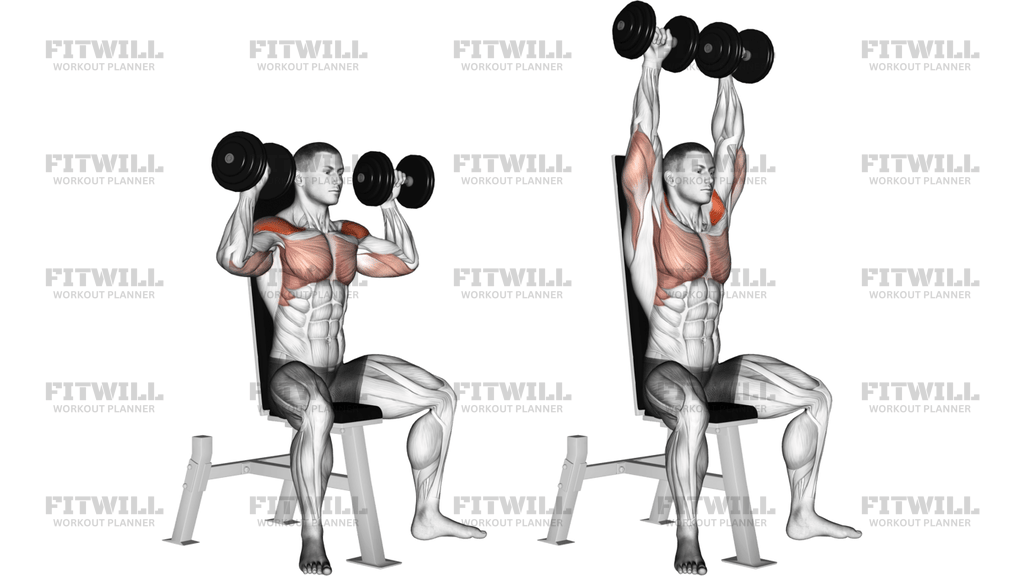
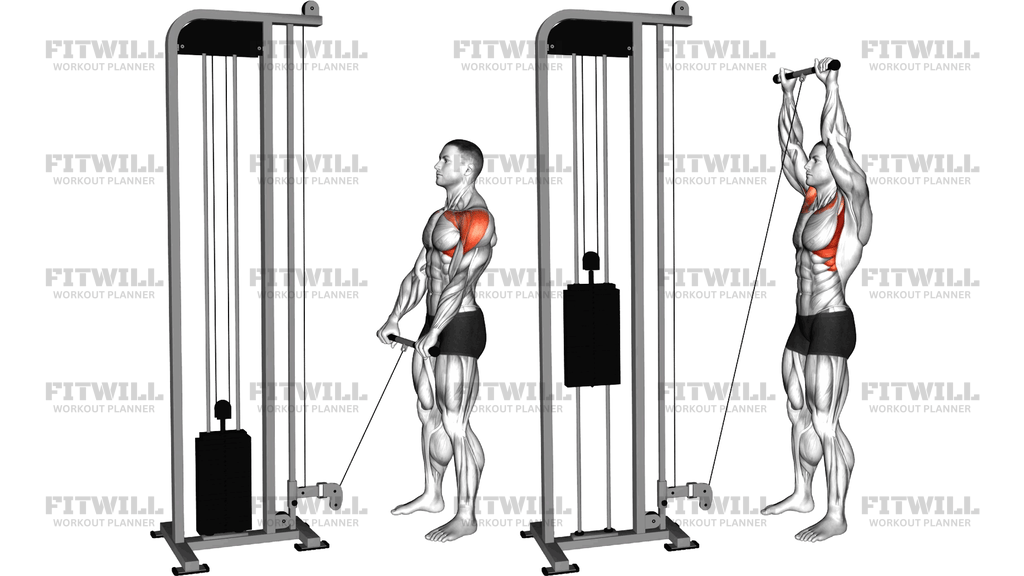
Dumbbell Seated Front Raise
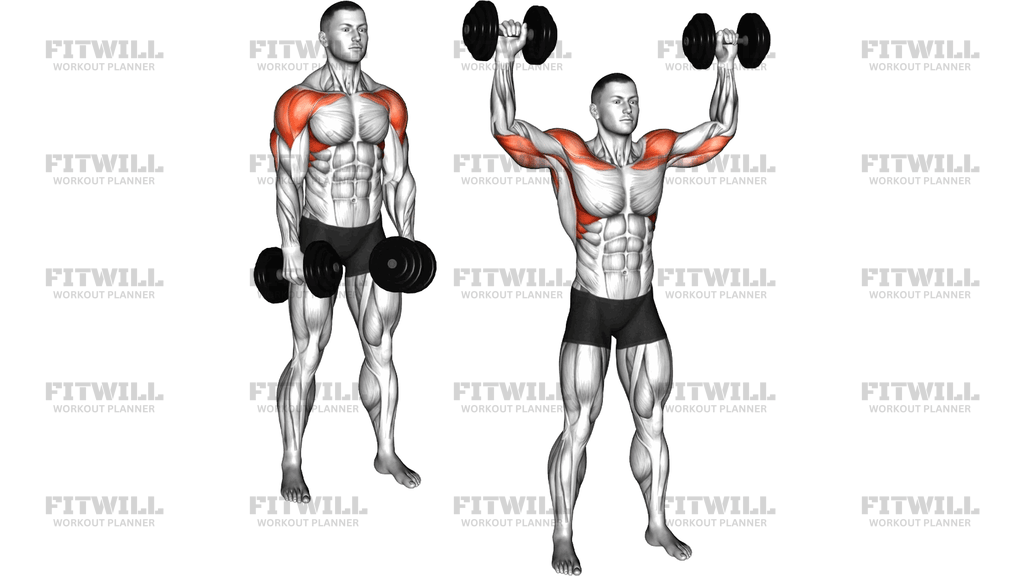
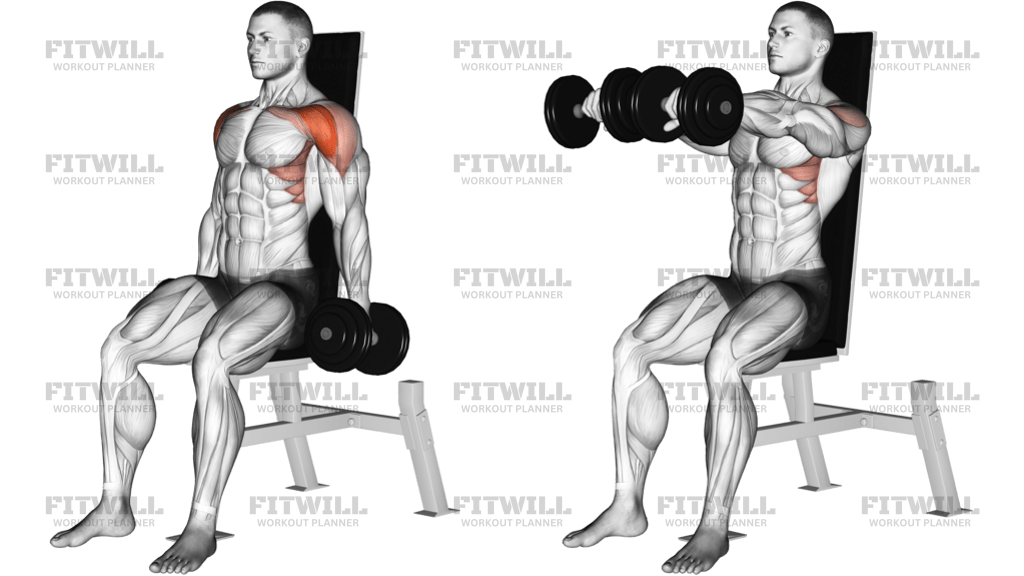
Dumbbell Seated Front Raise is a seated shoulder isolation exercise that uses one or two dumbbells to train the front delts through a forward raise pattern. In the pictured version, the lifter sits back against a bench, which removes most leg drive and torso swing so the shoulders have to do the work. That makes the exercise useful for building the front of the shoulder with less cheating than a standing raise.
The main target is the anterior deltoid, with the upper chest, serratus, and upper-arm stabilizers helping keep the dumbbells on path. Because the load starts low and travels in front of the body, the setup matters: the torso should stay tall against the back pad, the ribs should stay stacked, and the shoulders should stay down rather than creeping toward the ears. If the bench angle or posture turns sloppy, the movement quickly becomes a shrug or a press.
Perform the raise with a smooth arc in front of the body until the dumbbells reach roughly shoulder height. The elbows stay softly bent, but the bend should not change much rep to rep. At the top, the weights should be in line with the shoulders, not drifting far above them. A brief pause helps expose momentum and keeps the shoulders from taking over with a bounce. Lower the dumbbells under control to the start before beginning the next rep.
This is a good accessory movement for shoulder-focused training blocks, pressing support work, or general upper-body hypertrophy when you want extra front-delt volume without heavier compound loading. It is also easy to scale: lighter dumbbells, slower tempo, or a shorter range make the lift more manageable, while cleaner reps and slightly longer pauses make it more demanding without increasing weight. If the front of the shoulder feels pinchy, shorten the range and keep the dumbbells a little lower than shoulder height.
[ Workout Log & Planner ]
Put your next workout in Fitwill
Keep your plan and training log ready when you are.


Instructions
- Sit upright on a bench with a back pad and place your feet flat for balance.
- Hold a dumbbell in each hand with your arms hanging in front of your thighs, palms facing down or slightly inward.
- Set your chest tall against the pad and keep your ribs stacked instead of leaning back.
- Pull your shoulders down and away from your ears before the first rep.
- Raise both dumbbells forward in a smooth arc with a soft elbow bend.
- Stop when the weights reach about shoulder height.
- Pause briefly at the top without shrugging or arching your lower back.
- Lower the dumbbells slowly along the same path until they return to the start.
- Keep the neck relaxed and repeat for the next rep without swinging.
Tips & Tricks
- Use a light pair of dumbbells; front raises fatigue quickly when you try to load them like a press.
- Keep your upper back glued to the bench so the torso does not turn the rep into a lean-back heave.
- Raise the dumbbells in front of the body, not out to the sides, so the front delts stay on the line of force.
- A small elbow bend is fine, but do not turn the rep into a curl by flexing and extending the elbows.
- Stop near shoulder height; going much higher usually shifts tension to the traps and reduces shoulder control.
- Keep the wrists stacked over the dumbbells instead of letting them fold back at the top.
- Use a 2-1-3 style tempo if you want stricter shoulder work: lift smoothly, hold briefly, and lower slower than you lift.
- If one shoulder lifts ahead of the other, reduce the load and match both dumbbells to the slower side.
Frequently Asked Questions
What muscles does Dumbbell Seated Front Raise work?
It mainly trains the anterior deltoids. The upper chest, serratus, and upper-arm stabilizers help keep the dumbbells moving cleanly in front of the body.
Is Dumbbell Seated Front Raise beginner-friendly?
Yes, as long as you use light dumbbells and keep your back supported so you can raise the weights without swinging.
Why sit against a bench for this front raise?
The back pad limits torso momentum and makes it easier to isolate the shoulders. It also helps you notice when you are shrugging or leaning back to cheat the rep.
How high should I raise the dumbbells?
For most lifters, shoulder height is enough. Going much higher usually shifts the work toward the traps and increases the chance of losing shoulder position.
What grip works best on the dumbbells?
A neutral-to-pronated grip is common. Keep the wrist straight and let the hands travel with the elbows instead of cocking the wrists back.
Can I alternate arms instead of raising both together?
Yes, but the pictured version is a simultaneous two-arm raise. Alternating can reduce fatigue and help you focus on one shoulder at a time.
What is the most common mistake on this exercise?
Leaning back and turning the movement into a mini incline press or a shrug. Keep the rib cage quiet and the shoulders down.
How should I progress this movement?
Add load slowly, but prioritize cleaner reps, less shrugging, and a slower lowering phase before chasing heavier dumbbells.