Dumbbell Seated Lateral Raise
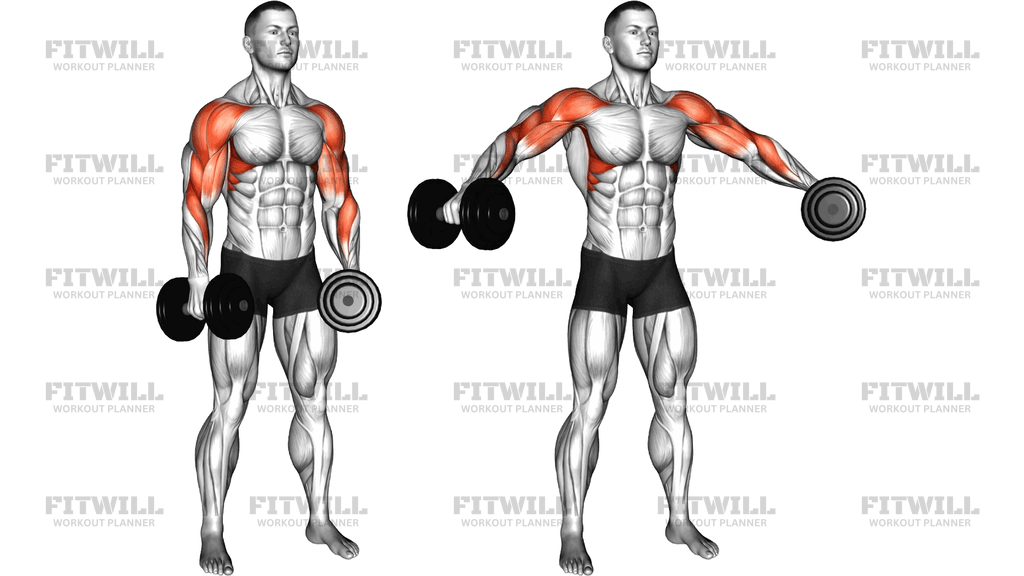
Dumbbell Seated Lateral Raise is a seated shoulder isolation exercise built to load the side delts through a controlled outward arc. In the image, the lifter sits upright on a flat bench with the dumbbells hanging beside the thighs, then raises both arms out to the sides until the upper arms reach roughly shoulder height. The seated position removes most lower-body momentum, so the shoulders have to do the work instead of a hip drive or a torso swing.
This variation is useful when you want more direct lateral-delt work without turning the rep into a full-body cheat. It is especially effective as accessory work after pressing, when the front delts are already warm and you want to focus on shoulder width, shape, and controlled muscular tension. The best reps feel smooth and deliberate, with the arms moving in a wide arc and the neck staying long rather than shrugging up toward the ears.
Setup matters because small changes in torso angle and arm path change where the tension lands. Sit tall with your feet planted, ribs stacked over the pelvis, and a slight bend in each elbow so the dumbbells stay controlled through the lift. Keep the weights a little in front of the torso at the bottom instead of letting them drift behind you, then raise them in the scapular plane or a slightly wider path until the upper arms are about level with the shoulders.
The main coaching point is to keep the lateral raise about the delts, not the traps. Use a load you can lift without leaning back, bouncing, or turning the top half of the rep into a shrug. If the shoulders pinch, shorten the range slightly and keep the elbows a touch below shoulder height. A controlled lowering phase matters just as much as the lift, because the side delts usually respond better to clean tension than to sloppy momentum.
Dumbbell Seated Lateral Raise fits well into hypertrophy sessions, shoulder specialization work, and upper-body warm-up blocks when the goal is to build stronger, more visible side delts with less joint stress than heavier pressing. It is simple on paper, but the quality of the arc, posture, and load choice determines whether it becomes a precise shoulder builder or just a noisy dumbbell swing.
Fitwill
Log Workouts, Track Progress & Build Strength.
Achieve more with Fitwill: explore over 9600 exercises with images and videos, access built-in and custom workouts, perfect for both gym and home sessions, and see real results.
Start your journey. Download today!




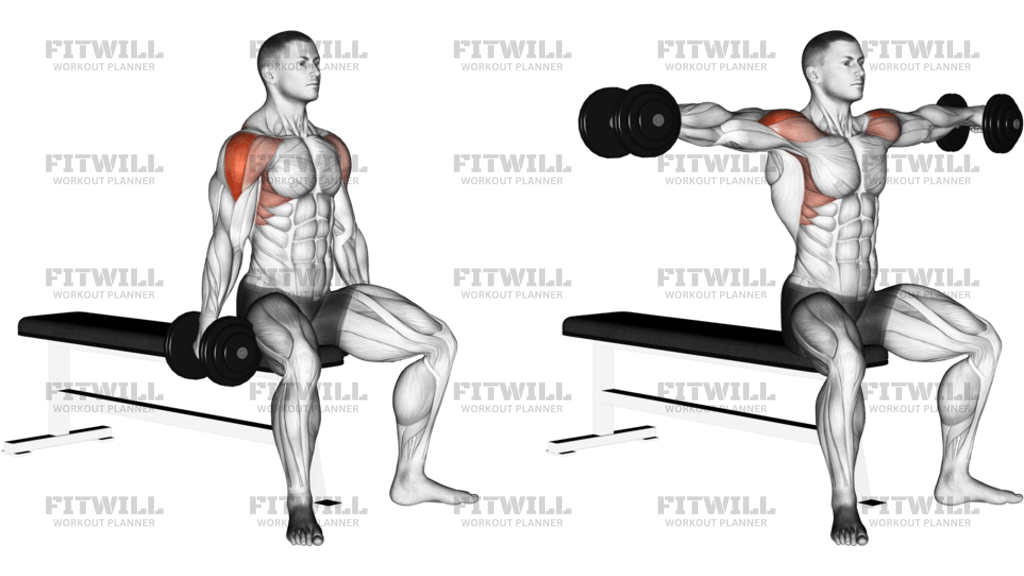
Instructions
- Sit upright on a flat bench with your feet planted, dumbbells hanging at your sides, and your chest tall over your hips.
- Set a slight bend in both elbows and let the dumbbells rest just outside your thighs with the palms facing in or slightly down.
- Brace your torso so your ribs stay stacked and your lower back does not arch as the set begins.
- Raise both dumbbells out to the sides in a wide arc, leading the movement with your elbows instead of your hands.
- Keep the dumbbells a little in front of your body as they rise so the shoulders stay in control of the path.
- Stop when your upper arms reach about shoulder height or just below it if the top position feels pinchy.
- Pause briefly at the top without shrugging your shoulders toward your ears.
- Lower the dumbbells slowly along the same arc until they return beside your thighs.
- Reset your shoulders before the next rep and keep every repetition smooth and symmetrical.
Tips & Tricks
- Choose a lighter pair than you would for standing lateral raises, because the seated setup removes your ability to cheat the rep.
- Think about moving the elbows out and slightly up, not lifting the dumbbells with the hands first.
- If your traps take over, lower the load and stop the rep before the shoulders start creeping toward the ears.
- Keep the wrists quiet and in line with the forearms so the dumbbells do not roll forward at the top.
- A slight forward angle in the arms is usually friendlier on the shoulder than flaring perfectly straight out to the sides.
- Do not bounce off the bottom; let the dumbbells settle beside the thighs before starting the next raise.
- A two- to three-second lowering phase keeps tension on the side delts and makes lighter weights more effective.
- If the top range pinches, shorten the arc instead of forcing the dumbbells higher.
- Use the same torso position on every rep so the set does not turn into a lean-back swing.
Frequently Asked Questions
What muscles does Dumbbell Seated Lateral Raise work?
It mainly targets the side delts, with the upper traps, rotator cuff, and upper-back stabilizers helping control the path. The seated setup keeps the shoulders doing most of the work.
Is Dumbbell Seated Lateral Raise beginner-friendly?
Yes, as long as you start very light and keep the range controlled. The seated position makes it easier to learn than a standing swing-based version.
How heavy should I use?
Use a load that lets you lift smoothly without shrugging, leaning back, or bending the elbows more as fatigue builds. For most people, this will be lighter than expected.
How high should I raise the dumbbells?
Raise them until your upper arms are about level with your shoulders, or slightly below if that keeps the movement clean. Going higher often turns the rep into a trap-dominant shrug.
Should my elbows stay bent during Dumbbell Seated Lateral Raise?
Yes. Keep a small, fixed bend in the elbows so the shoulders move the load and the elbows do not turn the rep into a front-raise pattern.
What if I feel this mostly in my traps?
That usually means the load is too heavy or you are shrugging at the top. Drop the weight, keep your neck long, and stop the lift a little lower.
Should my palms face down or in?
Either neutral or slightly pronated can work, but the hands should stay quiet and not twist aggressively through the rep. Pick the grip that lets you keep the shoulders relaxed.
What should I do if the top position pinches my shoulder?
Shorten the range and keep the raise a little in front of your body instead of directly out to the side. If it still hurts, stop and use a pain-free variation.
Can I use this as a warm-up before pressing?
Yes. Use lighter sets with strict form to wake up the side delts without fatiguing them before your main pressing work.