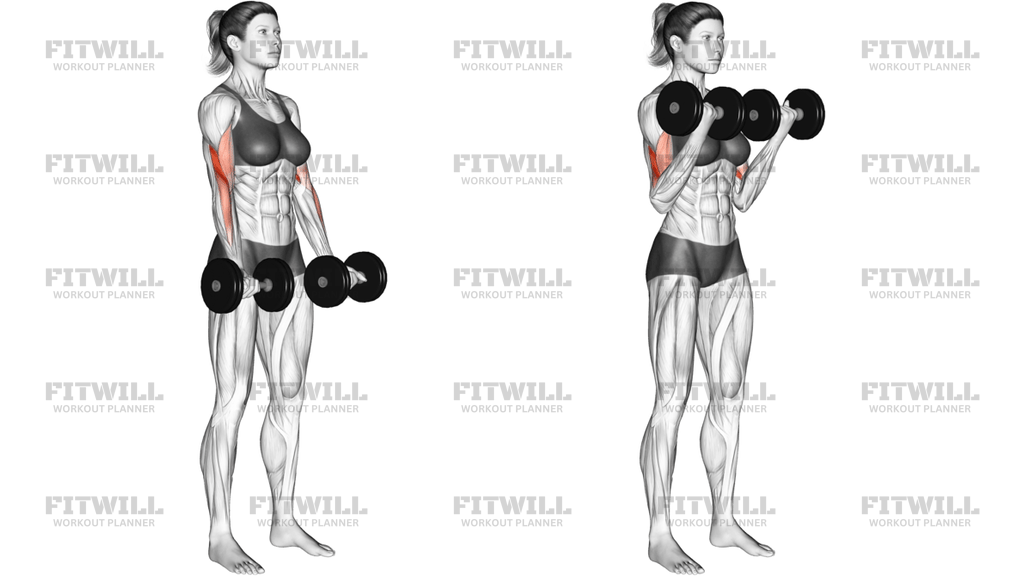
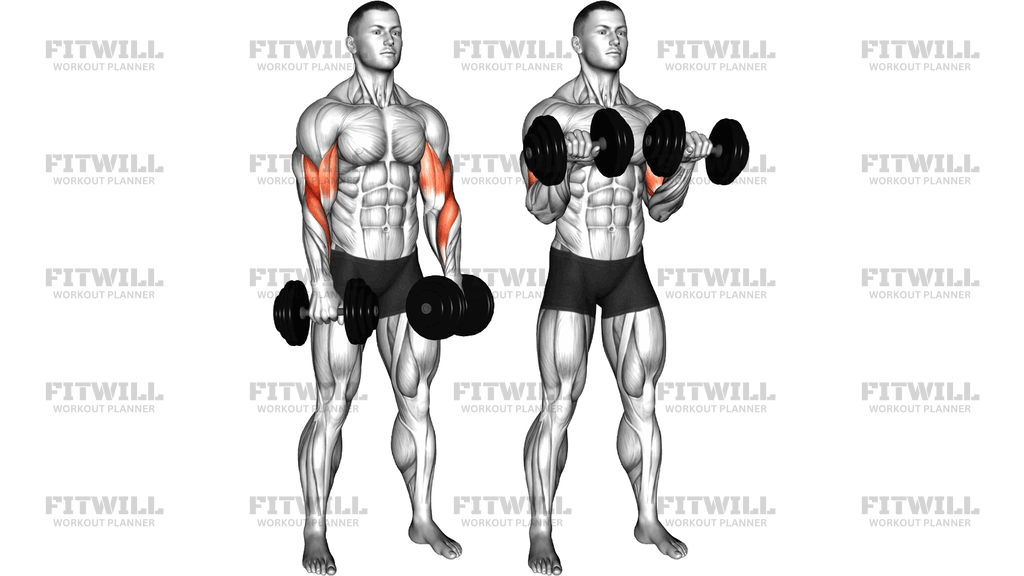
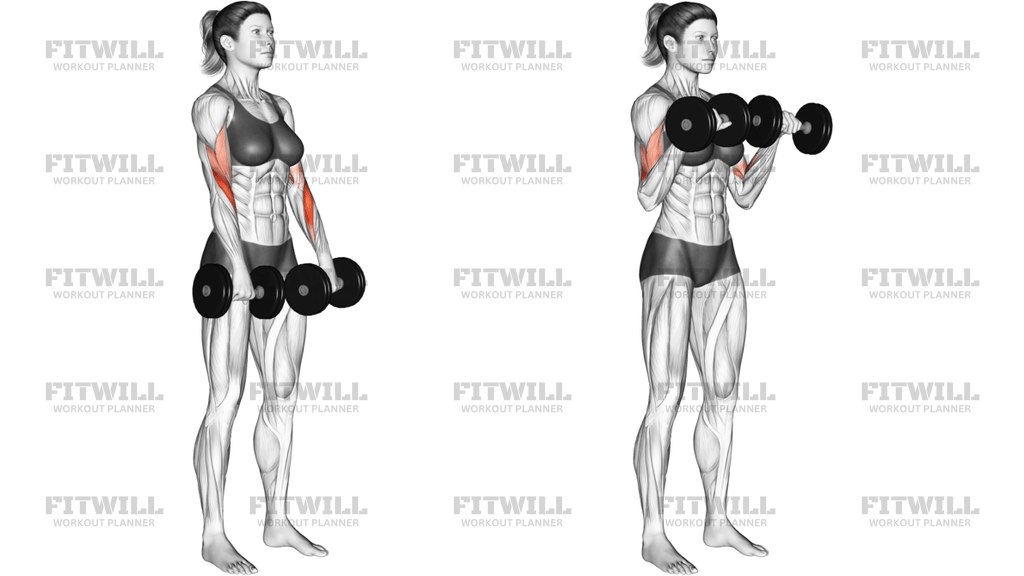
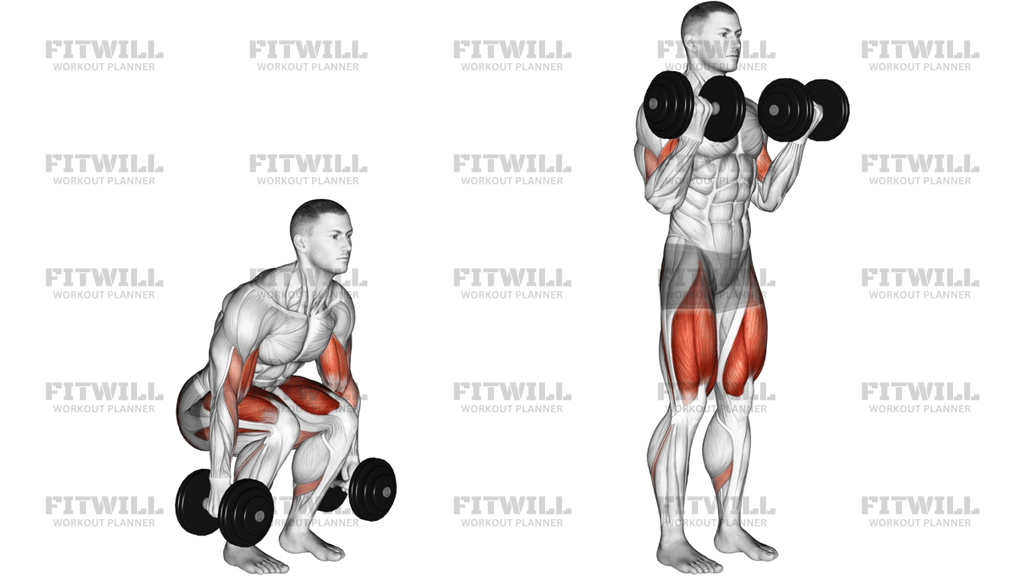
Dumbbell Seated Neutral Wrist Curl
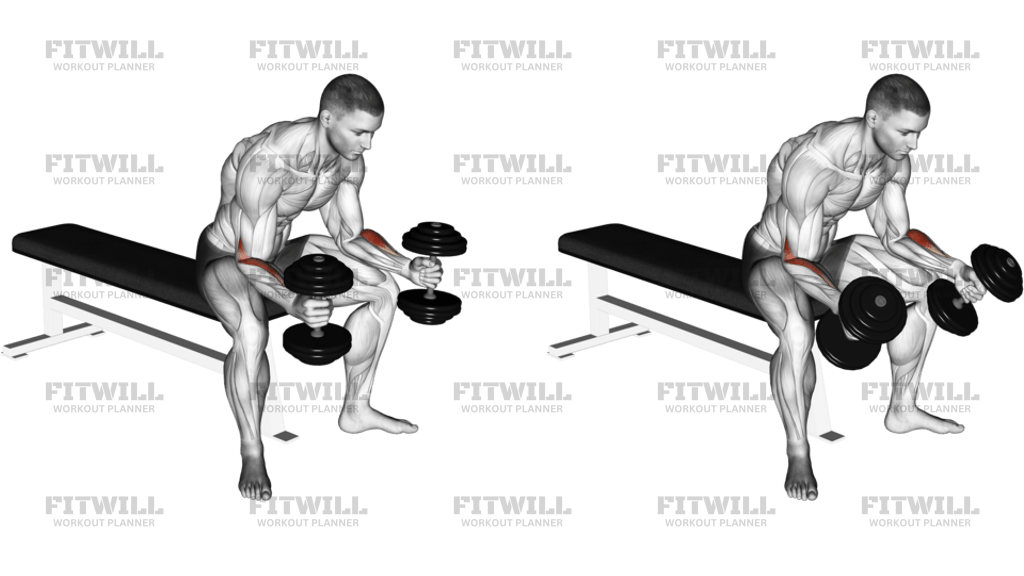
Dumbbell Seated Neutral Wrist Curl is a seated forearm isolation exercise that trains wrist flexion with the forearms braced on the thighs and the dumbbells held in a neutral, hammer-style grip. The movement uses a very small range, but it creates a strong local demand on the wrist flexors and grip because the load is hanging far from the wrist joint.
The setup matters more than the load. Sit tall on a flat bench, plant both feet, and rest the lower forearms across the thighs with the wrists just past the knees so the hands can move freely. The neutral grip keeps the dumbbells aligned vertically and makes it easier to keep the elbows and upper arms quiet instead of turning the exercise into a general arm curl.
From that braced position, flex the wrists to bring the dumbbells upward toward the forearms, then lower them slowly back into the hanging stretch. The forearms should stay anchored on the thighs the whole time, and the motion should come from the wrist only. A brief pause at the top and a controlled lowering phase make the movement more productive than trying to swing through a bigger range.
This exercise is useful as accessory work for grip endurance, forearm size, and wrist strength, especially if you want a low-complexity finisher after pulling work. Keep the weight light enough to avoid turning the wrists, shrugging the shoulders, or bouncing off the bottom. If the wrists or elbows feel pinchy rather than locally challenged, shorten the range, reduce the load, or stop the set.
[ Workout Log & Planner ]
Put your next workout in Fitwill
Keep your plan and training log ready when you are.


Instructions
- Sit on a flat bench with both feet planted and hold a dumbbell in each hand using a neutral, thumb-up grip.
- Rest your lower forearms across your thighs, with the wrists just past the knees so the dumbbells can hang freely.
- Keep your chest tall, shoulders down, and upper arms pinned lightly against the inner thighs.
- Start with the wrists extended and the dumbbells hanging straight down under the hands.
- Curl the wrists upward to bring the dumbbells toward the forearms without letting the elbows move.
- Squeeze briefly at the top of the wrist curl while keeping the forearms anchored to the thighs.
- Lower the dumbbells slowly until the wrists return to the hanging stretch position.
- Repeat for the desired reps, then set the dumbbells down carefully before standing up.
Tips & Tricks
- Use a light pair of dumbbells; the long lever from the hand to the wrist makes this harder than it looks.
- Keep the handles centered in the palm so the dumbbells do not roll into the fingers at the bottom.
- Let the wrists move, but do not let the elbows drift off the thighs or turn the set into a preacher-style arm curl.
- A 2 to 3 second lowering phase usually works better than trying to force a heavy concentric rep.
- If your knees block the dumbbells, slide your forearms slightly farther forward on the thighs.
- Stop the descent before the wrists collapse into an uncontrolled stretch.
- Keep the shoulders relaxed; shrugging usually means the load is too heavy.
- Higher reps are usually more useful than heavy loading for this forearm isolation movement.
Frequently Asked Questions
What muscles does Dumbbell Seated Neutral Wrist Curl work?
It mainly targets the wrist flexors and the forearm muscles that help close the hand and control the wrist. Your grip and the muscles around the elbow also work to keep the dumbbells steady.
Is Dumbbell Seated Neutral Wrist Curl beginner-friendly?
Yes. It is a straightforward seated isolation exercise as long as you use a light load and keep the forearms braced on the thighs instead of letting the whole arm move.
Why keep the dumbbells in a neutral grip?
The thumb-up grip keeps the forearms lined up on the thighs and makes it easier to isolate wrist flexion without turning the exercise into a regular dumbbell curl.
How far should the wrists travel?
Only move through the range you can control while the forearms stay planted. If the wrists bounce or the dumbbells lose their line, the range is too big.
Can I do this one arm at a time?
Yes. Alternating arms can help you focus on the wrist path and may be easier if one side is stronger or if you need to concentrate on forearm position.
What mistake causes this exercise to stop working?
The most common mistake is letting the elbows, shoulders, or torso help the dumbbells move. Once that happens, the forearms are no longer doing the work.
What should I feel during the rep?
You should feel a focused burn and shortening in the forearm near the wrist, plus a strong grip demand. You should not feel sharp pain in the wrist joint.
How do I progress Dumbbell Seated Neutral Wrist Curl?
Add reps first, then very small weight increases while keeping the same braced setup and slow lowering. Clean control matters more than loading this movement heavily.