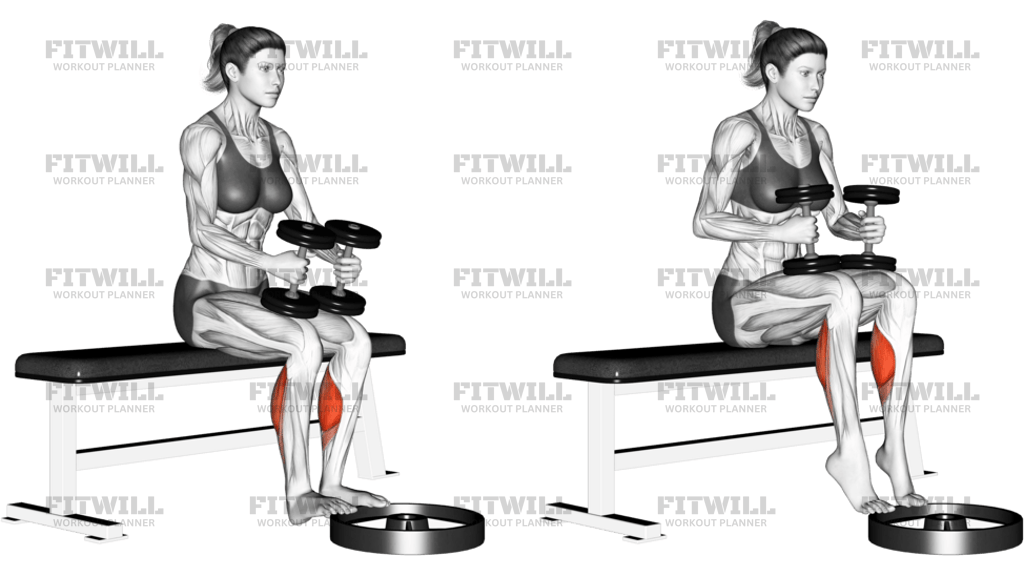
Dumbbell Seated One Leg Calf Raise
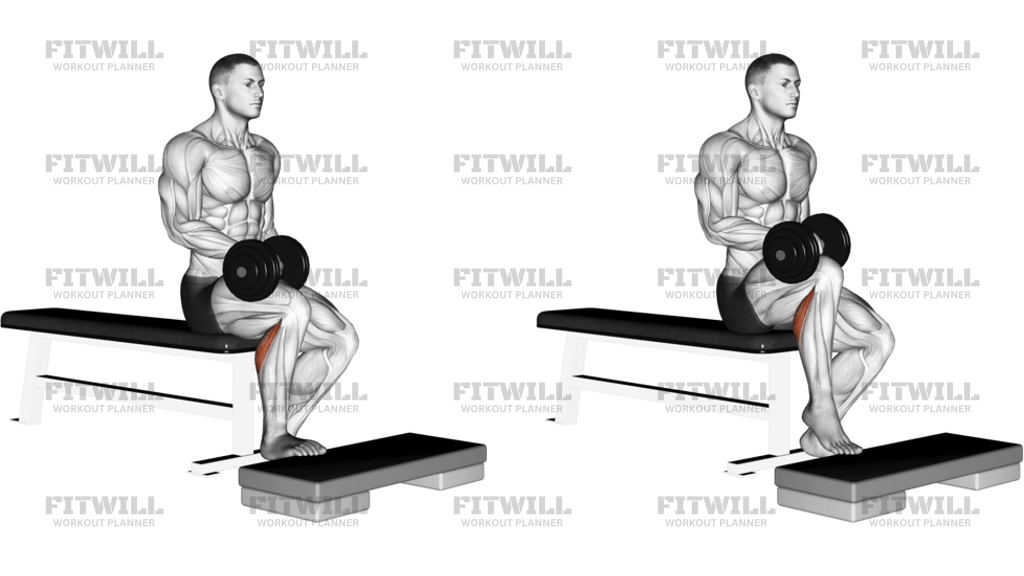
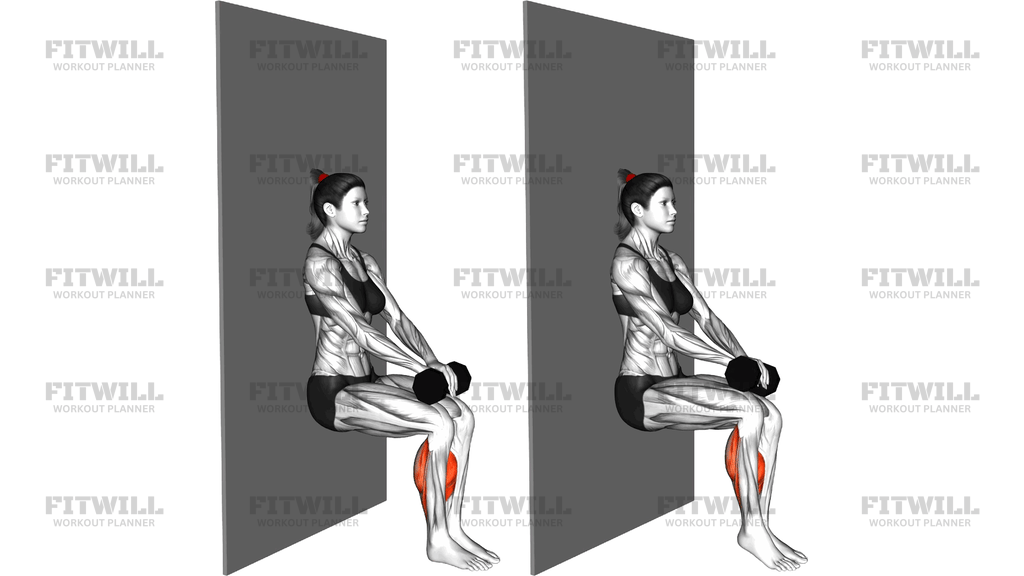
Dumbbell Seated One Leg Calf Raise is a bent-knee calf raise that loads one ankle at a time while you sit upright on a bench. The bent knee shifts more of the work toward the soleus and deep calf complex, while the single-leg setup exposes side-to-side differences in ankle control, foot pressure, and range of motion.
The setup matters because the dumbbell must stay stable on the working thigh and the heel needs clear space to travel below the forefoot. If the foot is too flat, the calf cannot lengthen fully. If the load drifts, the rep turns into a balance exercise instead of a focused calf raise. A clean setup gives you a consistent stretch at the bottom and a strong peak contraction at the top.
Sit tall with the working foot on a step or block so the ball of the foot is supported and the heel can hang off the edge. Keep the other leg quiet and the torso stacked over the hips. From the bottom, let the heel drop under control, then drive through the big toe and the base of the toes to raise the heel as high as you can without rolling the ankle outward. A short pause at the top makes the calf do the work instead of the bounce.
This exercise is useful when you want calf size, lower-leg endurance, ankle stiffness, or better support for running, jumping, and change of direction. It is also a practical way to train one side at a time when one ankle is weaker or less mobile than the other. Use a load that lets you own the full range and avoid shrugging, bouncing, or twisting the knee to fake extra height.
The key safety point is to keep the motion at the ankle. The knee should stay bent in a fixed position, the heel should lower smoothly, and the foot should stay planted through the forefoot instead of collapsing inward. If the Achilles, midfoot, or front of the ankle feels sharp or pinchy, shorten the range and slow the lowering phase before adding more weight.
Fitwill
Log Workouts, Track Progress & Build Strength.
Achieve more with Fitwill: explore over 9600 exercises with images and videos, access built-in and custom workouts, perfect for both gym and home sessions, and see real results.
Start your journey. Download today!




Instructions
- Sit on a flat bench and place the dumbbell across the thigh of the working leg, just above the knee.
- Set the ball of that foot on a step or block so the heel can drop below forefoot level.
- Keep the other leg relaxed and the torso tall instead of leaning back.
- Brace lightly and let the working heel sink into a slow stretch.
- Drive through the big toe and the base of the toes to raise the heel as high as possible.
- Keep the knee angle fixed so the motion comes from the ankle, not the hip or knee.
- Pause briefly at the top and squeeze the calf hard without rolling the foot outward.
- Lower the heel under control until you feel a strong but manageable stretch.
- Repeat all reps on one side, then switch legs and match the same range and tempo.
Tips & Tricks
- Keep the dumbbell centered on the thigh so it does not slide toward the knee cap or inner thigh.
- Use a block height that lets the heel drop below the forefoot without forcing the ankle into a painful stretch.
- Press through the big toe side as well as the little-toe side so the foot stays tripod-stable.
- Pause at the top for a full calf contraction instead of bouncing through the middle.
- Slow the lowering phase to two or three seconds if the heel is dropping too fast.
- Keep the opposite leg out of the way so it does not help you push or cheat the rep.
- If the dumbbell feels unstable, hold it with both hands and pin it more firmly into the thigh before starting.
- Stop the set when the ankle collapses inward or the heel no longer reaches the same depth on every rep.
Frequently Asked Questions
What does Dumbbell Seated One Leg Calf Raise emphasize?
It emphasizes the calves, especially the soleus because the knee stays bent, while the ankle and foot muscles stabilize the single-leg setup.
Why do I do this seated instead of standing?
The seated position keeps the knee bent, which shifts more of the work toward the deeper calf muscles and reduces how much the hip can help.
Where should the dumbbell sit?
Place it across the working thigh just above the knee and keep it steady with both hands so it does not roll as the heel rises and lowers.
How far should my heel drop?
Lower until you feel a strong calf stretch and the heel is clearly below the forefoot, but stop before the ankle pinches or the foot caves in.
What is the most common form mistake?
The most common mistake is bouncing out of the bottom or letting the ankle roll inward, which turns the rep into momentum instead of calf tension.
Can beginners use Dumbbell Seated One Leg Calf Raise?
Yes, if they start with a light dumbbell, a stable step height, and a slow tempo that keeps the foot and ankle under control.
What should I do if I feel it in my Achilles tendon?
Reduce the depth of the stretch, slow the eccentric phase, and use less load; if the pain stays sharp or local, stop the set.
How do I make this exercise harder without cheating?
Add a longer pause at the top, slow the lowering phase, or add reps before you increase the dumbbell weight.