Dumbbell Seated Shoulder Press
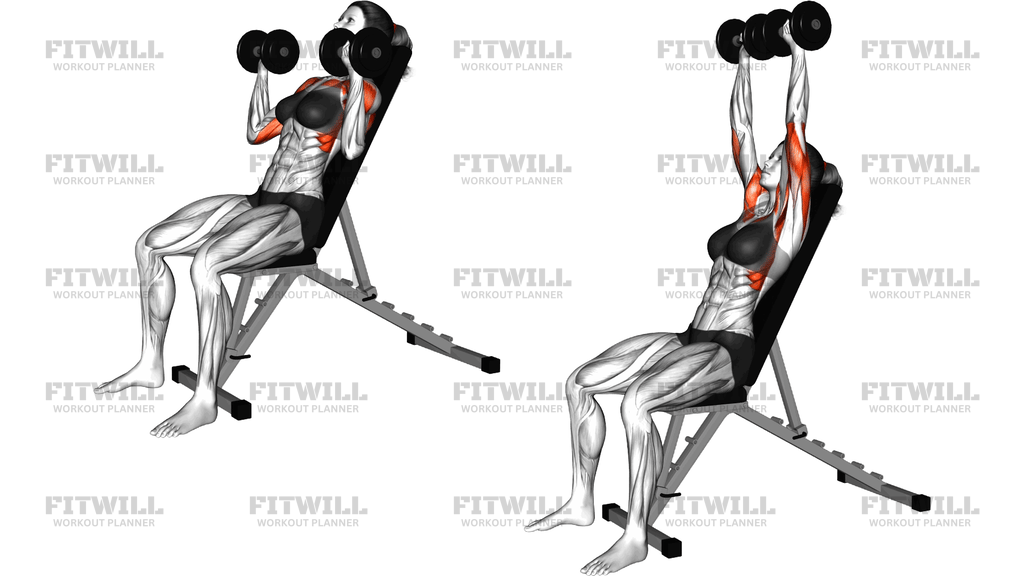
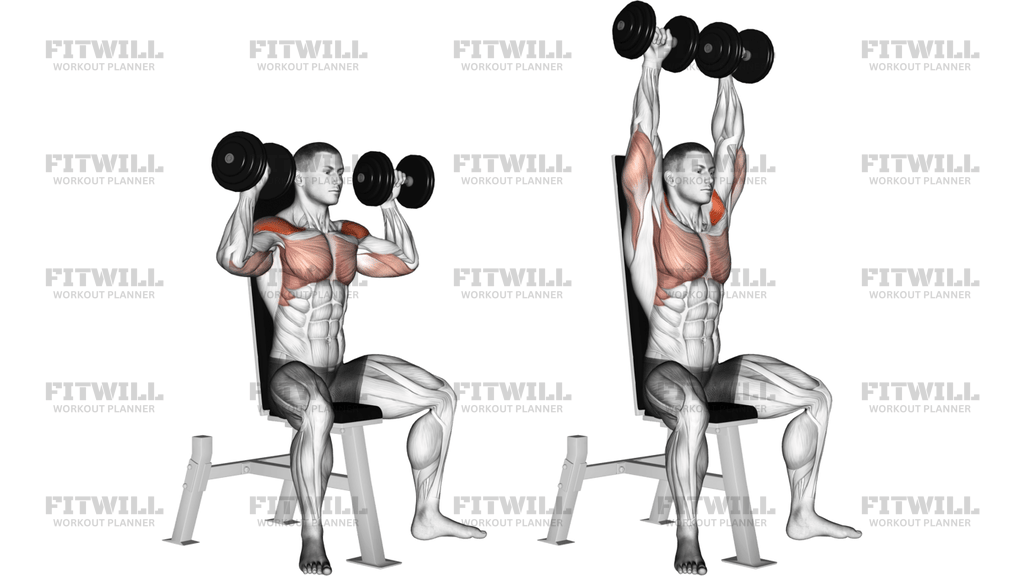
Dumbbell Seated Shoulder Press is a back-supported overhead press that trains the delts first, with the triceps, upper traps, and upper chest helping to finish each rep. The seated position removes most of the body swing you can use in a standing press, so the shoulders have to create the force and control the dumbbells on their own.
The bench position matters. With your back braced against an upright seat, your ribs can stay down, your torso stays quiet, and the dumbbells travel in a cleaner vertical path. That makes this version useful when you want to focus on shoulder size, pressing strength, or strict overhead mechanics without turning the rep into a push from the legs or low back.
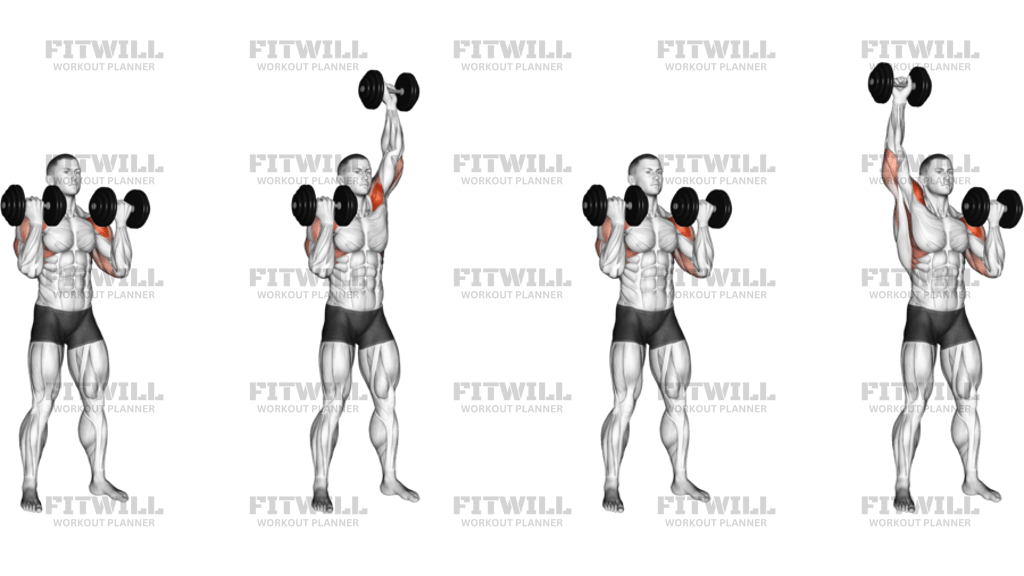
Set the bench so you can sit tall with both feet flat and the dumbbells starting near shoulder height. From there, press the weights overhead until your arms are nearly straight and the bells finish over your shoulders rather than drifting far in front of your head. Lower them with the same control back to shoulder level, keeping the elbows under the wrists and the neck relaxed.
The exercise should feel like a strict shoulder press, not a front raise and not a lean-back incline press. If the lower back arches, the shoulders shrug, or the dumbbells stop over the midline of the body, the load is probably too heavy or the seat angle is too upright for your current mobility. A neutral or slightly turned grip can make the press friendlier on irritated shoulders.
Use Dumbbell Seated Shoulder Press as a main pressing accessory, a shoulder hypertrophy movement, or a safer way to train overhead strength when standing presses are too unstable. It works best when the range stays pain-free, the descent stays slow, and every rep starts from the same shoulder-height position.
[ Workout Log & Planner ]
Put your next workout in Fitwill
Keep your plan and training log ready when you are.


Instructions
- Set an upright bench and sit with your upper back against the pad, feet flat and slightly in front of your knees.
- Bring the dumbbells to shoulder height with your elbows just below the handles and your wrists stacked over your forearms.
- Keep your chest tall but your ribs down so the bench, not a low-back arch, supports the press.
- Brace your abdomen and keep your neck long before you start the first rep.
- Press both dumbbells upward in a smooth line until your arms are nearly straight overhead.
- Finish with the weights over your shoulders, not drifting forward in front of your face.
- Lower the dumbbells slowly back to shoulder height under control.
- Reset each rep from the same shoulder-height position and repeat without bouncing.
Tips & Tricks
- If the bench is too flat or too upright, your lower back will try to help; choose an angle that lets you keep your ribs stacked.
- A neutral or slightly turned-in grip is usually friendlier on the shoulders than forcing the palms fully forward.
- Keep the forearms close to vertical at the bottom so the dumbbells sit over the elbow, not behind it.
- Do not shrug the weights to finish the rep; think about pushing up and slightly in while keeping the neck relaxed.
- Stop the descent when the elbows reach shoulder level or a little below it if deeper range causes pinching.
- Avoid letting the dumbbells drift far in front of your head, which turns the press into a front-delt-heavy push and stresses the neck.
- Use a load that lets you lower the bells slowly without losing the line of the press.
- If one side rises faster, pause the rep and match the pace before adding more weight.
Frequently Asked Questions
What muscles does Dumbbell Seated Shoulder Press work most?
It primarily trains the deltoids, especially the front and middle heads, with the triceps helping to lock out the press. The upper traps and upper chest assist, but they should not take over the movement.
Why do I need the bench back support?
The upright pad keeps your torso from leaning and swinging the dumbbells up. That makes the rep stricter and shifts more of the work to the shoulders.
How should the dumbbells travel on the way up?
They should move mostly upward, finishing over the shoulders in a stable overhead line. If they arc far forward, the press usually becomes harder on the neck and less efficient.
Should my elbows flare out wide?
A slight flare is normal, but the elbows should stay under control rather than opening so far that the shoulders feel jammed. A neutral or semi-neutral grip often keeps the elbow path smoother.
Is this better than a standing dumbbell press?
It is stricter and usually easier to stabilize because the bench removes leg drive and torso sway. Standing pressing can build more full-body coordination, but the seated version is often better when you want cleaner shoulder isolation.
What is the most common mistake?
The most common error is arching the low back and turning the press into an incline push. Another frequent mistake is shrugging hard at the top instead of keeping the shoulders down and controlled.
Can beginners use Dumbbell Seated Shoulder Press?
Yes, if they start with a light load and a pain-free range. Beginners usually benefit from the seated version because the bench makes it easier to learn the overhead path.
What if my shoulders pinch at the bottom?
Shorten the range slightly, try a more neutral grip, and make sure the elbows are not drifting too far behind the torso. If the pinch stays, switch to a more comfortable pressing variation.