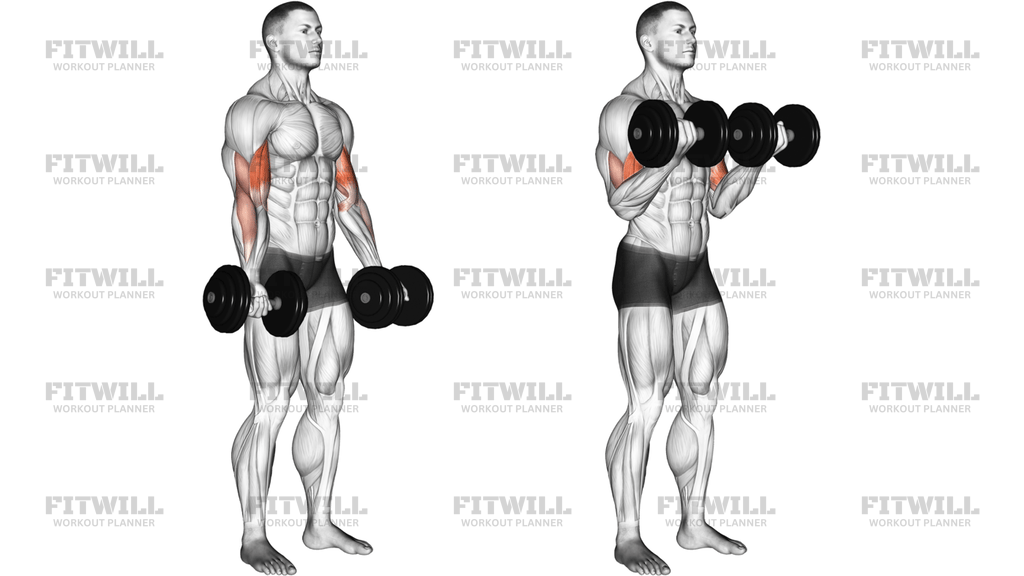
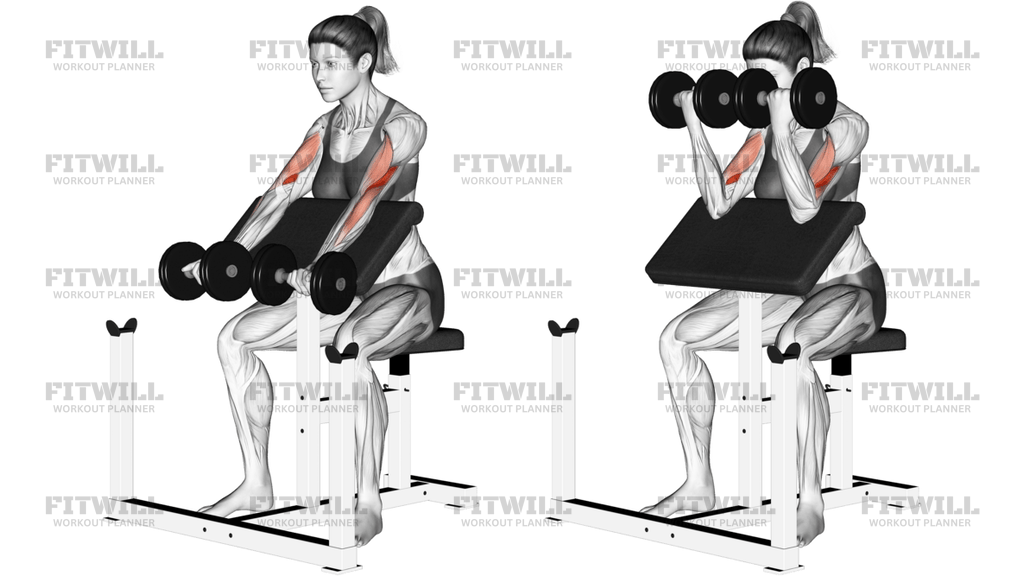
Dumbbell Standing One-Arm Curl Over Incline Bench
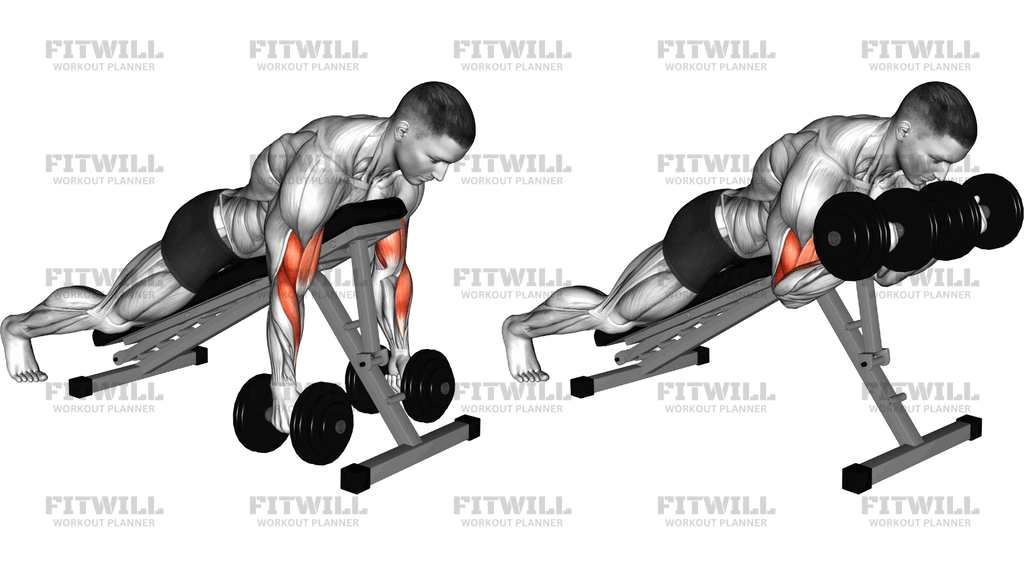
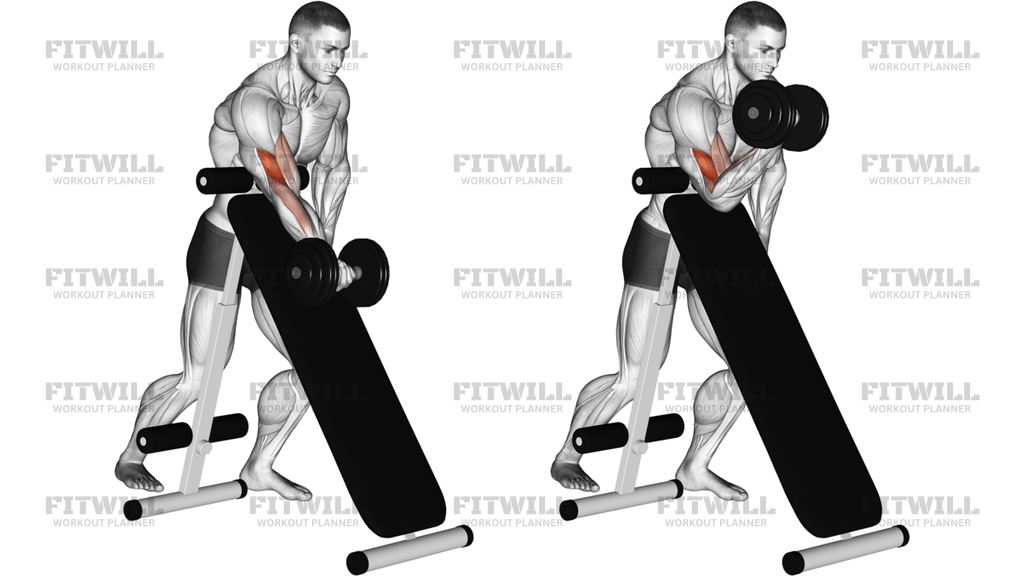
Dumbbell Standing One-Arm Curl Over Incline Bench is a supported single-arm curl that keeps the upper arm fixed against an incline bench while the forearm does the work. The setup takes most of the body sway out of the lift, so the biceps can be trained with a cleaner line of pull and less cheating from the shoulder or lower back.
This variation is useful when you want strict elbow flexion and a hard contraction without having to swing a heavy dumbbell. The bench support changes the feel of the rep: the arm starts in a slightly stretched position, then curls through a short, controlled arc that keeps tension on the biceps, brachialis, and forearm flexors.
Set the bench at a firm incline and stand beside it with your chest and upper arm braced into the pad. Keep the working shoulder quiet, the wrist stacked over the forearm, and the elbow pinned where the bench supports it. That fixed contact point is the key feature of the exercise, because it prevents the curl from turning into a shoulder-driven lift.
On each rep, let the dumbbell hang under control, curl it toward the shoulder without letting the elbow slide forward, then lower until the arm is almost straight again. The top should feel like a strong squeeze in the front of the upper arm, not a shrug or a twist. Use a slow return so the lowered position still works the biceps instead of bouncing out of it.
Dumbbell Standing One-Arm Curl Over Incline Bench fits well as an accessory movement after heavier pulling or pressing work, or as a strict arm-builder when you want to clean up curl technique. Keep the load modest enough that your torso stays anchored to the bench and your wrist remains neutral through the whole set.
[ Workout Log & Planner ]
Put your next workout in Fitwill
Keep your plan and training log ready when you are.


Instructions
- Set an incline bench in front of you and stand beside it so the upper edge can support your chest and upper arm.
- Lean your working-side chest and shoulder into the pad, and let the dumbbell hang straight down with a neutral wrist.
- Plant your feet in a staggered stance so you can stay balanced without twisting your torso.
- Pin the upper arm against the bench and keep the elbow in the same spot before you start the curl.
- Exhale as you bend the elbow and curl the dumbbell toward the front of your shoulder.
- Stop when the forearm is close to vertical and squeeze the biceps without rolling the shoulder forward.
- Lower the dumbbell slowly until the arm is almost straight and the biceps are stretched again.
- Keep the wrist stacked over the forearm on every rep and avoid letting the dumbbell drift away from the bench.
- Reset your chest and upper arm against the pad before the next rep or switch sides if the set is finished.
Tips & Tricks
- Keep the upper arm glued to the bench; if it slides, the shoulder starts helping the curl.
- Use a staggered stance so your hips stay quiet instead of rotating toward the dumbbell.
- A slightly lighter dumbbell usually works better here because the bench removes your ability to cheat.
- Let the bottom position open the biceps fully, but stop before the elbow loses control or the shoulder rolls forward.
- Keep the wrist straight; bending it back turns the rep into a forearm and grip struggle.
- Pause for a split second near the top to make the squeeze obvious instead of rushing through the contraction.
- Lower for a slow count so the stretched part of the rep still loads the biceps.
- If your torso peels off the pad, move your feet closer and reduce the load before the next set.
Frequently Asked Questions
What muscles does Dumbbell Standing One-Arm Curl Over Incline Bench work?
It mainly targets the biceps, with help from the brachialis, brachioradialis, and forearm flexors. The incline bench keeps the upper arm fixed so those elbow flexors do most of the work.
Why brace the chest and upper arm on the incline bench?
That contact point stops shoulder swing and torso momentum from taking over the rep. It also makes the stretched bottom position more consistent from one rep to the next.
Can I do Dumbbell Standing One-Arm Curl Over Incline Bench as a beginner?
Yes, if you start with a light dumbbell and keep the chest anchored to the pad. The bench support usually makes the curl easier to learn than a free-standing strict curl.
How should my elbow move on this curl?
The elbow should stay planted against the bench instead of drifting forward as you lift. If it slides, the movement stops being a strict arm curl.
How far should I lower the dumbbell?
Lower until the arm is almost straight and the biceps are stretched, but keep tension and stop before you lose control of the shoulder or wrist. A dead drop at the bottom usually makes the next rep sloppy.
What is the most common mistake with the bench setup?
People often stand too far from the pad and end up curling with the shoulder, or they lean so lightly on the bench that the torso twists. Stay close enough that the bench actually supports the working side.
Can I swap this for a regular dumbbell curl?
Yes, but the regular curl allows more body sway. Use the incline-bench version when you want a stricter rep and better control of the stretched position.
What should I do if my wrist starts bending back?
Reduce the load and keep the dumbbell stacked over the forearm from bottom to top. A neutral wrist usually fixes the strain quickly on this movement.