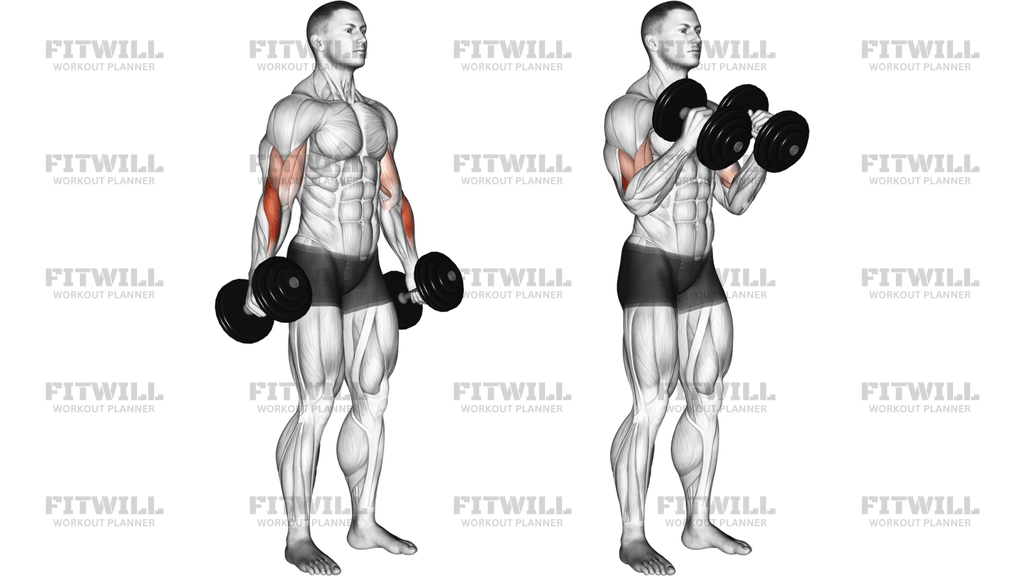
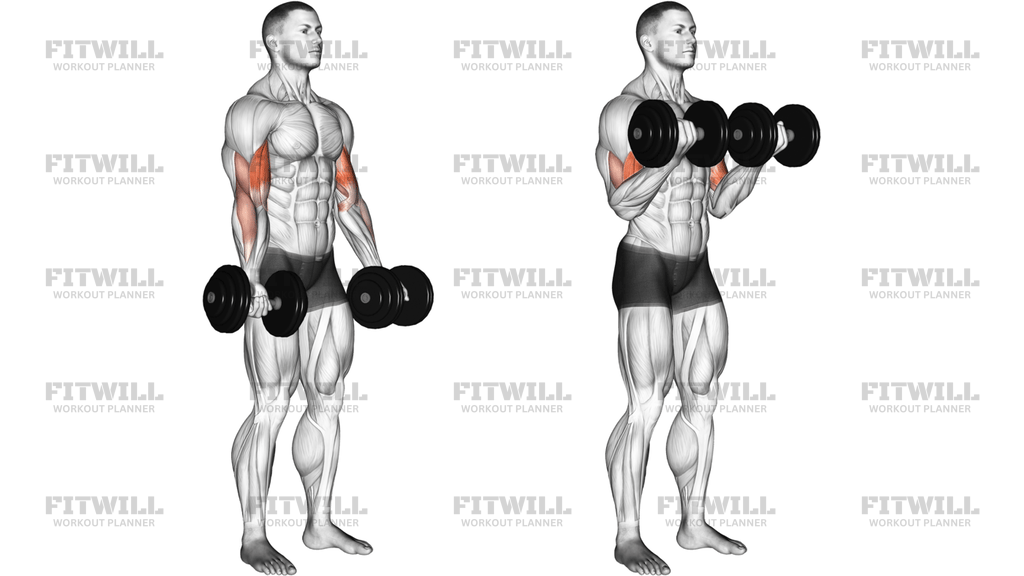
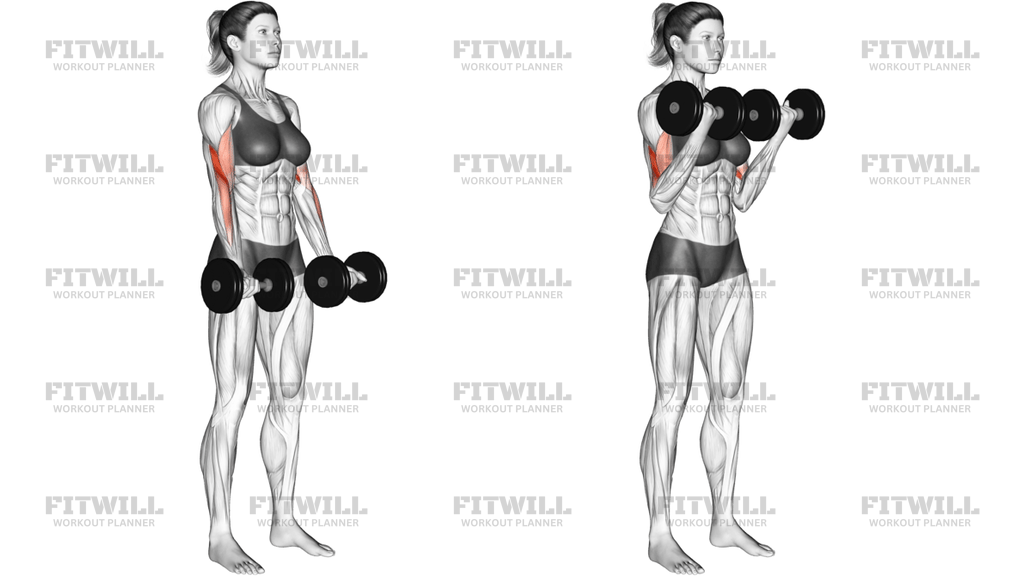
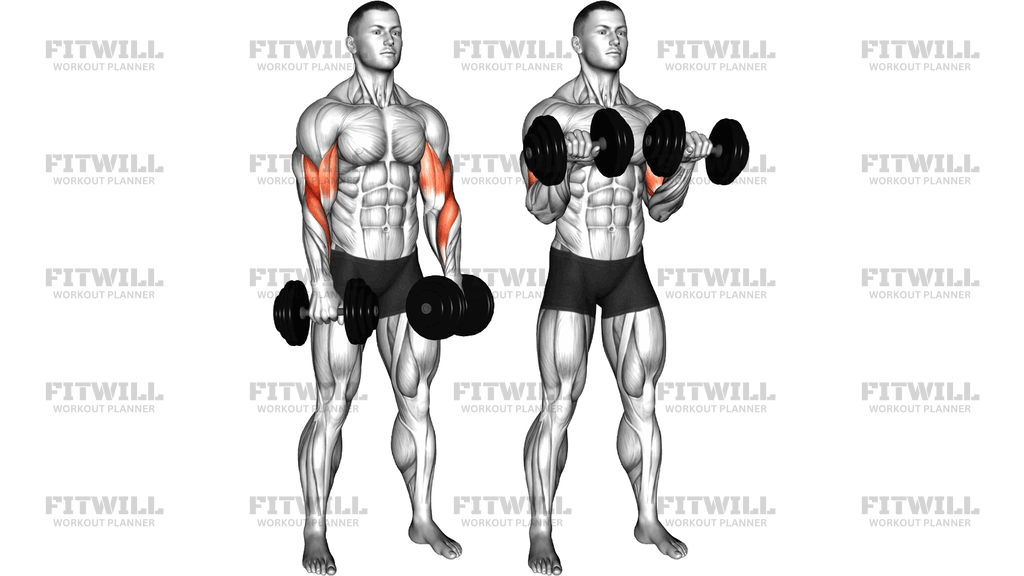
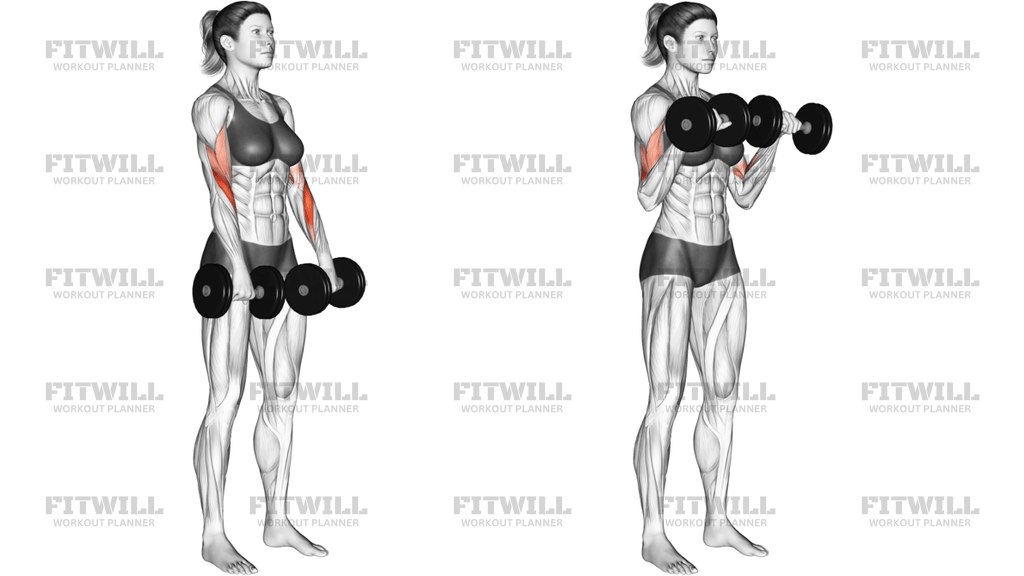
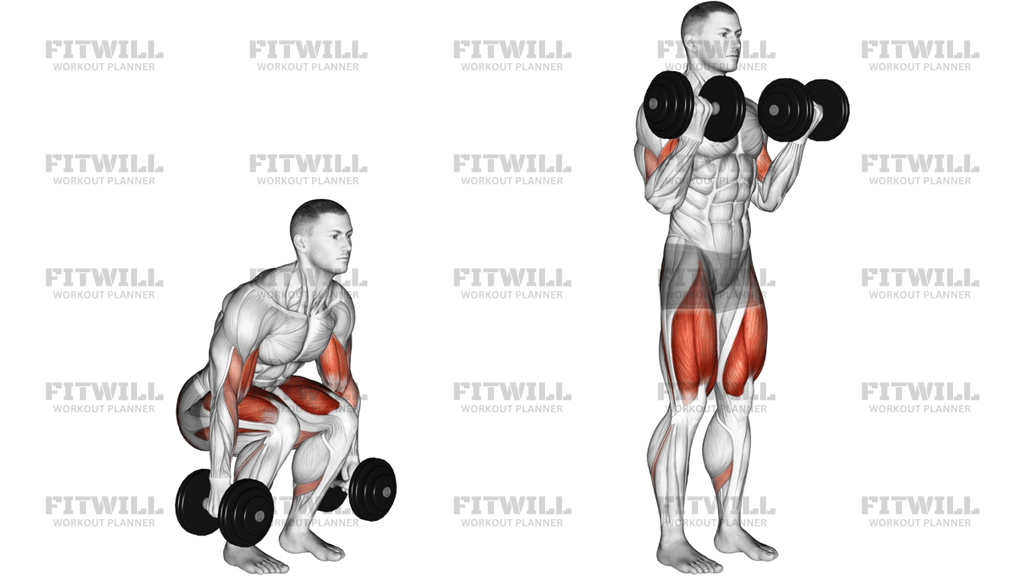
Dumbbell Standing One-Arm Reverse Curl
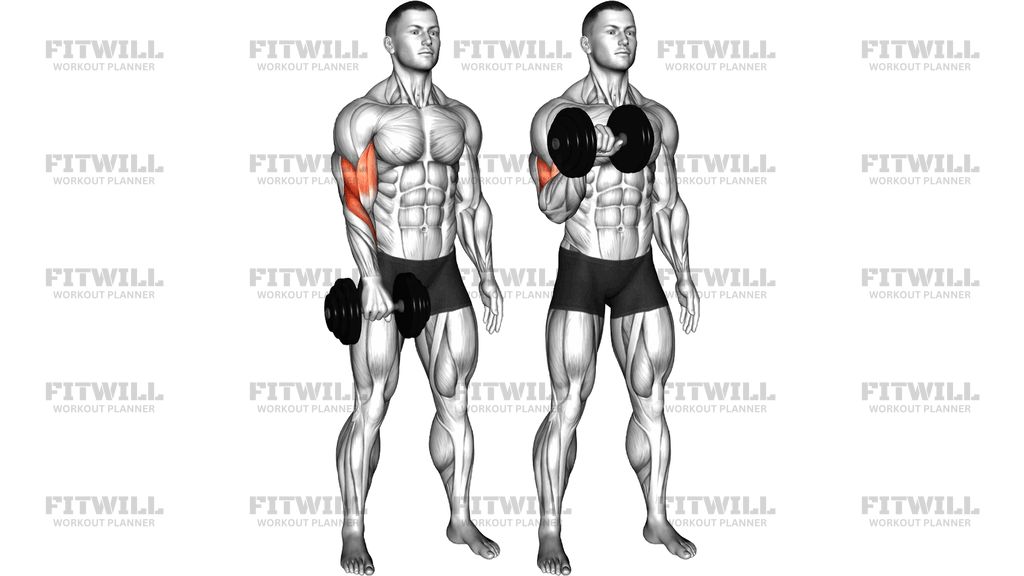
Dumbbell Standing One-Arm Reverse Curl is a standing arm isolation exercise that trains the forearm-side elbow flexors with a palms-down dumbbell grip. The pronated hand position shifts the workload away from a standard curl and puts more demand on the brachioradialis, brachialis, and the muscles that stabilize the wrist and forearm. It is a useful accessory when you want stronger elbows, thicker-looking forearms, and better control in pulling exercises that depend on grip and forearm endurance.
The single-arm setup makes the exercise easy to focus on. Because only one dumbbell is moving at a time, you can keep the upper arm quiet, feel whether one side is weaker than the other, and avoid hiding momentum behind the other arm. That makes Dumbbell Standing One-Arm Reverse Curl especially helpful for balanced arm work, accessory training after back sessions, or as a lighter elbow-friendly variation when regular curls feel too biceps-dominant.
Stand tall with the dumbbell hanging beside your thigh, palm facing the floor, shoulder relaxed, and elbow close to your ribcage. From there, curl by bending only at the elbow and keep the forearm rotating as little as possible. The wrist should stay stacked over the forearm rather than collapsing backward, and the upper arm should not drift forward to turn the rep into a front-delt swing. A clean top position is usually around lower chest or upper abdomen height, depending on your limb length.
Lower the dumbbell under control until the arm is nearly straight, then let the elbow fully extend only as far as your joints tolerate comfortably. The best reps feel smooth and deliberate, with tension staying in the forearm and elbow flexors instead of shifting into the shoulder or lower back. If the dumbbell starts to swing, the elbow moves in front of the torso, or the wrist bends back hard, the load is too heavy or the range is too aggressive.
Use Dumbbell Standing One-Arm Reverse Curl as a strength accessory rather than a max-effort ego lift. It pairs well with regular curls, hammer curls, rows, and pull-down work because it helps round out the arm from a different angle. Keep the movement strict, repeatable, and pain-free so the forearms do the work while the rest of the body stays quiet.
Fitwill
Log Workouts, Track Progress & Build Strength.
Achieve more with Fitwill: explore over 9600 exercises with images and videos, access built-in and custom workouts, perfect for both gym and home sessions, and see real results.
Start your journey. Download today!




Instructions
- Stand upright with one dumbbell hanging at your side, palm facing down and the working arm straight beside your thigh.
- Set your feet hip-width apart, keep your chest tall, and let the shoulder on the working side stay relaxed instead of shrugging up.
- Pin the upper arm close to your ribcage so the elbow stays almost fixed while you curl.
- Curl the dumbbell upward by bending the elbow, keeping the knuckles pointed mostly forward and the wrist stacked over the forearm.
- Stop near the top when the dumbbell reaches around lower chest or upper abdomen height without letting the elbow travel forward.
- Squeeze briefly at the top, then lower the dumbbell slowly until the arm is nearly straight again.
- Keep the torso quiet and avoid rocking, twisting, or leaning back to finish the rep.
- Finish the set by lowering the dumbbell fully under control, then switch sides and repeat with the same range and tempo.
Tips & Tricks
- Keep the dumbbell in a true palms-down position; turning the hand toward neutral turns this into a different curl variation.
- If the wrist bends back at the top, use a lighter dumbbell and keep the knuckles and forearm in one line.
- A small bend at the elbow on the bottom is fine, but do not let the shoulder roll forward as you lower.
- The rep should look almost vertical from the elbow down; if the upper arm starts swinging, the load is too heavy.
- A slower lowering phase usually feels better in the brachioradialis than a fast drop or rebound.
- Stop the curl before the dumbbell crashes into the shoulder line; the point is forearm tension, not a maximal range.
- One arm at a time makes side-to-side differences obvious, so match the cleaner side instead of chasing the weaker side's sloppy reps.
- If your elbow or wrist gets cranky, shorten the range slightly and keep the forearm more rigid through the middle of the rep.
Frequently Asked Questions
What muscles does Dumbbell Standing One-Arm Reverse Curl work?
It mainly works the brachioradialis and brachialis, with the biceps and forearm muscles assisting. The palms-down grip also challenges the wrist and grip muscles more than a standard curl.
Is Dumbbell Standing One-Arm Reverse Curl beginner-friendly?
Yes, as long as you start light and keep the elbow pinned to your side. The movement is simple, but the reverse grip can feel unfamiliar, so a small range and strict tempo are better than chasing load.
Should my palm stay facing down the whole time?
Yes. Keep the palm pronated for the whole rep so the exercise stays a true reverse curl and the forearm does the work it is meant to do.
How far should I curl the dumbbell up?
Curl until the dumbbell reaches about lower chest or upper abdomen height, or until the elbow wants to drift forward. Stopping a little short is better than turning the rep into a shoulder swing.
Why use one arm instead of both arms together?
One arm at a time makes it easier to keep the elbow fixed and spot side-to-side differences in forearm strength. It also reduces the temptation to cheat with torso movement.
What should I do if my wrists feel strained?
Reduce the load, keep the wrist stacked over the forearm, and avoid letting the dumbbell pull the hand backward at the top. If that still feels rough, shorten the range or switch to a hammer curl.
Can I swing my torso to finish the rep?
No. If you need to lean back, the dumbbell is too heavy for a strict Dumbbell Standing One-Arm Reverse Curl and the forearm is no longer doing the main job.
How is Dumbbell Standing One-Arm Reverse Curl different from a regular curl?
A regular curl uses a palms-up grip and emphasizes the biceps more. This reverse version shifts more attention to the brachioradialis and forearm while still involving the elbow flexors.