Dumbbell Standing Overhead Press
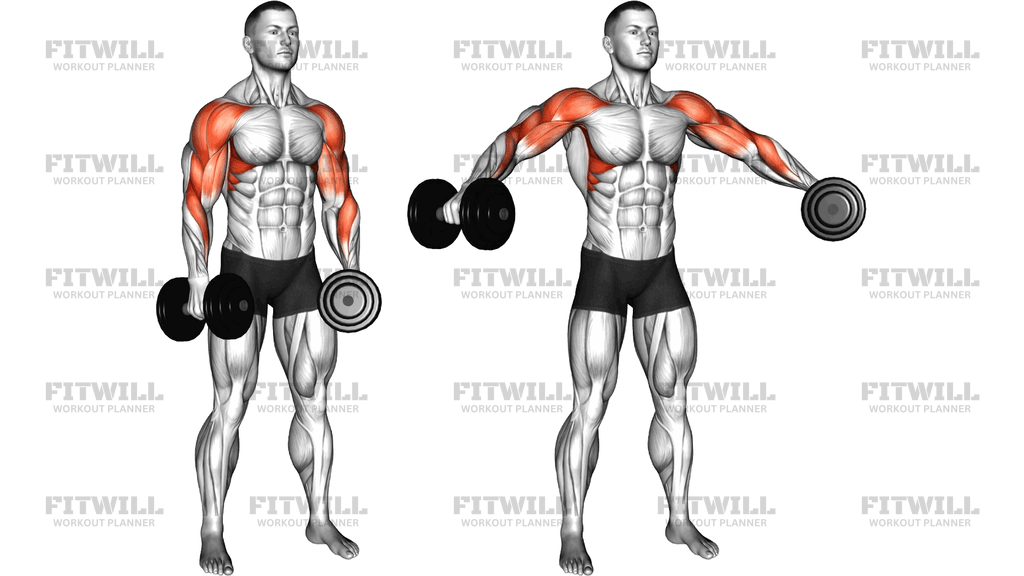
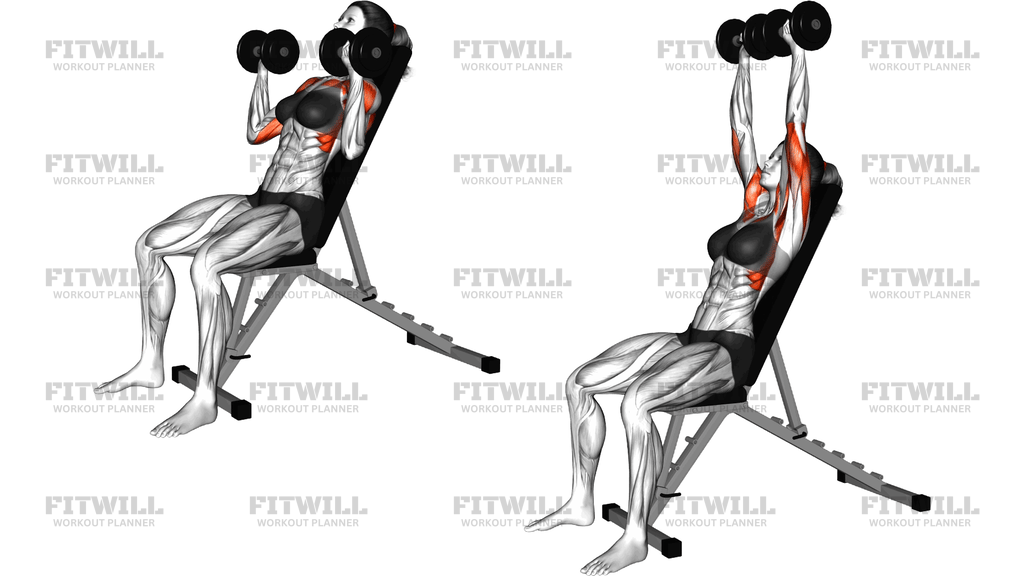
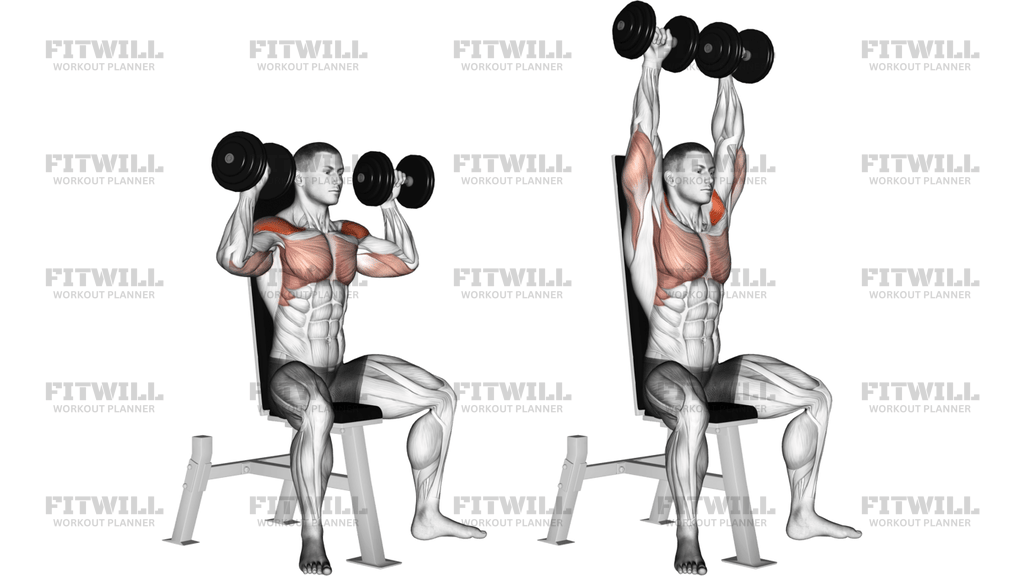
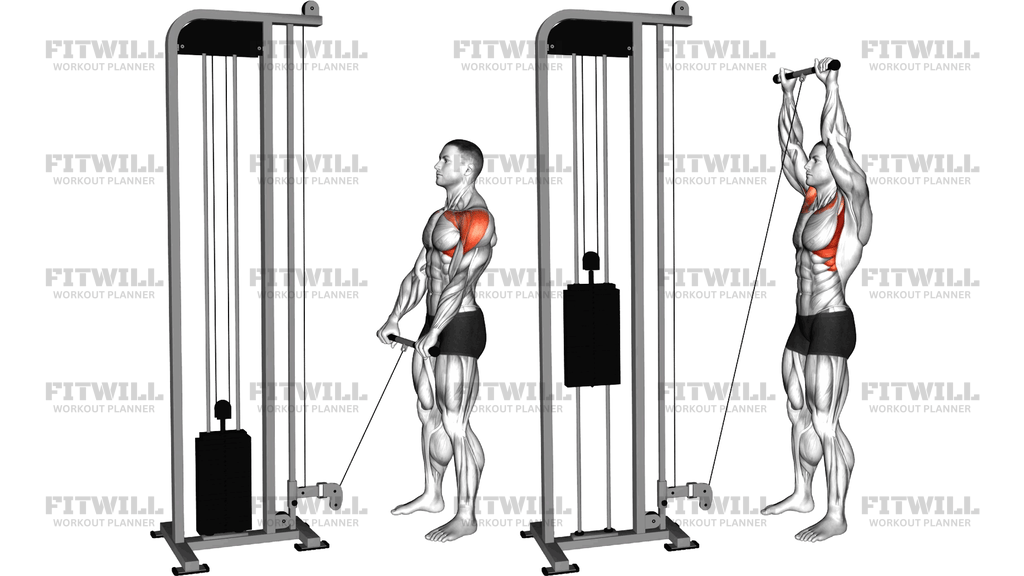
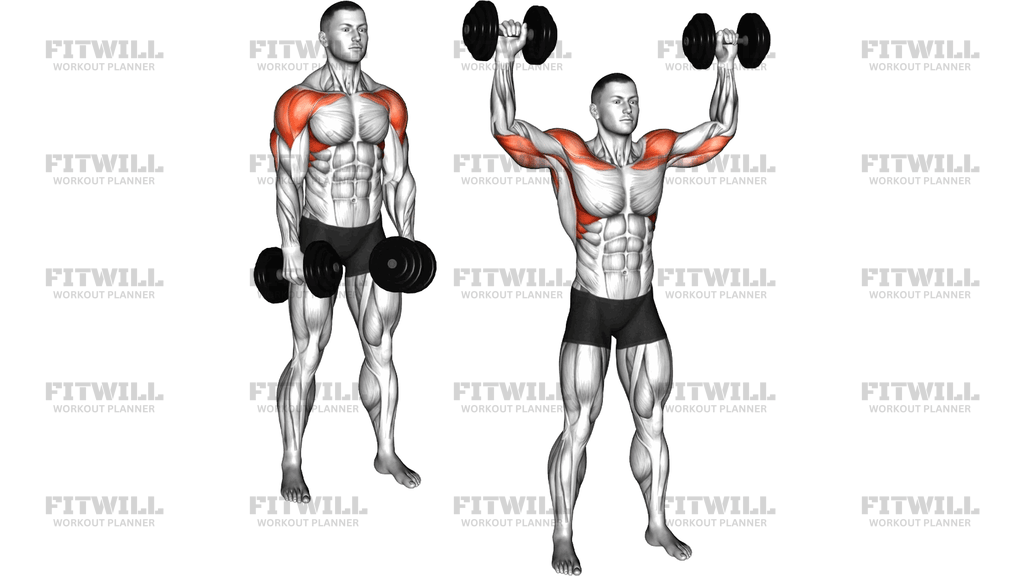
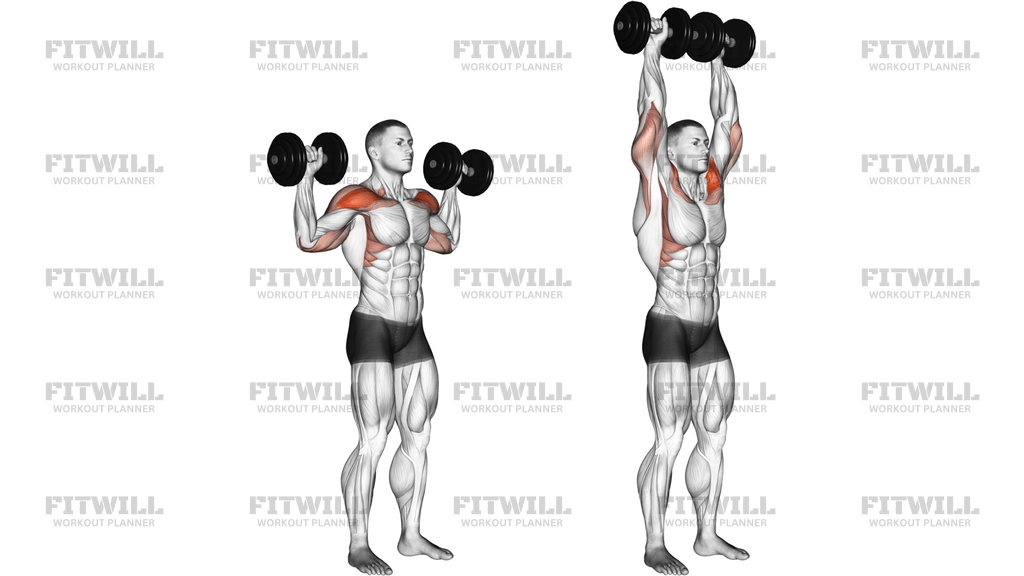
Dumbbell Standing Overhead Press is a vertical pressing exercise that builds shoulder strength and size while asking the trunk to stay stacked under load. The image shows both dumbbells starting at shoulder height and traveling straight overhead, which makes this more demanding than a seated press because your midsection, glutes, and upper back have to control sway as well as the lift itself.
The main muscles trained are the delts and triceps, with the upper chest, upper back, and core helping keep the press smooth and balanced. The standing position makes setup matter more than brute force. If the ribs flare, the low back arches, or the dumbbells drift forward, the shoulders lose a clean pressing path and the set turns into a full-body compensation drill instead of a true overhead press.
Start with the dumbbells racked beside the shoulders, forearms vertical, and wrists stacked over the elbows. Plant both feet firmly, keep the knees soft, and brace before the first rep so the torso does not sway as the weights leave the shoulders. Press the dumbbells slightly back toward the line of the ears, not out in front of the face, then lower them with control to the same shoulder-height position each rep.
Dumbbell Standing Overhead Press is useful for general shoulder development, athletic overhead strength, and accessory pressing work when you want each arm to move independently. Because the dumbbells force each side to stabilize its own path, the exercise also exposes side-to-side differences in shoulder mobility, pressing strength, and trunk control. That makes it a practical choice for lifters who need direct shoulder work without relying on a barbell groove.
Keep the movement pain-free and controlled. A little torso tension is normal; leaning back to finish the rep, shrugging hard at the top, or chasing range past a comfortable overhead position is not. If one shoulder feels pinchy, reduce the load, use a slightly narrower pressing path, or stop the descent where the upper arm stays in a strong position instead of forcing depth.
[ Workout Log & Planner ]
Put your next workout in Fitwill
Keep your plan and training log ready when you are.


Instructions
- Stand tall with a dumbbell in each hand at shoulder height, palms facing forward or slightly inward, and forearms vertical under the bells.
- Set your feet about hip-width apart, keep the knees soft, and brace your midsection before the first press.
- Keep the ribs stacked over the pelvis so the low back does not arch when the weights leave the shoulders.
- Press both dumbbells upward in a controlled line just inside the shoulders, letting them travel slightly back as they pass your face.
- Finish with the dumbbells overhead, biceps close to the ears, and elbows extended without locking the shoulders up hard.
- Lower the dumbbells slowly back to shoulder height, keeping the wrists over the elbows instead of letting the bells drift forward.
- Pause briefly at the bottom to reset your brace and shoulder position before the next rep.
- Repeat for the same path and range on every rep, then rack the dumbbells safely when your torso starts to shift.
Tips & Tricks
- Keep the dumbbells in the press line shown in the image: start beside the shoulders and finish over the midfoot, not far in front of you.
- A split stance is fine if it helps you stay steady, but do not use a staggered foot position to hide a back arch or lean.
- Think about reaching up with the arms instead of leaning back to get the bells overhead.
- If the elbows flare wide and the wrists bend back, the load is too heavy or the start position is too low.
- Stop the rep just before the shoulders pinch; forcing a deeper bottom position usually makes the next press uglier.
- Use a path that stays slightly in front of the face on the way up, then settles just behind the head at lockout.
- Keep the neck long and avoid shrugging the traps early; save that upward shoulder motion for the top, not the start.
- Choose a tempo that lets you own the lowering phase, since a sloppy descent usually shows the core is losing position first.
Frequently Asked Questions
What muscles does Dumbbell Standing Overhead Press work?
Dumbbell Standing Overhead Press mainly works the delts and triceps. The upper chest, upper back, and core help keep the dumbbells stacked over the shoulders and prevent body sway.
Is Dumbbell Standing Overhead Press beginner-friendly?
Yes, if you start with light dumbbells and a strict range. Beginners often do better with a split stance or a seated version until they can keep the ribs down and the bells traveling straight up.
How should the dumbbells be positioned at the start of Dumbbell Standing Overhead Press?
The dumbbells should start beside the shoulders with the forearms vertical and the wrists stacked over the elbows. If the bells drift forward of the shoulders, the first press usually turns into a front-delt and lower-back compensation pattern.
Should I press straight up or slightly back on Dumbbell Standing Overhead Press?
Press slightly back as the bells pass your face so they finish over the shoulders and midfoot. That path usually feels cleaner than pushing the dumbbells straight out in front of you.
What are the most common mistakes in Dumbbell Standing Overhead Press?
The biggest mistakes are leaning back, flaring the ribs, shrugging too early, and letting the wrists bend behind the elbows. Those errors usually show the load is too heavy or the brace is too loose.
Can I use a split stance for Dumbbell Standing Overhead Press?
Yes. A split stance can help you stay balanced if you are pressing heavy or working around a slight mobility limitation, but the torso still needs to stay stacked instead of twisting or leaning.
How heavy should I use for Dumbbell Standing Overhead Press?
Use a load that lets you keep the dumbbells under control for every rep without bouncing, twisting, or arching the low back. If the last few reps change the press path, the set is already too heavy.
What should I do if Dumbbell Standing Overhead Press pinches my shoulders?
Shorten the range slightly, turn the palms a bit inward, and avoid forcing the dumbbells too far behind the head at lockout. If pinching continues, switch to a lighter load or a supported variation.