Dumbbell Standing Reverse Curl
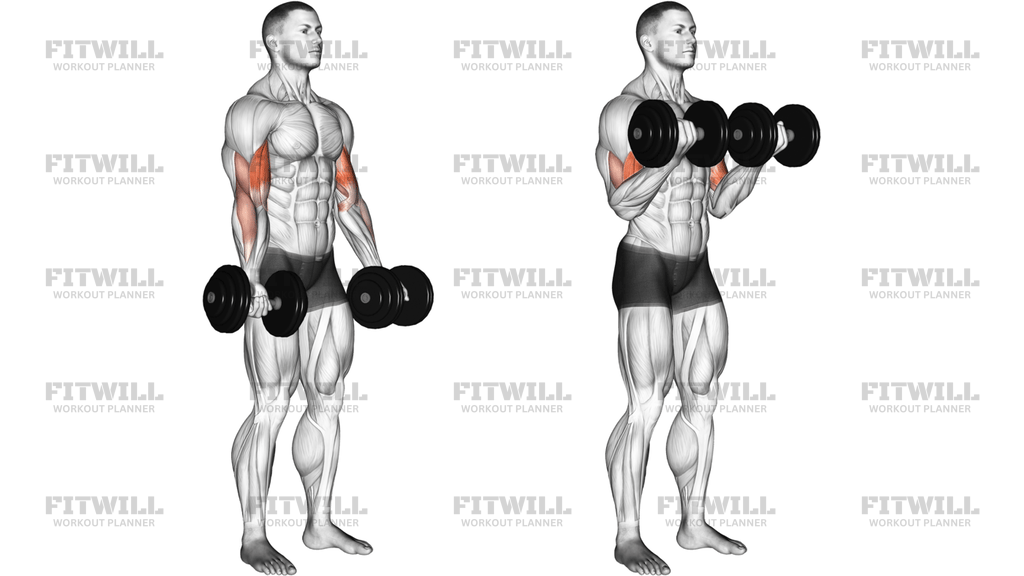
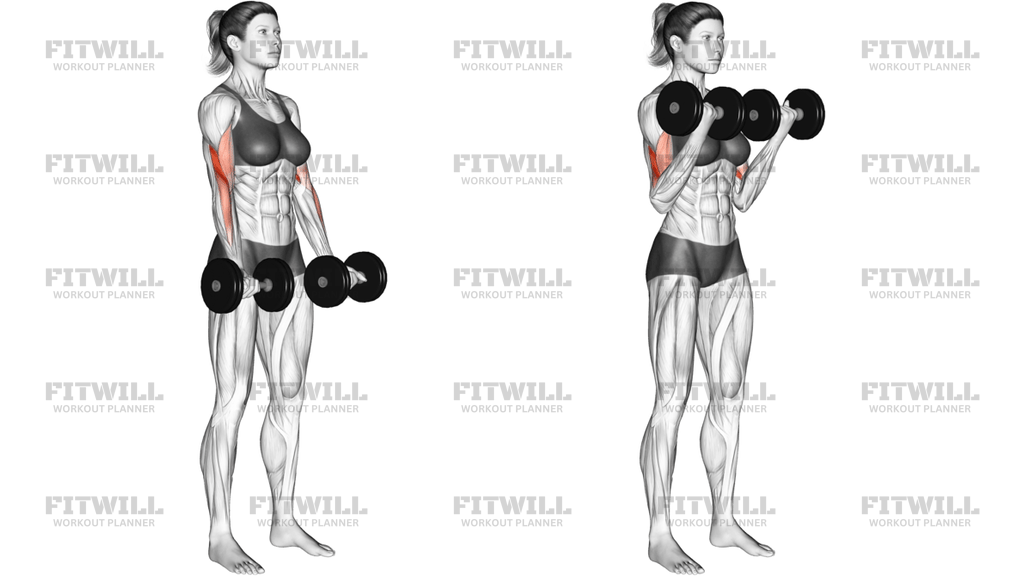
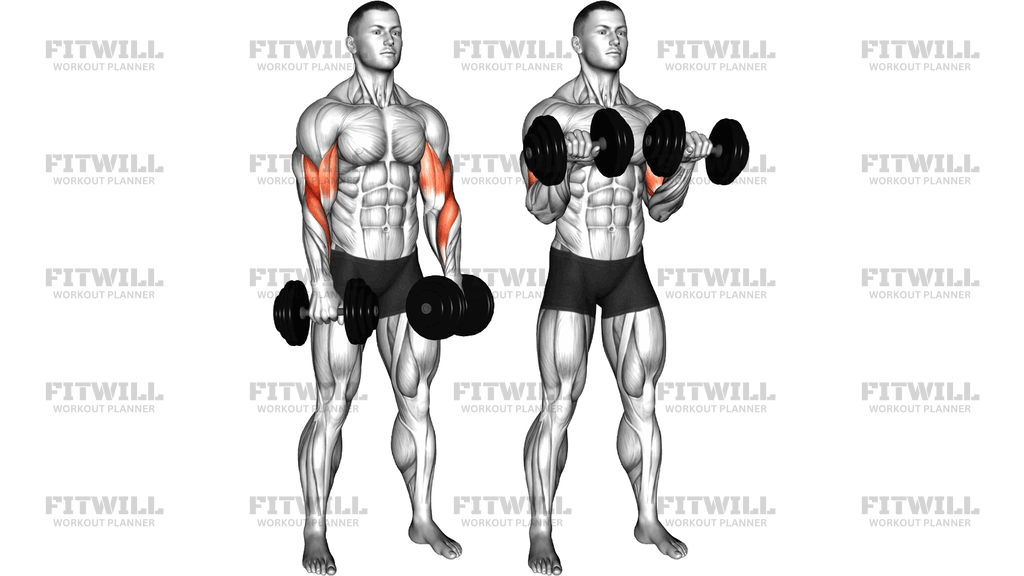
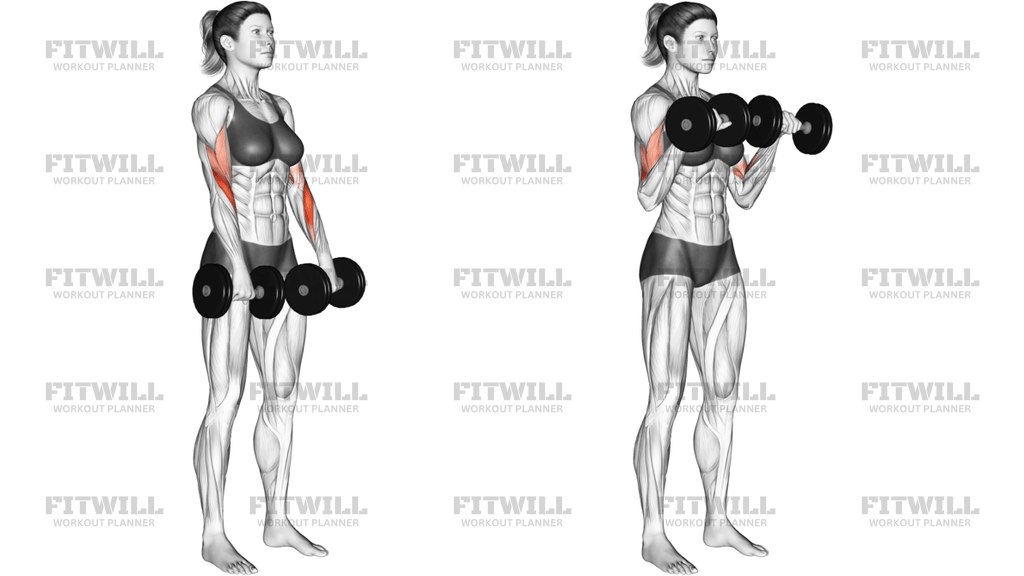
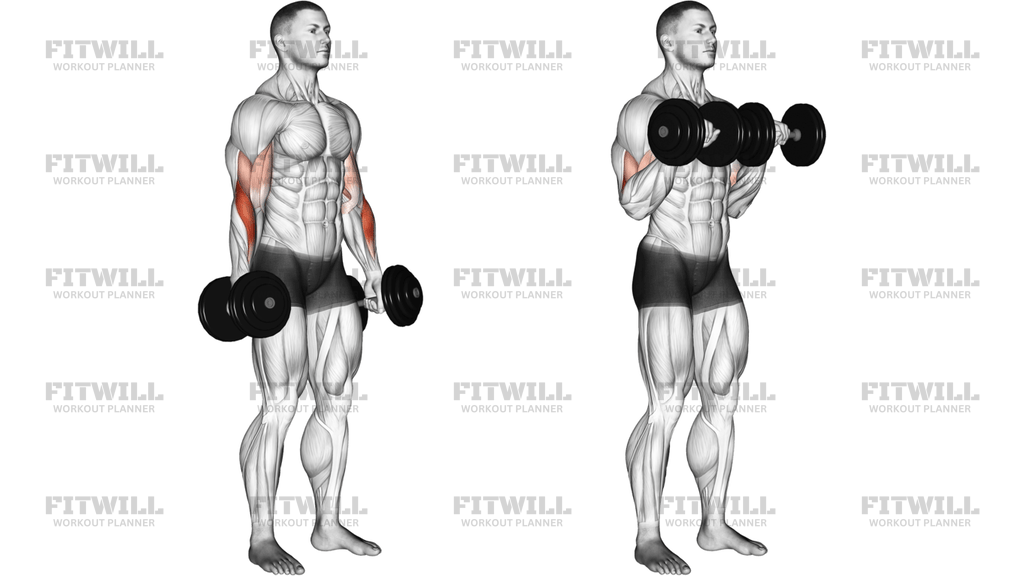
Dumbbell Standing Reverse Curl is a standing elbow-flexion exercise performed with a palms-down grip on dumbbells. The reverse grip changes the emphasis compared with a standard curl: the brachioradialis and forearm flexors have to work harder, while the biceps still contribute to elbow flexion. In the image, the lifter stands upright with the dumbbells hanging at the sides and curls them forward without using body swing or shoulder drive.
The setup matters because the palms-down position makes the wrists and elbows more sensitive to sloppy alignment. A neutral, tall stance helps keep the torso quiet so the forearms can do the work instead of the lower back or shoulders. This movement is useful as an arm accessory for lifters who want stronger forearms, more complete elbow-flexion strength, or a carryover to pulling exercises that tax the grip and forearm.
Start with the dumbbells just outside the thighs, palms facing the floor, elbows close to the ribs, and shoulders stacked over the hips. From there, the dumbbells travel in a smooth arc toward the upper abdomen or lower chest while the elbows stay mostly fixed. The top position should feel like a hard forearm and upper-arm contraction, not a shrug or a lean-back. Lower the weights under control until the elbows are nearly straight and the forearms are fully lengthened.
Use a load that lets you keep the wrists neutral and the upper arms quiet through the whole set. If the dumbbells drift forward, the shoulders roll, or the torso starts to rock, the set is too heavy or the tempo is too fast. This exercise usually works best with moderate reps, clean pauses, and a deliberate eccentric, especially when it is used after heavier pulling work.
Treat the reverse curl as a precision arm movement rather than a momentum lift. Small form changes make a big difference in how much tension stays on the forearms and brachioradialis. A strict standing position, a firm but not clenched grip, and a controlled descent are the main keys to making the exercise productive and safe.
[ Workout Log & Planner ]
Put your next workout in Fitwill
Keep your plan and training log ready when you are.


Instructions
- Stand tall with a dumbbell in each hand, arms straight, palms facing the floor, and the weights hanging just outside your thighs.
- Set your feet about hip-width apart and keep your chest stacked over your hips so the torso stays still.
- Pin your elbows close to your sides before the first rep and keep the upper arms from drifting forward.
- Curl both dumbbells upward by bending the elbows and keeping the wrists in line with the forearms.
- Lift until the dumbbells reach about lower-chest or upper-abdomen height, depending on your arm length and shoulder position.
- Squeeze the forearms and upper arms briefly at the top without shrugging or leaning back.
- Lower the dumbbells slowly until the elbows are almost straight and the forearms are fully lengthened.
- Reset the shoulders if they start to roll forward, then begin the next rep from a dead-still hang.
Tips & Tricks
- Keep the dumbbells in a true palms-down position; turning the hands even slightly toward neutral reduces the reverse-curl emphasis.
- Think about moving the knuckles upward instead of swinging the elbows forward.
- A narrow, fixed elbow position keeps tension on the forearms and brachioradialis instead of the front delts.
- If the wrists bend back hard at the top, the load is usually too heavy for a strict reverse curl.
- Use a slower lowering phase than the lifting phase to keep the forearms under tension longer.
- Stop the rep before the shoulders start to shrug or the torso starts to rock backward.
- Pick dumbbells you can lower quietly; clanging or dropping at the bottom usually means you lost control.
- A slightly lighter load is often better here because the reverse grip limits how much force you can produce safely.
Frequently Asked Questions
What muscles does Dumbbell Standing Reverse Curl work?
It mainly targets the brachioradialis and forearm flexors, with the biceps and brachialis helping the elbow bend. The shoulders and trunk mostly stabilize.
Is Dumbbell Standing Reverse Curl beginner-friendly?
Yes, if you start light and keep the palms-down position strict. Beginners usually learn it fastest with slow reps and no torso sway.
How high should the dumbbells come up?
They usually stop around the lower chest or upper abdomen. Go only as high as you can without the elbows drifting forward or the shoulders shrugging.
What grip should I use on the dumbbells?
Use a palms-down, pronated grip. If the wrists keep rotating toward neutral, lower the weight and reset the hand position before each rep.
Why do my wrists feel more involved than in a normal curl?
That is expected. The reverse grip shifts more work to the forearms and brachioradialis, so the wrists and grip will usually fatigue before a standard curl.
What is the most common form mistake?
The most common mistake is turning it into a body English curl by leaning back, swinging the dumbbells, or letting the elbows drift forward.
Can I do this with one arm at a time?
Yes. Single-arm reverse curls can help you control wrist position better, but keep the torso square and avoid twisting toward the working side.
Where should I feel the exercise?
You should feel the forearms working hard, especially near the top and through the lowering phase, with the upper arms assisting but not taking over.