Dynamic Back Stretch
Dynamic Back Stretch is a standing mobility drill that takes the shoulders from a long reach behind the body into a strong overhead position and back again. The exercise opens the lats, triceps, rear shoulder line, chest, and upper back while teaching the rib cage and shoulder blades to move together without dumping into the low back.
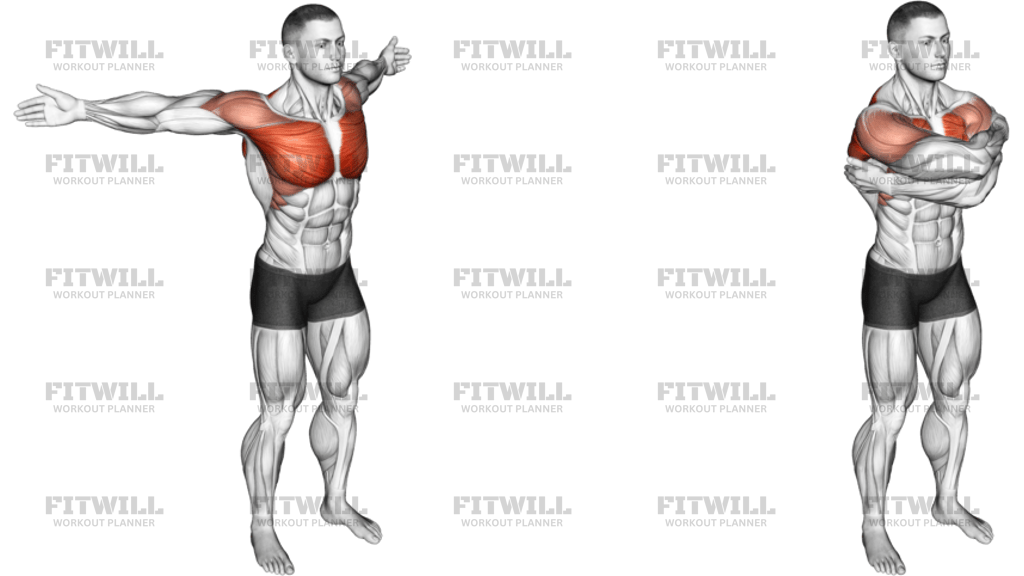
The image shows a tall stance with the arms sweeping from down and slightly behind the body into a fully extended overhead reach. That arm path is the key to the exercise. The stretch is not a passive hold and it is not a floor drill. It should feel like a controlled, rhythmic shoulder and upper-back opener with the torso staying stacked.
This setup matters because the movement is easy to turn into a shrug, a backbend, or a fast swing. Keep the feet rooted, soften the knees, and let the arms travel through a smooth arc while the ribs stay down. If the shoulders are tight, shorten the range first and earn the overhead position without forcing the hands farther back than the joints will allow.
Use Dynamic Back Stretch in a warmup before pressing, pulling, overhead work, or any session where the lats and shoulders need to move well. It also works as a reset after long periods of sitting or desk work. Keep the reps smooth and pain-free, and treat any pinching at the front of the shoulder or lower-back arching as a sign to reduce range immediately.
Fitwill
Log Workouts, Track Progress & Build Strength.
Achieve more with Fitwill: explore over 9600 exercises with images and videos, access built-in and custom workouts, perfect for both gym and home sessions, and see real results.
Start your journey. Download today!




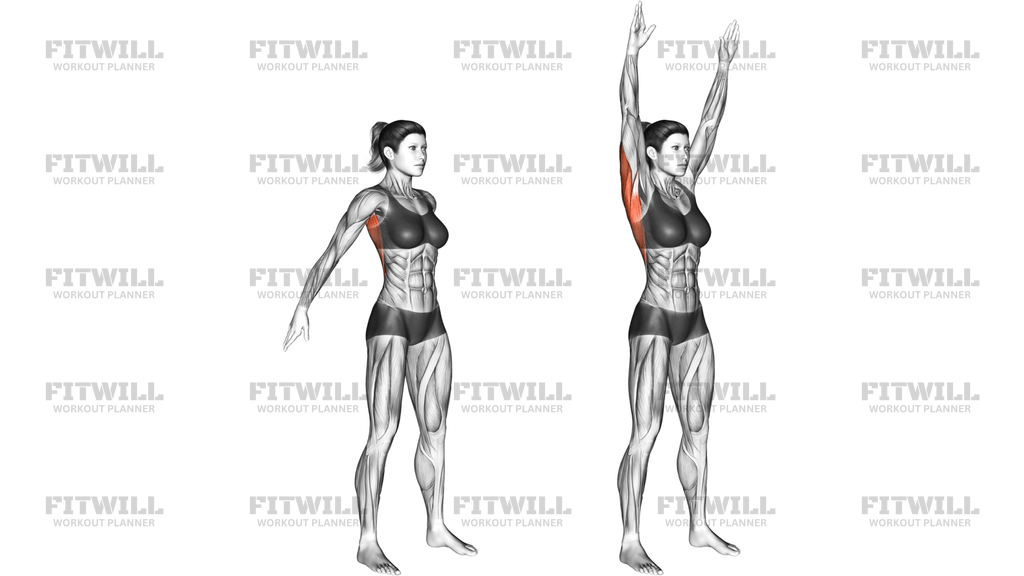
Instructions
- Stand tall with your feet about hip-width apart and your knees softly unlocked.
- Let your arms start slightly behind your hips with your chest open and your neck relaxed.
- Brace lightly so your ribs stay stacked over your pelvis instead of flaring forward.
- Sweep both arms forward and up in a smooth arc until they reach overhead.
- Keep the elbows mostly straight and allow the shoulders to rotate naturally as the hands rise.
- Pause briefly at the top without shrugging hard or leaning back.
- Lower the arms back down and slightly behind the body under control.
- Repeat for steady reps or time, breathing out as the arms rise and in as they return.
Tips & Tricks
- Keep the movement controlled enough that the torso does not drift into a standing backbend.
- If the shoulders feel stiff, stop the arc before the arms reach straight overhead and build range gradually.
- Think about reaching long through the fingertips rather than yanking the hands upward.
- Keep the shoulder blades moving naturally instead of pinching them hard together at the top.
- The low back should stay quiet; the stretch is coming from the shoulders, lats, and upper back.
- A slow exhale on the upward sweep helps keep the ribs from flaring.
- Do not force the hands farther behind the hips than you can control, especially if the front of the shoulder feels crowded.
- Use this as a mobility primer, not a fatigue drill, so the reps stay crisp and smooth.
Frequently Asked Questions
What does Dynamic Back Stretch actually stretch?
It mainly stretches the lats and upper-back line while also opening the triceps, rear shoulders, and chest as the arms sweep overhead.
Why does the exercise start with the arms behind the body?
Starting slightly behind the hips creates the shoulder extension that makes the overhead sweep feel like a real dynamic opening instead of a simple arm raise.
Should my lower back move during this stretch?
No. A small amount of natural posture change is fine, but the goal is to move the shoulders and upper back without turning it into a backbend.
How high should my arms go?
Go only as high as you can while keeping the ribs stacked and the shoulders comfortable. If overhead feels tight, use a smaller arc and build over time.
What is the most common mistake with Dynamic Back Stretch?
The most common mistake is rushing the arms up and arching the low back to fake more range. Keep the sweep smooth and the torso quiet.
Is this a good warmup before pressing or pulling?
Yes. It is useful before overhead presses, rows, pulldowns, or any session where the lats and shoulder girdle need to move freely.
Can beginners do this safely?
Yes. Beginners should use a smaller range, slow tempo, and a tall stance first so the shoulders learn the path without strain.
What should I feel if I am doing it correctly?
You should feel a controlled opening through the sides of the torso, upper back, and shoulders, not pinching in the front of the shoulder or strain in the low back.