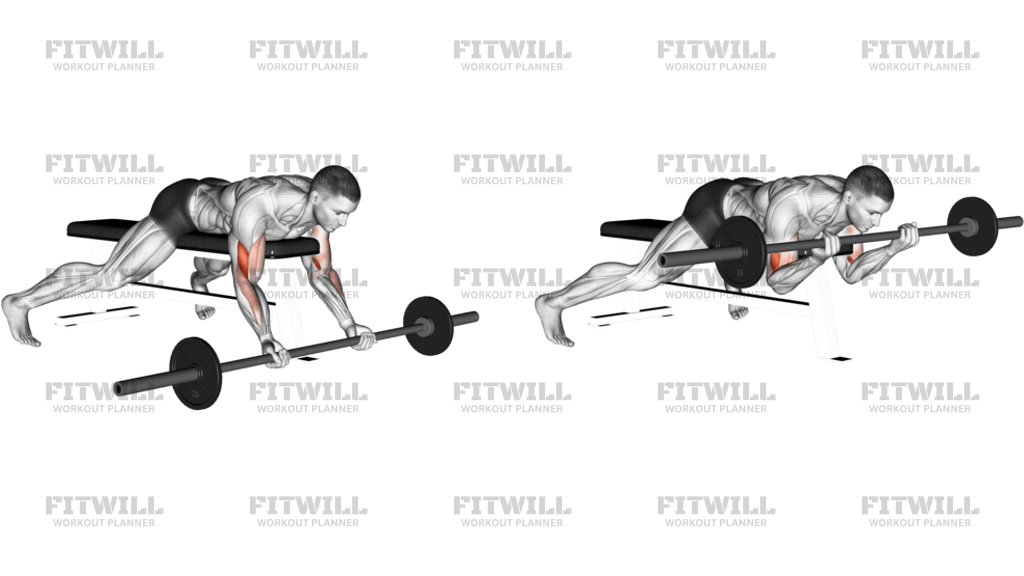
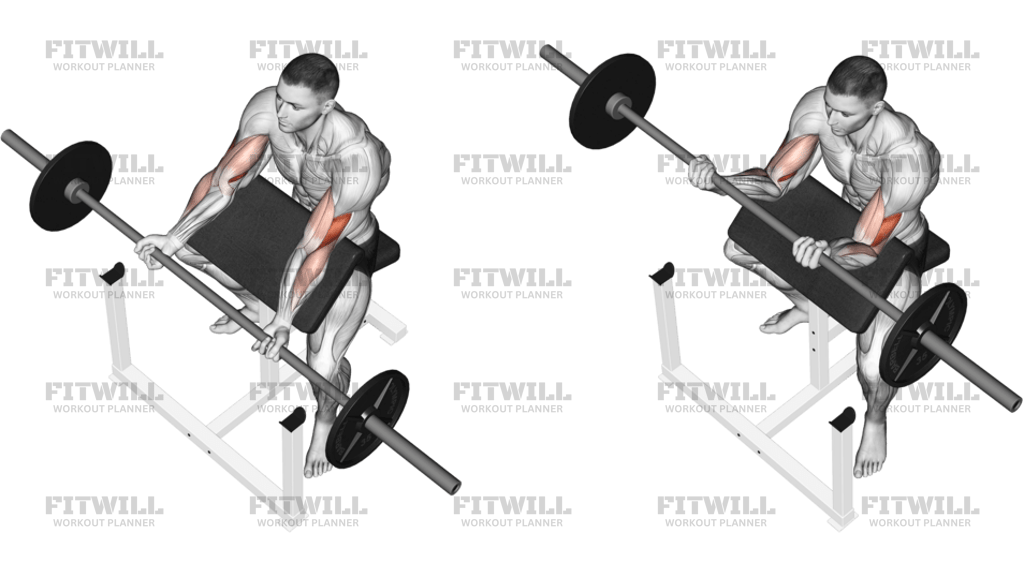
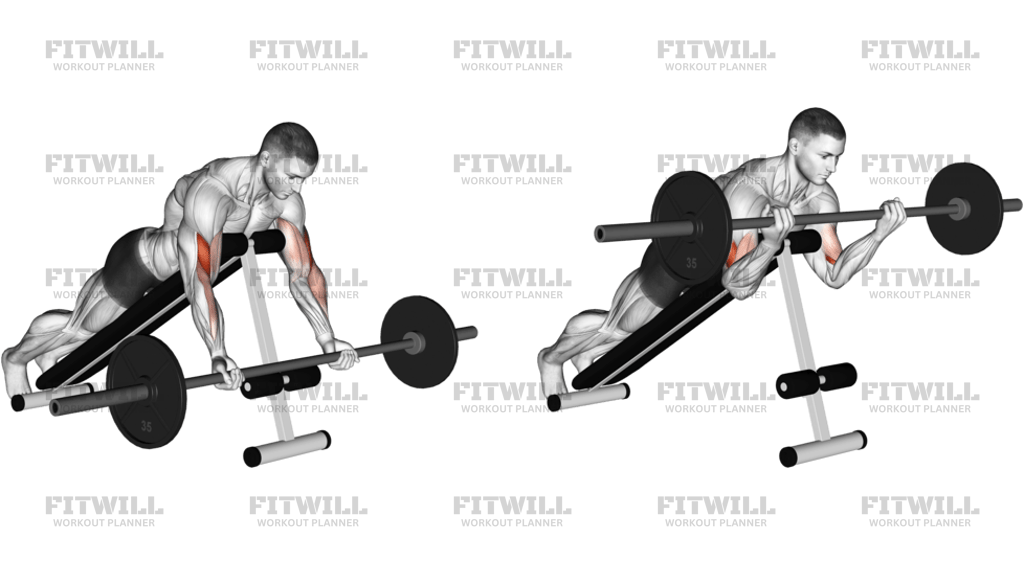
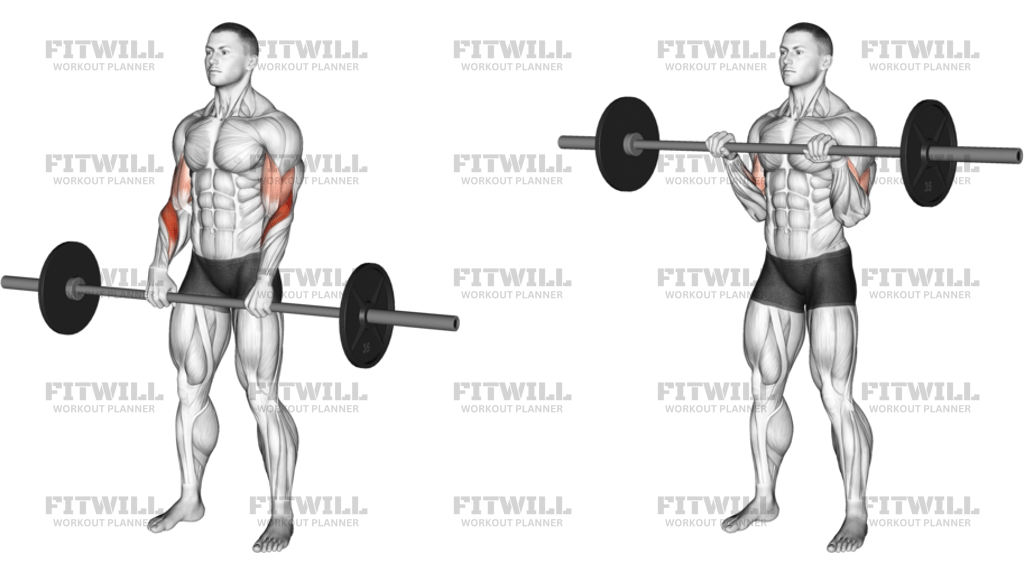
Finger Curls
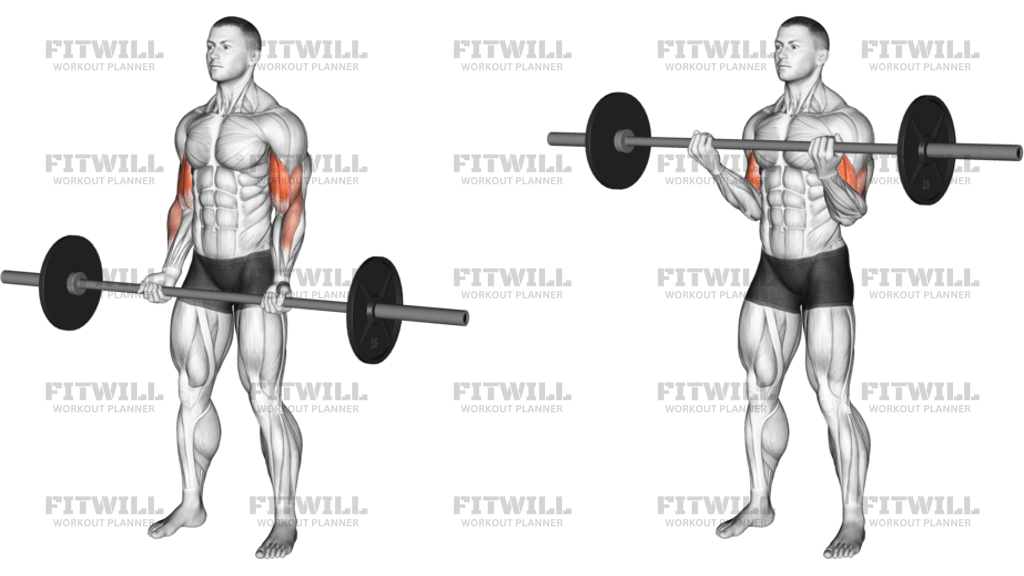
Finger Curls is a seated forearm exercise that emphasizes the muscles that flex the fingers and help maintain a strong grip. In the image, the lifter sits on a bench with the forearms supported on the thighs and the barbell resting low in the hands, which lets the fingers do most of the work instead of turning the movement into a wrist curl.
That setup matters because the thighs fix the forearms in place and shorten the amount of cheating that is possible. With the elbows and upper arms quiet, the exercise isolates the finger flexors more cleanly and makes the bar path easy to control. It is a small-range exercise, but the tension can be very high when the grip is weak or the bar is too heavy.
The useful range is the controlled roll from the fingertips into the palm and back again. Start with the bar sitting across open fingers, then close the fingers to curl the bar inward until it is firmly seated in the hand. Lower it the same way with patience so the bar does not drop or bounce off the fingertips.
This exercise is commonly used for grip strength, forearm size, and support work for pulling lifts, climbing, and sports that depend on hand endurance. Because the wrists are flexed and the fingers are under load, the movement should stay smooth and light enough to avoid irritation in the wrists or finger joints.
Choose a load that lets you keep the forearms pinned to the thighs and the wrists from collapsing. If the bar starts rolling out of position, the set is already too heavy. Clean repetitions and a consistent finger path are more valuable here than forcing extra weight.
Fitwill
Log Workouts, Track Progress & Build Strength.
Achieve more with Fitwill: explore over 9600 exercises with images and videos, access built-in and custom workouts, perfect for both gym and home sessions, and see real results.
Start your journey. Download today!




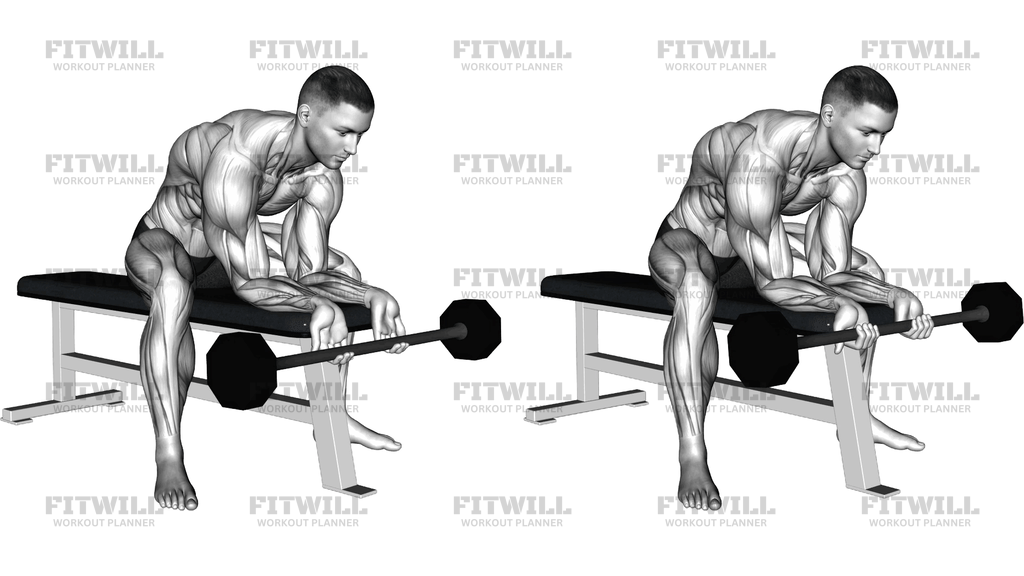
Instructions
- Sit on a flat bench with your feet planted and lean forward so your forearms can rest across your thighs just behind the knees.
- Hold a barbell with an underhand grip and let it sit low in the fingers, with the bar just past the palms and the wrists relaxed.
- Keep the elbows and upper arms still so the forearms stay pinned to the thighs for the whole set.
- Close the fingers to roll the bar inward from the fingertips toward the palm.
- Squeeze the bar firmly at the top without letting the shoulders shrug or the elbows drift.
- Open the fingers slowly to let the bar roll back toward the fingertips under control.
- Keep the motion short and smooth instead of bouncing the bar off the fingers.
- Breathe out as you curl the bar in and breathe in as you lower it back out.
- Set the bar back on the thighs or rack it carefully before relaxing your hands.
Tips & Tricks
- Keep the bar low in the fingers at the start so the fingers have to work through the full roll into the palm.
- Do not let the forearms float off the thighs; once the elbows move, the exercise turns into a partial curl.
- Use a lighter bar than you would for ordinary wrist curls, because the small finger muscles fail earlier.
- Pause briefly when the bar is seated in the palm to remove any bouncing between reps.
- Keep the wrists from cranking backward hard at the bottom, since that usually turns the set into joint stress instead of muscle work.
- A slower lowering phase makes the fingers work harder than trying to heave the bar up with momentum.
- If the bar slides toward the thumb side, reset your hand position before the next rep.
- Stop the set when your fingers start opening early or the bar begins to slip, not after it has already dropped.
Frequently Asked Questions
What muscles do Finger Curls work?
They mainly train the finger flexors and the forearm muscles that help close the hand and hold onto a bar. The biceps and shoulders only stabilize the setup.
Is Finger Curls a beginner-friendly exercise?
Yes, if the bar is light enough to keep the forearms fixed on the thighs and the fingers moving smoothly. Start conservatively because the grip can fatigue faster than expected.
Should my palms face up or down on Finger Curls?
Use an underhand, palms-up grip so the bar can roll from the fingertips into the palm. That position matches the movement shown in the image and keeps the forearms supported on the thighs.
What is the biggest mistake on this exercise?
Letting the forearms leave the thighs and turning it into a wrist curl or a partial cheat curl. Another common error is dropping the bar instead of controlling the roll back to the fingers.
How heavy should the barbell be?
Light enough that you can keep the wrists and fingers moving through a clean, controlled roll for every rep. If the bar slips or you have to fling it upward, the load is too heavy.
Can I use this for grip strength?
Yes. Finger curls are a direct way to build the hand and forearm endurance that supports deadlifts, rows, carries, climbing, and racket or bat sports.
Why are my forearms on my thighs?
The thighs anchor the arms so the fingers do the work instead of the shoulders or upper arms. That support also makes the bar path easier to control and repeat.
Should I do these fast or slow?
Slow enough to keep the bar rolling under control in both directions. A controlled lowering phase is especially useful because it keeps tension on the fingers instead of letting gravity do the work.
What should I do if the bar hurts my wrists?
Reduce the load, shorten the range slightly, and make sure the forearms stay planted on the thighs. If the pain persists, stop and use a different grip-strength drill.