Hyperextension On Bench
Hyperextension On Bench is a bench-supported hip hinge that trains the spinal erectors, glutes, hamstrings, and the abs that keep the pelvis from tipping as the torso moves. It is a simple name, but the setup changes the exercise completely: the hips need to be positioned so the torso can hinge freely while the lower body stays anchored.
The bench edge should sit just below the hip bones so you can fold at the hips without sliding forward or collapsing into the pad. When the setup is right, the torso can hang long at the bottom, the neck stays neutral, and the rep starts from a braced position instead of a relaxed stretch. That alignment is what keeps the movement focused on the posterior chain instead of turning it into a sloppy back bend.
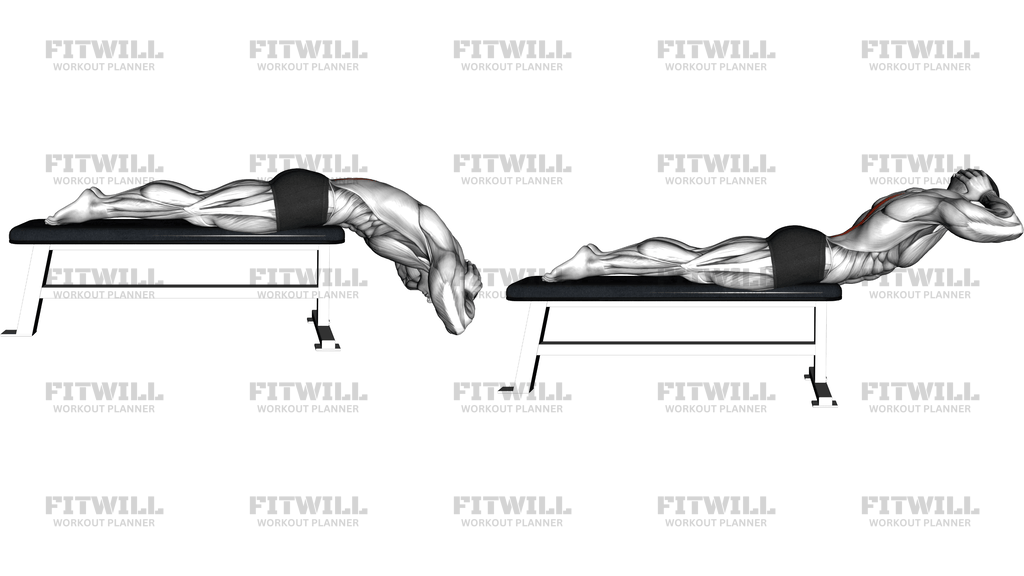
On each rep, lower by hinging at the hips until the torso dips just below the bench line, then drive the hips forward and squeeze the glutes to raise the chest back to a straight line with the legs. Stop at neutral. The goal is not to crank the spine into a bigger arch at the top, but to finish the rep with the ribs stacked, the pelvis controlled, and the movement smooth from bottom to top.
This exercise fits well in a posterior-chain or trunk-stability block, especially for people who need stronger hip extension and better endurance through the lower back. It can support deadlift work, running, jumping, and general back strength when it is kept controlled and pain-free. If the range is too deep, the hamstrings cramp, or the low back takes over, shorten the motion and make the top position cleaner before adding load or reps.
[ Workout Log & Planner ]
Put your next workout in Fitwill
Keep your plan and training log ready when you are.


Instructions
- Set a flat bench so the edge sits just below your hip bones and your torso can hang freely.
- Anchor your ankles or feet under a support, or have a partner hold them, so your legs stay fixed.
- Lie face down with your hip crease on the pad, legs straight, and your torso long over the bench.
- Brace your abs, keep your ribs down, and look at the floor with a neutral neck.
- Cross your arms on your chest or place your hands lightly beside your temples if that variation is comfortable.
- Inhale and hinge down from the hips until your torso drops just below the bench line.
- Exhale and lift by squeezing your glutes and driving your hips into the pad until your body reaches a straight line.
- Stop at neutral instead of cranking your spine higher than straight, then lower under control for the next rep.
Tips & Tricks
- Keep the motion at the hips; if your low back starts moving first, shorten the range.
- Think about squeezing the glutes to finish the rep instead of arching harder through the lumbar spine.
- Keep your chin slightly tucked so you do not chase the movement with your head.
- Use a slow lowering phase of about 2 to 3 seconds to keep tension on the posterior chain.
- If your hamstrings cramp, move the anchor point a little closer or reduce how far you lower.
- Do not let your knees bend and swing to create momentum.
- Hold the top for a brief pause only when you can still keep the ribs stacked over the pelvis.
- Add a light plate to the chest only after bodyweight reps stay smooth and level.
Frequently Asked Questions
What muscles does Hyperextension On Bench work?
It mainly trains the spinal erectors, glutes, and hamstrings. The abs and obliques help keep the torso braced so the pelvis does not dump forward.
How is Hyperextension On Bench different from a back extension machine?
The bench version usually gives you less pad support and a shorter setup, so body position matters more. You have to control the hinge without relying on the machine frame.
Where should my hips sit on the bench?
The edge should sit just below the hip bones so you can hinge freely. If the bench is too high or too low, the movement turns awkward and the low back tends to take over.
Should I round or arch my back during the rep?
Neither. Keep a long torso and finish at neutral, not at an exaggerated arch. The rep should come from hip extension, not from bending the spine harder.
Is this a beginner-friendly exercise?
Yes, as long as the setup is stable and the range stays small at first. Beginners should keep the movement smooth and stop before the lower back loses position.
Where do I put my hands?
Crossed on the chest is the simplest option. Hands beside the temples can work too, but do not pull on your neck or use the hands to force the chest up.
What should I do if I feel it mostly in my lower back?
Reduce the depth of the lowering phase and squeeze the glutes harder on the way up. If the bench setup is off, reset the hip position before continuing.
How can I make the exercise harder without cheating?
Use slower reps, a brief pause at neutral, or a light load held to the chest. Keep the same torso path and do not turn the top into a big back arch.