Kneeling Wrist Flexor Stretch
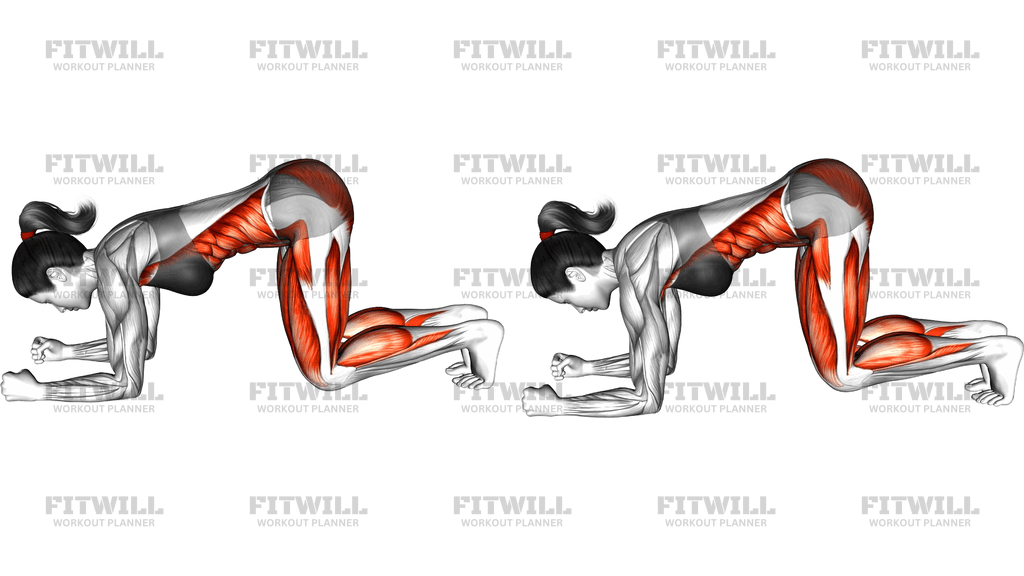
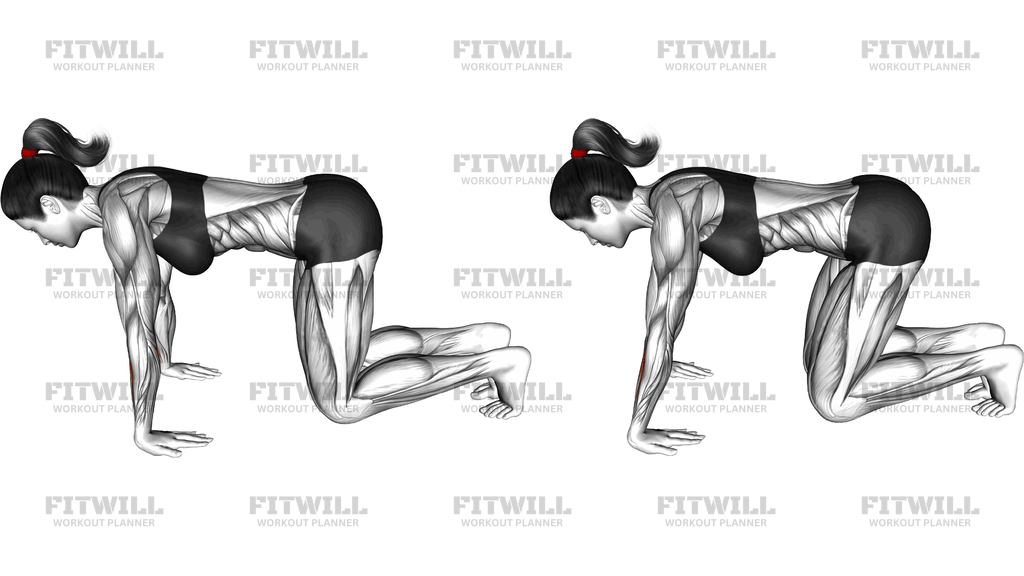
Kneeling Wrist Flexor Stretch is a floor-based mobility drill for the palm side of the forearm and the wrist joint. In the image, both hands are planted on the mat while the knees stay down and the hips shift back to increase the stretch. That kneeling setup lets you control how much body weight goes into the wrists, which makes it easier to open the forearm without dumping all the pressure into the joint.
The main tissues being lengthened are the wrist flexors and the muscles that help close the hand and stabilize the wrist, with the forearms doing most of the visible work. Shoulders and upper arms are there to support the position, but they should not be the thing you feel working hardest. If the elbows start bending or the shoulders shrug up, the stretch gets harder to control and usually shifts away from the wrists.
Set the hands flat with the fingers turned back toward the knees, then organize the shoulders directly over the hands before you shift the hips backward. The motion should be gradual: a small rock back, a pause, then a slightly deeper position if the wrists still feel smooth. The stretch should build along the underside of the forearm and into the wrist, not create a sharp pinch in the palm or a numb feeling in the fingers.
Breathing matters here because it helps the forearms relax. Exhale as you sink into the stretch and keep the neck long so the upper body does not brace unnecessarily. Hold the end position only as long as the pressure stays clear and tolerable, then come forward enough to reset before repeating. The goal is a repeatable stretch, not forcing the maximum range on every rep.
This exercise is useful before pressing, front rack work, hand-balancing drills, or any session where the wrists have been feeling stiff from gripping or desk work. It can also be used after training as a short cooldown when the forearms need to open back up. If the palms or wrists are sensitive, make the angle smaller, spread the load over both hands evenly, or use a softer mat instead of trying to chase a deeper stretch.
[ Workout Log & Planner ]
Put your next workout in Fitwill
Keep your plan and training log ready when you are.


Instructions
- Kneel on the mat and place both hands flat under your shoulders with the fingers turned back toward your knees.
- Keep your knees under your hips, arms straight, and palms spread so the weight is distributed across the whole hand.
- Stack your shoulders gently over your hands and keep your chest long instead of collapsing into the floor.
- Slowly shift your hips back a few inches until you feel the stretch begin on the palm side of the forearms.
- Hold the position and breathe out as the wrists and forearms open.
- Keep the elbows straight and the shoulders relaxed so the stretch stays in the wrists instead of turning into a shoulder hold.
- If the stretch feels too sharp, move your hands slightly forward or reduce how far you rock back.
- Return your hips forward to ease the pressure, then repeat with the same smooth path.
- Release the hands only after the pressure has dropped and the wrists feel calm again.
Tips & Tricks
- A small backward rock is usually enough; forcing the hips all the way to the heels can overload the wrists quickly.
- Press through the thumb mound and index-finger knuckle so the wrist does not collapse to the pinky side.
- Keep the elbows straight but not jammed; bending them shifts the stretch away from the forearms.
- If full finger-back position is too much, turn the hands out a little and rebuild tolerance there first.
- Use a softer mat or folded towel if the kneeling pressure distracts from the wrist stretch.
- Exhale while sinking back to help the forearm muscles relax, then inhale as you come forward.
- Stop the stretch if you feel numbness, tingling, or a sharp pinch in the wrist joint.
- This works best as a controlled hold, not a bounce or rapid rock, because the wrists respond badly to sudden loading.
Frequently Asked Questions
What does Kneeling Wrist Flexor Stretch target most?
It mainly lengthens the wrist flexors on the palm side of the forearm and opens the front of the wrist.
Where should I feel the stretch?
You should feel it through the underside of the forearm and into the wrist crease, not as a sharp pain in the joint.
Do my fingers need to point straight back?
Yes, the classic setup has the fingers turned back toward the knees, although a slight outward angle can feel better for sensitive wrists.
Should my elbows stay straight?
Yes. Straight arms keep the load on the wrists and forearms instead of turning the stretch into a shoulder position.
Can beginners do this stretch?
Yes, as long as they use a small backward rock and stay well short of tingling or sharp discomfort.
How long should I hold it?
Short holds of about 15 to 30 seconds usually work well, especially if you repeat several rounds.
What if my wrists feel pinchy?
Move the hands a little forward, reduce how far the hips travel back, or use a softer surface before trying to deepen the stretch.
When is this stretch most useful?
It fits well before pressing or floor work, and it also works as a cooldown after heavy gripping or front rack training.