Dumbbell One-Arm Row Rack Support
Dumbbell One-Arm Row Rack Support is a supported pulling exercise for the back, shoulders, and arms. One hand braces on a rack or sturdy rail while the other hand rows a dumbbell through a controlled arc. That support takes some load off the lower back, makes it easier to keep the torso steady, and lets you focus on the working side instead of turning the set into a body English row.
The exercise is most useful when you want to train unilateral back strength with cleaner mechanics. The main movers are the lats and upper back, with the biceps and rear shoulder helping to finish the pull. The support hand, staggered stance, and hinged torso all matter because they keep the rib cage, pelvis, and shoulder line quiet enough for the row to come from the shoulder and elbow rather than from twisting.
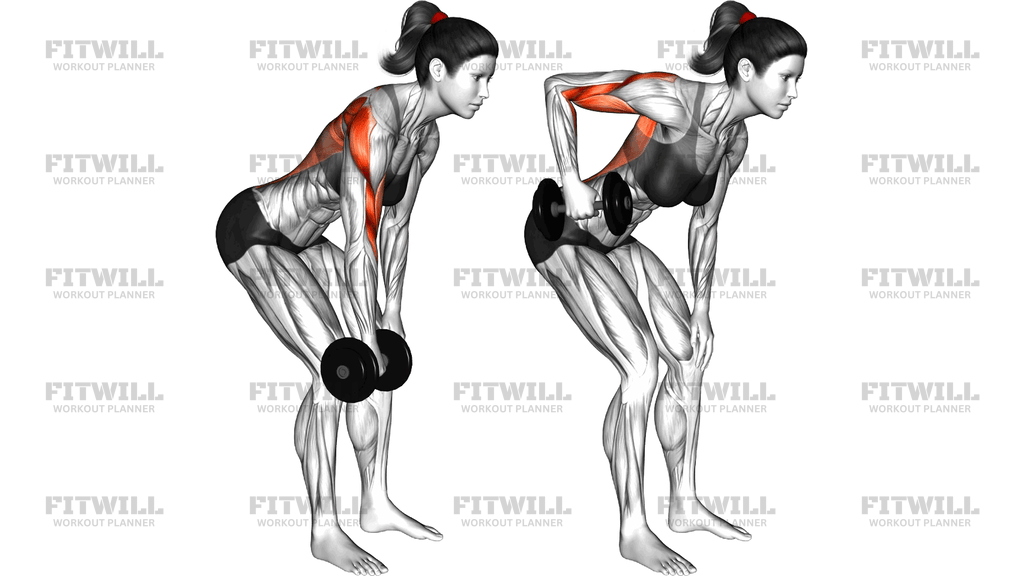
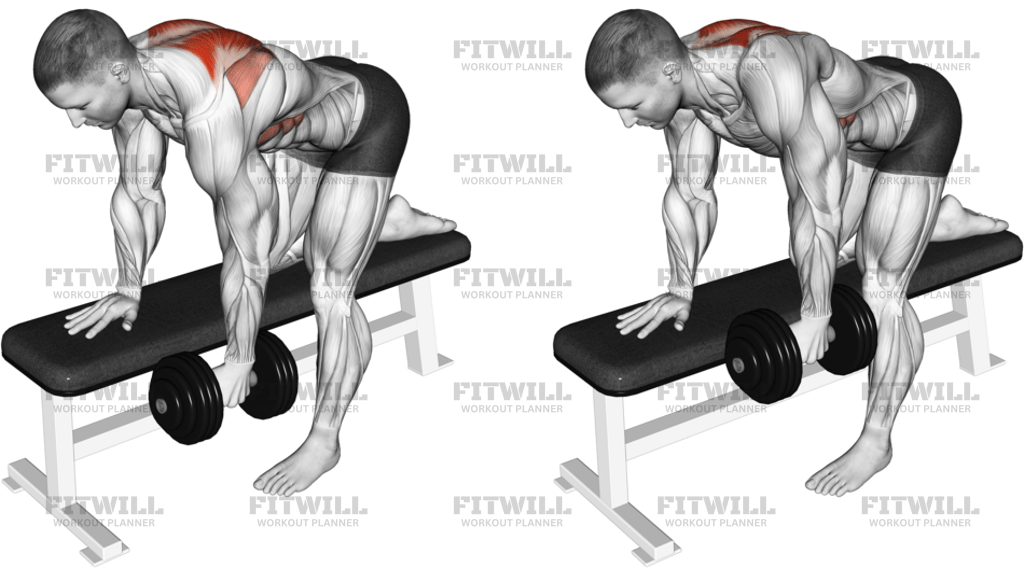
A good rep starts with a firm brace on the rack and a long spine. Hinge until your torso is almost parallel to the floor or to the angle shown in the image, then let the dumbbell hang straight down from the shoulder. From there, row the elbow back and slightly toward the hip or lower ribs, keeping the dumbbell close to your body and the wrist neutral. Pause briefly at the top before lowering under control.
Use this movement as a focused accessory lift for building thickness through the back and improving side-to-side balance. It works well when one side is weaker, when you want to reduce cheating compared with a free-standing row, or when you need a back exercise that is easier to stabilize than a barbell variation. The main safety goal is to keep the torso fixed, the neck relaxed, and the load light enough that the rack support stays steady instead of becoming a crutch for swinging the weight.
[ Workout Log & Planner ]
Put your next workout in Fitwill
Keep your plan and training log ready when you are.


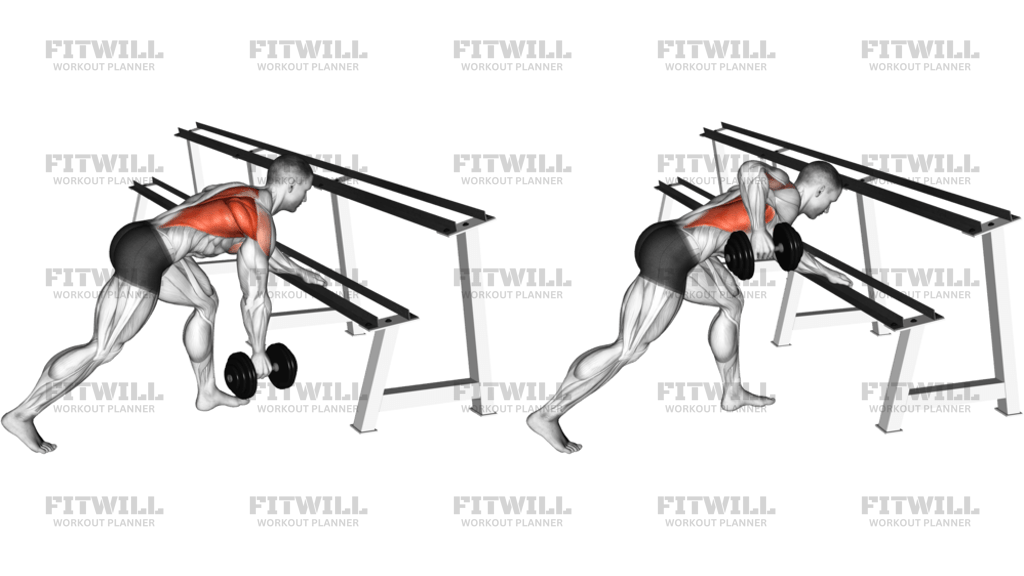
Instructions
- Stand beside a rack or sturdy rail and place your inside hand on the upper support so your arm can stay straight and steady.
- Hinge forward from the hips, stagger your feet for balance, and keep your torso nearly parallel to the floor with a long, neutral spine.
- Let the working-arm dumbbell hang directly below your shoulder with a neutral wrist and a soft bend in the knees.
- Brace your midsection and keep your rib cage from twisting open before you start the pull.
- Drive the elbow back and slightly toward your hip or lower ribs, keeping the dumbbell close to your side.
- Squeeze the shoulder blade in toward the spine at the top without shrugging the shoulder toward your ear.
- Pause briefly at the top, then lower the dumbbell slowly until the arm is fully extended again.
- Keep the support hand, head, and hips quiet through the set and breathe out as you row, in as you lower.
- Complete all reps on one side before switching, then reset the dumbbell with control.
Tips & Tricks
- Choose a rack height that lets your support arm stay straight without forcing your back to round or your shoulder to jam upward.
- Keep the dumbbell path tight to your torso; if it drifts away from your body, the load usually shifts into swinging and shoulder shrugging.
- Let the shoulder blade reach forward a little at the bottom, then pull it back only after the elbow starts moving.
- Row toward the hip or lower ribs instead of straight up to the armpit if you want a cleaner lat-driven path.
- Keep the same amount of bend in both knees so the torso angle does not change rep to rep.
- Do not let the support-side shoulder collapse; a stable brace keeps the spine from rotating with each pull.
- Use a weight that allows a brief pause at the top without bouncing off the bottom.
- If your lower back starts taking over, shorten the set, widen the stance slightly, or reduce the load before form breaks.
Frequently Asked Questions
What muscles does Dumbbell One-Arm Row Rack Support work most?
It mainly trains the lats and upper back, with the biceps, rear shoulder, and mid-back helping to finish the pull.
Why use the rack instead of doing a free-standing row?
The rack gives you a stable brace, which makes it easier to keep the torso fixed and focus on one side at a time.
How should the dumbbell travel during the row?
Pull it close to your side and aim it toward your hip or lower ribs rather than letting it swing out in front of you.
Do I need to twist my torso to get the weight up?
No. A small amount of movement can happen, but the torso should stay mostly square so the back does the work instead of momentum.
Is this exercise good for beginners?
Yes, as long as the dumbbell is light enough to keep the hinge, brace, and row path controlled.
Where should I feel the working side?
You should feel the back of the pulling side working through the shoulder blade, upper back, and lat, not just the arm.
What if my lower back gets tired first?
Reduce the load, shorten the set, and make sure the support hand, staggered stance, and hip hinge are keeping the torso stable.
Should I pause at the top of each rep?
A short squeeze at the top is helpful because it keeps the row honest and makes the shoulder blade finish the movement instead of bouncing.