Lateral Bound
Lateral Bound is a bodyweight plyometric used to train side-to-side power, balance, and landing control. It looks simple, but each repetition asks one leg to produce force, the other leg to counterbalance, and the trunk to stay organized while the body travels laterally. That combination makes it useful for athletes, field sports, and anyone who needs better single-leg stability under speed.
The movement starts from a slight athletic squat with the chest up, hips back, and the arms ready to help create momentum. From there, you push forcefully off one leg, travel sideways, and land on the opposite leg with the knee softly bent and the hips loaded. The trailing leg usually tucks behind the body instead of reaching straight down, which helps keep the landing controlled and keeps the work where it belongs: in the glutes, quads, calves, adductors, and stabilizers around the hip and ankle.
The quality of the landing matters more than the distance. A good lateral bound lands quietly, with the knee tracking over the toes and the torso staying level instead of collapsing toward the floor. If the hop becomes sloppy, shorten the jump and regain control before adding more speed or distance. The exercise should feel springy and athletic, not like a hard crash from side to side.
Because lateral bounds are reactive, they are usually best placed after a general warm-up and before heavy strength work or conditioning fatigue. They can also be used in a movement prep, speed session, or lower-body circuit when you want explosive work without equipment. Beginners can start with small bounds and a brief pause on each landing, then progress to faster, more continuous reps as balance and coordination improve.
Keep the ankles, knees, and hips working together so each landing absorbs force smoothly. If the planted foot rolls inward, the knee caves, or the upper body twists excessively, reduce the distance and re-establish control. The goal is a repeatable lateral push-off and a stable single-leg catch on every rep.
Fitwill
Log Workouts, Track Progress & Build Strength.
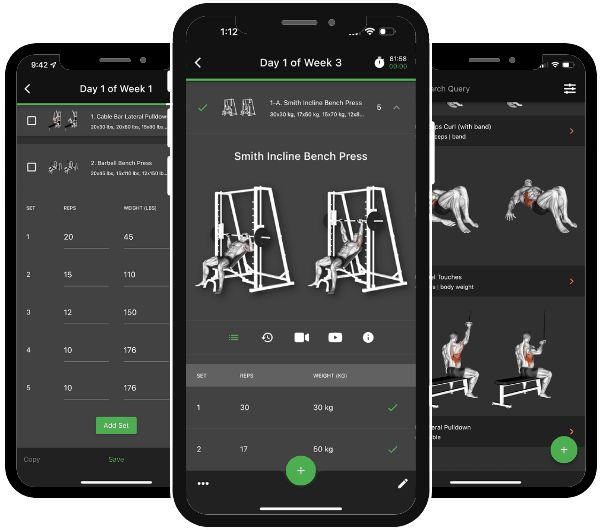
Achieve more with Fitwill: explore over 5000 exercises with images and videos, access built-in and custom workouts, perfect for both gym and home sessions, and see real results.
Start your journey. Download today!


Instructions
- Stand in an athletic quarter-squat with your feet about hip-width apart, chest up, and arms bent in front of your body.
- Shift your weight onto one leg and load the hip, keeping the planted knee soft and aligned over the toes.
- Swing the arms and push off the loaded leg to bound sideways toward the opposite side.
- Land on the other leg with a bent knee and the hips back, absorbing the impact quietly.
- Let the trailing leg cross behind the body for balance without letting the torso twist open.
- Hold the landing for a moment if you are learning the movement, or flow immediately into the next bound if you are working on speed.
- Keep the chest lifted and the core braced so the torso stays level through the side-to-side travel.
- Breathe out during the push-off and reset your breath as you stabilize the landing.
- Repeat for the planned distance or number of repetitions, then finish in a balanced standing position.
Tips & Tricks
- Think about pushing the floor away laterally rather than jumping up, or the bound will turn into a vertical hop.
- Land on a slightly bent knee; a locked knee makes the impact harsh and harder to control.
- Keep the planted foot tripod contact strong so the arch does not collapse when you catch yourself.
- Use the arms to help with rhythm, but do not let them swing so hard that the torso rotates.
- Shorter bounds are often better than bigger ones, especially if you are training speed and clean reactivity.
- Pause the landing for one second if your knees drift inward or your balance is unstable.
- Keep the hips back on the catch so the glutes can absorb the load instead of the knee taking all of it.
- If you are on a slick floor or hard surface, reduce speed and make the landing quieter before adding distance.
- Stop the set when the takeoff gets slow or the landing gets noisy; that is usually the first sign that power has dropped.
Frequently Asked Questions
What does a lateral bound train?
It trains side-to-side power, single-leg balance, and the ability to absorb force on one leg.
Should I jump as far as possible on every rep?
No. Start with a distance you can land quietly and stay in control, then increase the range only if the catch stays stable.
What should the landing leg look like?
The landing knee should stay softly bent and track over the toes while the hip sits back to absorb the force.
What happens to the trailing leg?
It usually sweeps behind the body as a counterbalance, which helps keep the torso steady during the bound.
Can beginners do lateral bounds?
Yes, but beginners should use small jumps and a brief pause on each landing until balance and knee control improve.
Where should I feel the exercise most?
You should feel it mainly in the glutes, quads, calves, and the muscles around the hips and ankles that stabilize the landing.
When should I use lateral bounds in a workout?
They work well after a warm-up and before heavy lower-body lifting or conditioning, while you are still fresh enough to be explosive.
What are the most common mistakes?
Common mistakes are jumping too high, landing stiff-legged, letting the knee cave inward, and twisting the torso instead of staying square.