Reverse-Grip Machine Lat Pulldown
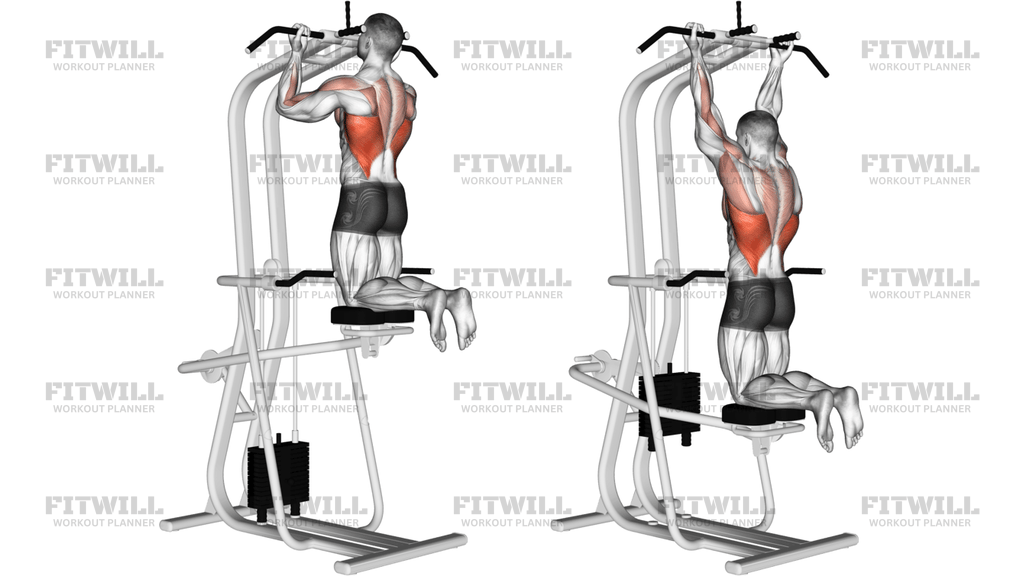
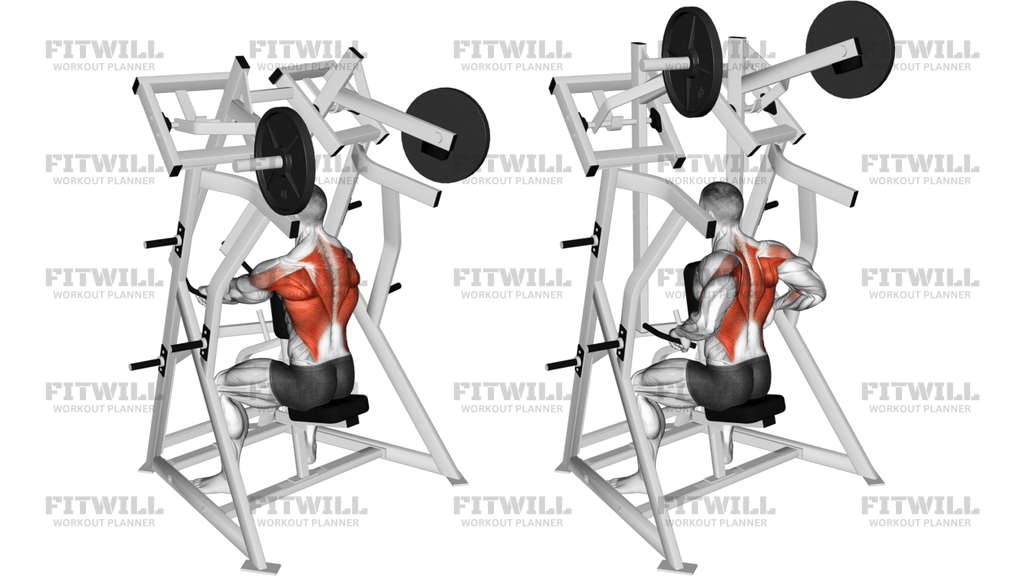
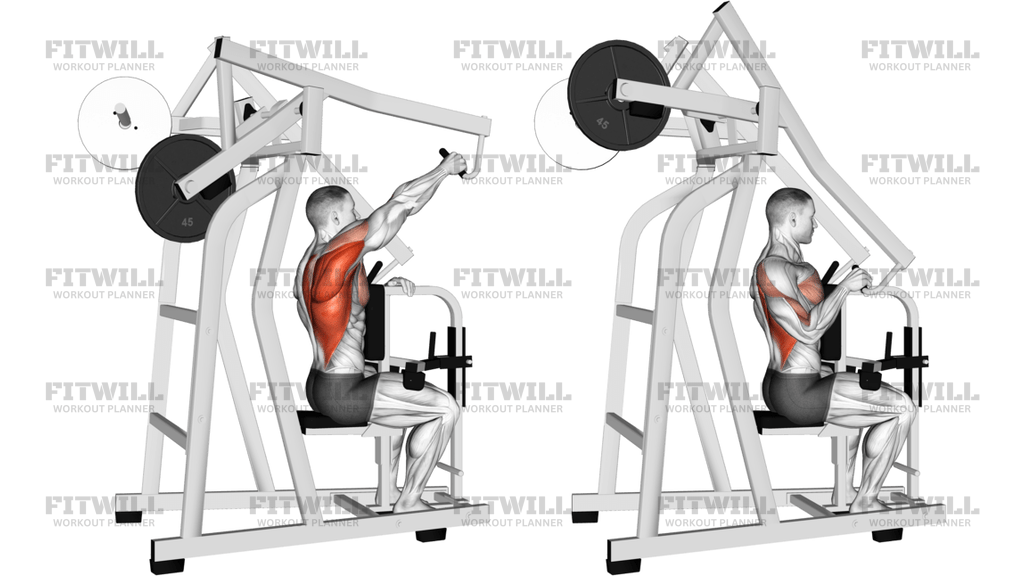
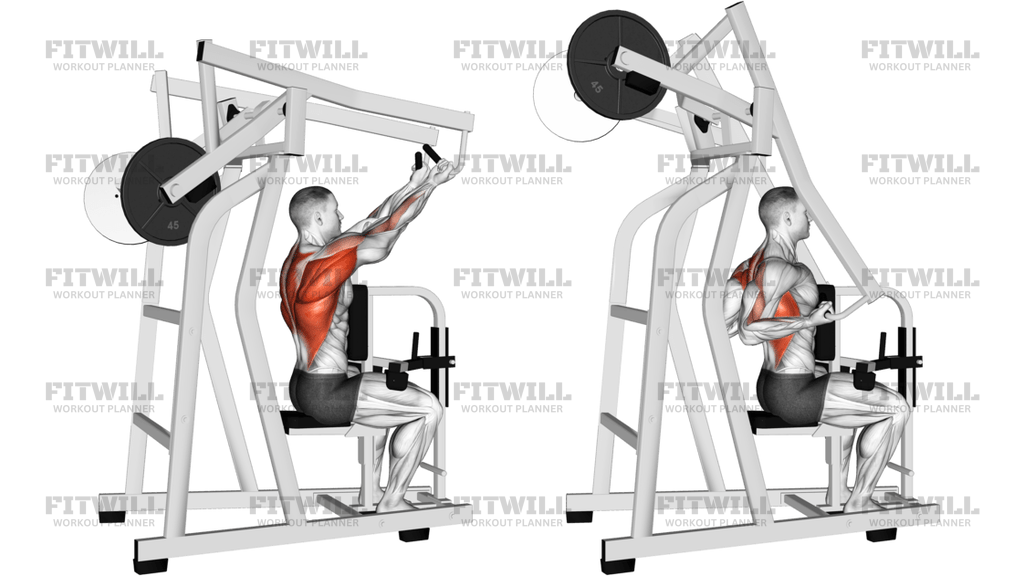
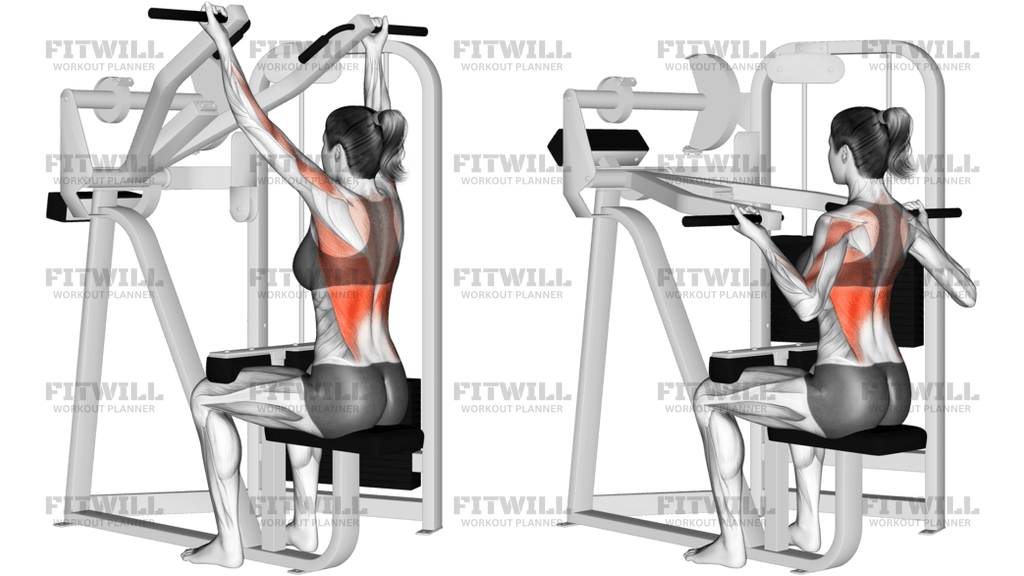
Reverse-Grip Machine Lat Pulldown is a seated back exercise done on a leverage machine with an underhand grip. The setup in the image shows the lifter facing the machine, knees secured under the thigh pad, and the hands on the bar with palms turned up. That reverse grip changes the feel of the pull and usually lets you keep the elbows a little tighter to the body, which makes it a useful option when you want to emphasize the lats while still training the biceps and upper back as support.
The main job of the movement is to pull the upper arms down and back through the shoulder joint. The latissimus dorsi does most of that work, while the biceps, lower and mid traps, rhomboids, rear delts, and forearms help stabilize the pull and hold the bar path steady. Compared with a wide overhand pulldown, the reverse grip usually makes the repetition feel more natural for people who like a closer arm path or want a stronger elbow-flexion component without turning the exercise into a curl.
The setup matters because the machine should hold you still enough that your torso does not have to swing to finish the rep. Sit tall with your chest lifted, plant your feet, and lock your thighs under the pad before you pull. Start with your shoulders set down, not shrugged, and your wrists straight so the bar sits cleanly in your hands. If the seat height is wrong or the pad does not pin the legs down, the load will pull you out of position and the lats will never get a clean line of tension.
During the pull, think about driving the elbows down toward your sides and bringing the bar to the upper chest or collarbone area, depending on the machine path. Keep the rib cage controlled instead of flaring hard, and avoid leaning so far back that the movement turns into a row. On the way up, let the arms lengthen fully under control until you feel the lats stretch, then start the next rep without bouncing the stack or jerking the shoulders.
This is a strong accessory exercise for back days, upper-body sessions, and programs that need a controlled vertical pull with a more arm-friendly grip. It works well for moderate to higher repetitions when you want tension and clean mechanics more than brute force. Use a load that keeps the bar path smooth, the shoulders packed, and the elbows tracking consistently, because the reverse grip only works well when the machine does not become a biceps-dominant heave.
[ Workout Log & Planner ]
Put your next workout in Fitwill
Keep your plan and training log ready when you are.


Instructions
- Sit on the machine facing the pad, hook your thighs under the support, and set your feet flat so you stay anchored.
- Take the bar with a shoulder-width underhand grip, palms up, and straighten your wrists before you pull.
- Sit tall with your chest up, shoulders down, and your torso slightly leaned back but not braced into a swing.
- Start with your arms long overhead and let the shoulder blades rise naturally without losing your rib control.
- Pull the bar down by driving your elbows toward your ribs and slightly behind your torso.
- Bring the bar to your upper chest or collarbone area while keeping your neck long and your wrists straight.
- Pause briefly in the contracted position, then reverse the path without letting your torso jerk backward.
- Return the bar slowly until your elbows are almost straight and you feel a full lat stretch, then repeat for the planned reps.
Tips & Tricks
- Keep the grip narrow enough that the reverse-grip path feels natural, but not so close that your wrists bend back.
- Think about pulling your elbows down first; if the hands move before the elbows, the set usually turns into an arm curl.
- A small backward torso angle is fine, but if your chest keeps drifting farther back each rep, the stack is too heavy.
- Let the shoulders reach up at the top only as far as you can control; do not shrug aggressively into the ears.
- Use your exhale during the pull and inhale as the bar travels back overhead so the rib cage stays organized.
- Stop the set if the lower back starts to arch hard or your hips slide forward on the seat.
- The machine should feel smooth all the way through; any clunking, bouncing, or jerking usually means the descent is too fast.
- If the biceps take over, lighten the load and focus on keeping the upper arms on the same path from rep to rep.
Frequently Asked Questions
What muscle does Reverse Grip Machine Lat Pulldown (female) target most?
The lats are the primary target, with the biceps and upper back helping control the pull.
Can beginners perform this exercise?
Yes. The guided machine path makes it beginner-friendly if the load is light enough to keep the torso still.
Where should the bar touch?
Bring it to the upper chest or collarbone area, depending on the machine path, without shrugging or leaning back hard.
Why use the reverse grip instead of a regular pulldown grip?
The underhand grip usually keeps the elbows closer and can make the lats feel easier to isolate for some lifters.
Should my torso move during the rep?
Only a small controlled lean is okay. If you need to swing back to finish the pull, the load is too heavy.
How wide should my grip be?
Use about shoulder width as a starting point. That usually keeps the wrists, elbows, and shoulder path aligned well.
What if I feel it mostly in my arms?
Lower the resistance, slow the lowering phase, and focus on driving the elbows down instead of pulling with the hands.
Is this a good choice for higher reps?
Yes. It works well for moderate to higher reps as long as the bar path stays smooth and controlled.