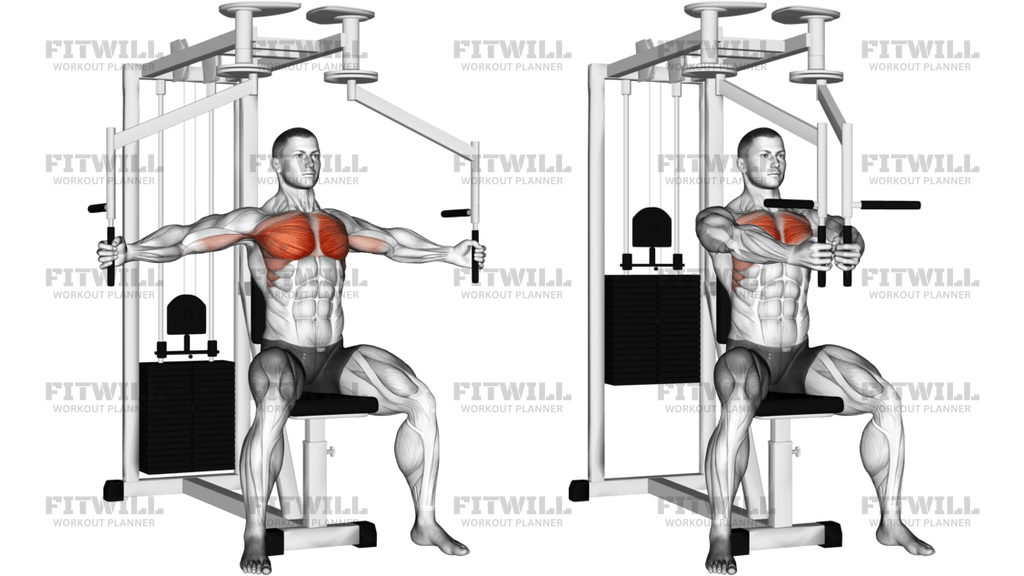
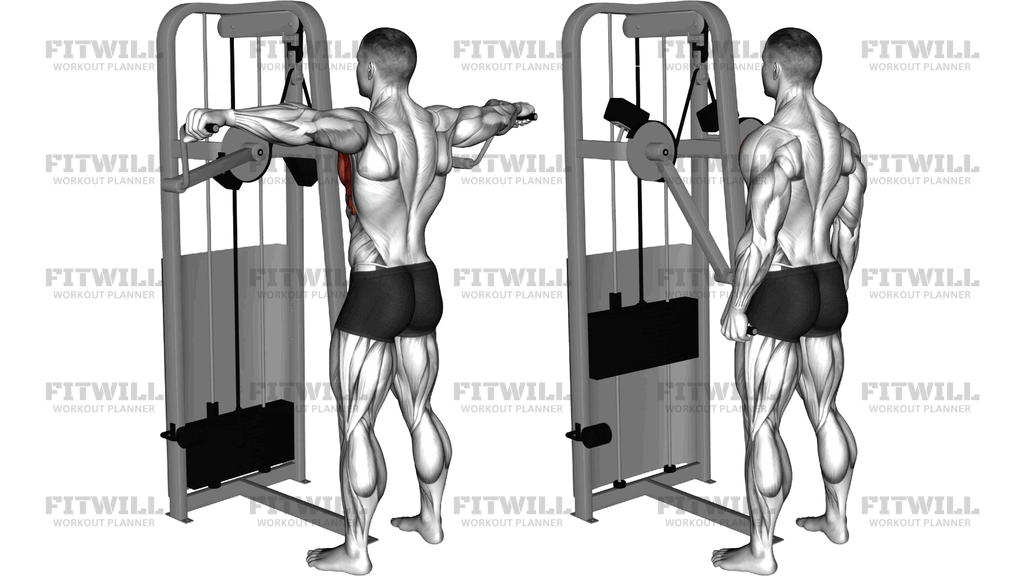
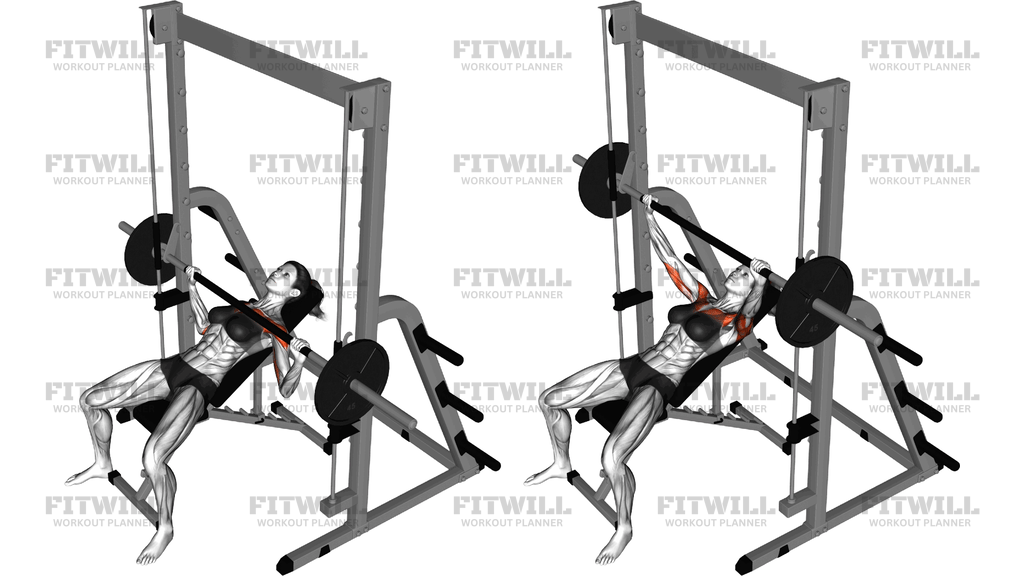
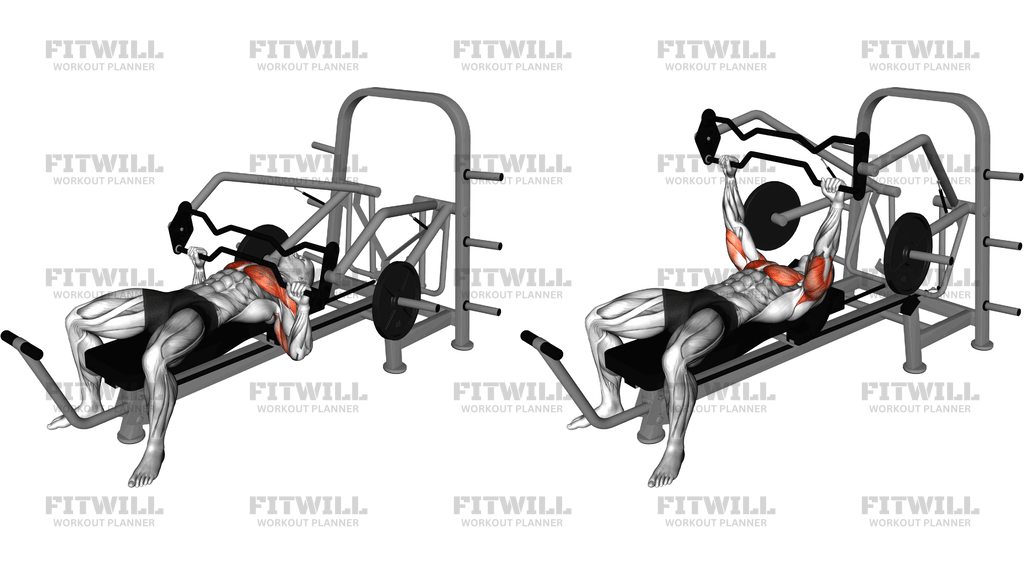
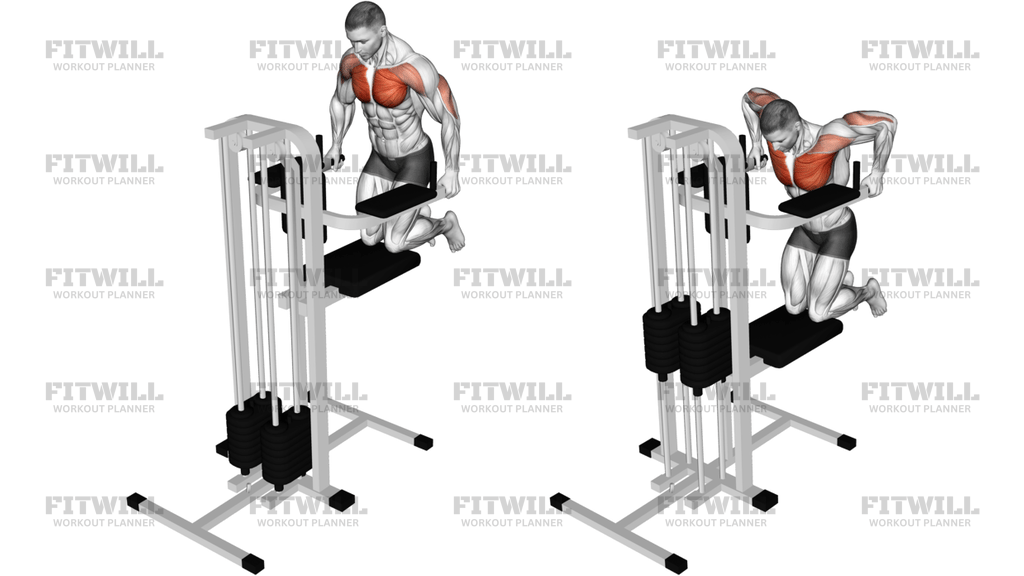
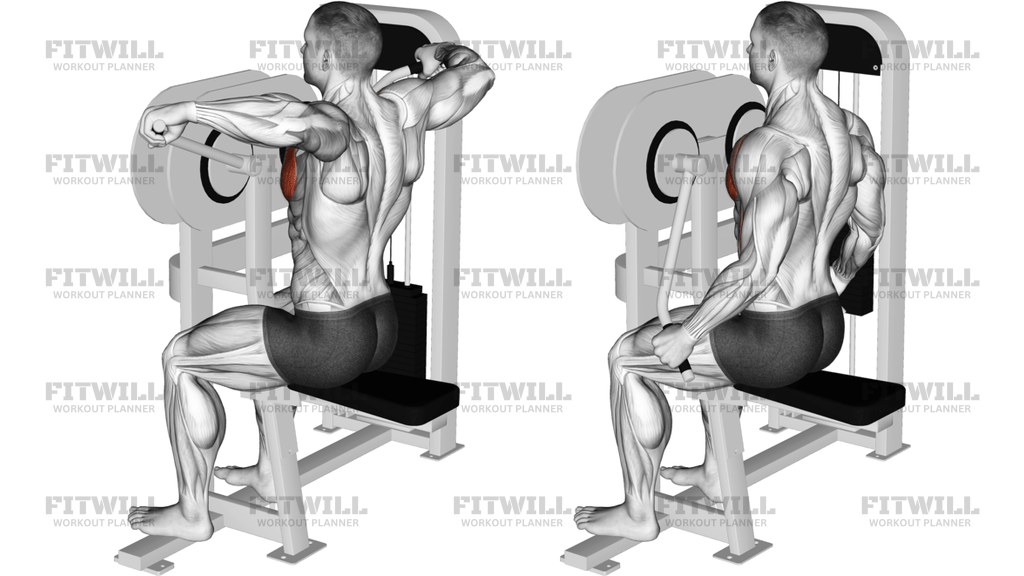
Lever Chest Press
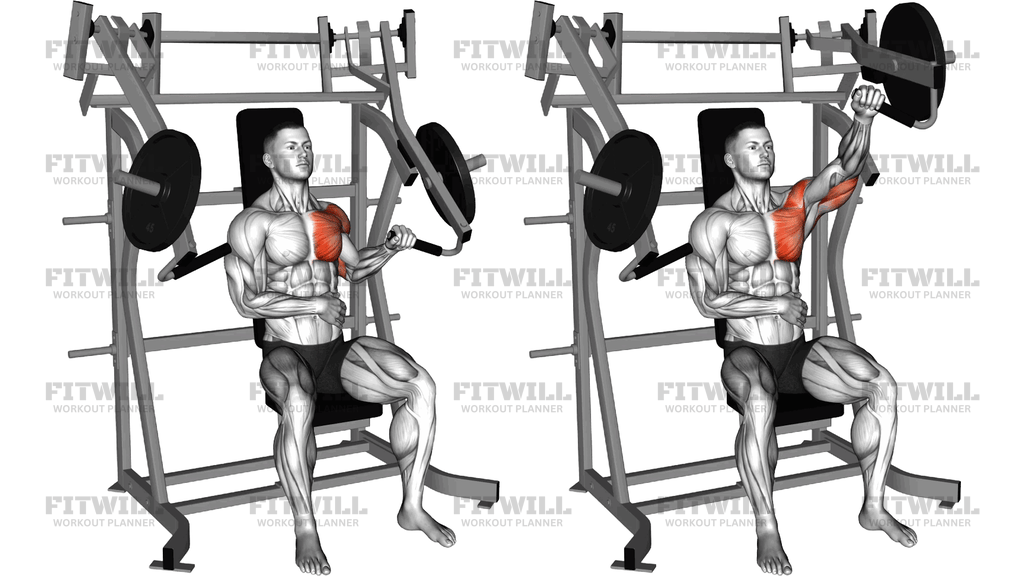
Lever Chest Press is a seated, plate-loaded pressing exercise that trains the chest with direct support from the front delts and triceps. The machine uses a fixed arc, which makes it easier to keep tension on the pecs and avoid the balance demands of a free-weight press. That makes it useful for hypertrophy work, controlled strength training, and sessions where you want to press hard without having to stabilize the load through the same range that a barbell or dumbbell press requires.
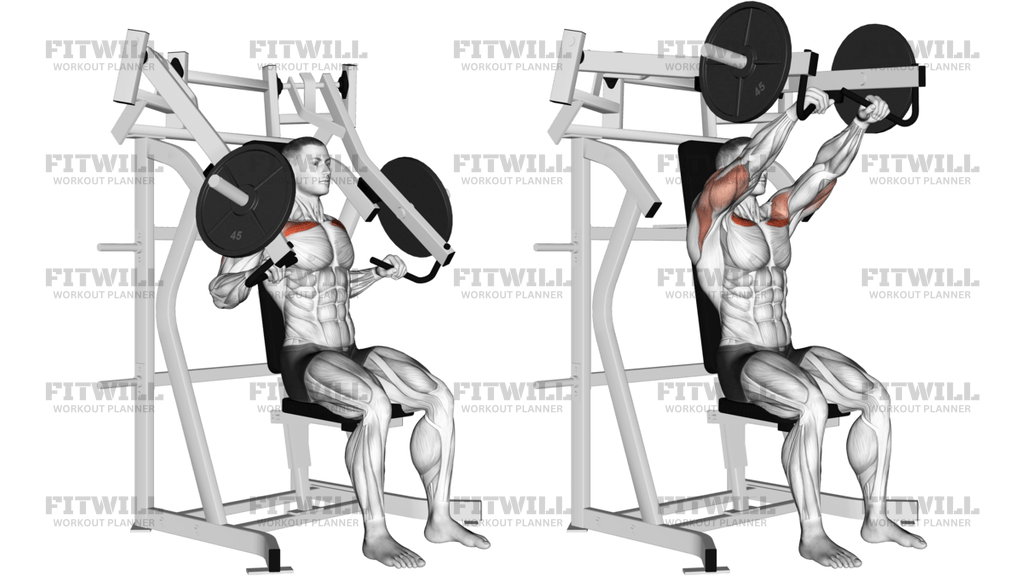
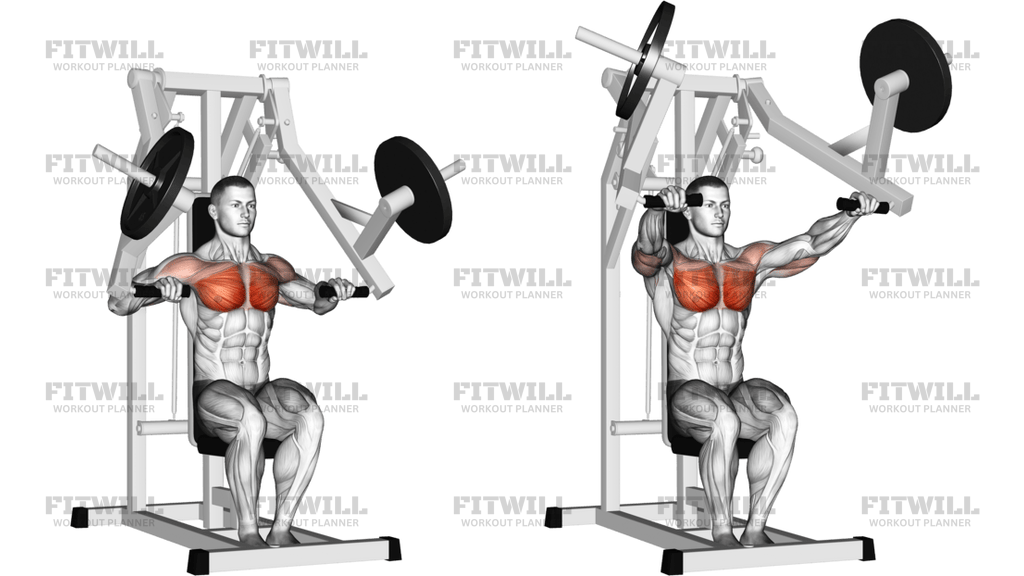
The setup matters because the seat height and back pad determine where the handles start relative to your chest. In the image, the handles sit around mid-chest level and the torso stays tall against the pad, so the press can travel forward from a strong shoulder position instead of drifting too high toward the neck or too low toward the ribs. When that alignment is right, the chest can do the work while the shoulders and triceps assist without taking over the movement.
A clean rep begins with the shoulder blades set down and back, feet planted, and elbows slightly below shoulder height. From there, press the handles forward and slightly inward along the machine’s arc until the arms are nearly straight, but do not slam into a hard lockout. The return should be slow and deliberate until the elbows come back to a comfortable stretch in the chest, usually just behind the line of the torso. Breathing should stay rhythmic: brace before the press, exhale through the drive, and inhale as the handles come back.
This exercise is especially useful when you want repeatable chest volume with less coordination cost than a barbell bench press. It can fit early in a chest-focused session as a primary press or later as a safer accessory after heavier free-weight work. Because the machine fixes the path, it is also a practical option for beginners, lifters managing shoulder irritation, or anyone who wants to train the pecs hard while keeping the torso stable and the motion controlled.
The main coaching goal is to keep the press honest. Use a load that lets you control the start position, the forward drive, and the return without bouncing off the stack or shrugging the shoulders forward at the top. When the seat, back pad, and grip are set correctly, Lever Chest Press gives a strong chest stimulus with a very clear path, making it one of the easiest ways to train pressing mechanics with precision.
[ Workout Log & Planner ]
Put your next workout in Fitwill
Keep your plan and training log ready when you are.


Instructions
- Set the seat so the handles start around mid-chest, then sit back with your head, upper back, and hips against the pad.
- Place both feet flat on the floor and grip the handles with wrists stacked over the forearms.
- Draw your shoulder blades down and back so the chest is lifted without arching hard through the lower back.
- Start with the elbows slightly behind the torso and the hands just outside the chest line.
- Brace your torso, then press the handles forward along the machine’s arc in a smooth, even path.
- Keep the elbows tracking just below shoulder height as the arms move toward near-full extension.
- Finish the press without slamming into the stops or locking the elbows aggressively.
- Pause briefly at the front if you can keep the shoulders down and the chest engaged.
- Lower the handles slowly until you feel a controlled stretch across the chest, then begin the next rep.
Tips & Tricks
- If the handles start too high, lower the seat; if they start too low, raise it until the press lines up with mid-chest.
- Keep your shoulders from rolling forward at the front of the rep, or the front delts will take over the press.
- Let the chest open on the way down, but stop the descent before the shoulder joint feels forced into a painful stretch.
- Use a grip width that keeps the wrists neutral; bent wrists usually turn into wasted force and elbow irritation.
- Press smoothly instead of jerking the first inch off the start, because the machine is most honest when the rep begins under control.
- Do not turn the movement into a shrug; if the upper traps start rising, the load is too heavy or the seat is out of position.
- A short pause at the front can help remove momentum and keep tension on the pecs through the whole set.
- Choose a resistance that lets the handles come back under control on every rep, not just on the first few.
- If one arm finishes early because the machine has independent levers, slow the stronger side and match the weaker side’s path.
Frequently Asked Questions
What muscles does the Lever Chest Press work?
The chest is the main mover, with the front delts and triceps helping drive the press.
How should I set the seat on this machine?
Set it so the handles line up around mid-chest at the start. That usually keeps the press path on the pecs instead of drifting into the shoulders.
Should my back leave the pad during the rep?
No. Keep your upper back and hips planted so the machine can guide the press instead of your torso turning it into a push and shrug.
How far should I lower the handles?
Lower them until you feel a controlled chest stretch and the elbows are slightly behind the torso, but stop before the shoulder joint feels pinched or forced.
Is the Lever Chest Press good for beginners?
Yes. The fixed path makes it easier to learn pressing mechanics, provided the load is light enough to keep the shoulders down and the return controlled.
Why do my shoulders feel more involved than my chest?
The seat may be too high, the grip may be too narrow, or the shoulders may be rolling forward at the front of the press. Adjust the setup so the handles start at chest level.
Can I use this after barbell bench press?
Yes. It works well as a secondary chest press when you want more volume with less stabilization demand.
What is the main form mistake on this exercise?
Rushing the first part of the press and bouncing the handles at the front. Both reduce chest tension and usually make the shoulders do more work.