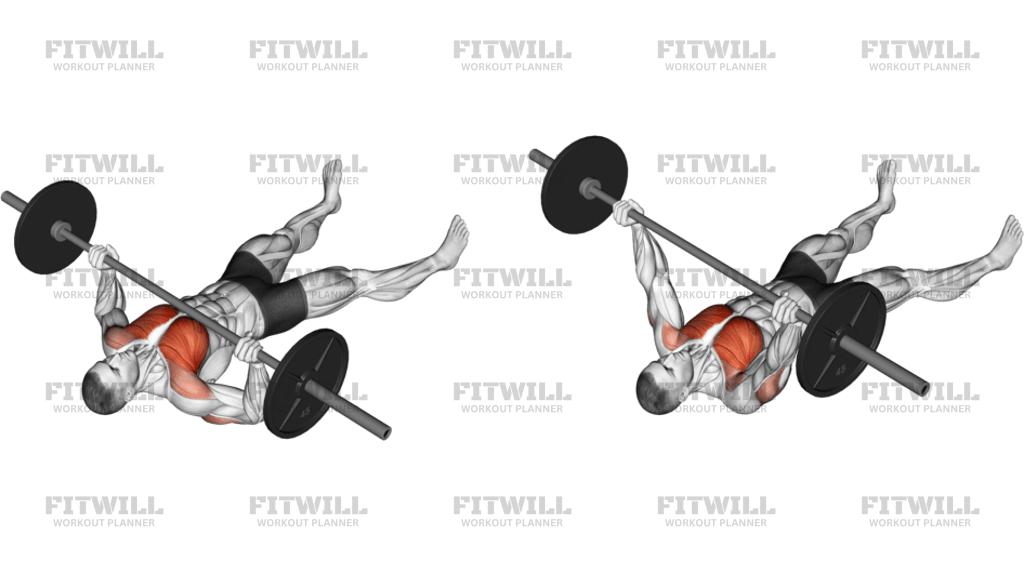
Landmine Floor One-Arm Chest Fly
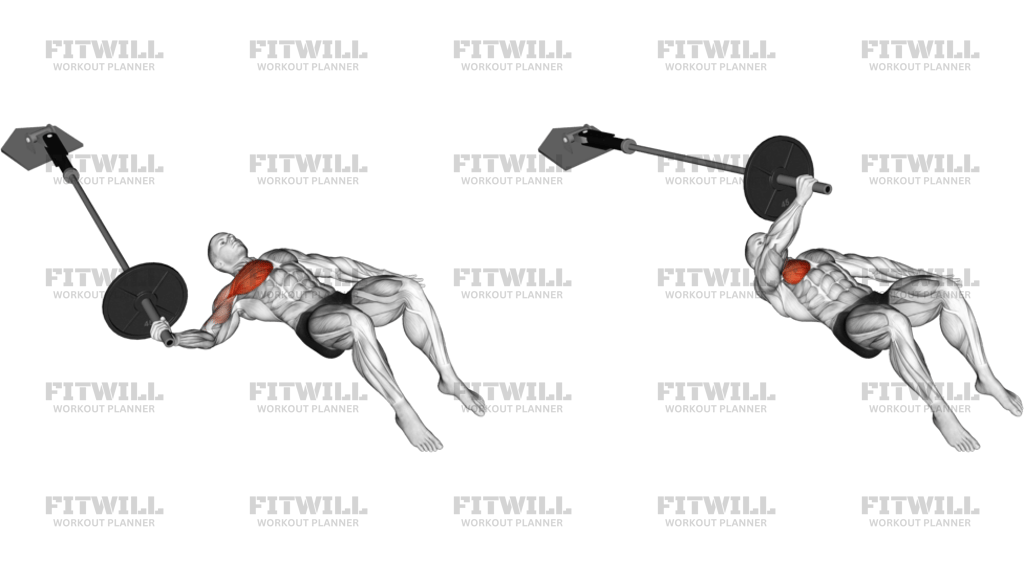
Landmine Floor One-Arm Chest Fly is a unilateral chest exercise built around a barbell anchored in a landmine attachment and a floor-based pressing position. The floor shortens the bottom range of motion, which makes the exercise easier to control than a standing fly and helps keep the shoulder in a safer path while you train the chest through a long arc.
The main target is the pecs, with the front shoulders and triceps helping to stabilize and guide the arm as it travels. Because one arm works at a time, the torso has to resist rotation and keep the rib cage from flaring. That makes this movement useful when you want chest work plus a little anti-rotation demand without the joint stress of a deep dumbbell fly.
Set up with the landmine end beside your working side and lie on the floor with your knees bent and feet planted. The working hand should start low and slightly out from the chest, with a soft elbow and the wrist stacked over the handle or sleeve. The floor should support your torso so you can focus on the arm path instead of balancing a bench or chasing extra range.
From there, sweep the arm in a controlled arc until the hand finishes above the shoulder, then lower it back along the same path. The movement should feel like hugging a large barrel rather than pressing straight up, and the elbow angle should stay nearly fixed. If the shoulder starts to shrug or the ribs pop up, the load is too heavy or the range is too big for that rep.
This is a good accessory lift for chest-focused strength work, upper-body sessions, or hypertrophy blocks where you want strict tension and a clear mind-muscle connection. It is also a practical option for lifters who want a chest fly variation that respects shoulder comfort and limits overextension at the bottom. Keep the reps smooth, symmetrical from side to side, and controlled enough that the arm path looks the same on every repetition.
[ Workout Log & Planner ]
Put your next workout in Fitwill
Keep your plan and training log ready when you are.


Instructions
- Anchor the barbell in a landmine setup and lie on the floor beside the loaded end with the working shoulder closest to the sleeve.
- Bend both knees, place both feet flat on the floor, and let the non-working arm rest out to the side for balance.
- Grip the handle or sleeve with the working hand, keep a soft bend in the elbow, and start with the hand low and slightly outside the chest.
- Set your shoulder blade down and keep your ribs quiet so the torso stays still before the first rep.
- Inhale, then sweep the working arm in a wide arc across the chest until the hand finishes above the shoulder.
- Stop the lift when the wrist, elbow, and shoulder line up without shrugging or letting the elbow bend more.
- Exhale as you lower the arm back to the start along the same arc, keeping tension on the chest the whole way down.
- Repeat all reps on one side with the same path, then carefully lower the bar and switch sides.
Tips & Tricks
- Keep the elbow slightly bent and fixed; turning this into a press changes the load away from the chest.
- Let the floor be your depth limit instead of reaching for a deeper stretch that tugs the front of the shoulder.
- Use a lighter load than you would for a landmine press; the fly position gets harder as the arm opens.
- Keep the working shoulder from rolling forward at the bottom, or the pec will lose tension and the joint will take over.
- If your torso twists toward the landmine, spread your feet wider and tighten the opposite-side obliques.
- Think about bringing the upper arm across the body, not just the hand upward, so the pec stays involved through the arc.
- Pause briefly near the top if you tend to rush the return; that makes each side feel more even and controlled.
- Stop the set when the shoulder starts to shrug or the wrist drifts behind the elbow, because both usually mean the load is too heavy.
Frequently Asked Questions
What does Landmine Floor One-Arm Chest Fly train most?
It mainly trains the chest, especially the pecs, with the front shoulders and triceps helping to control the arm path.
Why do it on the floor instead of a bench?
The floor limits the bottom range, so the shoulder cannot drop into an overly deep stretch. That usually makes the fly easier to control and a bit friendlier for the shoulder.
How should my elbow move during the landmine fly?
Keep a small bend in the elbow and hold that angle mostly steady while the upper arm sweeps in an arc. If the elbow keeps changing, the movement starts to look like a press.
Where should the landmine bar start for this exercise?
Set the anchored end beside your working side so the arm can travel across the body in a smooth arc. The loaded sleeve should be close enough that you can start low without twisting your torso.
Can beginners use Landmine Floor One-Arm Chest Fly?
Yes, but start light and keep the range small until you can keep the ribs down and the shoulder quiet. The floor makes it easier to learn than a deep fly variation.
What is the most common mistake with the handle path?
Most lifters try to reach too far back or shrug the shoulder at the top. The arm should travel in a controlled arc, not a loose swing.
How do I know if the weight is too heavy?
If your torso twists, the wrist lags behind the elbow, or the top position turns into a shrug, the load is too much for strict chest work.
Can I substitute this for a dumbbell chest fly?
Yes, it is a good shoulder-friendlier fly alternative when you want chest isolation with a shorter bottom range. It is not identical, but the chest emphasis is very similar.