Lever Chest Press
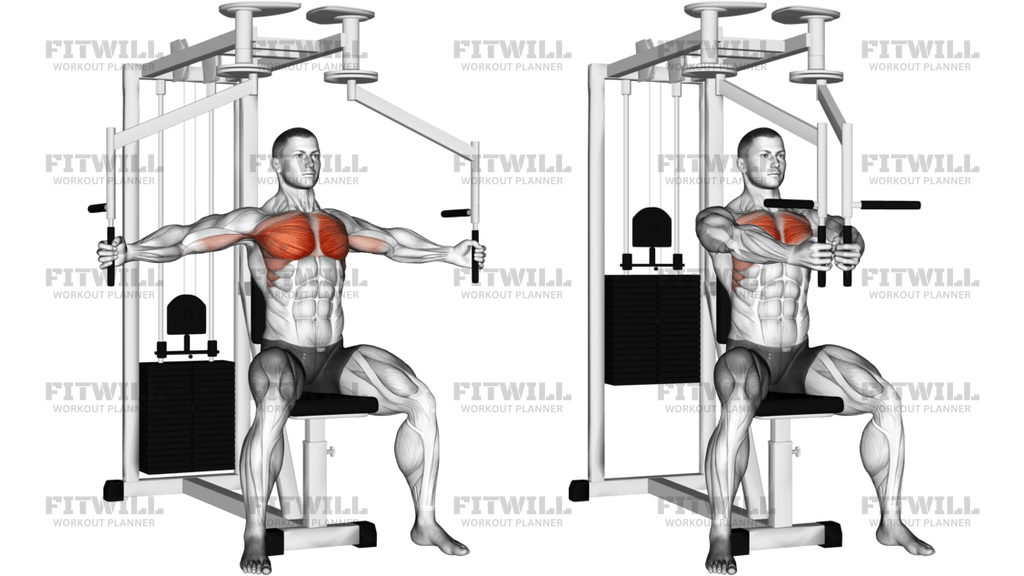
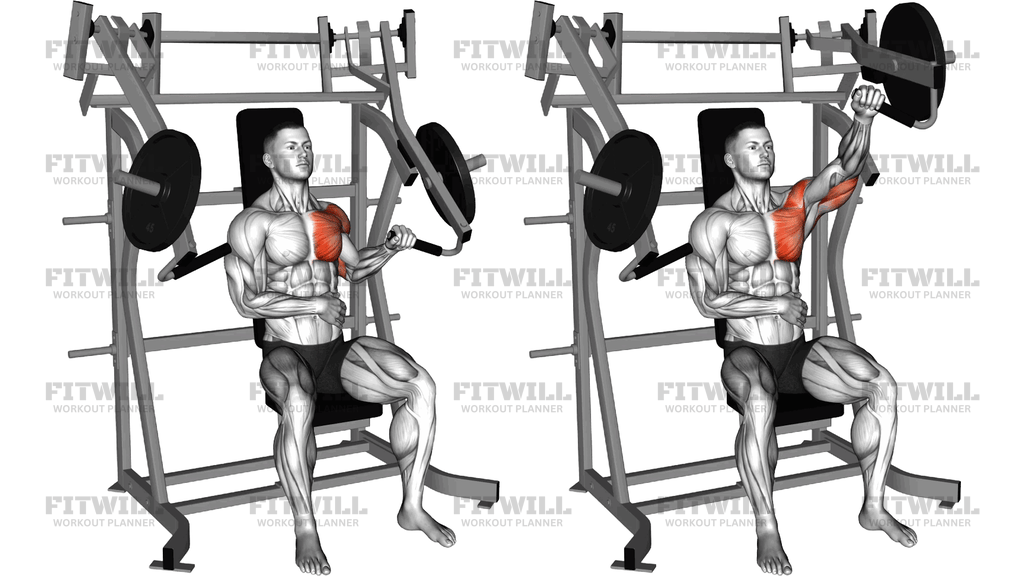
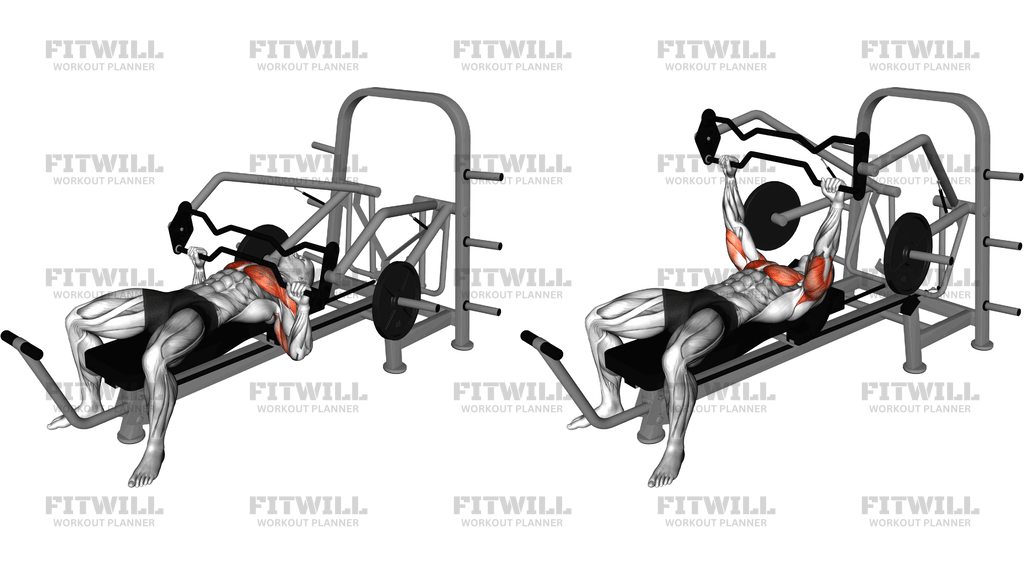
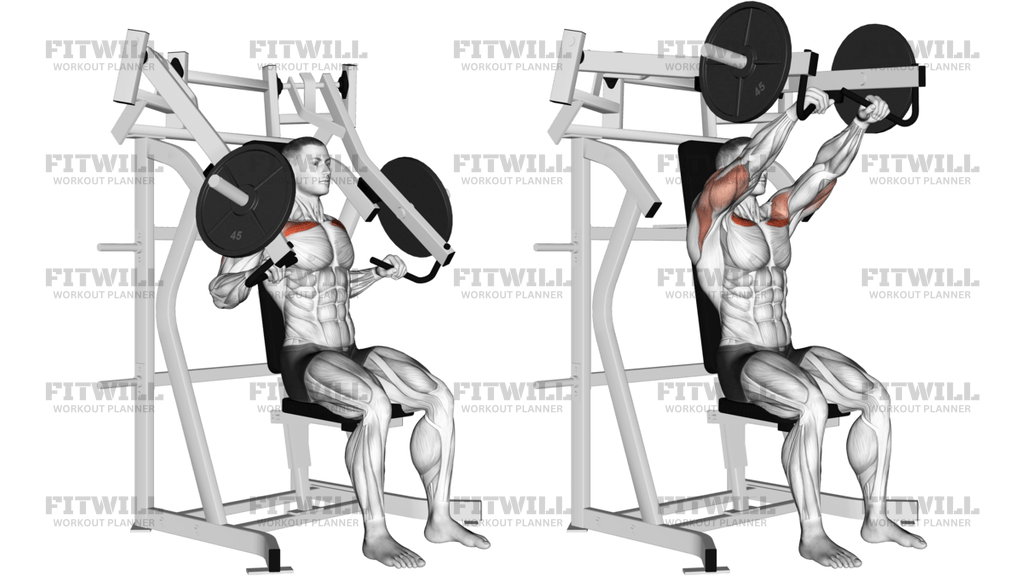
Lever Chest Press is a seated machine pressing exercise that lets you train the chest through a fixed lever path. The handles travel forward in a smooth arc, so you can focus on pressing force, shoulder position, and repeatable tempo instead of balancing a free weight. That makes Lever Chest Press useful for building chest size and pressing strength with less setup complexity than a barbell bench press.
The main work comes from the chest, with the front shoulders and triceps helping finish the press. The lever path also asks the upper back to stay organized against the pad so the shoulders do not roll forward at the bottom or shrug at the top. When the seat height is correct, the handles line up near mid-chest and the press feels direct through the pecs rather than crowded into the shoulders.
Good reps on Lever Chest Press start before the weight moves. Sit all the way back against the pad, plant both feet, and set your grip so the wrists stay stacked over the handles. From there, press the arms forward and slightly inward in the machine's natural path, keeping the chest lifted and the elbows from flaring excessively high. The goal is a strong, controlled press that finishes with the arms almost straight, not a hard slam into lockout.
The lowering phase matters just as much as the press. Let the handles come back under control until the chest gets a comfortable stretch and the upper arms are open without the shoulders sliding forward. If the machine's range forces the shoulders to round, shorten the depth slightly or lower the load. That keeps tension on the pecs where it belongs and reduces the chance of the front of the shoulder taking over the set.
Lever Chest Press fits well in hypertrophy blocks, accessory work, or any routine where you want chest work with a stable, repeatable motion. It is also a practical option for beginners because the lever guides the path and reduces balance demands, provided the seat is adjusted correctly and the load is kept honest. Use it when you want clean pressing volume, a predictable range of motion, and a machine that lets you train hard without sacrificing control.
[ Workout Log & Planner ]
Put your next workout in Fitwill
Keep your plan and training log ready when you are.


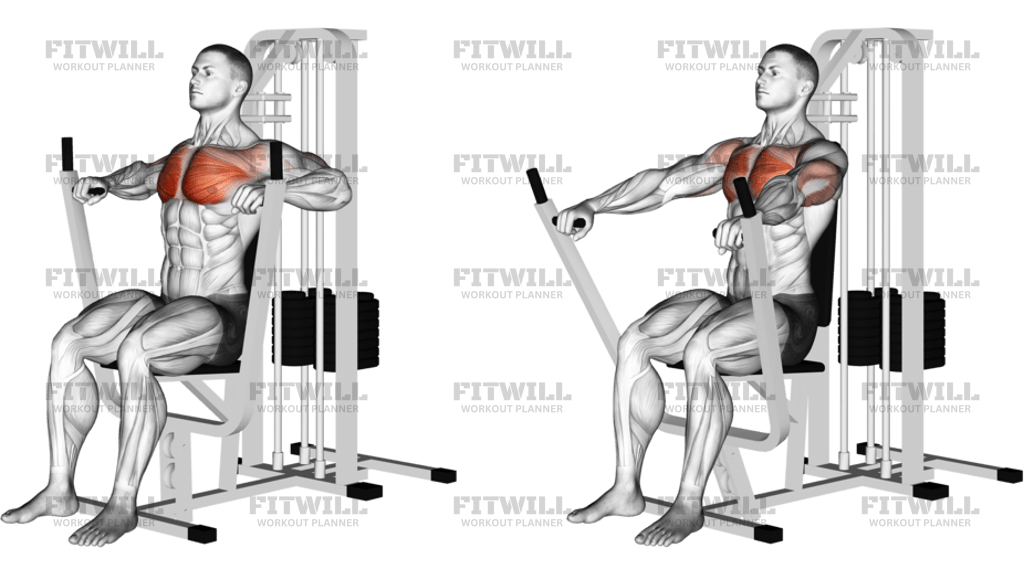
Instructions
- Adjust the seat so the handles line up with mid-chest and your forearms can stay nearly vertical at the start.
- Sit back against the pad with your head, upper back, and hips supported, and plant both feet flat on the floor.
- Grip the handles firmly with wrists straight and elbows slightly below shoulder height.
- Take a breath, brace your torso, and keep your chest lifted before the first press.
- Press the handles forward in the machine's arc until your arms are almost straight without forcefully locking the elbows.
- Keep your shoulders down and do not let them roll toward your ears as you finish the press.
- Pause for a brief moment in the fully pressed position without bouncing the handles.
- Lower the handles slowly until you feel a comfortable stretch across the chest and the elbows return near the starting angle.
- Exhale on the press, inhale on the return, and reset your shoulder position before the next rep.
Tips & Tricks
- If the handles start above your shoulders, lower the seat so the press begins from a chest-friendly line.
- Keep your wrists stacked over the handles; bent wrists turn the press into a forearm and shoulder fight.
- Think about bringing your upper arms together rather than reaching your hands forward with straight elbows.
- Do not slam the weight stack at the top; a soft finish keeps tension on the pecs.
- If the front of your shoulders take over, reduce the depth slightly and keep the elbows a little closer to your sides.
- A controlled two- to three-second lowering phase usually works better here than a fast drop.
- Plant both feet and keep your hips pinned to the pad so you do not push yourself backward on heavier reps.
- Use a load that lets you repeat the same chest-to-handle path for every rep, not just the first few.
- If the machine feels cramped, move the seat or back pad position before adding more weight.
Frequently Asked Questions
What muscles does Lever Chest Press work most?
The chest is the main driver, with the front shoulders and triceps helping finish each press.
Is Lever Chest Press beginner-friendly?
Yes. The fixed lever path makes it easier to learn than a free barbell press, as long as the seat height and load are set correctly.
How high should I set the seat on Lever Chest Press?
Set it so the handles start around mid-chest and your forearms are nearly vertical before you press.
How deep should I lower the handles?
Lower them only until you feel a comfortable stretch in the chest. If your shoulders round forward, shorten the range.
Why do my shoulders feel Lever Chest Press more than my chest?
The seat may be too high, the elbows may be flaring too much, or the load may be too heavy. Lower the seat slightly and keep the press path more chest-focused.
Should I lock out at the top of Lever Chest Press?
Finish with the arms almost straight, but do not slam the handles or hard-lock the elbows. A soft top keeps tension on the chest.
Can I use Lever Chest Press instead of a barbell bench press?
Yes, it can be a solid chest-building alternative when you want a more guided press and less setup demand.
What grip feels best on this machine?
Use the grip that lets your wrists stay straight and your elbows track comfortably just below shoulder height. Neutral or angled handles are often easier on the shoulders if the machine offers them.