Lever Pec Deck Fly
Lever Pec Deck Fly is a machine-based chest fly that trains horizontal adduction through a fixed arc. The seated leverage setup keeps the path consistent, which makes it useful for building pec tension without needing to balance dumbbells or stabilize cables. It is especially useful when you want direct chest work after pressing movements or when you want a controlled isolation pattern that keeps the shoulders honest.
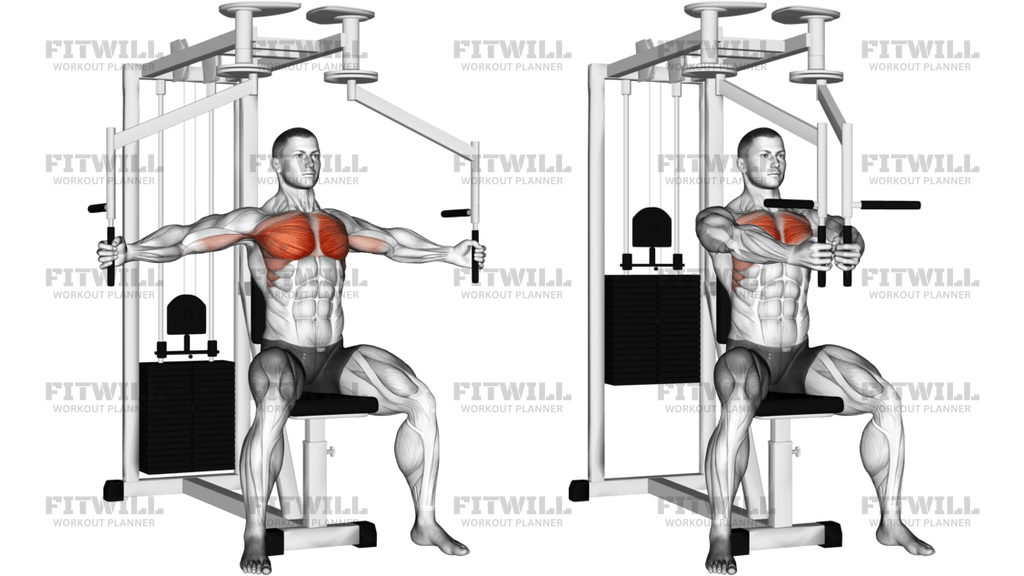
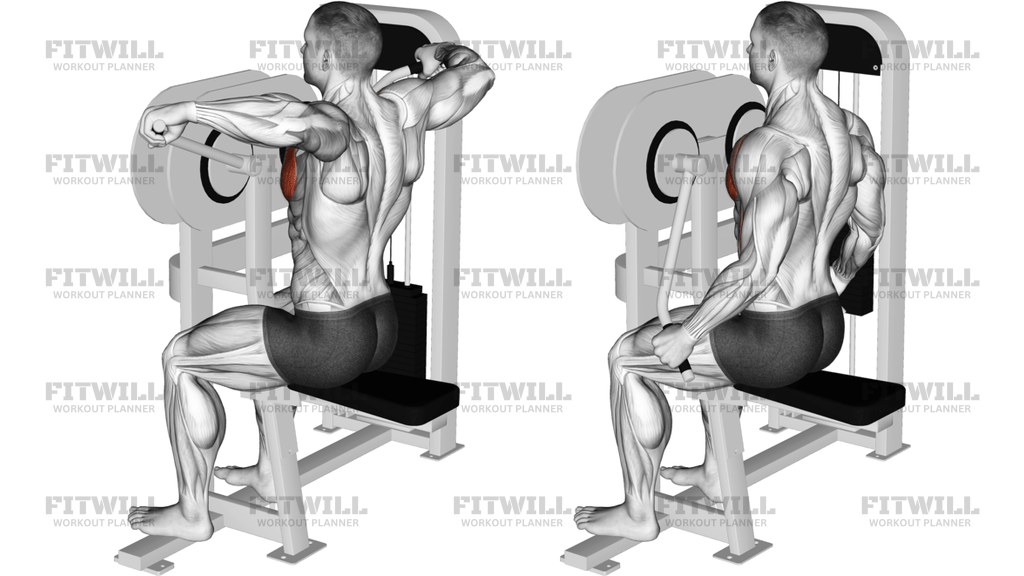
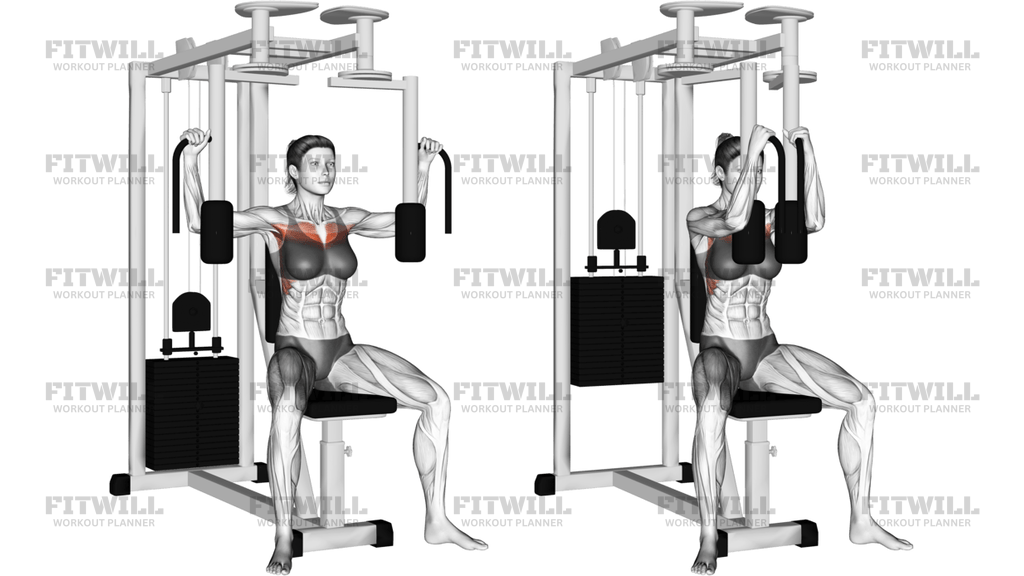
The image shows a seated chest fly position with the back supported, feet planted, and the arms starting open at shoulder height before sweeping inward. That setup matters because the machine only works well when the handles line up with the middle of the chest and the upper arms can move in a clean arc. If the seat is too high or too low, the shoulders take over and the fly turns into a sloppy front-delt movement instead of a chest exercise.
To perform the rep well, keep the chest tall, shoulders down, and elbows softly bent while you bring the handles together in front of the sternum. Think about hugging a barrel rather than pushing the grips in a straight line. The pecs should shorten as the arms come together, then lengthen under control on the way back until you feel a comfortable stretch across the chest without letting the shoulders roll forward or the ribs flare up.
This exercise is best used as a chest accessory, a finisher, or a volume movement when you want more pec work without heavy joint stress. A moderate load with a slow return usually works better than chasing stack weight. It is beginner-friendly because the machine guides the path, but the exercise still demands good seat height, neutral wrists, and a controlled range so the shoulders stay in position and the chest does the work.
For programming, it usually fits well in moderate to higher rep ranges where tension and control matter more than explosive effort. Use it when you want to reinforce chest position, improve mind-muscle connection, or add extra pec volume without the complexity of free-weight fly variations. Stop the set when the handles can no longer travel smoothly or when the shoulders start to round forward.
Fitwill
Log Workouts, Track Progress & Build Strength.
Achieve more with Fitwill: explore over 9600 exercises with images and videos, access built-in and custom workouts, perfect for both gym and home sessions, and see real results.
Start your journey. Download today!




Instructions
- Set the seat so the handles line up with the middle of your chest, then sit back with your head and upper back supported and both feet flat on the floor.
- Grip the handles with neutral wrists and keep a soft bend in the elbows before you start the rep.
- Lift the chest slightly, keep the shoulders down, and take a breath to brace without arching the lower back.
- Allow the arms to open under control until you feel a stretch across the pecs, but stop before the shoulders roll forward.
- Sweep the handles inward in a wide arc, keeping the elbow angle nearly fixed and the wrists stacked over the forearms.
- Bring the hands together in front of the sternum or just short of contact if the machine stops earlier.
- Squeeze the chest for a brief pause while keeping the neck relaxed and the ribs from flaring.
- Return the arms to the open position slowly and under tension, then reset your shoulder position before the next repetition.
Tips & Tricks
- Set the seat first; when the handles start at mid-chest height, the pecs stay in a better line of pull and the front delts stay quieter.
- Keep the elbows softly bent and almost fixed through the whole rep so the movement stays a fly instead of turning into a press.
- Think about bringing the upper arms together around the ribcage, not just squeezing the hands, so the chest stays responsible for the motion.
- Let the arms open only until the shoulders still feel stacked; if the front of the shoulder pinches, shorten the range.
- Use a slower return than the closing phase so the pecs keep tension instead of letting the machine yank you back.
- Keep the ribs down and the lower back neutral; over-arching usually means the torso is helping too much.
- If your grip or forearms take over, lighten the load and press the handles with steadier hand pressure.
- Stop one or two inches before the shoulders roll forward at the finish, especially on high-fatigue sets.
Frequently Asked Questions
What muscle does Lever Pec Deck Fly target most?
It primarily targets the pecs, especially the chest fibers that bring the arms across the body.
Where should I set the seat on the pec deck machine?
Set it so the handles line up with the middle of your chest or slightly below shoulder level when you are seated against the pad.
Should my elbows stay bent the whole time?
Yes. Keep a soft elbow bend and hold that angle as the arms move in and out.
How far back should I let the handles open?
Open only until you feel a strong chest stretch without your shoulders sliding forward or your torso losing position.
Can I touch the handles together at the finish?
Yes, if the machine allows it and your shoulders stay down. If touching them forces your shoulders forward, stop just short.
Is Lever Pec Deck Fly good for beginners?
Yes. The fixed path makes it beginner-friendly, but the seat height and range of motion still need to be set correctly.
What is the most common form mistake?
The biggest mistake is letting the shoulders roll forward or using too much load so the chest stops doing the work.
How should I breathe during the rep?
Inhale as the arms open, then exhale as you sweep the handles inward and squeeze the chest.
Where should I feel the exercise?
You should feel it mostly across the pecs, with some work in the front shoulders and a little triceps support.