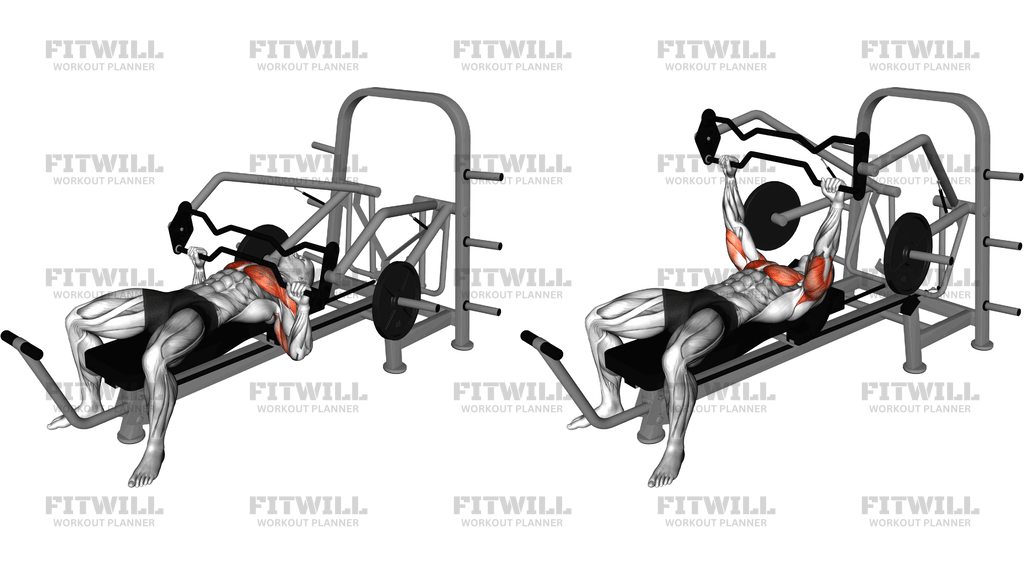
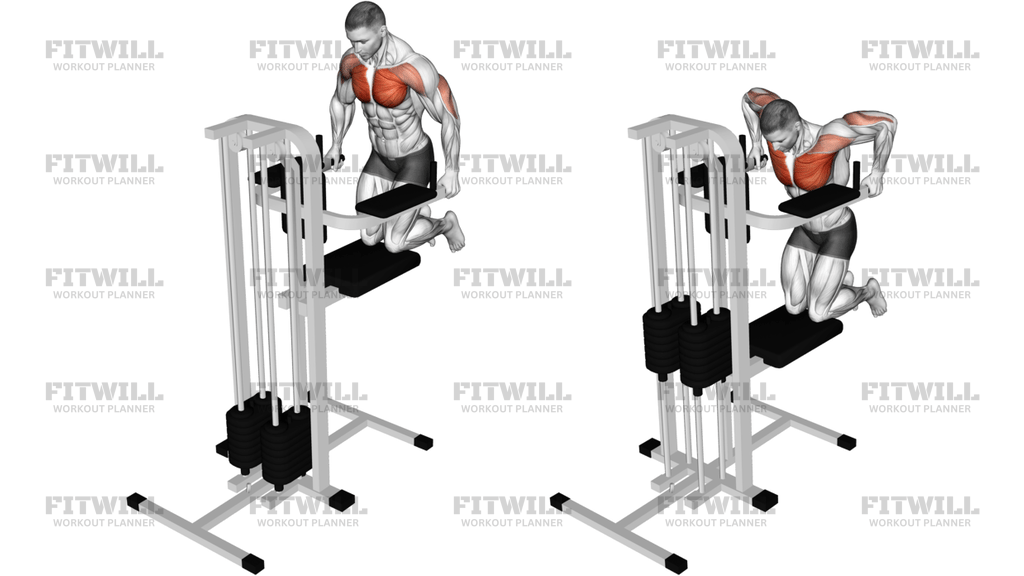
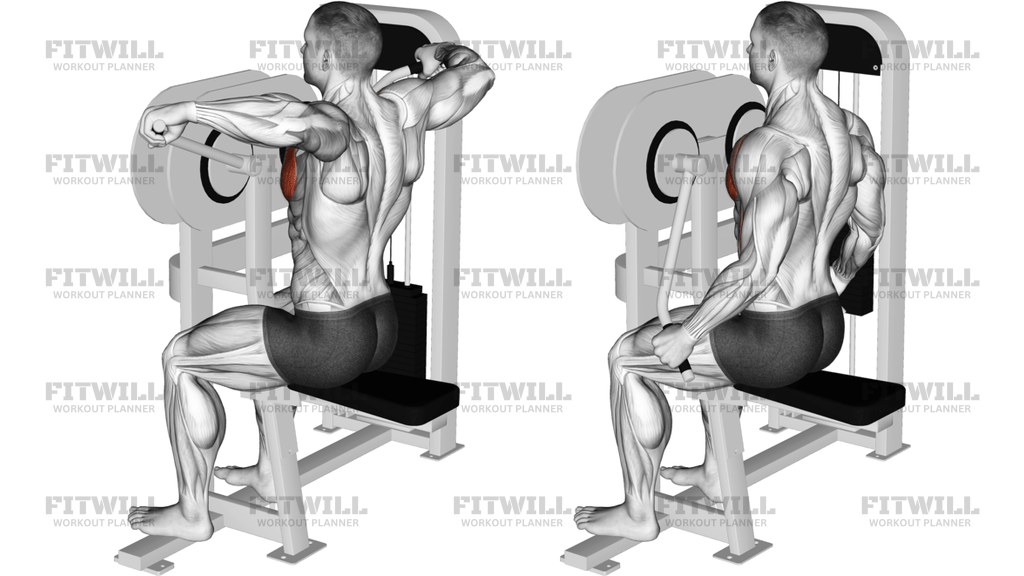
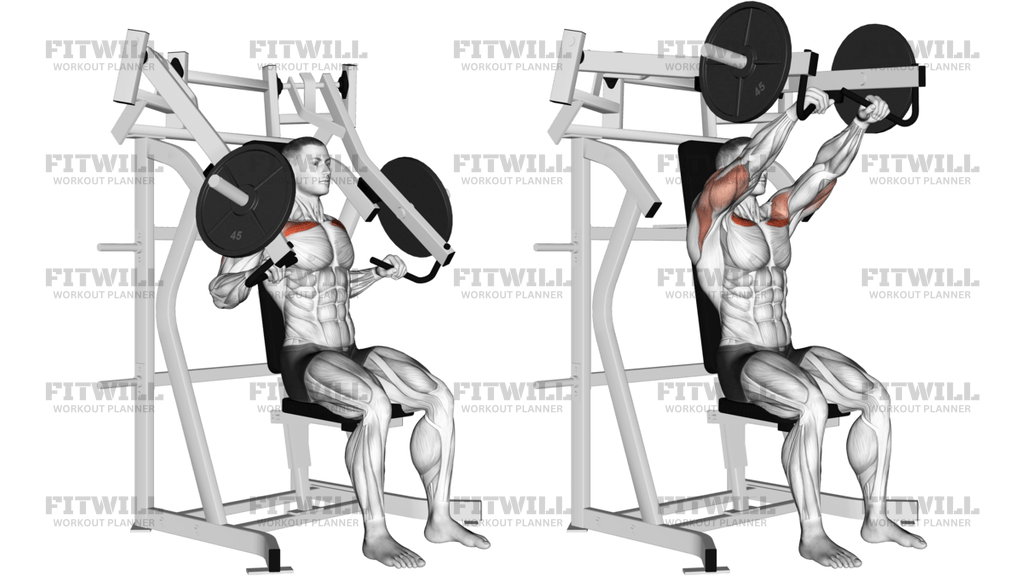
Machine Inner Chest Press
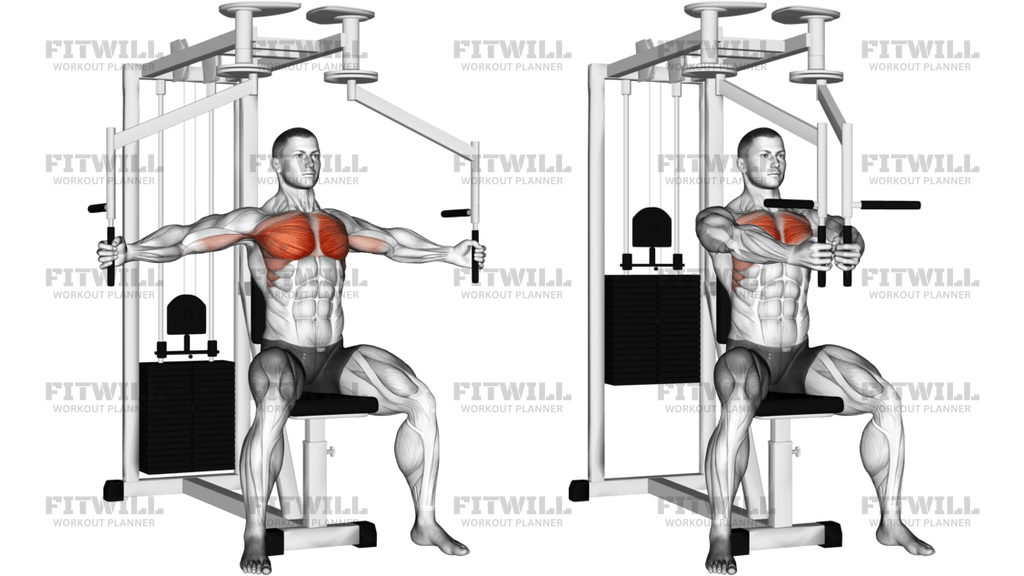
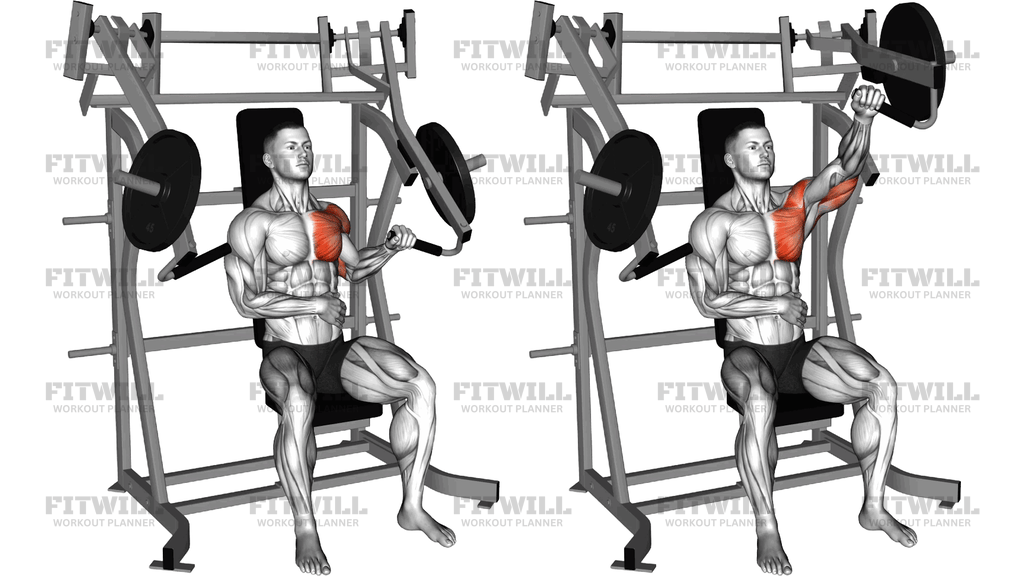
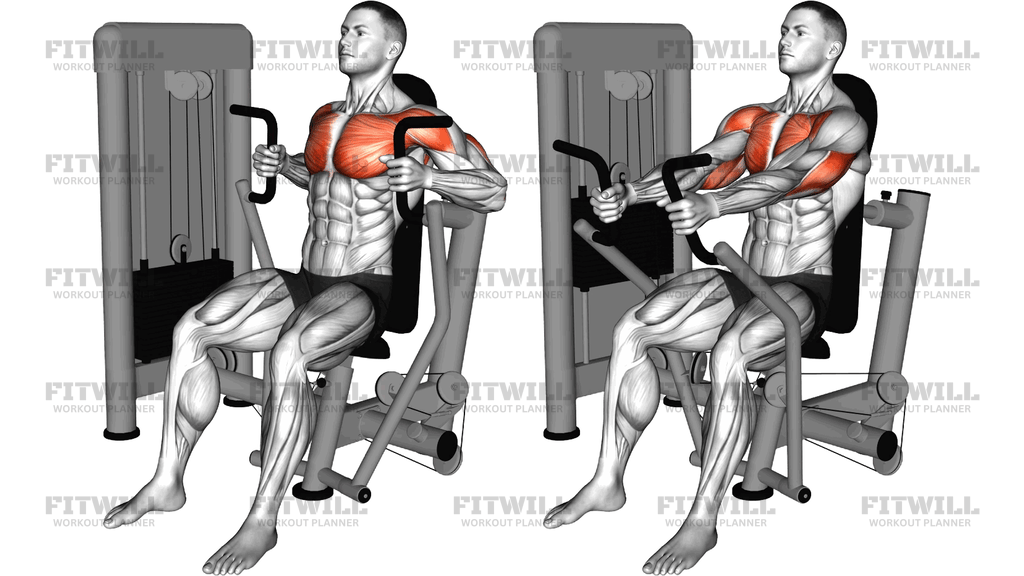
Machine Inner Chest Press is a seated leverage machine press that keeps the pressing path fixed while you drive the handles forward and slightly inward. The setup makes the biggest difference in how the exercise feels: if the seat is too high, the shoulders take over; if it is too low, the press turns into a shoulder-dominant push. When the handles line up around mid-chest and the back stays supported, the chest can do the work with less wobble and less need to stabilize the load.
This exercise is built to load the chest hard through a guided path while the front delts and triceps assist. In anatomy terms, the main work centers on the Pectoralis major, with help from the Anterior deltoid, Triceps brachii, and Rectus abdominis. The name suggests an inner-chest focus, but the real goal is a strong chest contraction as the arms come together and the hands travel toward the centerline.
Start each set by anchoring the upper back and setting the shoulders down rather than reaching forward. Keep the chest tall, wrists stacked over the handles, and elbows slightly tucked so the machine can press through the chest instead of forcing the joints into an awkward flare. A controlled start position also helps you own the first inch of the press instead of bouncing out of the bottom.
During the press, drive the handles forward and slightly inward until the chest contracts strongly and the arms are nearly straight. Keep tension on the machine instead of slamming into lockout, then bring the handles back slowly until you feel a controlled stretch across the chest without letting the shoulders roll forward. That return phase matters as much as the press because it decides whether the chest stays loaded or the front of the shoulder gets irritated.
Machine Inner Chest Press fits well in chest sessions, push-day workouts, hypertrophy blocks, and beginner-friendly strength work because the path is easy to learn and the back support reduces cheating. It is also useful when you want chest work without balancing a barbell or dumbbells. Use a load that lets you keep the same seat position, elbow angle, and breathing pattern from the first rep to the last, and stop the set if the shoulders start to shrug or the range gets sloppy.
[ Workout Log & Planner ]
Put your next workout in Fitwill
Keep your plan and training log ready when you are.


Instructions
- Adjust the seat so the handles line up around mid-chest and your upper back rests firmly against the pad.
- Place both feet flat on the floor and sit tall with your chest lifted before you unrack or grab the handles.
- Grip the handles with wrists stacked and elbows slightly tucked, not flared straight out to the sides.
- Set your shoulders down and back so the press starts from a stable upper body position.
- Brace your torso, then press the handles forward and slightly inward along the machine's fixed path.
- Squeeze the chest as the handles come together, but do not slam into an aggressive lockout.
- Lower the handles slowly until you feel a controlled chest stretch without letting the shoulders roll forward.
- Exhale as you press and inhale as you return, then repeat for the planned reps.
Tips & Tricks
- If the handles start above your chest line, lower the seat before adding more weight.
- Keep the elbows slightly below shoulder level so the press stays chest-dominant instead of turning into a front-delt drive.
- Think about bringing the upper arms together, not just pushing the handles straight ahead.
- A short pause at the squeezed position can make the chest work harder without needing extra load.
- Do not let the shoulders drift forward at the bottom; stop the descent when the chest stretch is strong but controlled.
- Use a slower return than the press so the pecs stay under tension through the full rep.
- Choose a load that allows the machine arms to move evenly on both sides without twisting your torso.
- If your wrists bend back or your forearms are not in line with the handles, adjust the grip before the next set.
Frequently Asked Questions
What muscles does Machine Inner Chest Press work?
It primarily trains the chest, especially the pectoralis major, with the front delts and triceps assisting on the press.
Is this the same as a regular chest press machine?
It is similar, but the handle path and tighter arm angle emphasize a stronger midline chest squeeze.
How should I set the seat?
Set it so the handles line up around mid-chest, not up near the shoulders or down near the ribs.
Should my elbows flare out wide?
No. Keep them slightly tucked so the press stays controlled and the shoulders do not take over.
Can beginners use this machine?
Yes. It is beginner-friendly if the seat is adjusted correctly and the load stays light enough to control.
Why do I feel this more in my shoulders than my chest?
The seat is usually too high, the elbows are flaring, or the shoulders are rolling forward at the bottom.
How deep should I lower the handles?
Lower them until you feel a controlled chest stretch, but stop before the shoulders lose position or pinch.
What is the best way to progress this exercise?
Add load only after you can keep the same seat height, elbow path, and slow return on every rep.