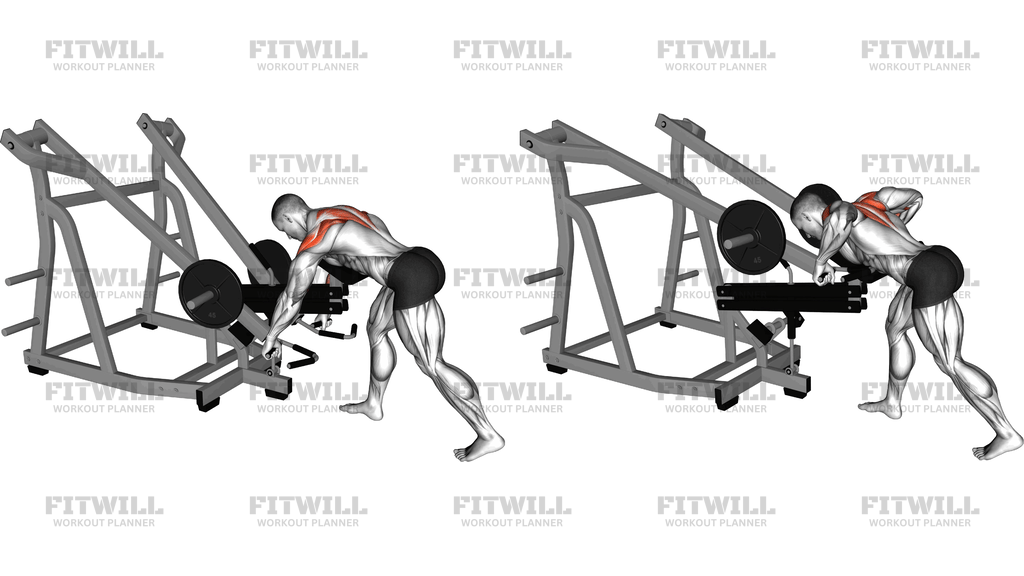
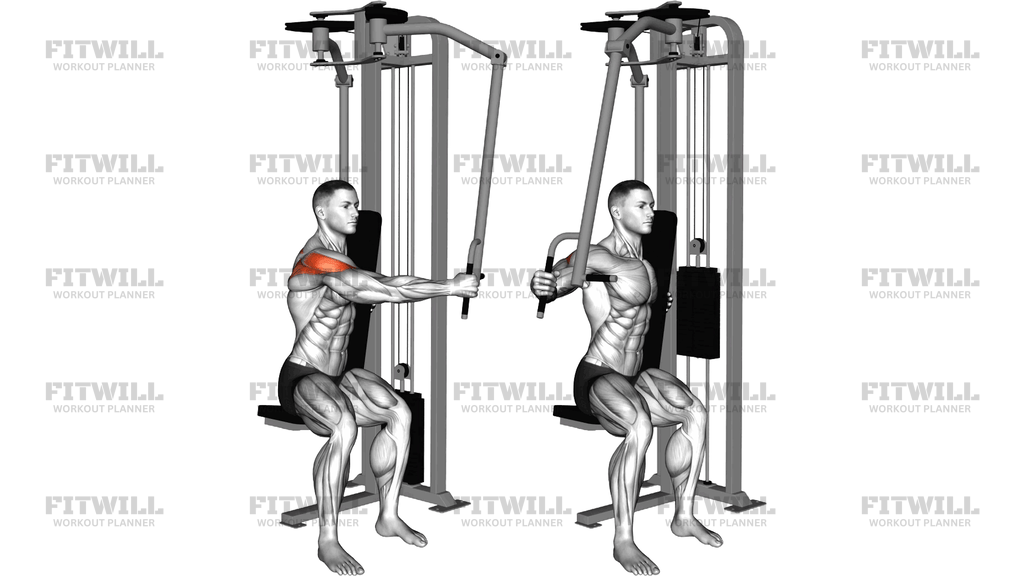
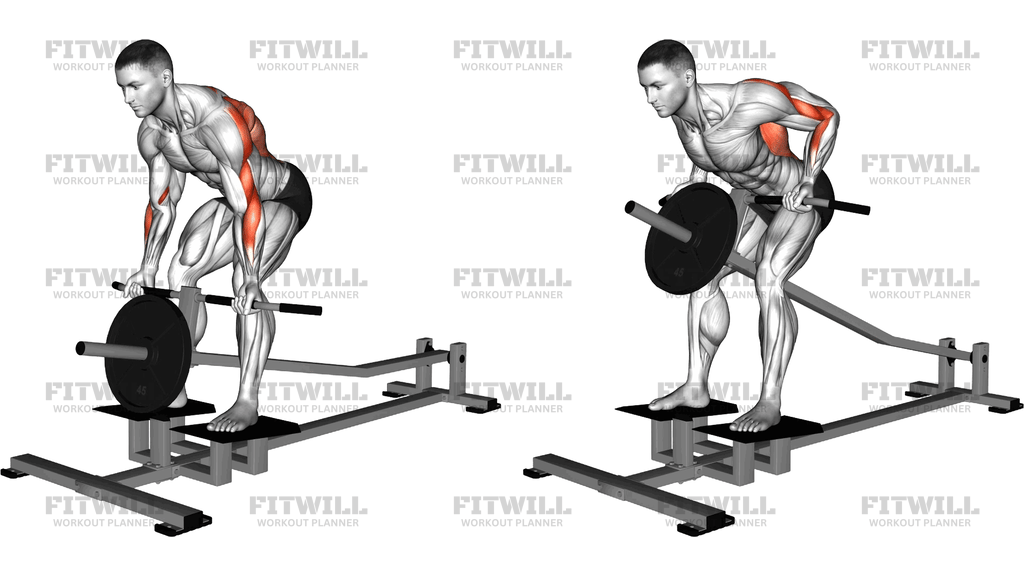
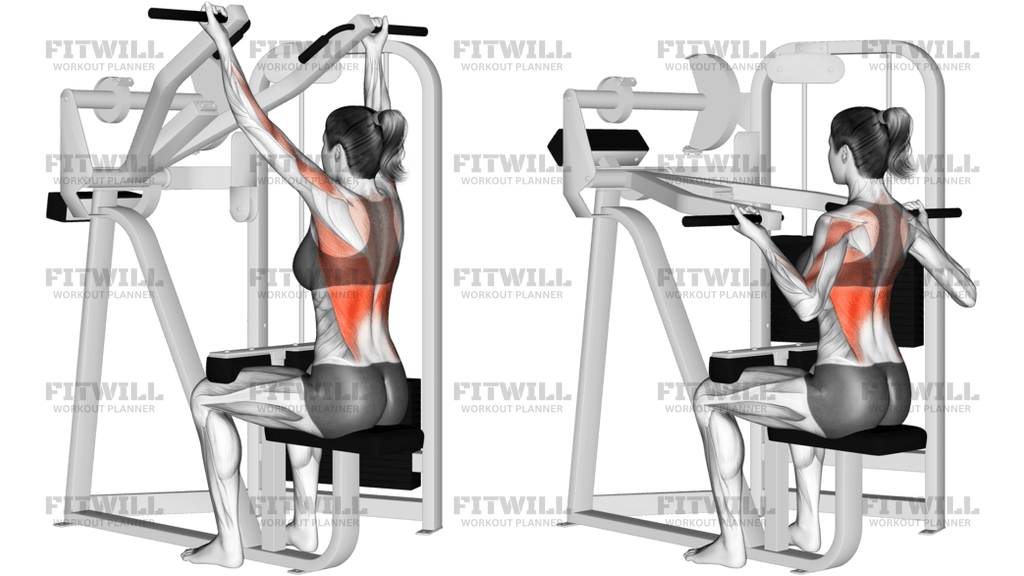
Lever High Row Plate Loaded
Lever High Row Plate Loaded is a machine-based pulling exercise that places the body in a supported seated position while the handles travel from a high start down toward the upper chest. The fixed lever path makes it easier to focus on back tension, scapular control, and steady repetition quality without having to balance a barbell or dumbbells. It is especially useful when you want strict upper-back work with less lower-body involvement and less opportunity to swing the torso.
The main emphasis is on the traps, with the upper back, lats, and biceps assisting throughout the pull. Because the handle path is higher than a standard seated row, the exercise tends to feel stronger through the upper back and rear-shoulder line instead of the lower lat sweep alone. That makes Lever High Row Plate Loaded a practical choice for lifters who want more thickness through the upper back, better shoulder-blade control, and a strong machine accessory after heavier presses or free-weight pulls.
The setup matters because the seat height and chest-pad contact determine whether the pull feels clean or cramped. Sit tall with your chest against the pad, feet flat, and the handles positioned high enough that you can reach them without shrugging your shoulders up to your ears. Before you start each rep, keep your ribs from flaring, keep your neck long, and let the shoulders stay down so the pull begins from the back instead of from a yank.
Each repetition should start with the shoulders set, then the elbows driving down and slightly back toward the upper chest. Pull smoothly until the handles reach the point where the machine path naturally finishes and the upper back is fully shortened, then lower the handles with control until the arms are long again. The return should stay deliberate so the weight never snaps you forward or pulls the chest off the pad. Exhale on the pull, inhale on the way back, and keep the motion rhythmic instead of jerky.
Lever High Row Plate Loaded works well as a main accessory on back day, a higher-rep upper-back builder, or a strict finishing movement when you want quality tension more than maximal load. If the exercise starts turning into a shrug, a lean-back row, or a half-rep pull, the weight is too heavy or the seat is set too low. Used with clean form, it gives you a very repeatable way to train the upper back, reinforce scapular movement, and accumulate productive pulling volume without excessive joint stress.
[ Workout Log & Planner ]
Put your next workout in Fitwill
Keep your plan and training log ready when you are.


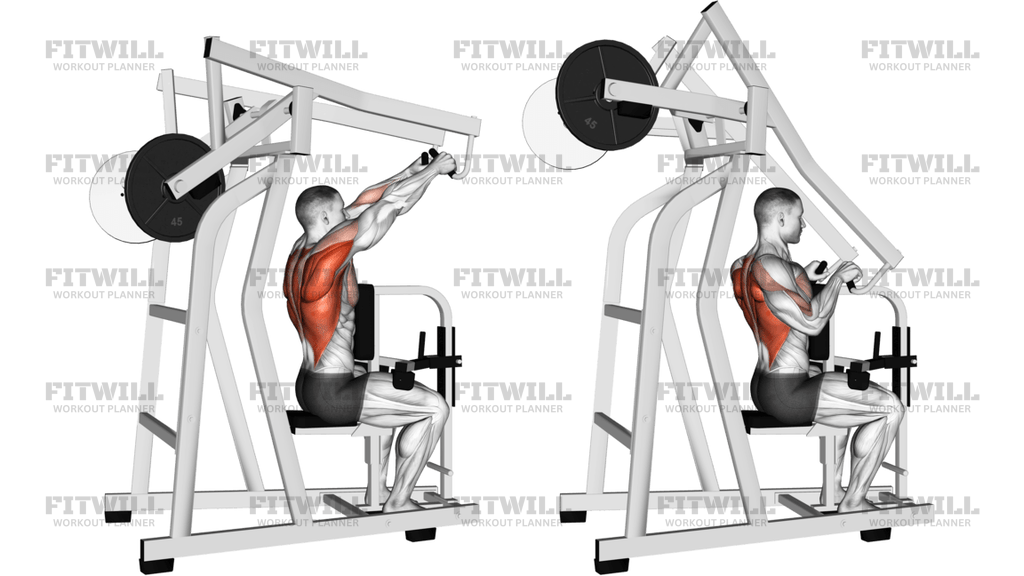
Instructions
- Sit on the machine with your chest pressed firmly into the pad, feet flat on the foot platform or floor, and the handles positioned high enough that you can reach them without shrugging.
- Grip the handles with both hands, keep a slight bend in the elbows, and let the arms extend forward and upward to the starting position.
- Set your ribs down, brace your midsection, and keep your neck long so your shoulders stay away from your ears.
- Start the pull by drawing the shoulder blades down and back before the arms bend hard.
- Drive your elbows down and slightly back until the handles come toward the upper chest or upper ribs.
- Pause briefly at the end of the rep without lifting your chest off the pad or leaning back.
- Lower the handles slowly until the arms are long again and the shoulders stay controlled.
- Breathe out as you pull, breathe in on the return, and keep every rep smooth and repeatable.
Tips & Tricks
- Raise the seat if you have to shrug just to reach the handles; the first rep should start from a long back, not an elevated shoulder position.
- Think about pulling the elbows, not the hands, so the upper back does the work instead of the arms leading everything.
- Keep your chest glued to the pad; if the torso starts leaving the support, the load is too heavy.
- Use a controlled 2-3 second return so the lever does not yank you into the next rep.
- Stop the pull when the handles reach the point where your shoulders stay down and the upper back is fully squeezed.
- If your neck tightens, soften the grip and keep the chin slightly tucked instead of jutting forward.
- If the biceps take over early, lighten the stack and keep the elbows moving first.
- For more upper-back emphasis, let the elbows travel a little wider; for more lat emphasis, keep them closer to your sides.
Frequently Asked Questions
What muscles does Lever High Row Plate Loaded work most?
The main emphasis is on the traps and upper back, with the lats and biceps helping during the pull.
Is Lever High Row Plate Loaded more of a back exercise or a shoulder exercise?
It is mainly a back exercise, especially for the upper back and traps, with the rear shoulders assisting.
How should I sit on the machine for Lever High Row Plate Loaded?
Sit with your chest firmly against the pad, feet planted, and the handles set high enough that you can start without shrugging.
Should I pull the handles to my chest or my neck?
Pull toward the upper chest or upper ribs. If you are reaching toward the neck, the shoulders usually start to ride up too much.
Can beginners use Lever High Row Plate Loaded?
Yes. The chest support and fixed path make it beginner-friendly as long as the load stays light enough to keep the shoulders down.
What is the most common mistake on this exercise?
Shrugging into the first inch of the pull is the big one. The shoulders should stay down while the elbows drive back.
Do I need to lean back during the rep?
No. Keep your chest on the pad and let the machine move through its path instead of turning it into a body-swing row.
How can I make Lever High Row Plate Loaded feel more in the lats?
Keep your elbows a little closer to your sides and finish the pull with the upper arm moving down rather than flaring wide.