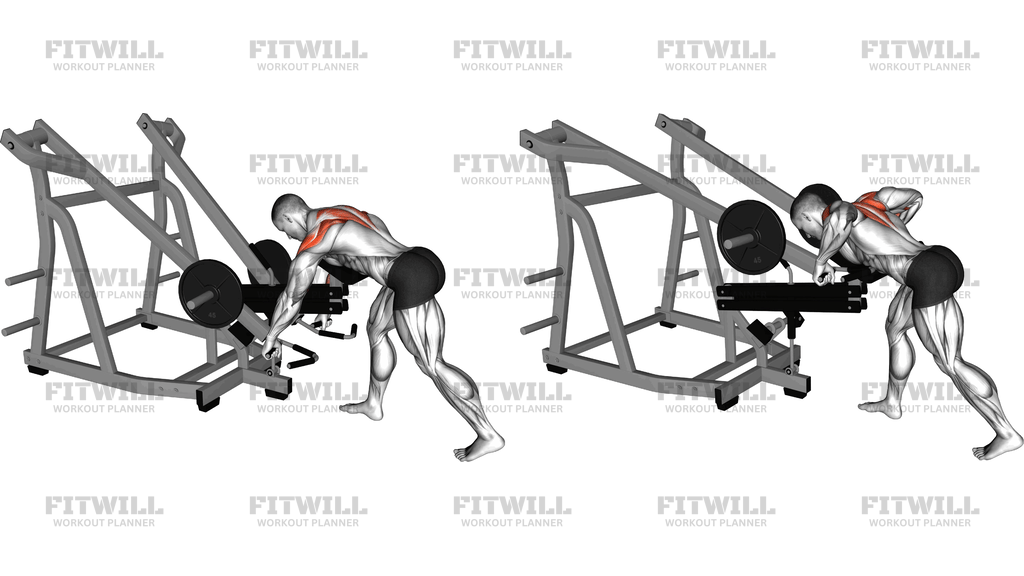
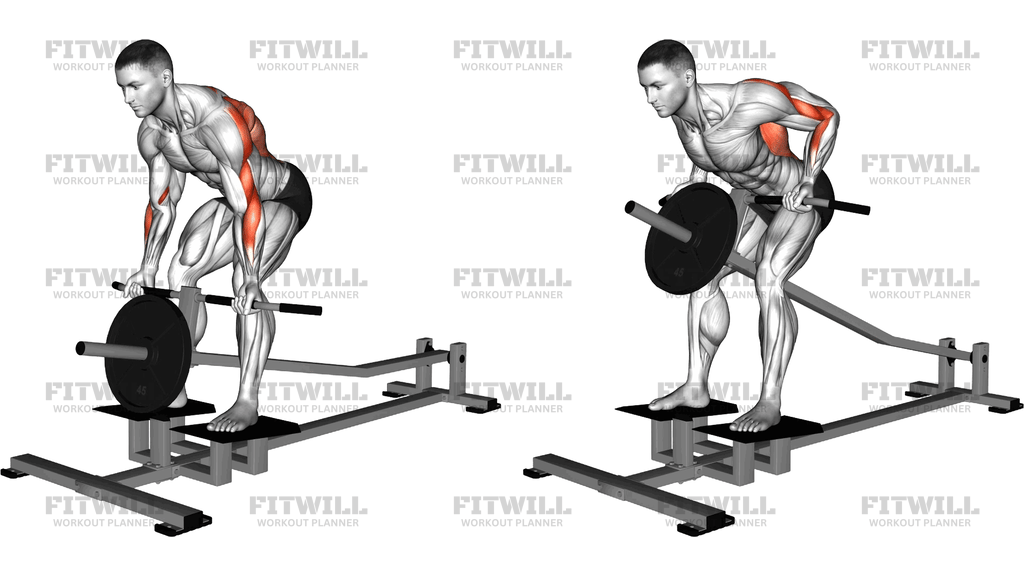
Lever Shrug Plate Loaded
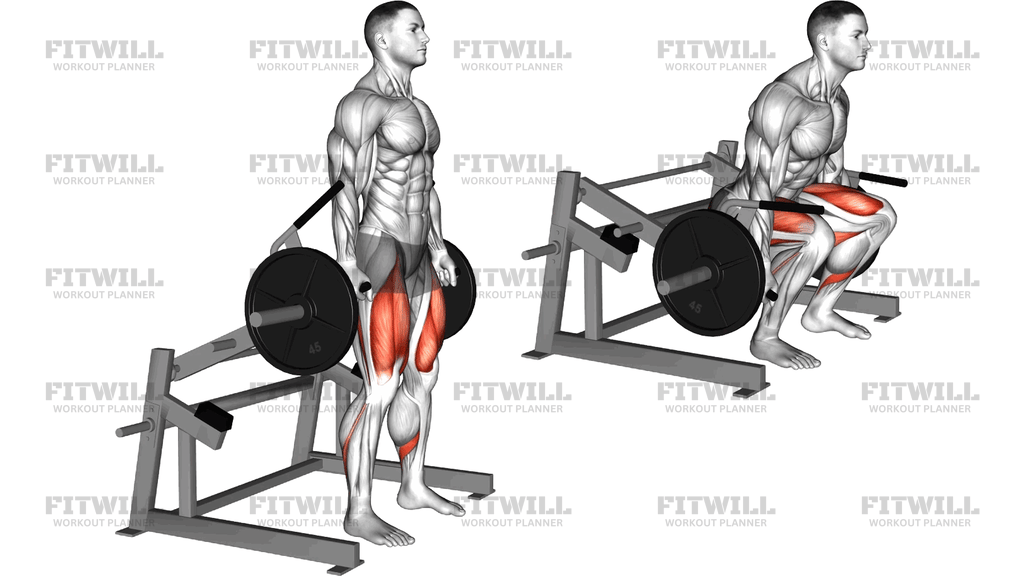
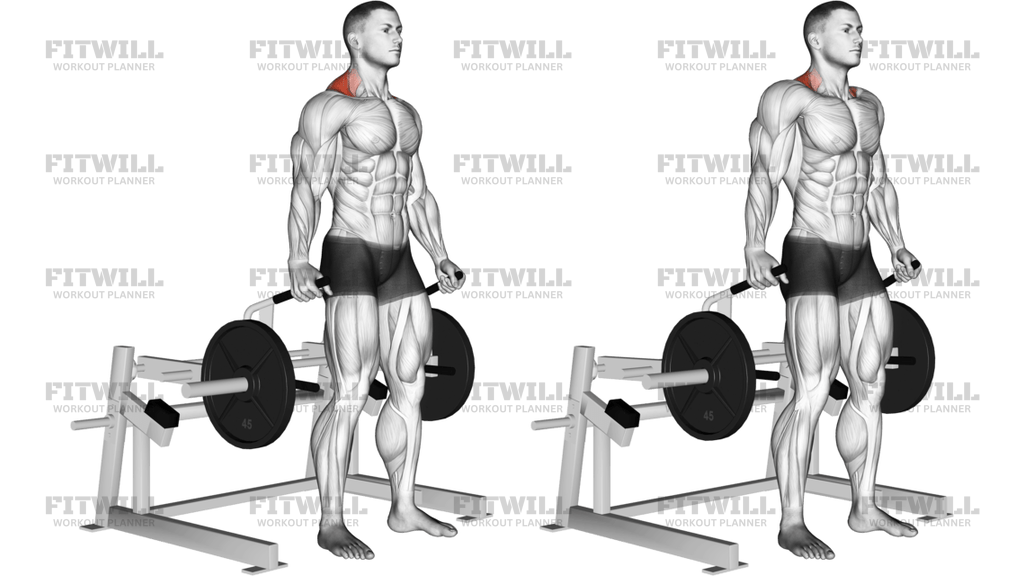
Lever Shrug (plate Loaded) is a standing machine shrug that loads the upper traps through a fixed lever path. The handles stay by your sides, the arms stay long, and the shoulders travel straight up and down instead of swinging through a loose free-weight arc. That setup makes the exercise useful when you want a simple, repeatable way to train scapular elevation with less balance demand than dumbbell shrugs.
The movement is built around the trapezius, with the rhomboids, upper back, and forearm grip helping you stay organized on the machine. In anatomy terms, the primary work centers on the trapezius, with support from the rhomboids, latissimus dorsi, and biceps brachii. Because the lever machine fixes the hand path, the main technical job is to keep the torso quiet, let the shoulders travel vertically, and avoid turning the shrug into a rolling or bouncing motion.
The setup matters a lot. Stand centered on the platform, take the handles with a neutral grip, and let your arms hang straight without bending the elbows. Keep your chest tall, ribs stacked, and head neutral so the neck does not jut forward as the load rises. From the bottom, initiate the rep by lifting the shoulders toward the ears in a straight line, not by leaning back, swinging the torso, or pulling with the arms.
At the top, squeeze the upper traps briefly without shrugging in circles or pinching the neck hard. Then lower the handles under control until the shoulders return to their natural resting position and the traps feel lengthened again. A short pause at the top and a slower return usually give better trap tension than chasing speed or load. Exhale as you shrug, inhale on the way down, and keep the lower body planted so each repetition looks clean and identical.
This exercise fits well as accessory work after pulling or pressing patterns, or as a focused finisher when you want direct trap volume without heavy spinal loading. It is also a practical option for beginners because the machine path is simple, but only if the load stays light enough to keep the torso still and the neck relaxed. If the shoulders start rolling, the elbows bend, or the body sways, the set is too heavy or the range is getting forced.
Fitwill
Log Workouts, Track Progress & Build Strength.
Achieve more with Fitwill: explore over 9600 exercises with images and videos, access built-in and custom workouts, perfect for both gym and home sessions, and see real results.
Start your journey. Download today!




Instructions
- Stand centered on the lever shrug platform with the handles at your sides and your feet about hip-width apart.
- Take a neutral grip on the handles and let your arms hang straight with only a soft bend in the elbows.
- Stack your ribs over your pelvis, keep your chest tall, and set your head in a neutral position.
- Before each rep, let the shoulders settle down without rounding the upper back.
- Drive the shoulders straight up toward your ears as if you are trying to shorten the neck.
- Keep the arms long and the torso still while the machine moves through its fixed path.
- Pause briefly at the top when the traps are fully contracted.
- Lower the handles slowly until the shoulders return to their natural resting position.
- Exhale on the shrug, inhale as you lower, and reset your stance before the next rep.
Tips & Tricks
- Think up, not back: the shoulders should rise vertically instead of drifting behind you.
- Keep the elbows almost locked so the arms do not turn the shrug into a row.
- Do not roll the shoulders in circles; that usually reduces trap tension and irritates the neck.
- Use a load that lets you pause at the top without jerking the machine.
- A one-second squeeze at peak contraction usually works better than chasing extra height.
- Keep your chin slightly tucked so the neck stays long as the traps contract.
- Press evenly through both feet to stop the torso from rocking as the lever rises.
- Lower under control all the way to the start so the traps get a clean stretch before the next rep.
- If your grip fails before your traps do, consider straps or a lighter load.
Frequently Asked Questions
What does Lever Shrug (plate loaded) train most?
It primarily trains the upper trapezius, with the rhomboids and other upper-back muscles helping stabilize the shoulder girdle.
How is this different from a dumbbell shrug?
The machine fixes the hand path and makes it easier to keep the torso still, so it is often simpler to control than dumbbells.
Should I bend my elbows during the rep?
No. Keep the arms long so the movement comes from shoulder elevation, not from pulling with the elbows.
Do I need to roll my shoulders at the top?
No. Roll-free shrugs are usually better for this machine; lift straight up, pause, and lower straight down.
Where should I feel the exercise?
You should feel it high across the tops of the shoulders and upper traps, not in the lower back or through a swinging torso.
Is this exercise suitable for beginners?
Yes, if the load is light enough to keep the neck relaxed and the torso motionless throughout the set.
How heavy should I load the machine?
Use a weight that lets you shrug smoothly, hold the top briefly, and lower without bouncing.
Can I use straps on this machine?
Yes. Straps can help if your grip fatigues before your upper traps, especially on higher-rep sets.