Lying Side Quadriceps Stretch
Lying Side Quadriceps Stretch is a side-lying bodyweight stretch for the front of the thigh. It is designed to lengthen the quadriceps, especially the rectus femoris, while also easing some of the pull through the hip on the stretched side. The mat mainly gives you comfort and a stable surface so you can keep the pelvis steady and focus on the line of pull instead of fighting balance.
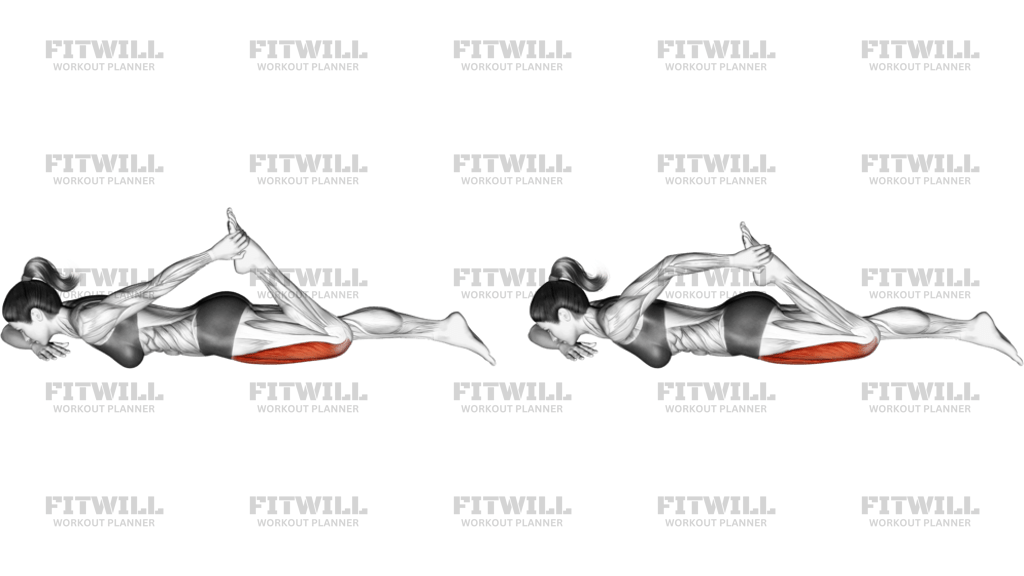
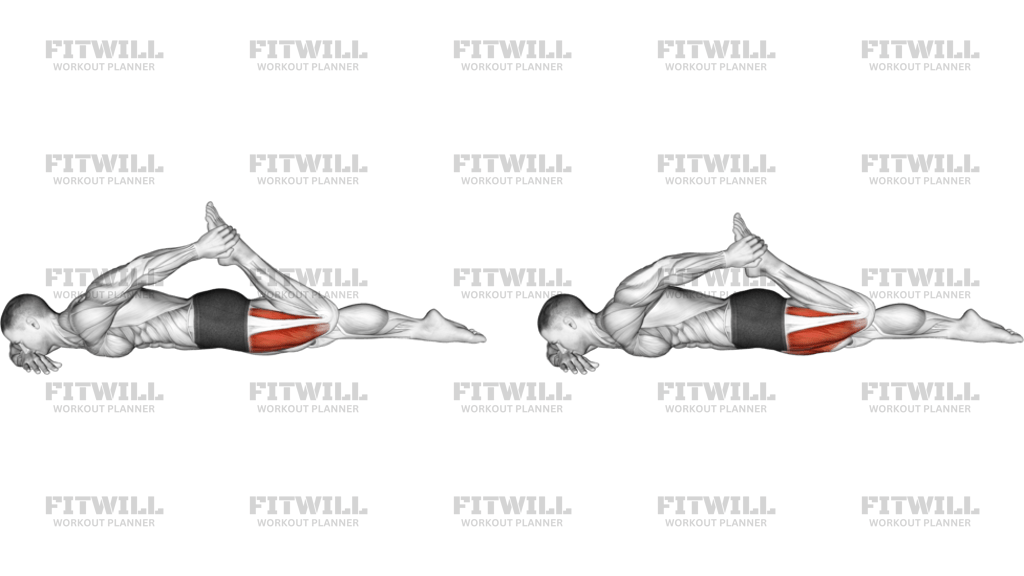
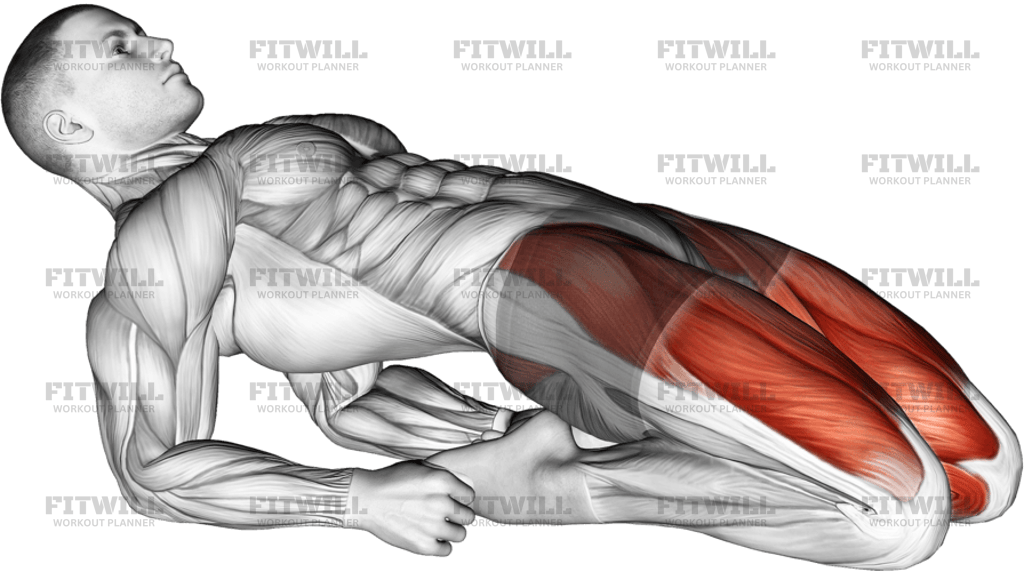
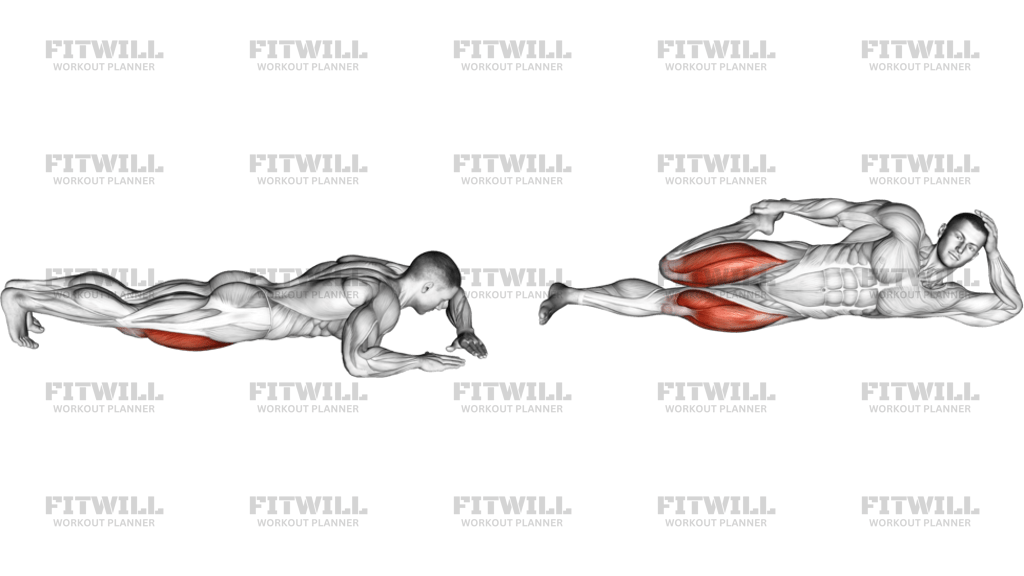
The position matters because a quad stretch only becomes effective when the knee is bent without letting the low back arch or the hip roll open. In the image, the athlete lies on one side, supports the upper body with the forearm and head, and reaches back to hold the top ankle. That setup lets you keep the knees close together, draw the heel toward the glute, and control how far the front of the thigh opens.
This is a stretch, not a strength rep, so the goal is calm tension rather than force. Move into the position slowly, then hold the end range long enough to let the thigh soften. If you yank the ankle or crank the knee behind the body, the stretch usually leaks into the knee joint or lower back instead of staying where it belongs. A small amount of glute engagement on the stretched side can help keep the hip from dumping forward.
Use it after lower-body training, during a mobility block, or in a recovery session when your quads feel tight from squats, lunges, sprinting, or cycling. It is a good option for beginners because the setup is simple, but the stretch should stay pain-free and controlled. If the position pinches the knee or low back, shorten the hold, reduce the bend, or use a strap around the ankle so you can keep the same shape without forcing the range.
[ Workout Log & Planner ]
Put your next workout in Fitwill
Keep your plan and training log ready when you are.


Instructions
- Lie on one side on a mat and stack your shoulders and hips, with the bottom forearm under the shoulder and the head supported.
- Keep the bottom leg long and relaxed, then bend the top knee so the shin points back behind you.
- Reach back with the top hand and hold the top ankle or foot from the same side.
- Keep the thighs close together and let the top knee stay in line with the hip instead of flaring forward.
- Gently draw the heel toward the glute until you feel a clear stretch through the front of the thigh.
- Keep the ribs down and avoid arching the low back as you settle into the stretch.
- Hold the end position with slow nasal or relaxed breathing for the programmed time.
- Release the ankle slowly, straighten the leg, and repeat on the other side if both sides need work.
Tips & Tricks
- Keep the top knee slightly behind the hip so the stretch stays in the quadriceps instead of turning into a front-hip arch.
- Use the bottom forearm and ribcage to stay stacked; rolling the chest backward usually makes the low back take over.
- If you cannot reach the ankle comfortably, use a strap or hold the shoe so you can keep the same side-lying shape.
- A light squeeze of the glute on the stretched side can help keep the pelvis from tipping forward.
- Do not force the heel all the way to the glute if the knee feels compressed; a smaller bend is fine.
- Exhale as you settle into the hold, because a long exhale often lets the front of the thigh relax a little more.
- Keep the bottom leg relaxed and long so the lower body does not twist to help the stretch.
- If the pose makes your lower back arch, shorten the hold and reduce how far the top knee travels backward.
Frequently Asked Questions
What does Lying Side Quadriceps Stretch target most?
It mainly targets the quadriceps on the top leg, especially the rectus femoris, with some stretch felt into the front of the hip.
How do I set up the side-lying position correctly?
Lie on one side with the bottom forearm under your shoulder, stack your hips, bend the top knee, and reach back to hold the top ankle or foot.
Should I pull the knee straight back as far as possible?
No. Keep the stretch controlled and stop before the low back arches or the knee feels compressed.
Why does this stretch sometimes hit my lower back instead of my thigh?
That usually happens when the ribs flare and the pelvis rolls forward. Keep the ribs down and the hips stacked so the stretch stays in the quadriceps.
Is this a good stretch for tight quads after leg day?
Yes. It is a good post-workout option after squats, lunges, running, or cycling when the front of the thigh feels shortened.
Can beginners do this stretch?
Yes. The setup is simple, and beginners can keep the knee bend smaller or use a strap if reaching the ankle is difficult.
What if my knee feels pinched while I hold the ankle?
Reduce the bend, slide the top knee a little less far back, or use a strap so you can keep tension in the quad without cranking the joint.
How long should I hold each side?
A short hold can work for warm-up, while longer relaxed holds are better when you want to downshift tension after training.