Upward Facing Dog
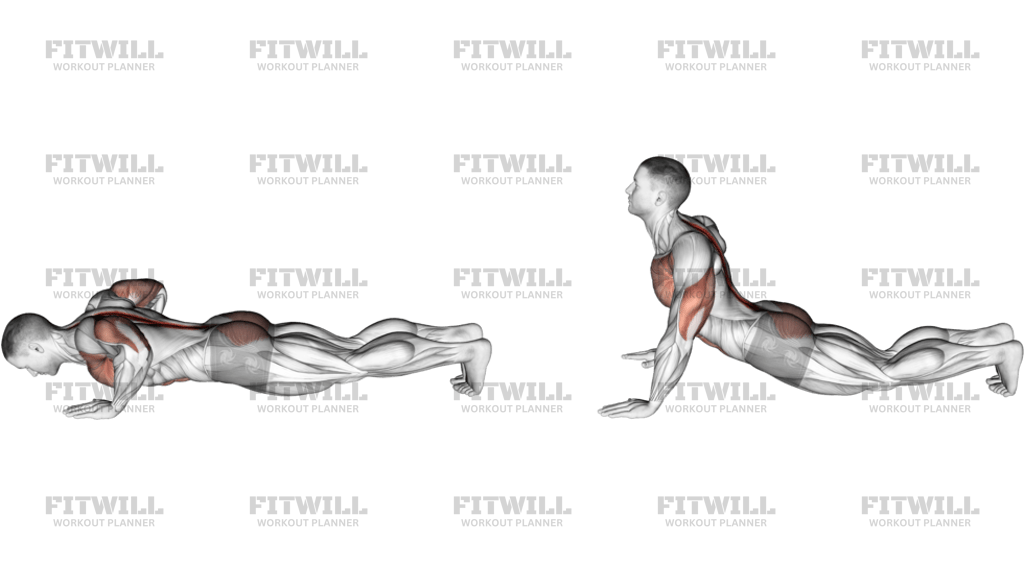
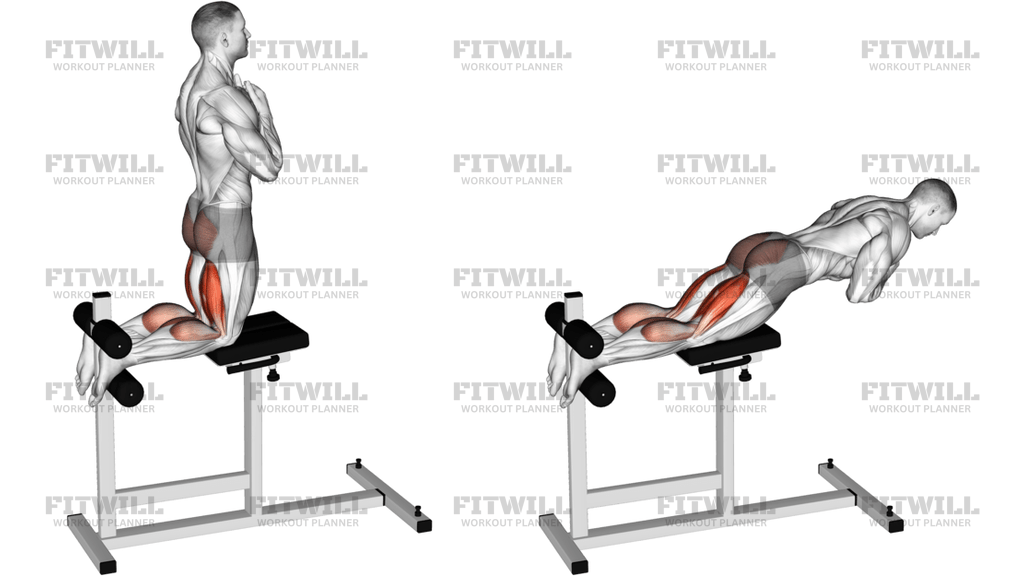
Upward Facing Dog is a bodyweight yoga backbend performed from a prone position with the hands on the floor, the arms straight, the chest lifted, and the thighs hovering off the mat. It emphasizes active spinal extension, shoulder opening, and strong support through the hands and arms rather than a passive stretch. The pose is most useful when the chest rises, the collarbones widen, and the legs stay engaged enough that the lower back does not take over.
The setup matters because this pose is created from the floor, not by forcing a bigger arch after you are already moving. Place the palms under or slightly behind the shoulders, spread the fingers, and press evenly through the hands. Extend the legs back with the tops of the feet on the floor, then keep the quads active so the knees and thighs can lift cleanly. That active base lets the chest move forward and up without collapsing the shoulders toward the ears.
Upward Facing Dog is often used in vinyasa-style flows, as a mobility drill, or as a gentle strength-and-extension exercise for the upper back, shoulders, triceps, and trunk. It is not the same as simply hanging on the joints: the arms stay strong, the sternum reaches forward, and the shoulder blades draw down the back to make space across the chest. When it is done well, the pose feels long and open through the front of the body while the back of the neck stays relaxed.
During the hold, keep the gaze slightly forward or up without jamming the neck, and keep the thighs lifted if the pose is meant to be a true Upward Facing Dog rather than a low Cobra. The pelvis should feel supported by the legs and core, not dumped into the lumbar spine. Breath is part of the movement: inhale to lift and broaden, then keep smooth breathing while you hold the shape and maintain pressure through the hands and feet.
This pose works best when it is controlled and pain-free. If the wrists, shoulders, or low back do not tolerate the full shape, reduce the range, shorten the hold, or regress to a lower backbend. Good repetitions look clean, even, and repeatable, with the chest lifting first and the lower body staying organized throughout the pose.
[ Workout Log & Planner ]
Put your next workout in Fitwill
Keep your plan and training log ready when you are.


Instructions
- Lie face down with your legs extended straight behind you, the tops of your feet pressing into the floor, and your palms under or slightly behind your shoulders.
- Spread your fingers wide and root through the base of each palm so your wrists, elbows, and shoulders line up before you move.
- Engage your thighs and glutes enough to keep the knees and hips off the floor as you prepare to lift.
- Inhale, press firmly through your hands, and straighten your arms as your chest glides forward and up.
- Keep the shoulders drawn down away from your ears while the sternum lifts and the collarbones widen.
- Let the legs stay active so the thighs hover and the pelvis stays supported instead of sinking into the lower back.
- Hold the top position for a controlled breath or two with the neck long and the gaze slightly forward or upward.
- Exhale, lower the chest and thighs back to the floor together, then reset before the next repetition or hold.
Tips & Tricks
- Press through the heel of the hand and the base of the index finger to protect the wrists and keep the lift balanced.
- If your shoulders pinch, move the hands a little farther forward and think about lengthening the chest instead of cranking the arms straighter.
- Keep the thighs lifted if you want the classic Upward Facing Dog shape; if they stay down, the movement becomes more like Cobra.
- A small amount of glute tension helps support the lumbar spine, but do not squeeze so hard that the pelvis tucks aggressively.
- Look slightly forward rather than throwing the head back, which keeps the neck from taking the full bend.
- Use the inhale to create the lift and the exhale to stabilize the hold, especially when moving through a flowing sequence.
- If the lower back feels crowded, reduce how high you come up and focus on chest length and shoulder depression instead of range.
- Stop short of pain in the wrists, low back, or front of the shoulders; this pose should feel open, not forced.
Frequently Asked Questions
What does Upward Facing Dog train?
It mainly trains spinal extension, shoulder opening, and support through the arms while the chest lifts away from the floor.
Can beginners perform this exercise?
Yes, beginners can do it if they keep the lift small, press evenly through the hands, and stop before the low back feels compressed.
How is Upward Facing Dog different from Cobra?
In Upward Facing Dog the thighs hover and the arms are straight, while Cobra keeps more of the legs and pelvis on the floor with a lower backbend.
Where should my hands be on the floor?
Place the palms under or slightly behind the shoulders so you can press the chest forward and up without overreaching.
Should my thighs stay on the floor?
No. In a true Upward Facing Dog the thighs and knees lift off the floor while the tops of the feet stay down.
Why do my shoulders feel jammed in this pose?
Usually the hands are too far back, the chest is not reaching forward enough, or the shoulders are shrugging toward the ears.
Can I hold the pose instead of doing repetitions?
Yes. It is often practiced as a held position during yoga flows or breathing work, not just as repeated reps.
What should I do if my wrists hurt?
Reduce the load through the hands, shorten the hold, or switch to Cobra or another backbend that is easier on the wrists.