Plyo Jacks
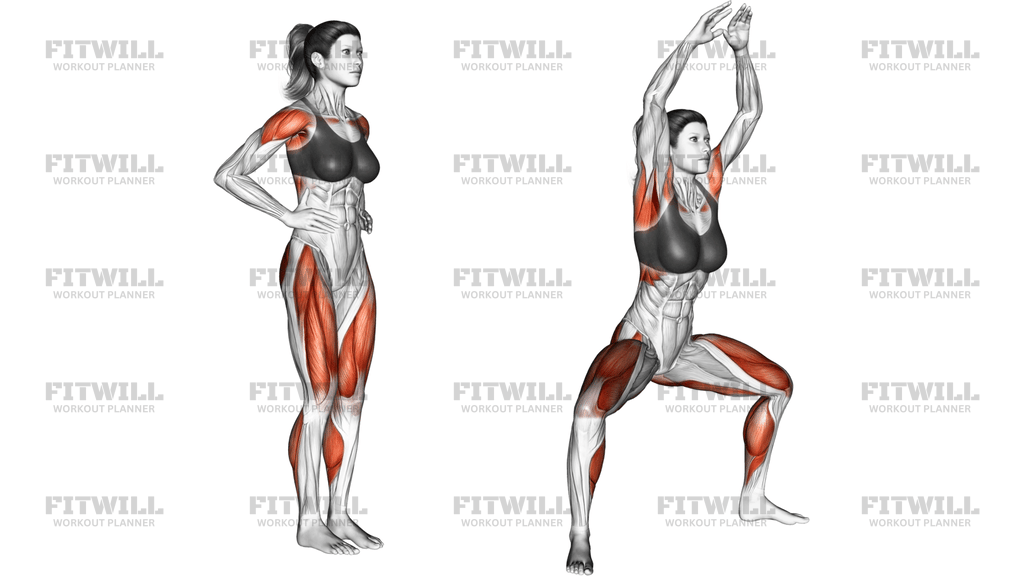
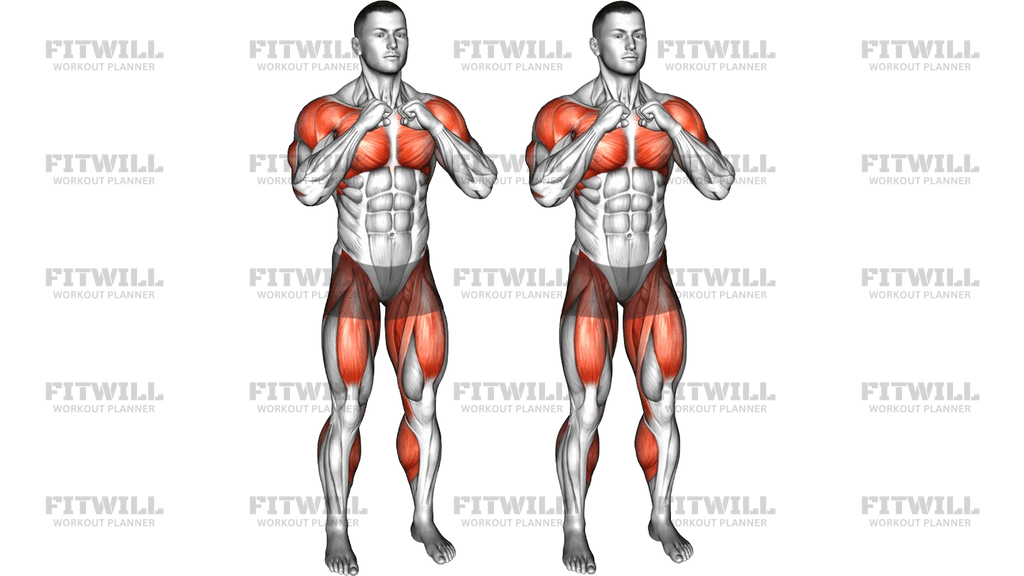
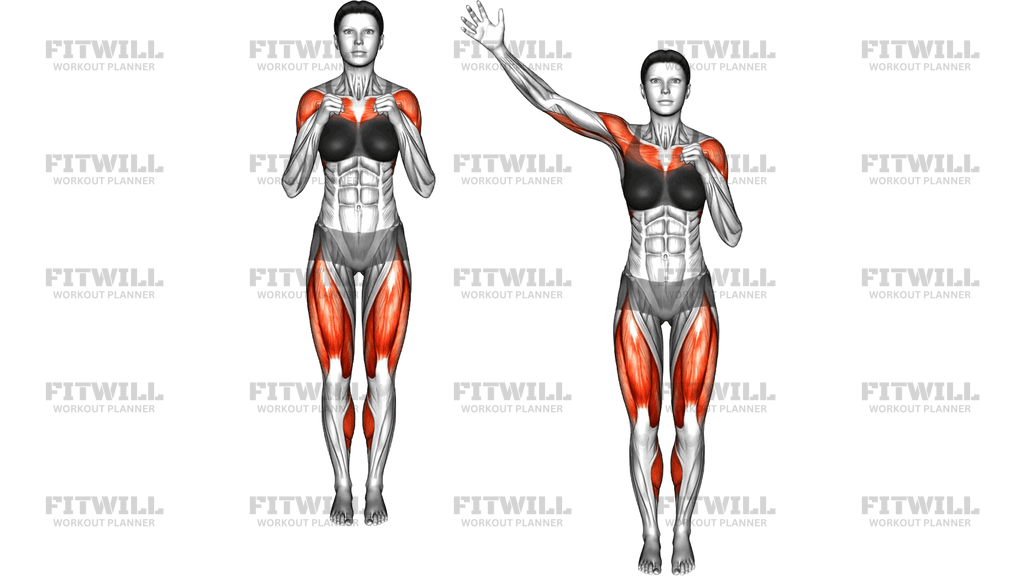
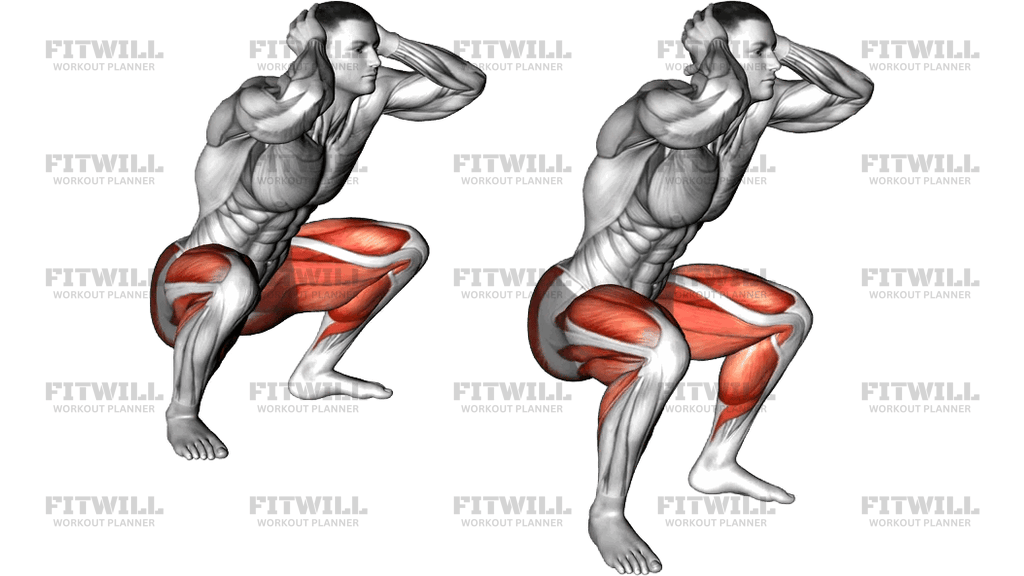
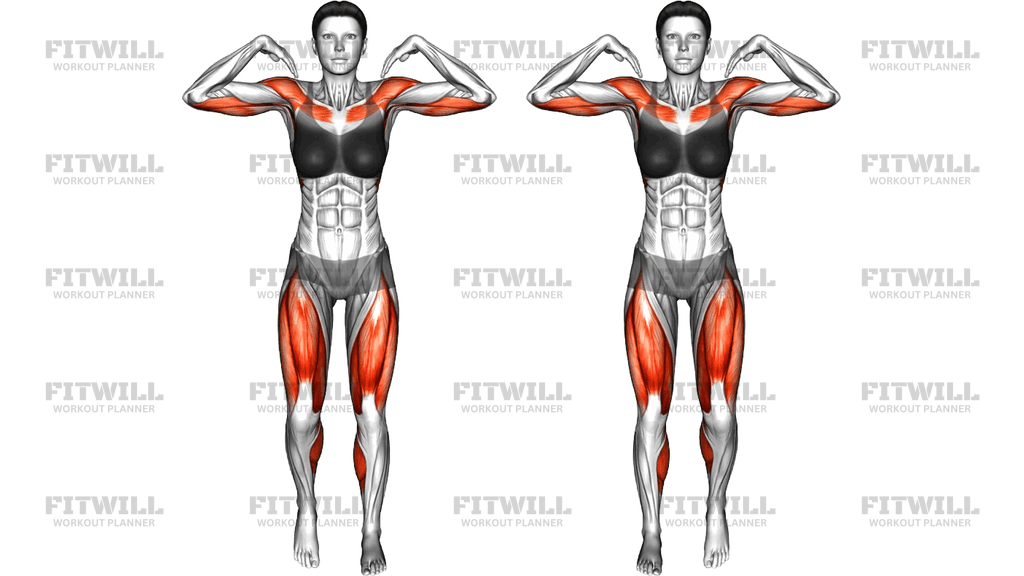
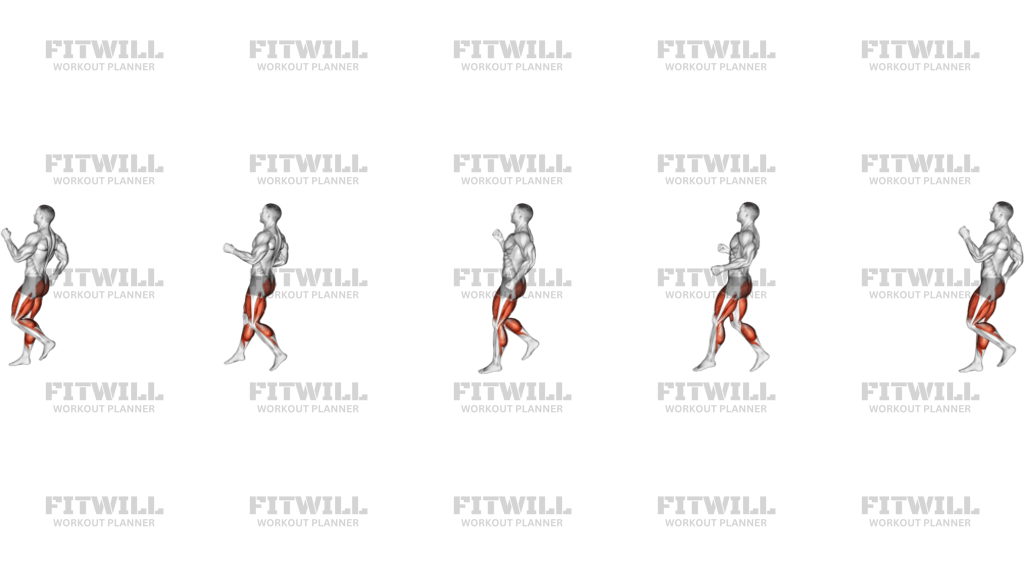
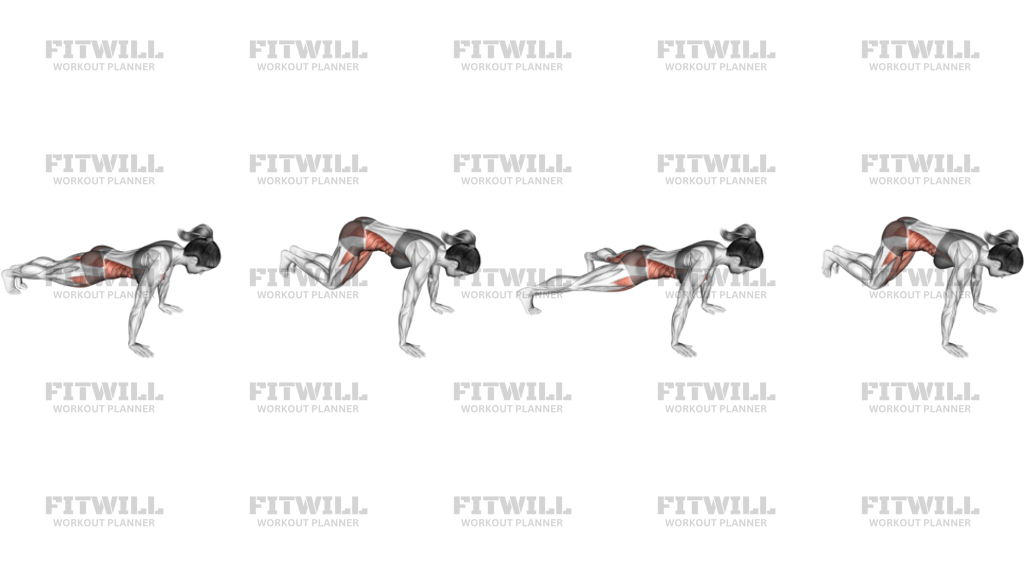
Plyo Jacks are a bodyweight plyometric cardio drill that blends a jumping jack with a shallow squat. From the image, the movement starts in a narrow stance with the torso tall and the arms near the body, then quickly jumps out to a wide stance while the hips sit back and the arms sweep overhead. The exercise is designed to raise heart rate, train rhythmic lower-body power, and reinforce fast changes between a closed stance and an athletic squat position.
This movement emphasizes the legs and glutes while the shoulders, calves, and trunk work to coordinate the landing and the overhead reach. The squat depth is usually modest, but the tempo is fast enough to challenge balance, timing, and breathing. Because it is a plyometric pattern, good mechanics matter more than getting a huge jump. The goal is to land softly, keep the knees tracking in line with the toes, and avoid collapsing through the lower back or shoulders.
The setup is simple but important. Stand with your feet together, ribs stacked over the pelvis, and your weight balanced over the middle of each foot. Before each rep, tighten your midsection just enough to keep the torso steady. As you jump out, send the hips slightly back, open the knees, and raise the arms without shrugging. On the way back in, bring the feet together under control and reset your posture before the next rep.
Plyo Jacks are useful in warmups, conditioning circuits, athletic finishers, or home workouts when you want a high-output, no-equipment option. They are also easy to scale. Beginners can reduce the jump by stepping out and in instead of hopping, while more advanced lifters can move faster, increase rep density, or use them inside interval blocks. The best version keeps the landings quiet, the torso organized, and the breathing steady enough to maintain repeated efforts.
If the movement feels rough on the knees or ankles, shorten the stance, reduce the squat depth, or switch to a step-out jack. If the shoulders get tired before the legs, keep the arms slightly in front of the body rather than forcing a locked overhead position. With clean timing and soft landings, Plyo Jacks become a simple but effective way to build conditioning without equipment.
[ Workout Log & Planner ]
Put your next workout in Fitwill
Keep your plan and training log ready when you are.


Instructions
- Stand tall with your feet together, arms relaxed by your sides, and your weight centered over the middle of each foot.
- Brace your trunk lightly, keep your chest stacked over your hips, and prepare to jump rather than squat deep.
- Jump your feet out to a wide stance as you lower into a shallow squat and swing your arms overhead.
- Land softly through the balls of your feet and let the knees track in the same direction as the toes.
- Keep the torso upright while the hips sit back just enough to absorb the landing.
- Drive the feet back together with a quick rebound and bring the arms back down as you return to the start.
- Reset balance for a moment if needed, then repeat with the same rhythm and landing quality.
- Continue for the planned number of reps or time without letting the jumps get sloppy.
Tips & Tricks
- Land quietly; if the feet sound heavy, shorten the jump and absorb more through the ankles and hips.
- Keep the squat shallow enough that your heels stay grounded and your chest does not pitch forward.
- Let the arms rise naturally instead of forcing an overhead lockout if your shoulders start to shrug.
- Use a quick inhale on the reset and a sharper exhale as you jump out or back in.
- Keep the knees pushing over the second and third toes so they do not cave inward on the landing.
- If your calves fatigue first, slow the pace and focus on a smoother rebound off the floor.
- For lower-impact conditioning, step the feet out and in instead of jumping.
- Stop the set when your landings get noisy, your torso starts leaning, or the rhythm breaks.
Frequently Asked Questions
What muscles do Plyo Jacks work most?
They mainly work the legs and glutes, with the calves, shoulders, and core helping control the jump and landing.
Is the squat in Plyo Jacks supposed to be deep?
No. The image shows a shallow athletic squat, not a full squat, so the landing stays quick and controlled.
Should my feet leave the floor on every rep?
Not necessarily. A true plyo jack uses a jump, but you can step out and in if you need a lower-impact version.
What is the most common mistake with Plyo Jacks?
The biggest mistake is landing hard with the knees collapsing inward or the torso leaning too far forward.
Do I need to keep my arms overhead the whole time?
No. The arms should swing overhead on the wide landing, then return down as you come back to the narrow stance.
Can Plyo Jacks be used as a warmup?
Yes. They work well in a warmup when you want to raise heart rate and rehearse fast footwork before harder training.
How do I make this exercise easier on my knees?
Reduce the jump height, keep the squat shallow, and use a step-out jack instead of a full plyometric landing.
How should my breathing work during this drill?
Use a steady rhythm, exhaling through the effort and taking quick breaths during the brief reset between reps.