Plyo Sit Squat Wall
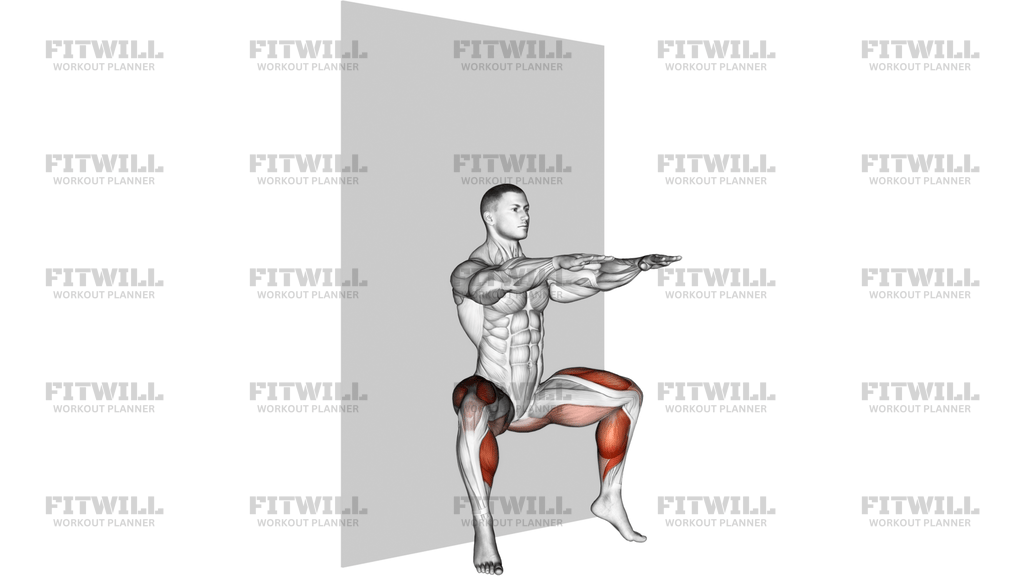
Plyo Sit Squat Wall is a wall-supported plyometric squat that uses body weight to train quick force production through the quads. The wall gives the body a fixed reference point, so the torso stays organized while the legs do the work. That makes the exercise useful when you want to build lower-body power, work capacity, and landing control without needing external load.
The main emphasis is on the quads, but the glutes, calves, and core all contribute to a clean rep. In a good repetition, the knees and hips share the work instead of collapsing into the wall or drifting forward. Plyo Sit Squat Wall is most effective when the feet are planted well enough in front of the wall to keep tension on the thighs while still allowing a crisp, explosive drive upward.
Setup matters more here than in a basic squat because the wall controls part of the pattern. Sit back into the wall with the lower back in contact, feet about shoulder width, and toes slightly turned out if that feels natural. From there, lower to the chosen depth and make sure the heels stay down, the knees track over the toes, and the chest stays quiet instead of collapsing forward.
The plyometric portion comes from the transition out of the wall sit. Drive through the whole foot and extend the knees and hips quickly, then land softly and sink back into the wall sit with control. The goal is not a huge jump; it is a fast, repeatable push-off with a quiet landing and stable knee position. If the landing gets loud or the hips lose contact with the wall, the set is too aggressive.
Plyo Sit Squat Wall fits well in athletic warmups, lower-body conditioning blocks, and finisher work where you want quad-dominant power with minimal equipment. It can also be a useful intro plyometric for people who need the wall to keep the squat path honest. Keep the range pain-free, reduce the depth if the knees complain, and stop the set once the reps turn into bouncing instead of controlled power. For the best carryover, keep each rep snappy and consistent instead of chasing fatigue or a bigger jump.
Fitwill
Log Workouts, Track Progress & Build Strength.
Achieve more with Fitwill: explore over 9600 exercises with images and videos, access built-in and custom workouts, perfect for both gym and home sessions, and see real results.
Start your journey. Download today!




Instructions
- Stand with your upper back and hips against a wall, then walk your feet forward about one to two foot lengths so you can sit into the squat without your heels lifting.
- Slide down the wall until your thighs are near parallel to the floor, keeping your feet about shoulder width apart and your knees tracking over your toes.
- Press your lower back lightly into the wall and brace your abs so your ribs stay stacked over your pelvis.
- Load the legs evenly through the whole foot, with pressure through the heels and midfoot instead of drifting onto the toes.
- Drive upward quickly by extending your knees and hips, using a small explosive push instead of a slow grind.
- If the rep calls for a plyo pop, leave the floor only as much as you can land softly and control the rebound back into the wall sit.
- Land with bent knees, absorb quietly, and return straight back to the wall sit without letting the hips peel off the wall.
- Keep breathing rhythmical through the set, then step away from the wall carefully when the set is complete.
Tips & Tricks
- Set your feet far enough in front of the wall that your shins stay comfortable; if your heels pop up, move them a little farther out.
- Keep the jumps small and fast. A huge jump usually turns this into a sloppy landing instead of a better leg stimulus.
- Land as quietly as possible. A loud landing means you are dropping too hard or losing tension on the way down.
- Keep the lower back in contact with the wall on every rep so the torso does not swing forward as you drive up.
- Let the knees track in line with the second and third toes instead of caving inward as fatigue builds.
- Use shorter sets if the wall sit starts to turn into shaking and sliding rather than crisp push-offs.
- Stop the set before your hips rise off the wall during the return phase; once that happens, the exercise stops looking like a wall squat.
- If your knees dislike the bottom position, reduce the depth slightly and keep the same explosive drive.
- Choose a tempo that gives you a clean reset on the wall between reps instead of bouncing through the set.
- Treat the return as part of the rep: absorb the landing and settle back into the wall sit instead of collapsing into it.
Frequently Asked Questions
What muscles does Plyo Sit Squat Wall train most?
The quads do most of the work, with help from the glutes, calves, and core to keep the wall sit and landing controlled.
Is Plyo Sit Squat Wall the same as a regular wall sit?
No. A regular wall sit is mostly isometric, while Plyo Sit Squat Wall adds an explosive drive up and a controlled return to the wall.
How low should I sit against the wall?
A thigh position around parallel is a solid target, but go slightly higher if your knees feel stressed or your heels start to lift.
Should my lower back stay on the wall the whole time?
Yes. Keep light contact through the lower back and hips so you are driving the rep with the legs instead of leaning away from the wall.
Can beginners do Plyo Sit Squat Wall?
Yes, but they should keep the jump very small or even practice the wall sit drive without leaving the floor until the landing feels stable.
What is the biggest mistake in Plyo Sit Squat Wall?
The most common issue is letting the landing get noisy and the knees cave in, which usually means the jump is too aggressive for the current control level.
How many reps should I use for this exercise?
Short sets work best, usually just enough to keep each rep explosive and clean before fatigue turns the movement into a slow wall hold.
What can I substitute if Plyo Sit Squat Wall bothers my knees?
Use a standard wall sit, a partial wall squat, or a low-bodyweight squat to keep quad tension without the plyometric landing.