Rope Climb
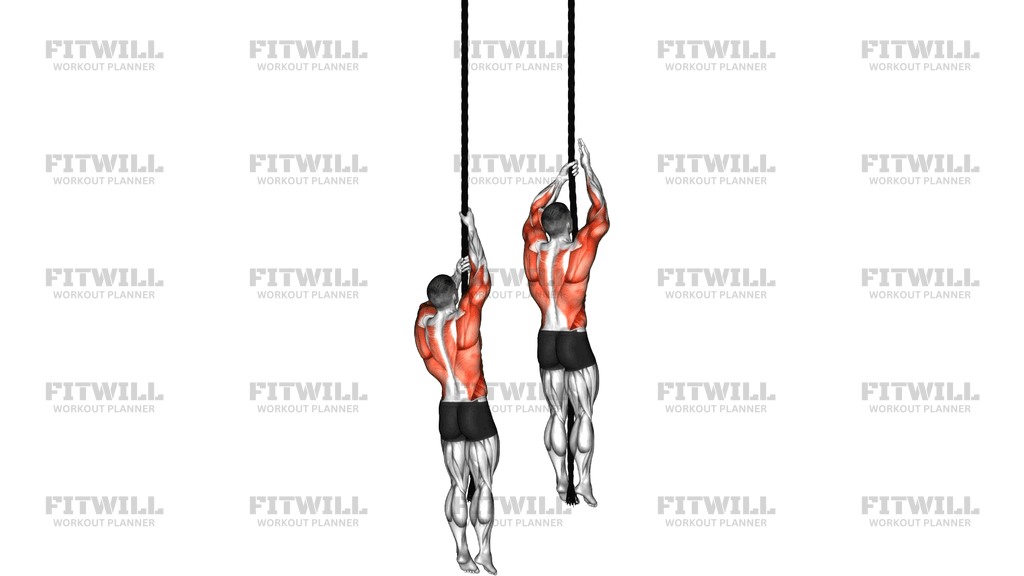
Rope Climb is a vertical pulling exercise that develops climbing strength, grip endurance, and whole-body coordination with a rope and rope attachment. In the image, the athlete is moving hand-over-hand up a hanging rope while keeping the torso close to the line of pull, which makes the movement much more than an arm exercise. The traps, upper back, lats, biceps, shoulders, and forearms all have to work together while the trunk stays tight and the body stays organized.
The setup matters because rope climbs get inefficient very quickly when the shoulders are shrugged, the core is loose, or the body swings away from the rope. Start beneath a secure anchor with enough overhead clearance to finish the climb without rushing the last reach. Place the hands so you can change grips smoothly, set the shoulders before you leave the floor, and make sure the feet and legs are ready to help if your version of the climb uses a rope lock or a standing push.
A clean rep is a sequence, not a yank. Brace first, pull the chest upward, then regrip the rope one hand at a time while keeping the rope close to the torso. If you are using the legs, clamp the rope or stand on it to unload the arms before each next reach. If you are climbing mostly with the upper body, keep the legs quiet and avoid kicking or twisting. The goal is steady upward progress, not a violent pull that leaves the shoulders jammed and the grip blown out.
Rope Climb is useful in strength programs, obstacle-course prep, tactical training, and any session where you want pulling power plus real-world grip demand. It exposes side-to-side differences fast, especially in shoulder control, elbow strength, and trunk stiffness. Because the movement is demanding, it works best when the rep quality stays high and the descent is just as controlled as the ascent.
Treat the top and bottom positions with the same discipline. Pause briefly near the top instead of bouncing off the anchor, then descend one grip at a time while keeping tension through the hands and shoulders. Avoid dropping from height unless your training setup specifically allows it. Progress this exercise by climbing farther with the same control, reducing leg assistance, slowing the descent, or adding total climbs only after technique stays consistent from start to finish.
[ Workout Log & Planner ]
Put your next workout in Fitwill
Keep your plan and training log ready when you are.


Instructions
- Stand beneath the rope and take a high top hand and a lower support hand before you leave the floor.
- Set your shoulders down and back, then brace your core so your ribs stay stacked over your pelvis.
- Keep your torso close to the rope and avoid leaning back or swinging away from the line of pull.
- Pull with the upper hand while the lower hand stays firm enough to keep you stable.
- Reach the lower hand up to a higher grip one hand at a time without shrugging or twisting.
- If you are using your legs, lock or clamp the rope with the feet and stand tall to help the next pull.
- Bring the chest upward in small controlled pulls instead of yanking the rope with momentum.
- Pause briefly near the top, then climb down one grip at a time with control.
- Keep breathing steady through each reach and reset before the grip or shoulder position breaks down.
Tips & Tricks
- Keep the rope as close to your body as possible; drifting away from it makes every pull harder and less stable.
- Use your legs to unload the arms if you are doing repeated climbs or longer sets.
- Look toward the rope and keep the neck neutral instead of craning the head back to find the anchor.
- Drive the elbows down and slightly in so the lats and upper back can contribute to the pull.
- Change grips before your forearms are completely fried so the hand switch stays clean and secure.
- If your feet are involved, practice the same rope lock every rep rather than improvising a different clamp each time.
- Descend slower than you climb to reinforce shoulder control and grip discipline.
- Stop the set as soon as the torso starts swinging or the chest can no longer stay lifted toward the rope.
Frequently Asked Questions
What muscle does Rope Climb target most?
The traps are the primary target, with major help from the upper back, lats, biceps, shoulders, and forearms.
Can beginners perform this exercise?
Yes, but beginners usually need short climbs, extra leg assistance, or rope-hold variations before attempting full climbs.
Do I need to use my legs on the rope?
Not always, but using the legs makes the climb more efficient and keeps the arms from failing too early.
What is the most common mistake on Rope Climb?
The most common mistake is swinging away from the rope and trying to finish the climb with momentum instead of tension.
What should my hands be doing during the climb?
One hand should stay secure while the other reaches higher, so each grip change is controlled instead of rushed.
How should I descend from the top?
Climb down one grip at a time with tension in the shoulders and hands instead of dropping or sliding uncontrolled.
What does a good rope lock feel like?
It should feel stable enough to stand on the rope briefly and unload the arms without slipping or twisting.
How do I make Rope Climb harder?
Reduce leg assistance, climb farther, slow the lowering phase, or complete more total climbs with the same clean form.