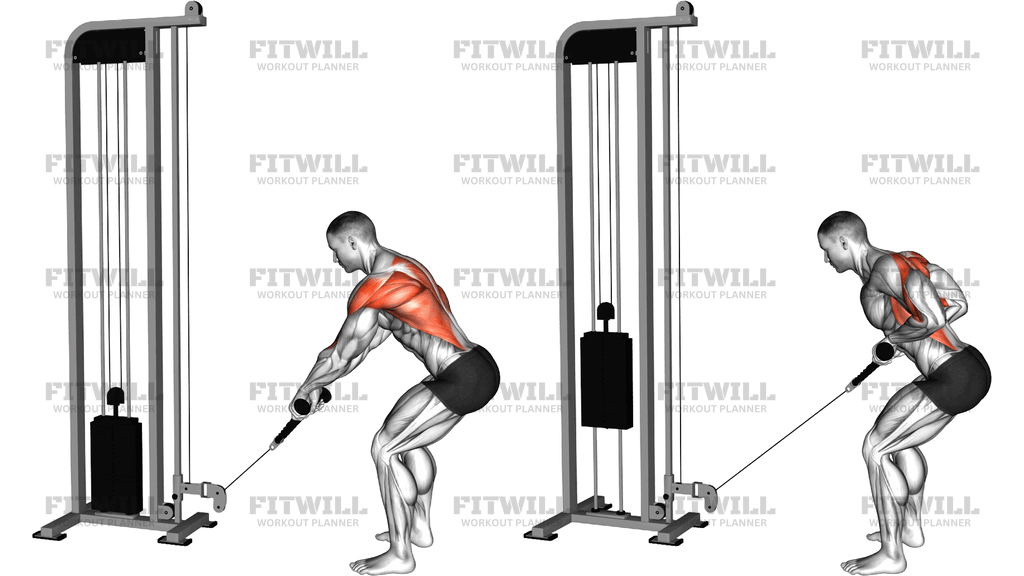
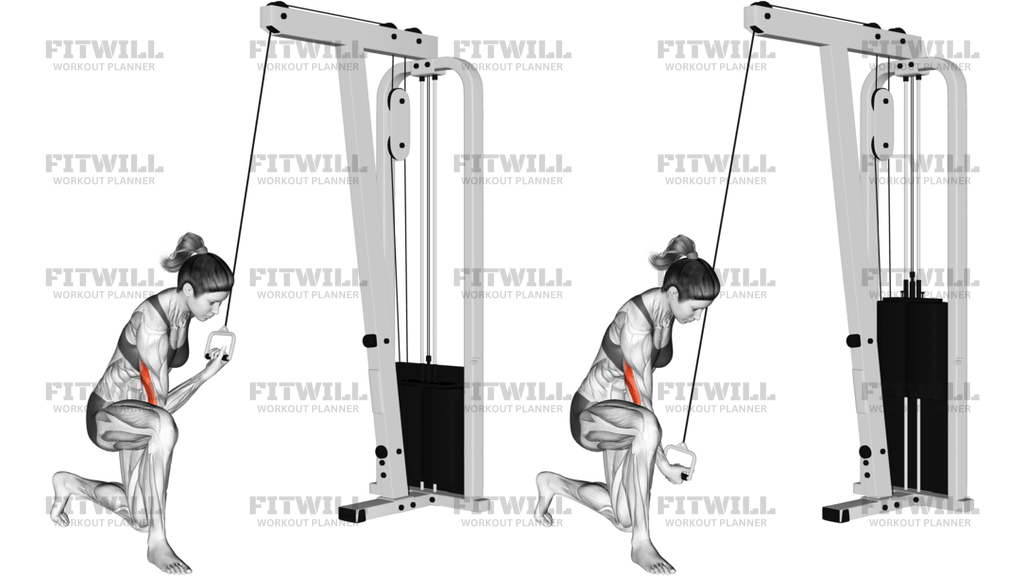
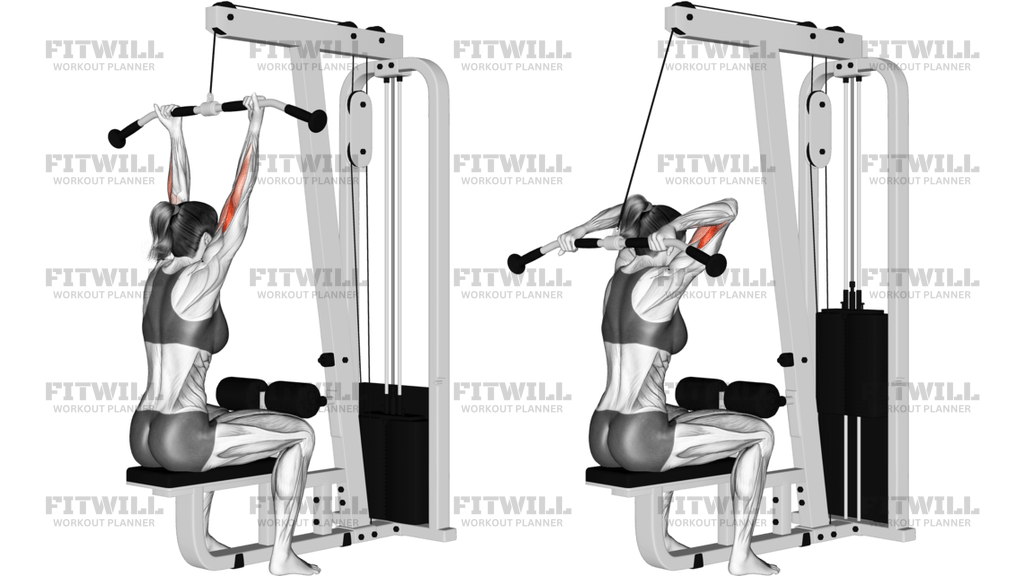
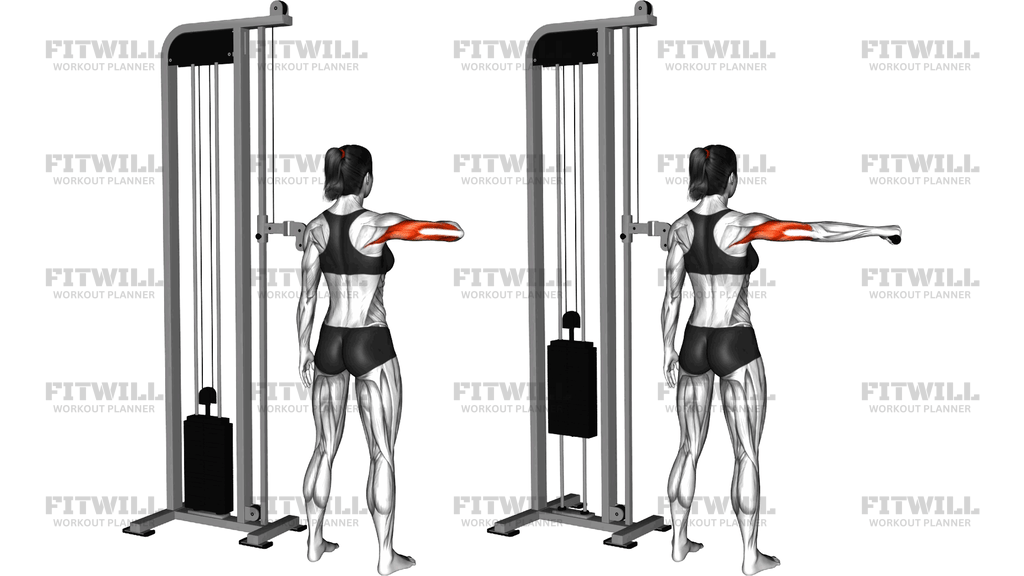
Cable Lying Shrug
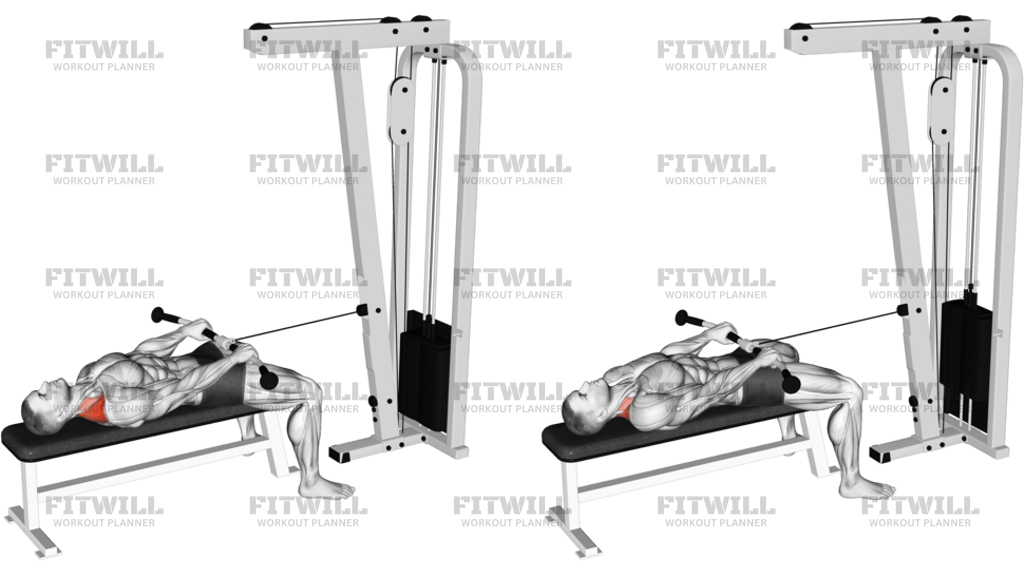
Cable Lying Shrug is a bench-supported shrug variation that uses a cable machine and handle attachment to train shoulder elevation with steady resistance. Lying on a flat bench removes most of the body English that can creep into standing shrugs, so each rep has to come from the shoulder girdle instead of from knee drive, torso sway, or arm pulling.
The movement mainly targets the upper trapezius, with the levator scapulae and upper-back stabilizers helping control the shoulder blades. Because the cable stays under tension through the whole range, the exercise is useful when you want a strict trap-focused accessory movement that still feels smooth and joint-friendly. It can work well after heavy pulling, on a dedicated trap day, or as a controlled shoulder-girdle drill in a hypertrophy block.
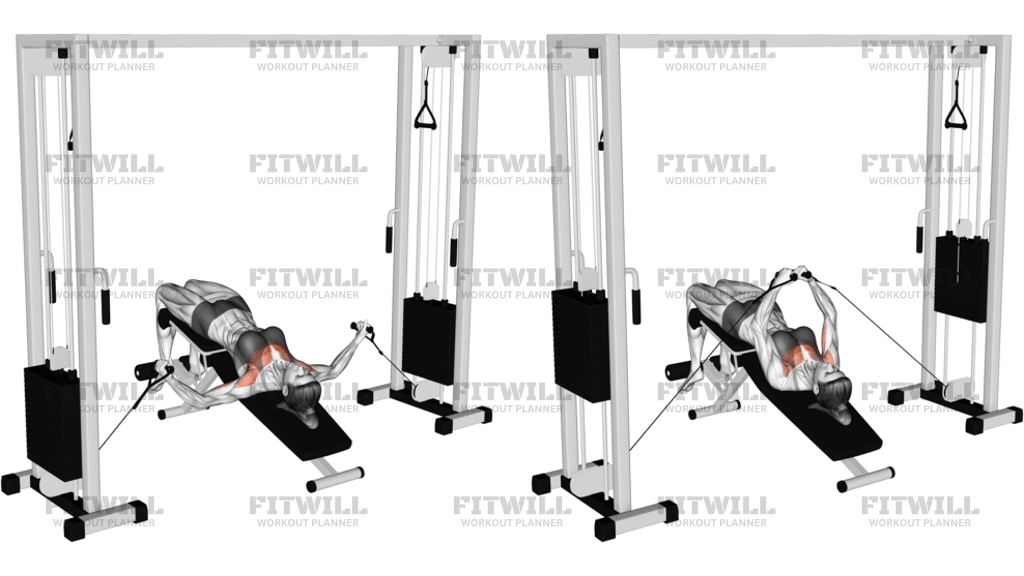
Setup matters more here than in a lot of shrug variations. Lie face up on the bench with your head close enough to the pulley that the cable line feels direct and even. Keep your feet planted, knees bent, ribs down, and neck long. Hold the handle with both hands and keep your elbows softly bent but fixed so the cable resistance loads the shoulders rather than the arms.
Each repetition should be a small, deliberate shoulder lift. Shrug the shoulders up toward the ears, keep the handle path quiet, pause briefly at the top, and then lower under control until the shoulders are fully released again. The goal is not to press, row, or crunch the torso; it is to elevate and lower the shoulder girdle while the bench keeps the body anchored.
This exercise is best performed with moderate or light loading and a controlled tempo. If the neck starts taking over, the bench shifts, or the elbows begin to bend and straighten, the set is too heavy or the setup is off. Use the cable's constant tension to keep the reps clean, and stop the set when the shoulders no longer move smoothly.
Fitwill
Log Workouts, Track Progress & Build Strength.
Achieve more with Fitwill: explore over 9600 exercises with images and videos, access built-in and custom workouts, perfect for both gym and home sessions, and see real results.
Start your journey. Download today!




Instructions
- Set a flat bench beside a low cable pulley and attach a single handle.
- Lie face up on the bench with your head nearest the pulley, knees bent, and feet planted.
- Hold the handle with both hands above your torso and keep your elbows slightly bent.
- Set your shoulders down, keep your neck long, and brace your ribs against the bench.
- Exhale and shrug your shoulders straight up toward your ears without changing the arm angle.
- Keep the handle path steady so the motion comes from the shoulder girdle, not from the elbows.
- Pause briefly at the top when the upper traps are fully shortened.
- Lower your shoulders slowly until they are stretched again, then repeat for the target reps.
Tips & Tricks
- Choose a load that lets the cable move smoothly while your elbows stay fixed.
- Position the bench so the cable pulls in a straight line instead of dragging your torso sideways.
- Think about lifting the shoulders toward the ears, not pulling the handle toward the chest.
- Keep your chin slightly tucked so the neck does not jut forward at the top.
- Do not let the rib cage pop up to fake a bigger shrug; keep the torso anchored to the bench.
- A brief pause at the top usually gives better trap tension than bouncing through fast reps.
- Lower the shoulders under control so the traps work through both the lift and the release.
- Stop the set if the movement turns into neck strain, arm pulling, or shoulder rolling.
Frequently Asked Questions
What muscle does Cable Lying Shrug target most?
It mainly targets the upper trapezius, with the levator scapulae and upper-back stabilizers helping control the shrug.
Why do the shrug lying on a bench instead of standing?
The bench removes leg drive and torso sway, so the shoulders have to do the work more strictly.
How much should my elbows move during the rep?
They should stay almost fixed. Bend them only enough to hold the handle, but do not turn the shrug into a row or press.
Should I shrug straight up or try to roll the shoulders?
Keep the movement mostly straight up toward the ears. Rolling the shoulders usually reduces control and shifts tension away from the traps.
Is this a good beginner trap exercise?
Yes, if the cable load is light and the bench setup keeps the movement stable and easy to feel.
What should I do if I feel it mostly in my neck?
Reduce the load, keep your chin tucked, and make the shrug smaller and more controlled.
How heavy should the cable be for this exercise?
Use enough resistance to challenge the upper traps, but not so much that your shoulders roll or your torso shifts.
Can I pause at the top of each rep?
Yes. A short pause at the top usually improves trap engagement and keeps the reps honest.