Cable Rope Crossover Seated Row
Cable Rope Crossover Seated Row is a seated cable pulling exercise that builds upper back strength while keeping the torso supported. It works well when you want constant cable tension and a controlled path instead of a free-weight row that depends more on hip hinge and balance. The exercise is especially useful for building cleaner scapular control, stronger posture under load, and a better connection between the pull and the muscles between the shoulder blades.
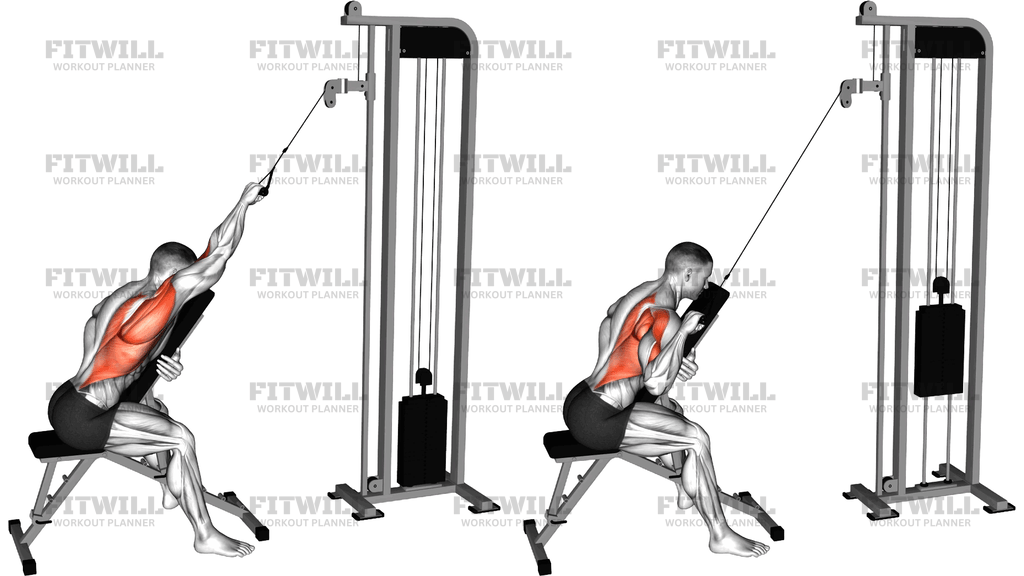
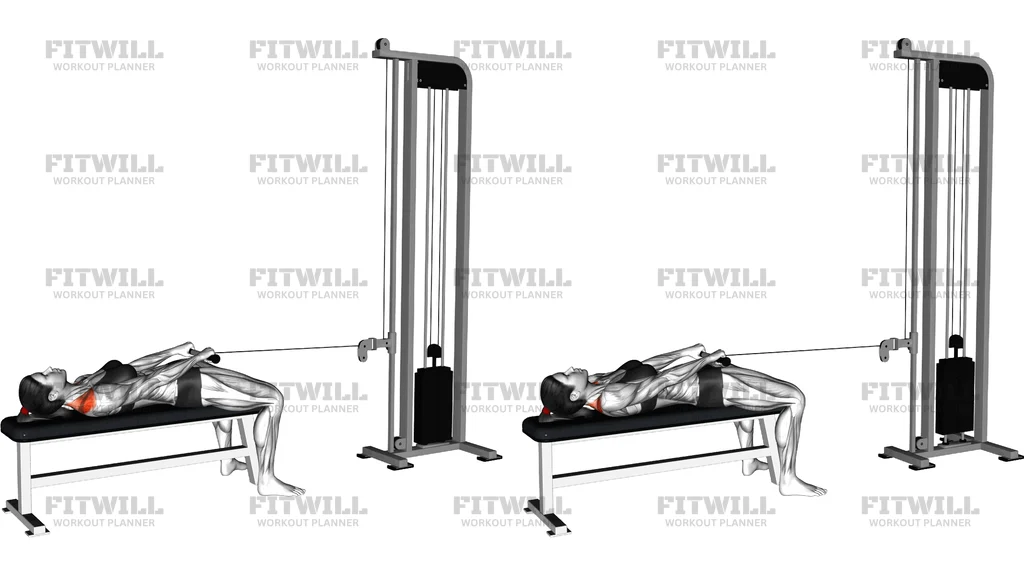
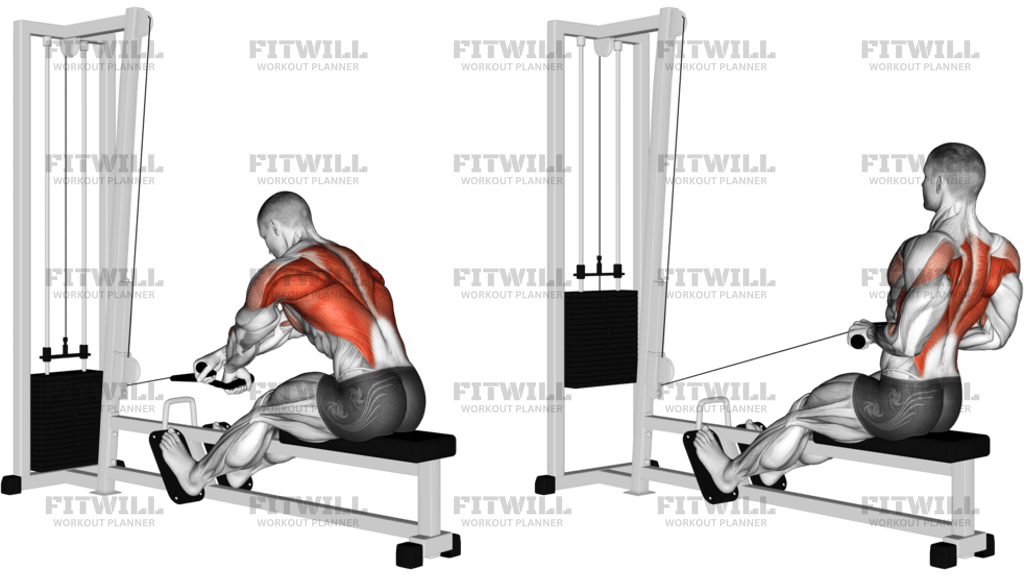
The image shows a seated row set up on a bench facing a low pulley, with the feet braced on the platform and the cable traveling forward from the machine to the hands. That setup matters because your bench distance, foot pressure, and torso angle determine whether the pull stays smooth or turns into a shrug-and-swing. The main effort is centered on the trapezius, with help from the rhomboids, latissimus dorsi, rear shoulders, and biceps as the elbows drive back and the shoulder blades move together.
A good Cable Rope Crossover Seated Row starts before the first rep. Sit tall enough to keep your ribs stacked over your pelvis, then lean forward just enough to create tension in the cable without rounding the low back. Hold the rope or dual handles with a neutral grip, keep the wrists straight, and let the arms lengthen fully before you pull. That long starting position gives you a clean range of motion and makes it easier to feel the upper back initiate the rep instead of the hands yanking the weight.
During each pull, drive the elbows back and slightly away from the cable path until the handles reach the lower ribs or upper abdomen, then squeeze the shoulder blades without letting the chest flare forward. The finish should feel strong through the upper back, not cramped in the neck. On the way down, let the arms extend under control until the cable is taut again and the shoulders can open without losing posture. A short pause at the top and a slower return make the row more effective than simply moving the stack from one end to the other.
Cable Rope Crossover Seated Row is a practical choice for back-focused training days, accessory work after pressing, or any session where you want to keep tension on the upper back without loading the spine heavily. It is also a useful option for beginners because the machine path provides feedback while the bench and foot brace reduce the need to stabilize the whole body. Keep the load honest, keep the motion smooth, and stop the set if you have to lean back hard or shrug to finish the pull.
[ Workout Log & Planner ]
Put your next workout in Fitwill
Keep your plan and training log ready when you are.


Instructions
- Sit on the bench facing the low pulley, plant your feet on the foot platform, and hold the rope or dual handles with your arms straight and palms facing each other.
- Slide back until the cable is tight at the start, then lean forward slightly from the hips without rounding your low back.
- Set your chest tall, keep your ribs stacked over your pelvis, and let your shoulders stay away from your ears before you pull.
- Brace your midsection and pull the elbows back along the cable path so the handles travel toward your lower ribs or upper abdomen.
- Squeeze the shoulder blades together at the finish without throwing the chest forward or leaning back to fake extra range.
- Pause briefly at the top with the neck long and the wrists straight, then keep the cable under control as you begin the return.
- Lower the handles slowly until your arms are almost straight and the shoulder blades can open again without the torso collapsing forward.
- Reset the shoulders and breath at the bottom, then repeat for the planned reps with the same bench position and cable path.
- When the set is done, guide the stack down before standing up and release the handle only after the cable is fully settled.
Tips & Tricks
- Set the bench far enough from the stack that the cable stays taut at the start, but not so far that you lose the slight forward lean needed for a full pull.
- Keep the feet hard against the platform; if you slide or lift the heels, the row usually turns into a body swing.
- Think about driving the elbows back, not pulling with the hands, so the grip does not take over the movement.
- A neutral wrist is usually easier with the rope attachment than with a straight handle, especially when the load gets heavier.
- If your shoulders creep toward your ears at the finish, reduce the load and stop the rep before the shrug takes over.
- Do not lean back to complete the pull; if your torso changes angle rep to rep, the upper back is losing tension.
- Use a slower lowering phase than the pulling phase so the cable does not yank you forward at the bottom.
- Stop the set when the handles start drifting upward toward the chest instead of staying near the lower ribs or upper abdomen.
- A brief squeeze at the top helps the upper back do the work, but the pause should not become a hard backward arch.
- If the forearms fatigue before the back, lighten the stack and keep the fingers relaxed enough to hold the rope without death-gripping it.
Frequently Asked Questions
What muscles does Cable Rope Crossover Seated Row work most?
The main emphasis is the upper back, especially the trapezius and rhomboids, with the lats, rear shoulders, and biceps helping during the pull.
How should I sit for Cable Rope Crossover Seated Row?
Sit on the bench facing the low pulley, brace your feet on the platform, and keep a small forward lean so the cable starts under tension without rounding your low back.
Should I pull the handles to my chest or my stomach?
For this row, finish around the lower ribs or upper abdomen. Pulling much higher usually turns it into a shrug, while pulling much lower often shortens the upper-back squeeze.
Is Cable Rope Crossover Seated Row beginner friendly?
Yes. The seated setup makes it easier to control than a free row, as long as the load stays light enough that you can keep your torso still and your shoulders out of your ears.
Why does this exercise use a rope or crossover handle?
The rope lets your wrists stay neutral and gives the hands a natural path as the elbows travel back. That usually feels smoother on the shoulders than forcing a fixed straight-bar path.
What is the most common mistake on Cable Rope Crossover Seated Row?
Leaning back to finish the rep is the big one. If the torso keeps changing angle, the cable row stops challenging the upper back and becomes a momentum exercise.
Can I use this instead of a standard seated cable row?
Yes, it can fill the same back-training role, but the rope or crossover setup often lets you keep a more natural wrist and elbow path.
How can I make Cable Rope Crossover Seated Row harder without cheating?
Add a one-second squeeze at the finish, slow the return, or increase the load only if you can keep the same bench angle and shoulder position on every rep.