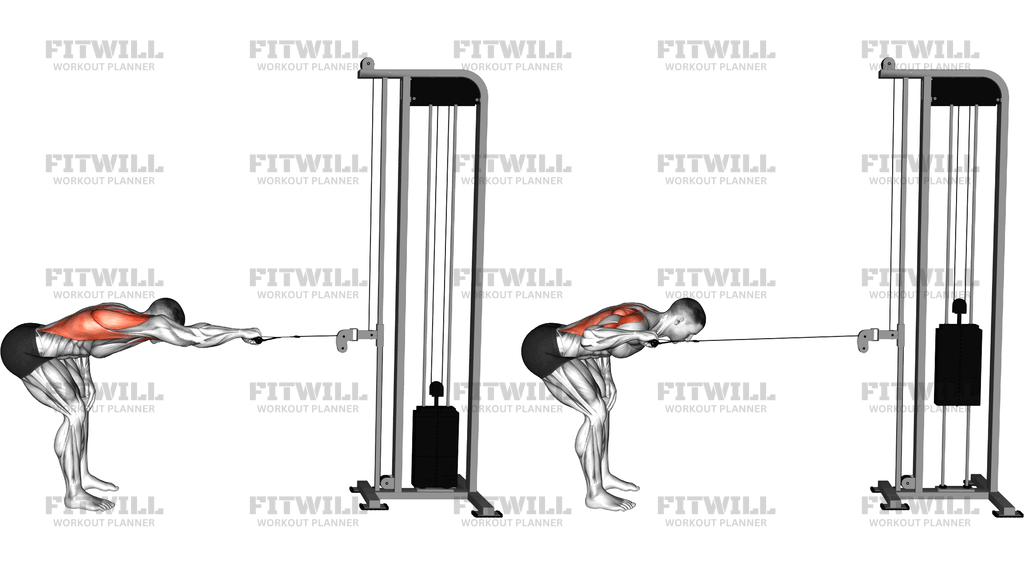
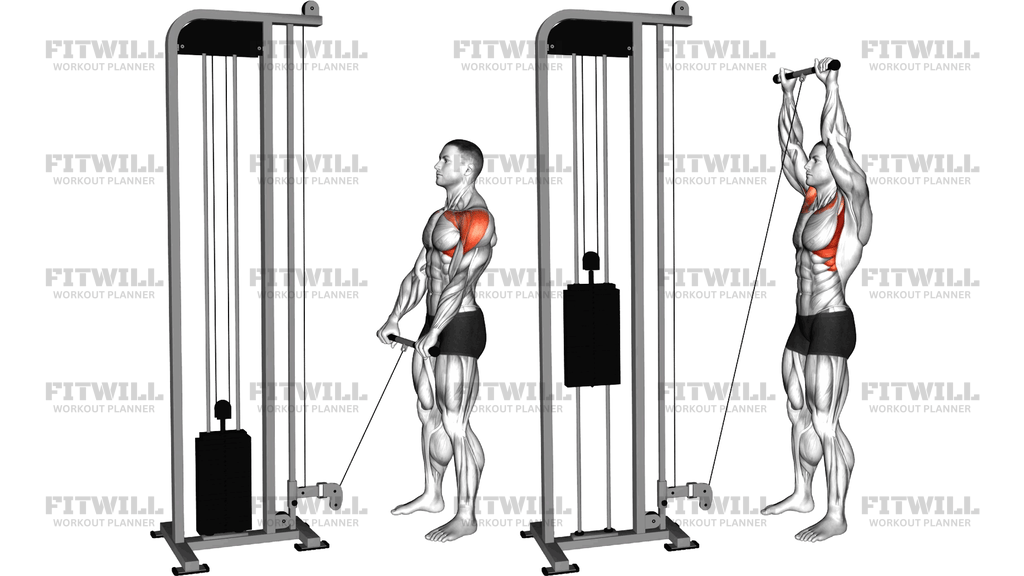
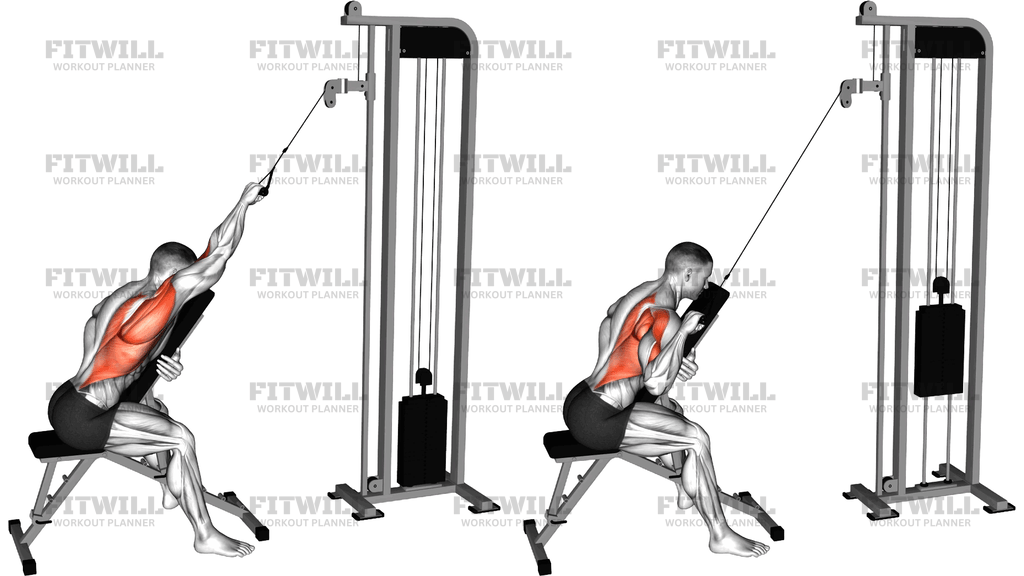
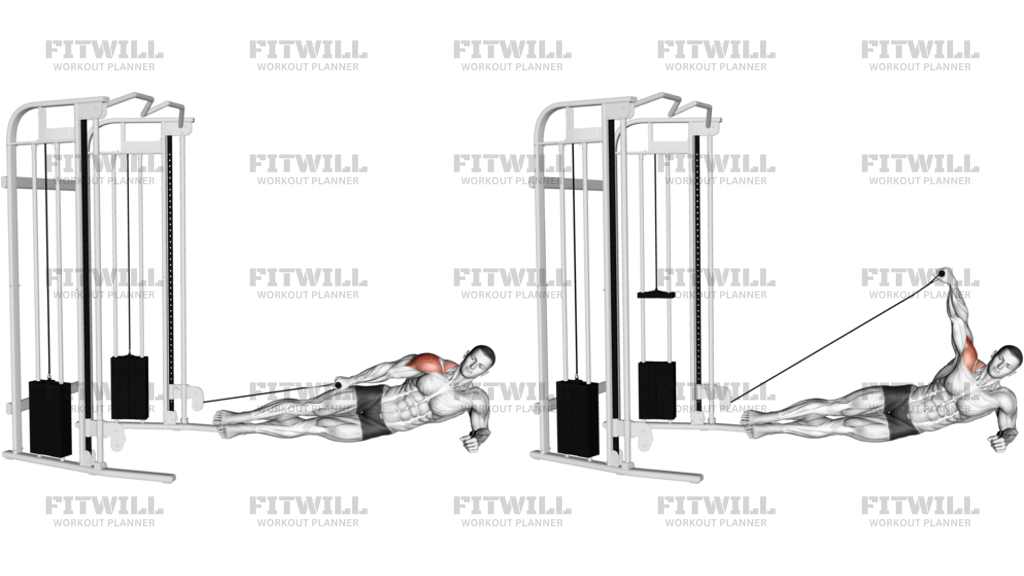
Cable Rope Seated Row
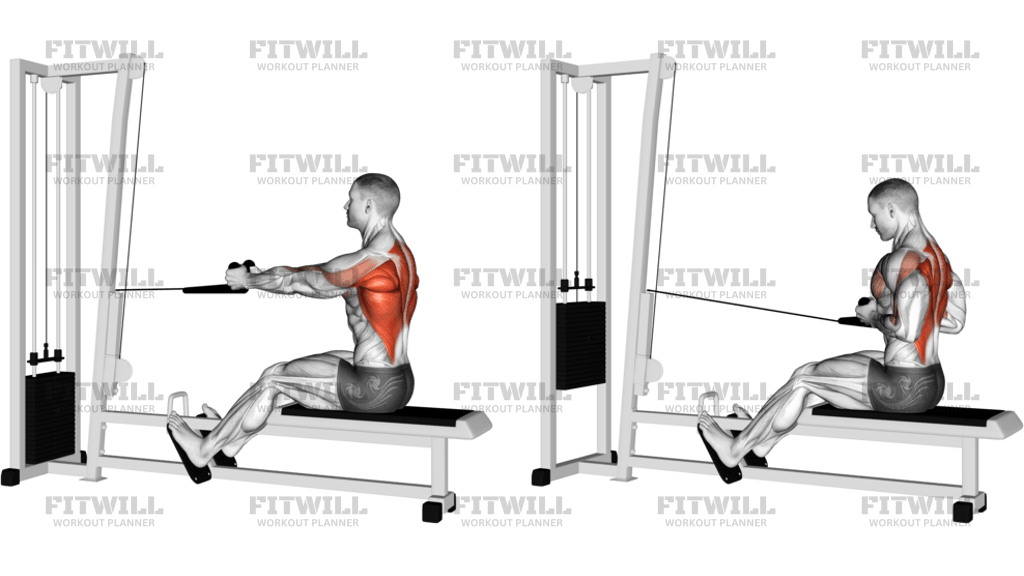
Cable Rope Seated Row is a seated horizontal pulling exercise that builds upper-back strength, posture control, and arm involvement through a cable machine. The setup matters because the bench, foot position, and torso angle decide whether the pull comes from the back or turns into a fast body swing. This version is especially useful when you want steady tension through the entire pull without the free-weight balance demands of a dumbbell row.
The main emphasis is on the traps, with the rhomboids, lats, and biceps helping to control the handle and finish the row. In anatomy terms, the movement centers on the trapezius, with support from the rhomboids, latissimus dorsi, and biceps brachii. That makes Cable Rope Seated Row a good choice for training the muscles that retract the shoulder blades and hold the upper back organized under load.
A clean repetition starts with a tall seat, a neutral spine, and the chest open before the pull begins. Whether you are using a rope attachment or a close-grip handle, the goal is to keep the shoulders down, the wrists straight, and the elbows tracking close enough to the body that the pull stays tight and controlled. If the torso rocks back to finish the rep, the load is too heavy or the setup is too far from the stack.
At the finish, squeeze the shoulder blades together without shrugging or leaning back. The handle should come to the lower ribs or upper abdomen, then return under control until the arms are long and the shoulders are still stacked over the hips. That slow return is where the upper back stays active and the movement gets its best training effect.
Cable Rope Seated Row fits well in back sessions, upper-body splits, and accessory work after heavier presses or pulling lifts. It is also useful for beginners because the cable path makes the row easy to learn, as long as the user keeps the feet planted and avoids yanking the handle toward the chest. When performed strictly, it trains strength, posture, and repeatable pulling mechanics without needing a large swing or a maximal load.
Fitwill
Log Workouts, Track Progress & Build Strength.
Achieve more with Fitwill: explore over 9600 exercises with images and videos, access built-in and custom workouts, perfect for both gym and home sessions, and see real results.
Start your journey. Download today!




Instructions
- Sit on the bench facing the cable stack, plant both feet on the floor or footplates, and slide back until the handle reaches you with your arms fully extended.
- Set your torso tall with a neutral spine, chest lifted, and shoulders stacked over your hips before you start the pull.
- Hold the rope or close-grip handle with a neutral wrist position and keep your elbows softly unlocked at the start.
- Brace your midsection, then pull the handle toward your lower ribs or upper abdomen without leaning back to create momentum.
- Drive your elbows back close to your sides as you squeeze your shoulder blades together at the finish.
- Pause for a brief moment in the contracted position while keeping your neck long and your shoulders out of your ears.
- Lower the handle slowly until your arms are straight again and the weight stack settles under control.
- Keep your feet anchored and repeat for the planned reps, then let the handle return fully before safely releasing it.
Tips & Tricks
- If your torso swings backward to finish the row, reduce the load and keep your sternum stacked over your hips.
- Think about pulling the elbows back, not curling the handle with your hands; the biceps should assist, not lead.
- With a rope attachment, let the ends separate slightly near your torso so you can finish the squeeze without shrugging.
- Keep the wrists straight so the forearms stay in line with the cable instead of folding the handle toward your face.
- Stop the pull at the lower ribs or upper abdomen; dragging the handle too high usually turns the movement into a shrug.
- Use a 2-3 second return so the shoulder blades glide forward under control instead of snapping back to the stack.
- If the bench or footplate leaves you too close to the pulley, adjust the seat so the cable stays level with your midsection.
- Keep the neck relaxed and eyes forward; looking down often rounds the upper back and shortens the row.
- Choose a load that lets you hold the squeeze at the finish without losing rib position or letting the shoulders roll forward.
- If your lower back feels the set more than your upper back, shorten the range slightly and keep the torso more upright.
Frequently Asked Questions
What muscles does Cable Rope Seated Row work most?
It mainly targets the traps, rhomboids, and lats, with the biceps helping as the elbows bend during the pull.
Should I use a rope attachment or a close-grip handle for Cable Rope Seated Row?
Either works if the cable path stays smooth. A rope lets you separate the ends slightly at the finish, while a close-grip handle gives a more fixed hand position.
How far back should I pull the handle?
Pull it to your lower ribs or upper abdomen, then stop before your torso starts leaning back. The finish should come from the shoulder blades and elbows, not a big body swing.
Can beginners do Cable Rope Seated Row safely?
Yes. Start light enough to keep your feet planted, chest tall, and shoulders down while you learn the pulling path.
Why do my shoulders feel like they are doing the work?
That usually means you are shrugging the finish or pulling too high. Keep the handle lower, drive the elbows back, and finish with the shoulder blades moving together.
Do I need to lean back during Cable Rope Seated Row?
No. A small torso angle is fine, but the rep should stay mostly upright. Leaning back too far turns the row into a body-English lift.
What if the handle hits my stomach before I feel my back working?
Move the seat or bench so the cable lines up with your torso, and use a cleaner elbow path toward the ribs instead of a higher pull.
How should I breathe during the set?
Exhale as you pull the handle in, then inhale as you let it return under control. The breath should stay calm enough that your chest does not collapse between reps.