Smith Seated Shoulder Press
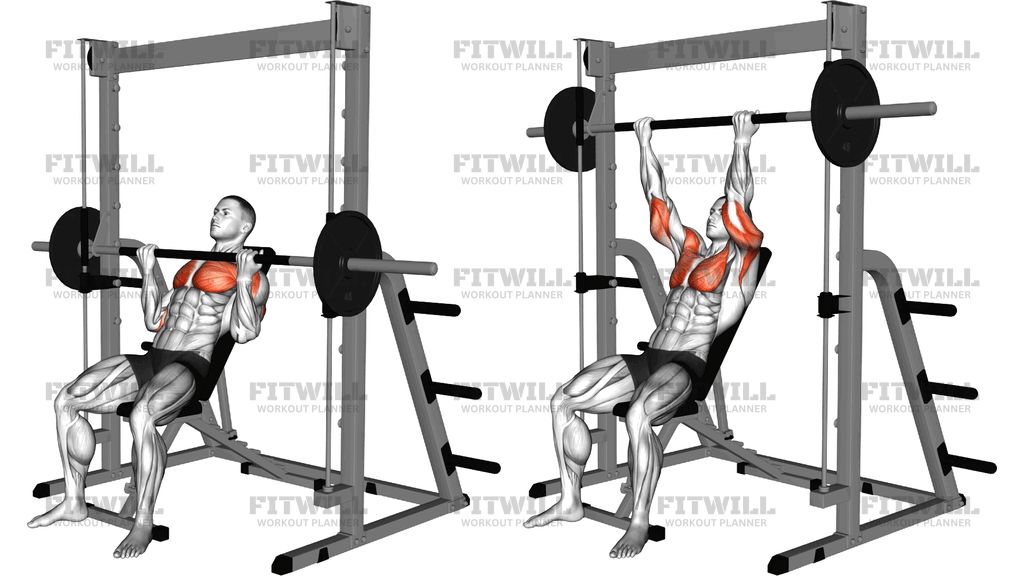
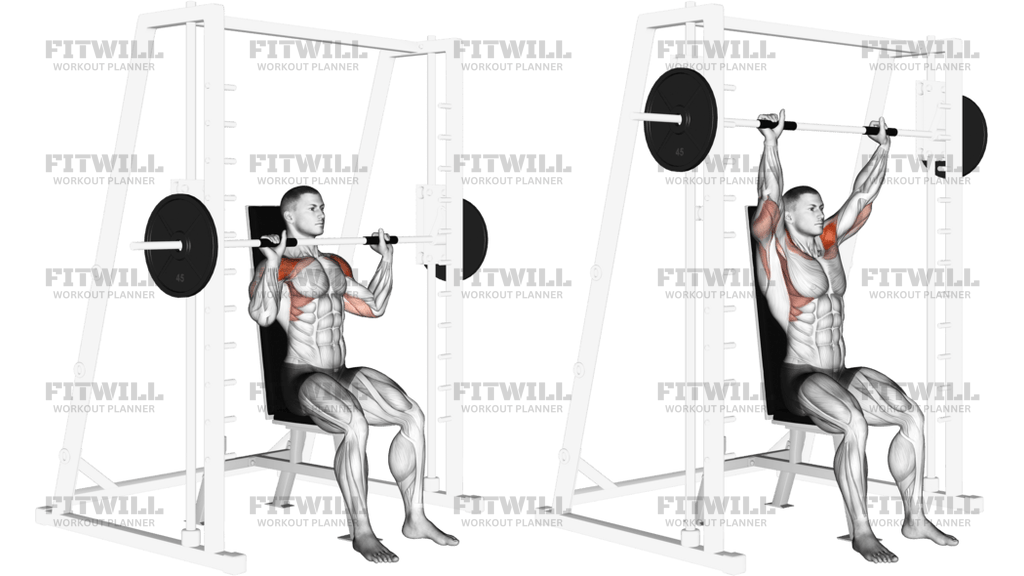
Smith Seated Shoulder Press is a guided overhead press performed on a Smith machine while seated on a bench or shoulder-press seat. The fixed bar path lets you load the movement more aggressively than a free-bar press while still keeping the torso supported, which makes it useful for building the shoulders with less balance demand.
The exercise mainly trains the delts, especially the front and middle heads, with the triceps helping to finish each rep and the upper back working to keep the shoulder girdle organized. In practical terms, the Smith machine takes balance out of the equation, so the quality of the set depends on seat height, grip width, and how cleanly you press the bar along the machine's track.
The setup matters a lot. The bar should start around upper-chest or collarbone height, the hands should be just outside shoulder width, and the forearms should stay close to vertical at the bottom. If the seat is too low, the press begins from an awkwardly deep position; if it is too high, the range gets shortened and the shoulders lose tension too soon. A stable back pad and feet planted flat help keep the ribs from flaring and the lower back from taking over.
During the press, drive the bar upward in a controlled line, letting the head move slightly back if needed so the bar can clear the face, then finish with the arms overhead without shrugging hard or leaning into the pad. Lower the bar slowly to the same shoulder line each rep instead of bouncing out of the bottom. That controlled return is what keeps tension on the delts and makes the exercise productive for hypertrophy, accessory strength work, or shoulder-focused training blocks.
Use a load that keeps the bar path smooth and repeatable. This movement is a good option for lifters who want a seated press with more stability than free weights, but it still punishes sloppy shoulder position or excessive range. If the bar feels jammed at the bottom or the shoulders pinch, adjust the bench height, narrow the range slightly, or reduce load before forcing the rep.
[ Workout Log & Planner ]
Put your next workout in Fitwill
Keep your plan and training log ready when you are.


Instructions
- Set the seat so the fixed bar starts around upper-chest or collarbone height when you are seated upright, with both feet flat on the floor.
- Sit with your back against the pad, ribs stacked over your pelvis, and grip the bar just outside shoulder width with your wrists stacked over your elbows.
- Unrack the bar and hold it just below chin level in front of your face, keeping your forearms close to vertical.
- Brace your midsection and press the bar straight up along the Smith machine track.
- Let your head travel slightly back only as needed so the bar can clear your face, then bring it back under the bar as you finish the press.
- Extend the arms overhead without leaning back or shrugging hard at the top.
- Lower the bar slowly to the same upper-chest line, keeping the elbows under the bar and the shoulders controlled.
- Reset your brace before each rep and rack the bar carefully after the final repetition.
Tips & Tricks
- Match the seat height to your shoulder mobility; the bottom position should feel like a strong press, not a deep grind.
- Keep the grip only slightly wider than your shoulders so the elbows stay under the bar instead of flaring out.
- Use the back pad for support, but do not push your ribcage forward to fake extra range.
- If the bar grazes your face or nose, move your head back a little sooner on the way up rather than arching harder.
- Lower the bar under control to the same touch point each rep instead of dropping into the bottom.
- Stop just short of a painful lockout if your shoulders or elbows complain at full extension.
- Choose a load that keeps the Smith rail path smooth; jerking the bar makes the fixed track feel worse, not better.
- A slight forward elbow angle usually feels better on the shoulders than forcing the elbows straight out to the sides.
Frequently Asked Questions
What muscles work most in Smith Seated Shoulder Press?
The main work goes to the delts, with the triceps helping to lock out the press and the upper back stabilizing the shoulder position.
How should I set the seat under the Smith bar?
Set the seat so the bar starts around upper-chest or collarbone height when you are seated tall, with the bar just in front of your face.
How wide should my grip be on the bar?
A grip just outside shoulder width usually keeps the forearms stacked and makes the press feel smoother on the shoulders.
Do I need to lean back against the pad?
Yes, stay lightly in contact with the back pad so the torso stays stable, but do not turn the press into a hard backbend.
Where should the bar travel during the rep?
It should follow the fixed Smith track from upper chest to overhead, with your head moving only enough to clear the path.
Is this a good beginner shoulder exercise?
Yes, the Smith setup removes balance demands and can help beginners learn a controlled overhead press with lighter loads.
What is the most common mistake on this movement?
The biggest mistake is setting the seat too low or over-arching the lower back to force extra range that the shoulders do not actually need.
Can I use this instead of a barbell shoulder press?
Yes, it can be a useful substitute when you want a more stable press or when free-bar balance is limiting your shoulder work.