Smith Rear Delt Row
Smith Rear Delt Row is a bent-over pulling exercise that uses the guided bar path of a smith machine to isolate the rear delts while still involving the upper back and arms. The fixed bar path makes it easier to stay consistent rep to rep, which is useful when you want the shoulders doing the work instead of the torso swinging the load. It is especially helpful for lifters who want a rear-delt-focused row without having to stabilize a free barbell in the same way.
The setup matters because this version of the row depends on a strong hip hinge and a stable torso angle. You want your chest angled toward the floor, knees softly bent, spine long, and the bar close enough that you can pull with the elbows rather than shrugging or heaving. When the hinge is solid, the rear delts can work through a clean arc and the upper back can assist without turning the movement into a sloppy full-body row.
Each repetition should start from a controlled hang with the shoulders set and the neck relaxed. Pull the bar toward the upper abdomen or lower chest while driving the elbows out and back, then pause briefly when the shoulders are fully retracted and the rear delts are shortened. Lower the bar under control until the arms are long again, but keep the torso angle and ribcage position steady so the bar does not become a swinging pendulum. The smith machine can tempt lifters to rush because the bar path feels secure, so the best reps are deliberate and crisp.
Smith Rear Delt Row is a good accessory movement for shoulder health, upper-back balance, and rear-delt development in pressing-heavy programs. It can also be used when a lifter wants more repeatable tension than a free row variation provides. The exercise is still a loaded hinge, though, so the lower back should stay braced and still, and the bar should be used with a weight that lets you keep the hinge and elbow path honest from the first rep to the last.
If the bar starts drifting into a shrug, the torso begins rising, or the lower back takes over, the load is too heavy or the setup is off. Keep the motion focused on the upper back and rear shoulders rather than chasing height on the bar. Done well, Smith Rear Delt Row is a precise, time-efficient pulling drill that builds posterior-shoulder strength without needing complicated equipment setup.
[ Workout Log & Planner ]
Put your next workout in Fitwill
Keep your plan and training log ready when you are.


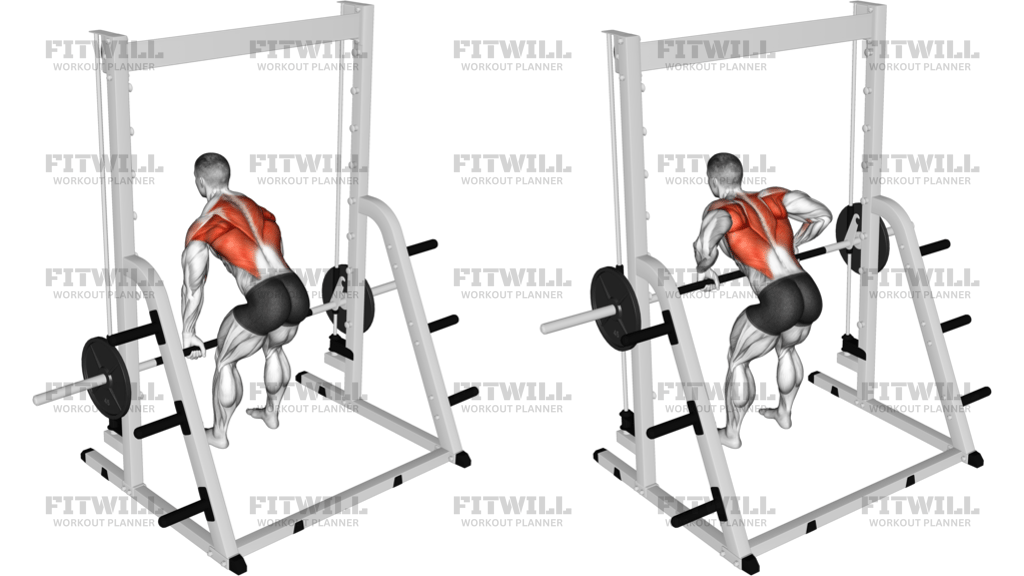
Instructions
- Set the smith bar around mid-thigh height, stand inside the frame, and take a hip-width stance with the bar in front of your legs.
- Hinge at the hips until your torso is angled forward, bend your knees slightly, and keep your back long with your chest reaching toward the floor.
- Grab the bar with an overhand grip a little wider than shoulder width, then let your arms hang straight under your shoulders.
- Set your shoulder blades lightly back and down so your neck stays long and your upper back is ready to row.
- Brace your midsection and keep your torso fixed before you start the first pull.
- Pull the bar toward your upper abdomen or lower chest by driving your elbows out and back, not by standing up or shrugging.
- Squeeze the rear delts and upper back at the top for a brief pause while keeping your wrists neutral.
- Lower the bar slowly until your arms are straight again and your shoulders stay controlled, then reset the hinge if needed before the next rep.
- Breathe in on the way down and exhale as you pull, keeping each rep smooth and repeatable.
- Finish the set by lowering the bar all the way, standing up under control, and re-racking it safely.
Tips & Tricks
- Set the bar height so the first rep starts with straight arms and a clean hinge, not a squat to reach the bar.
- Keep the elbows flared 45 to 70 degrees from your torso; tucking them too much turns this into a lat-biased row.
- Think about pulling the upper arm back, not yanking the hands toward your chest.
- If your torso rises each rep, reduce the load and hold the same hinge angle for the whole set.
- Stop the bar around the lower chest or upper abdomen; pulling higher usually turns the rep into a shrug.
- A brief pause at the top helps the rear delts do more work and keeps the smith bar from bouncing.
- Keep your head in line with your spine instead of looking up at the mirror, which can overextend the neck.
- Use straps if your grip gives out before your rear delts and upper back do.
- Choose a load that lets the bar travel smoothly without jerking through the bottom half of the rep.
- If you feel the movement in your lower back more than your shoulders, shorten the range and tighten the hinge before continuing.
Frequently Asked Questions
What does Smith Rear Delt Row train most?
It mainly targets the rear delts, with the upper back and traps assisting as you pull the smith bar toward your upper abdomen.
How far should I hinge over on Smith Rear Delt Row?
Hinge until your torso is close to parallel with the floor or slightly higher, as long as you can keep a fixed back angle and pull without standing up.
Where should the smith bar touch in Smith Rear Delt Row?
The bar usually finishes near the upper abdomen or lower chest, depending on your torso angle and elbow path. If it gets much higher, the movement usually turns into a shrug.
Can beginners use Smith Rear Delt Row?
Yes. The fixed bar path makes it easier to learn than a free barbell row, but beginners should start light and practice the hinge before adding load.
What grip works best on the smith bar?
Use an overhand grip a little wider than shoulder width so the elbows can flare and the rear delts can work through the pull.
Why do my traps take over on this exercise?
Usually the elbows are drifting too high, the shoulders are shrugging, or the bar is being pulled too far up. Lower the target to the upper abdomen and keep the neck long.
Is Smith Rear Delt Row the same as a regular bent-over row?
No. A regular bent-over row is often more lat and mid-back dominant, while this version uses a wider elbow path to bias the rear delts and upper back more strongly.
What should I do if my lower back gets tired first?
Reduce the load, shorten the set, or raise the torso slightly so you can keep the same hinge without fighting to hold position.
How many reps work well for Smith Rear Delt Row?
Moderate to higher reps usually work best because the rear delts respond well to controlled tension, not maximal loading.