Smith Standing Shoulder Press
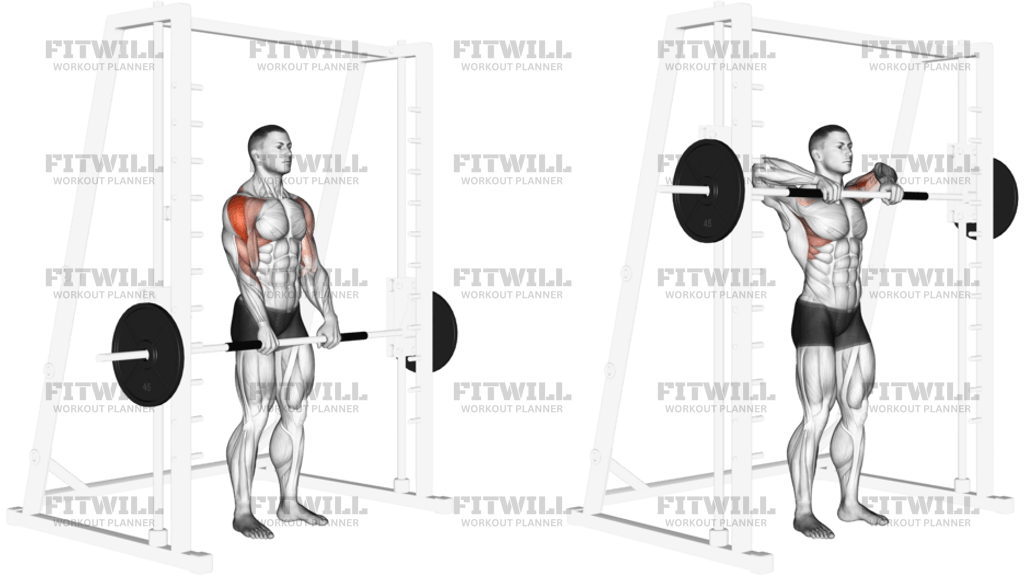
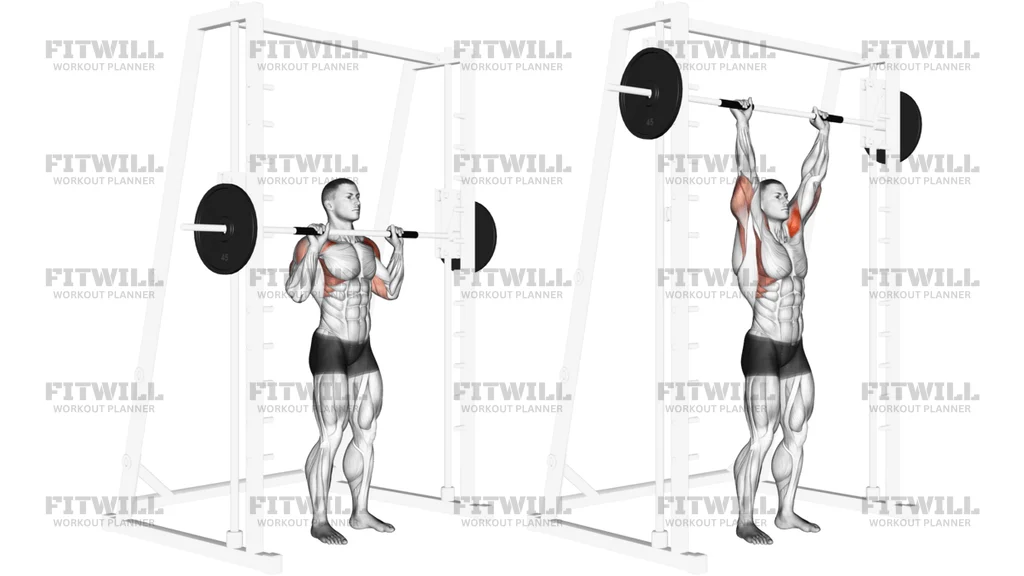
Smith Standing Shoulder Press is a guided overhead press performed on a Smith machine while standing. The fixed bar path makes it easier to focus on pressing mechanics, but it also means your feet, torso angle, and bar position need to be set carefully so the bar can travel cleanly without forcing your lower back to arch or your shoulders to shrug forward.
This exercise primarily trains the deltoids, especially the front and middle heads, with the triceps helping to finish the press and the upper traps and upper back working to stabilize the torso under load. Because the bar is locked to the machine, you can use it to practice strict overhead pressing, build shoulder strength, and add controlled volume when free-bar pressing is limited by balance or setup demands.
The starting position matters a lot here. Set the bar around upper-chest height, stand with your feet planted and slightly staggered only if that helps you balance, and hold the bar just outside shoulder width. Your elbows should stay slightly in front of the bar, your ribs should stay stacked over your pelvis, and your head should be ready to move back a little so the bar can clear your face without drifting forward.
Press the bar up in a smooth line until your arms are straight and the bar finishes over your shoulders and midfoot. At the top, keep your neck long and avoid forcing your shoulders up toward your ears. Lower the bar under control to the same upper-chest or chin-height start point, keeping tension through the shoulders instead of dropping the weight into the rack position.
Smith Standing Shoulder Press is useful in strength blocks, hypertrophy work, or as a controlled accessory when you want overhead pressing without the balance challenge of a free bar. It is a good option for lifters who already understand basic shoulder-press mechanics, but it should still be treated as a technical lift: use a range that feels smooth, stop if the fixed path irritates the shoulders, and choose loads that let you keep the torso quiet from the first rep to the last.
Fitwill
Log Workouts, Track Progress & Build Strength.
Achieve more with Fitwill: explore over 9600 exercises with images and videos, access built-in and custom workouts, perfect for both gym and home sessions, and see real results.
Start your journey. Download today!




Instructions
- Set the Smith bar at upper-chest to chin height, face the bar, and stand with your feet planted under the track so you can press without leaning back.
- Grip the bar just outside shoulder width and rack it across the front of your shoulders with your elbows slightly in front of the bar.
- Brace your abs and glutes so your ribs stay stacked over your pelvis before you start the first rep.
- Unrack the bar, then let your head drift slightly back so the bar can travel past your face in a straight path.
- Press up and slightly back until your arms are straight and the bar finishes over your shoulders and midfoot.
- Keep your shoulders down as the bar reaches the top instead of shrugging into the lockout.
- Lower the bar under control to the same start point, keeping your elbows under the bar and your torso quiet.
- Exhale as you press, inhale as you lower, and re-brace before each repetition.
- Rack the bar carefully after the last rep and step away only once it is fully secured.
Tips & Tricks
- Place your feet so the fixed bar path feels vertical and natural; if the bar drifts into your face or too far in front of you, adjust your stance before loading up.
- Keep the bar on the front of the shoulders at the bottom rather than letting it sink deep behind the head.
- Press with your forearms close to vertical so the triceps can finish the rep without your wrists folding back.
- Do not turn the lift into a standing incline press by leaning hard into the benchless Smith frame.
- A light backward head movement is normal as the bar passes your forehead, but do not crane your neck to chase the bar.
- If your lower back starts arching, reduce the load and reset your rib position before continuing.
- Use a controlled descent of about two seconds so the shoulders stay under tension instead of bouncing off the bottom.
- Stop one rep before the machine forces your shoulders to shrug or your elbows to flare unnaturally.
- If the fixed track bothers one shoulder, reduce range slightly and press only through a pain-free line.
Frequently Asked Questions
What muscles do Smith Standing Shoulder Press work most?
The main work goes to the deltoids, especially the front and middle heads, with the triceps helping to lock the bar out.
Why use a Smith machine for a standing shoulder press?
The fixed track reduces balance demands, so you can focus on pressing mechanics, bar control, and strict shoulder tension.
Where should the bar start?
Start with the bar across the front of the shoulders, usually around upper-chest or chin height, not deep behind the head.
How far should my feet be from the bar path?
Stand close enough that the bar can travel cleanly without a big lean, but far enough that your face and chest can stay out of the way as it rises.
Should I lean back during the press?
Only enough to let the bar clear your face. Big back lean turns the movement into a lower-back compensation pattern and usually reduces shoulder work.
Can beginners use this exercise?
Yes, if they keep the load light and learn to stack the ribs, press in a straight line, and control the lower phase.
What is a common mistake on this lift?
The biggest issue is over-arching the lower back or shrugging hard at the top instead of keeping the torso quiet and the shoulders controlled.
Is this a good replacement for barbell overhead press?
It can be a useful substitute when you want a more guided press, but it does not train balance and stabilization the same way a free bar does.
How heavy should I go on Smith Standing Shoulder Press?
Use a load that lets you keep the same bar path, same torso position, and same depth on every rep without bouncing or grinding.