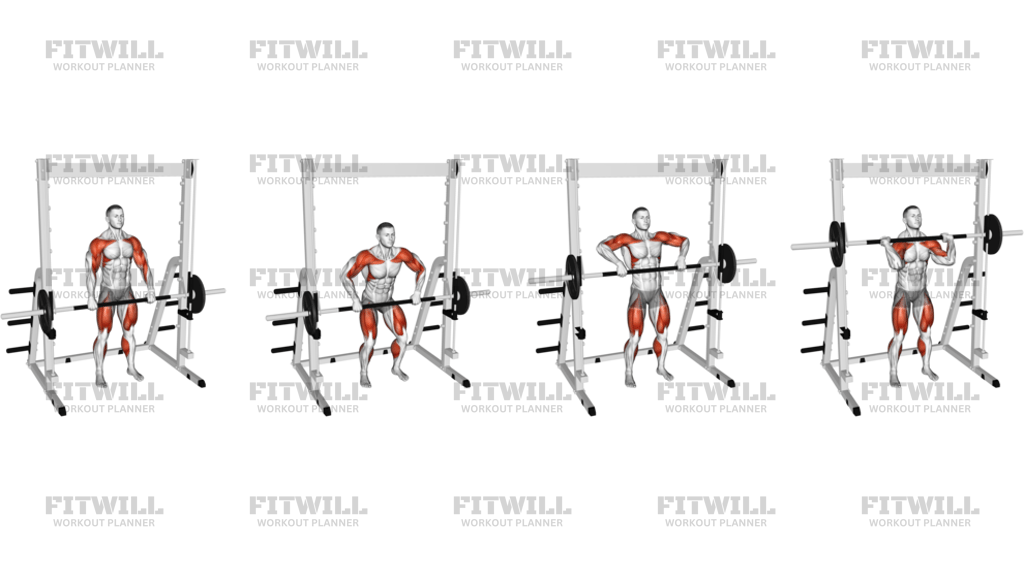
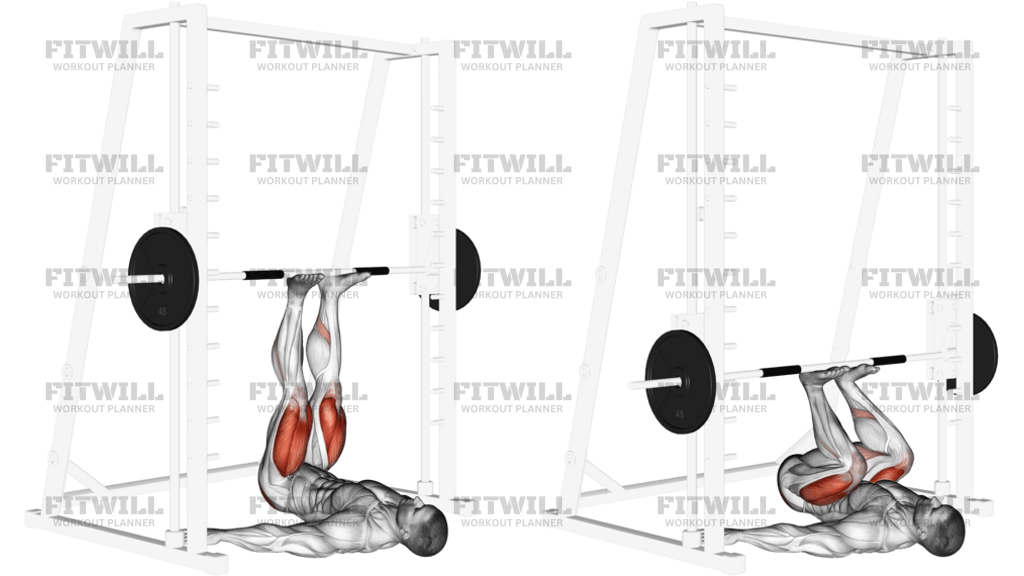
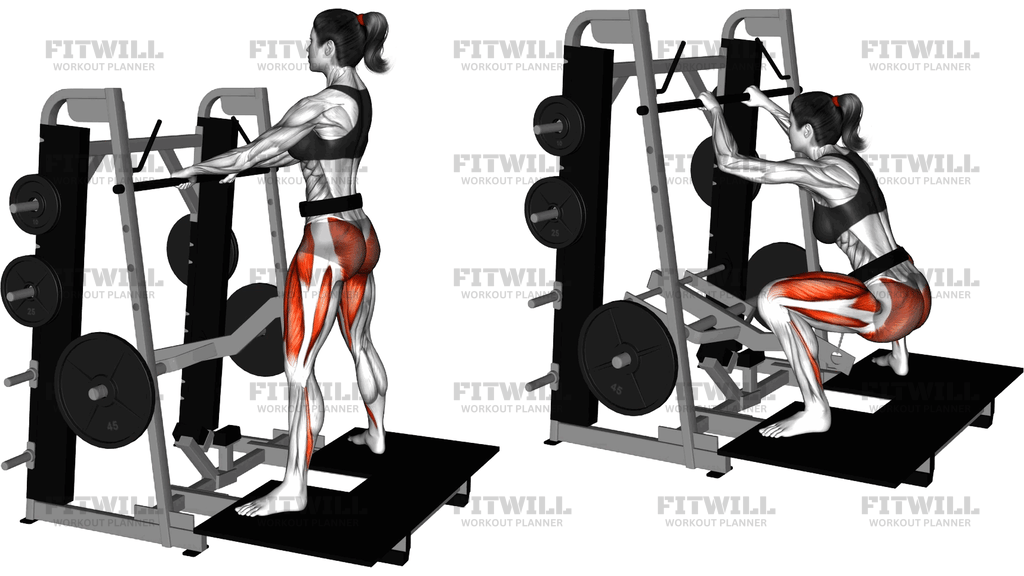
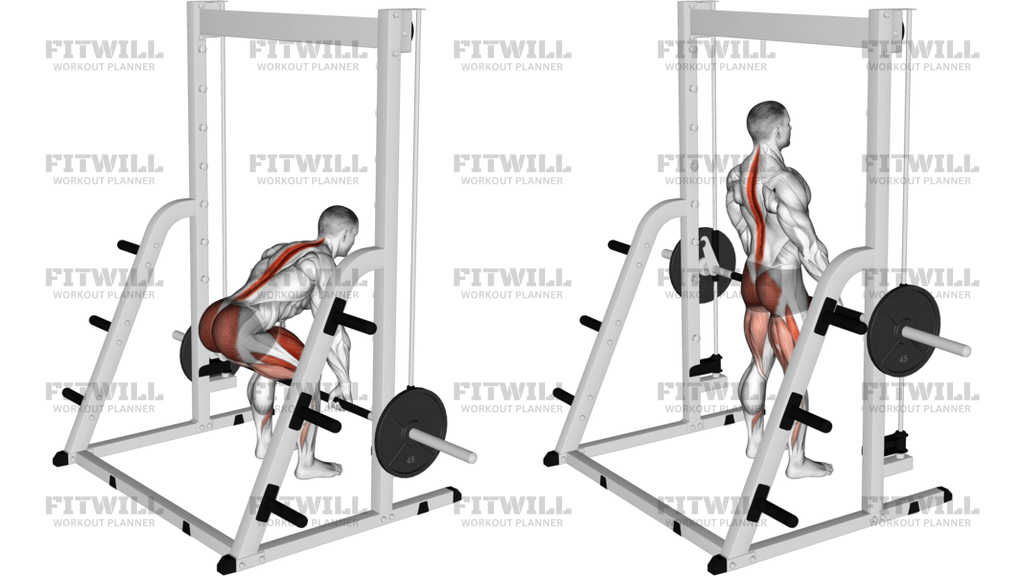
Smith Single Leg Split Squat
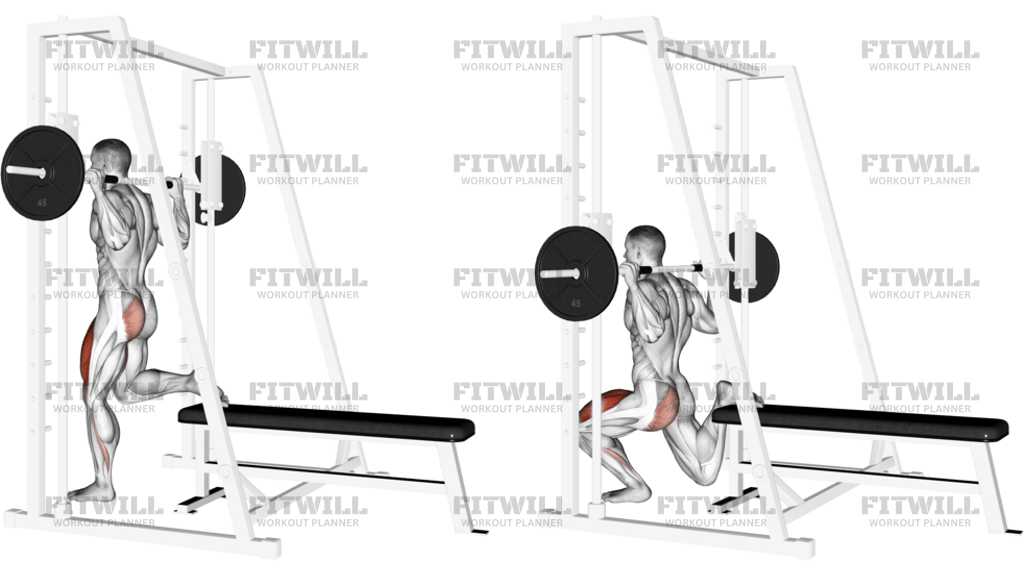
The Smith Single Leg Split Squat is a guided single-leg squat pattern done with the bar on a Smith machine and the rear foot elevated on a bench. It is a lower-body strength exercise that lets you load one leg at a time while the fixed bar path reduces balance demands compared with free-bar split squat variations. That makes it useful when you want to focus on leg drive, hip control, and clean depth instead of fighting the bar path.
This version places the strongest demand on the front leg. The glutes are the main driver, with the thighs contributing heavily through the knee and hip, while the hamstrings, core, and lower back work to keep the torso steady. Because the rear foot is supported on the bench, the front side has to control the descent, stabilize the knee, and push the body back up without bouncing off the back leg.
Setup matters a lot in this movement. The front foot should be far enough forward that you can lower under control without the heel lifting or the knee collapsing inward. The rear foot rests on the bench behind you, usually with the top of the foot supported, and the bar should sit comfortably across the upper traps or rear shoulders. A slightly longer stance and a modest forward lean usually shift more work to the glutes; a shorter stance with a more upright torso will make the quads work harder.
During each repetition, descend slowly until the front thigh reaches a deep but comfortable position, then drive through the front foot to stand back up. Keep the Smith bar centered, the pelvis level, and the front knee tracking in line with the toes. The rear leg is there for support, not for pushing. If the bench height, stance length, or depth causes hip pinching, knee pain, or a loss of control, shorten the range and adjust the setup before adding load.
This exercise fits well in a leg day, unilateral strength block, or accessory work when you want targeted tension on one side at a time. It is especially useful for lifters who want the security of a guided path while still training split-squat mechanics. The goal is not to rush reps, but to keep every rep smooth, stable, and identical from the first side to the last.
[ Workout Log & Planner ]
Put your next workout in Fitwill
Keep your plan and training log ready when you are.


Instructions
- Place a bench behind the Smith machine and set the bar across your upper traps or rear shoulders.
- Step the front foot forward into a split stance, then rest the top of the rear foot on the bench behind you.
- Grip the bar just outside shoulder width, stand tall, and rack the bar so it feels centered and stable.
- Brace your core, keep your ribs stacked over your pelvis, and plant the front foot flat on the floor.
- Lower by bending the front knee and hip together until the rear knee drops toward the floor under control.
- Keep the front knee tracking over the toes and let the torso lean only as much as needed to stay balanced.
- Drive through the front heel and midfoot to stand back up without pushing off the rear foot.
- Finish each rep tall with the front glute squeezed, then reset your stance before the next rep.
- Complete all reps on one side, switch legs, and repeat with the same stance length and depth.
Tips & Tricks
- A longer front-foot stance usually shifts more work to the glutes, while a shorter stance makes the front knee travel more and increases quad demand.
- Do not push off the rear foot on the bench; it should only help you balance and guide the split stance.
- Keep the front heel planted the whole time. If it lifts, move the foot a little farther forward or reduce depth.
- Let the front knee travel naturally over the toes, but keep it tracking in line with the second or third toe instead of collapsing inward.
- A slight forward torso angle is normal and often helps the glute on the working leg do more of the work.
- Lower under control and avoid bouncing out of the bottom, especially when the rear foot is elevated on the bench.
- Use a bench height that lets the rear leg stay relaxed; if the back hip feels cramped, a lower support is usually better.
- Keep the Smith bar stacked over the working side of your midfoot at the bottom so the rep feels stable instead of tipped forward.
Frequently Asked Questions
What muscle does Smith Single Leg Split Squat target most?
The glutes are the main target, with the front thigh doing a lot of the work and the hamstrings helping stabilize the movement.
Why use a Smith machine for this split squat variation?
The fixed bar path reduces balance demands, so you can focus more on stance, depth, and pushing evenly through the front leg.
Should my rear foot stay on the bench or on the floor?
For this variation, the rear foot stays elevated on the bench behind you. That support creates the split-squat position shown in the image.
How far forward should my front foot be?
Far enough that you can lower with a flat front heel and a controlled knee track. If the heel pops up, move the foot forward slightly.
Is this more of a glute or quad exercise?
Both work hard. A longer stance and slight forward lean bias the glutes more; a shorter stance with a more upright torso shifts more stress to the quads.
Can beginners do the Smith Single Leg Split Squat?
Yes, if they start with a light load and a conservative depth. The Smith machine makes it easier to learn than a free-bar version.
What should I avoid at the bottom of the rep?
Avoid collapsing the front knee inward, pushing off the rear foot, or bouncing out of the bottom to get back up.
How do I progress this movement safely?
Progress load only after the stance, depth, and knee path stay consistent. You can also slow the lowering phase before adding weight.