Smith Stiff Legged Deadlift
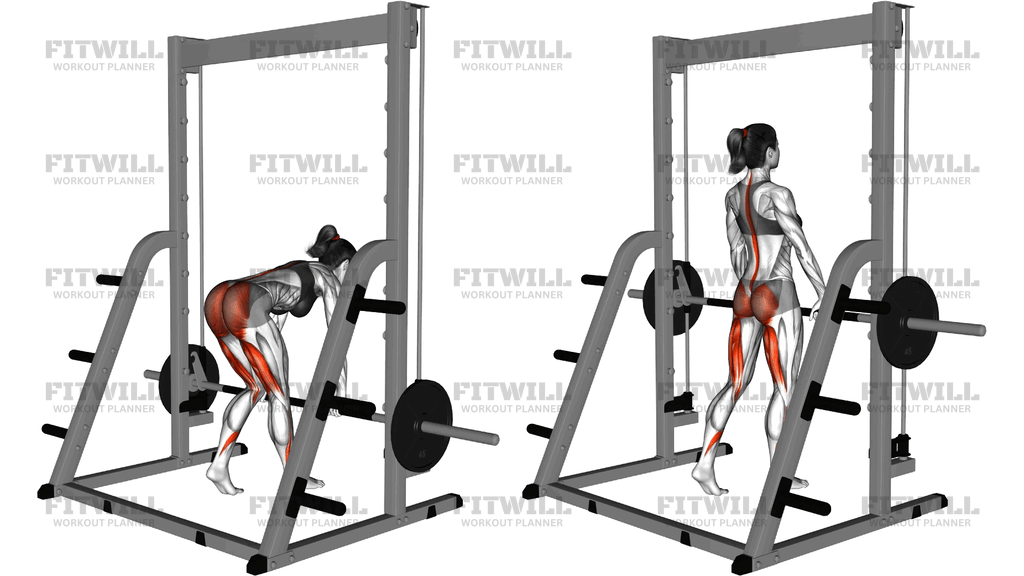
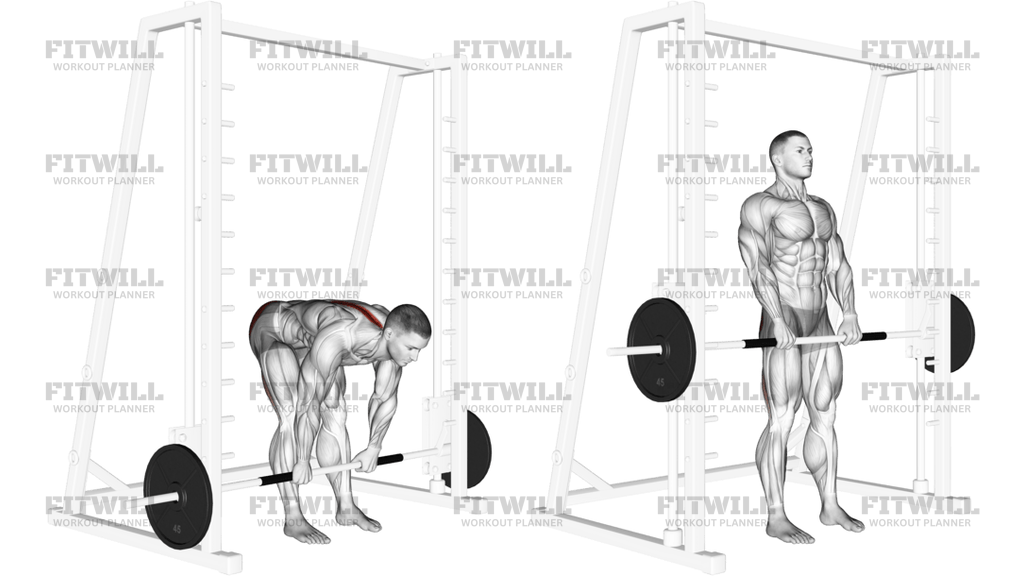
Smith Stiff Legged Deadlift is a fixed-path hip hinge that trains the hamstrings, glutes, and spinal erectors through a controlled stretch and stand-up pattern. The Smith machine keeps the bar on a vertical track, which can make the movement easier to learn than a free-bar stiff-leg deadlift as long as the setup keeps the bar close to the legs and the torso stays braced.
The exercise is named for the straighter-knee hinge used through the descent, but the legs should still stay soft rather than locked out. That small bend lets the hips travel back, keeps tension on the back of the thighs, and helps the pelvis move without the lower back doing all the work. If the knees drift too far forward, the exercise becomes more of a squat; if the knees lock hard, the hamstrings lose a lot of their useful line of pull.
A good rep starts from a stable stance with the bar in front of the thighs and the shoulders packed down. Hinge at the hips, let the bar slide along the legs, and stop when the hamstrings are fully loaded without the back rounding. On the way up, drive the hips forward and stand tall without leaning back at the top. The fixed Smith bar means your feet may need to sit slightly forward or slightly behind the bar so the path feels natural rather than forced.
Use this movement when you want direct posterior-chain work with predictable balance and a clear stretch position. It fits well in hamstring-focused sessions, lower-body accessory work, or as a controlled deadlift variation for people who want more stability than a free bar provides. Keep the range pain-free, control the lowering phase, and stop the set if the bar starts drifting away from the legs or the pelvis loses position.
[ Workout Log & Planner ]
Put your next workout in Fitwill
Keep your plan and training log ready when you are.


Instructions
- Stand inside the Smith machine with your feet about hip width, the bar resting in front of your thighs, and a soft bend in both knees.
- Grip the bar just outside your legs, pull your shoulders down and back, and brace your torso before you start the hinge.
- Push your hips straight back and lower the bar along the fronts of your thighs, keeping the shins nearly vertical as the torso leans forward.
- Continue until you feel a strong hamstring stretch and the bar reaches about mid-shin or as low as you can keep a neutral spine.
- Pause briefly in the stretched position without bouncing or relaxing your grip.
- Drive your hips forward to stand up, keeping the bar close to your legs as you return to the top.
- Finish tall with the glutes engaged and the ribs stacked over the pelvis, without leaning back to overextend the low back.
- Reset your breath at the top and repeat for the planned number of repetitions.
Tips & Tricks
- Keep a slight knee bend the entire rep; locking the knees hard turns the exercise into a back-dominant reach instead of a hamstring hinge.
- Let the bar skim the thighs and shins. If it drifts forward, the lever gets longer and the lower back has to fight the load.
- Set your feet so the bar path feels vertical and natural on your body. On many Smith machines that means standing a little in front of the bar at the top.
- Lower under control for two to four seconds so the hamstrings load smoothly instead of snapping into the bottom position.
- Stop the descent when your spine starts to round, even if the bar has not reached the floor or the lowest plate setting.
- Keep your neck in line with your torso instead of looking up; lifting the chin usually helps the ribs flare and the low back overarch.
- Use straps or a mixed grip only if grip is the limiting factor, not if you are still losing hinge position.
- If the bar feels like it is scraping the knees, shorten the range slightly and keep the hips moving back instead of bending the knees more.
Frequently Asked Questions
What muscle does Smith Stiff Legged Deadlift target most?
It mainly targets the hamstrings and glutes, with the spinal erectors working hard to keep the torso stable through the hinge.
Can beginners perform this exercise?
Yes. The Smith machine makes the bar path more predictable, so beginners can learn the hip hinge with lighter load and a shorter range first.
Where should the bar travel during the rep?
The bar should stay close to the thighs and lower legs, moving straight down and up on the Smith track rather than swinging forward.
How bent should my knees be?
Keep them softly bent and almost fixed. Too much knee bend shifts the movement toward a squat, and locked knees usually make the hinge feel harsher on the hamstrings and back.
How low should I go on the descent?
Go only as low as you can keep a neutral spine and a strong hamstring stretch. Depth is useful only if you can hold position.
Is this the same as a Romanian deadlift?
They are very similar hip hinges. The Smith version uses a fixed bar path, which changes balance and usually makes setup and tracking a little easier to repeat.
Should I lock out hard at the top?
No. Stand tall and squeeze the glutes, but do not lean back and shove the hips forward into lower-back extension.
What if I feel it mostly in my lower back?
Usually the bar is drifting away from the legs, the knees are too straight too early, or the range is deeper than your hamstrings can control. Shorten the range and reset the hinge.