Smith Front Squat
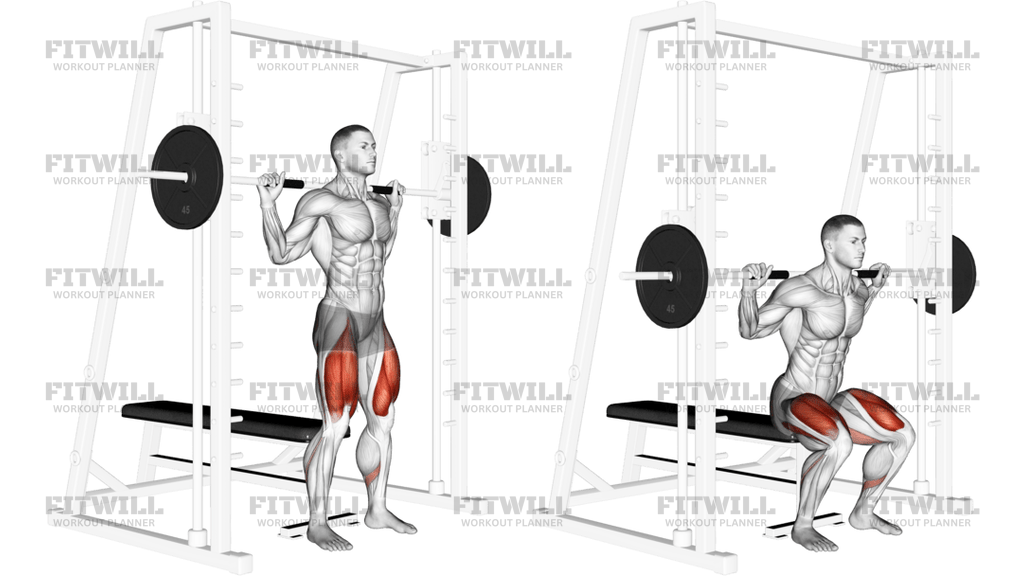
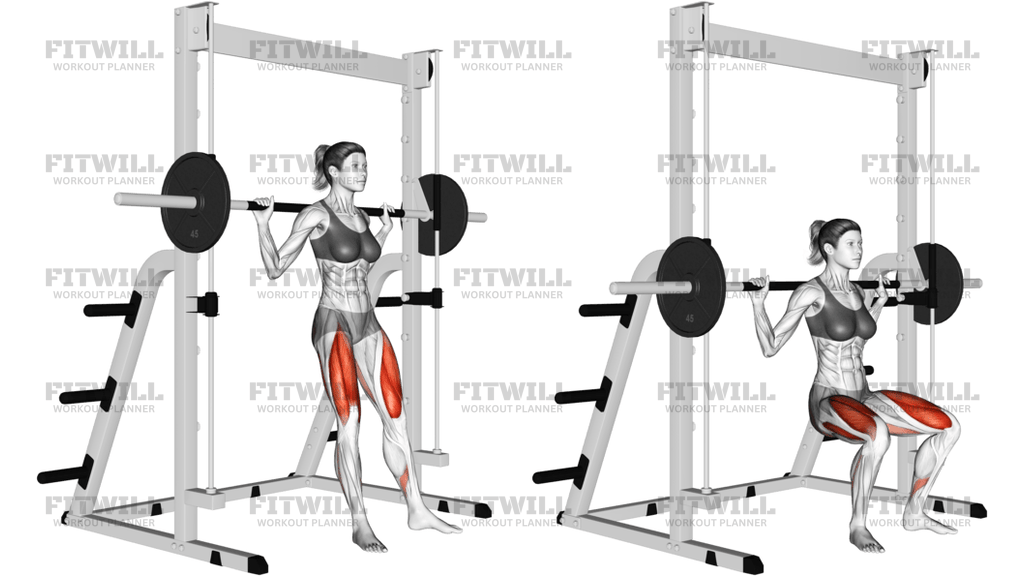
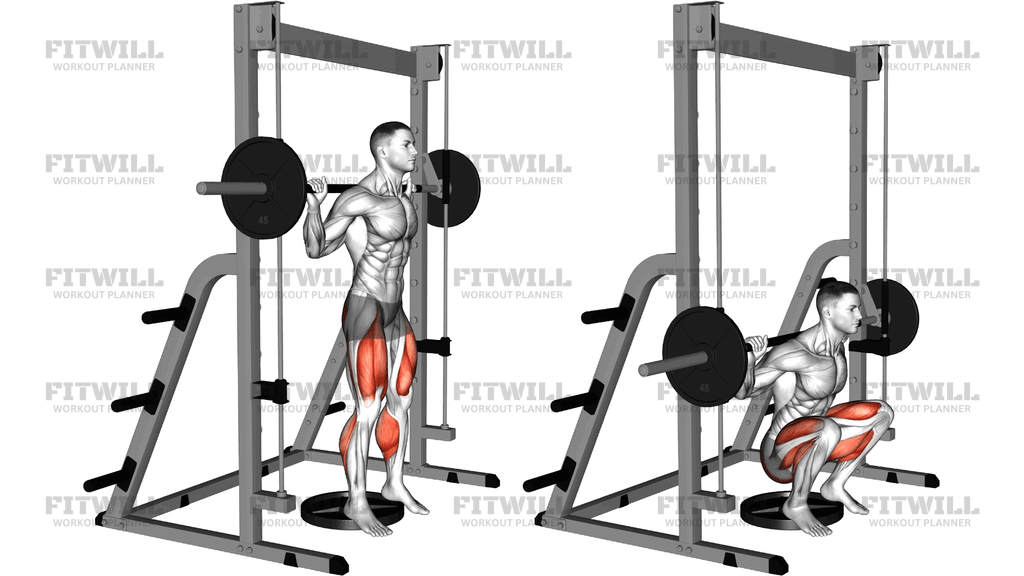
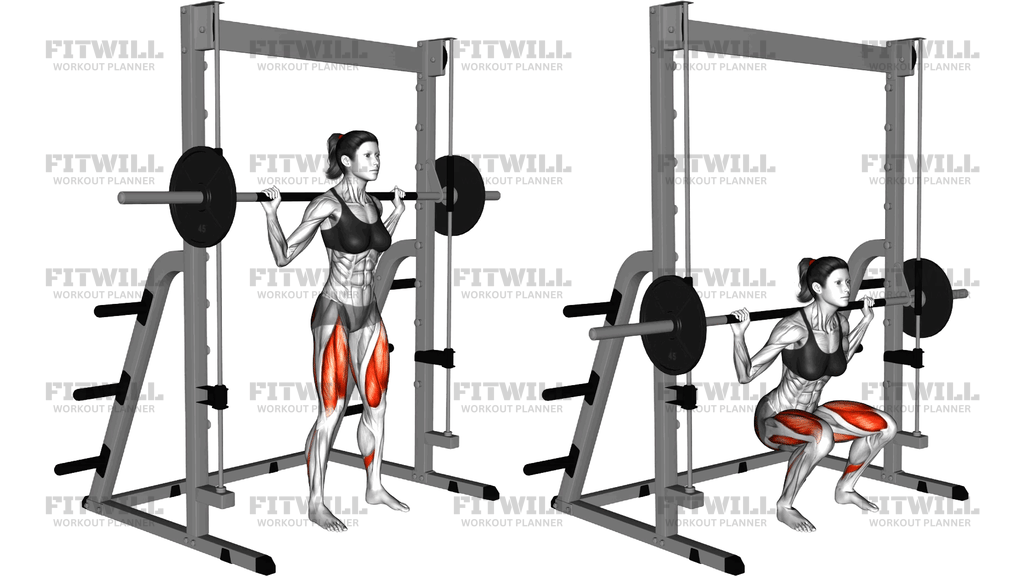
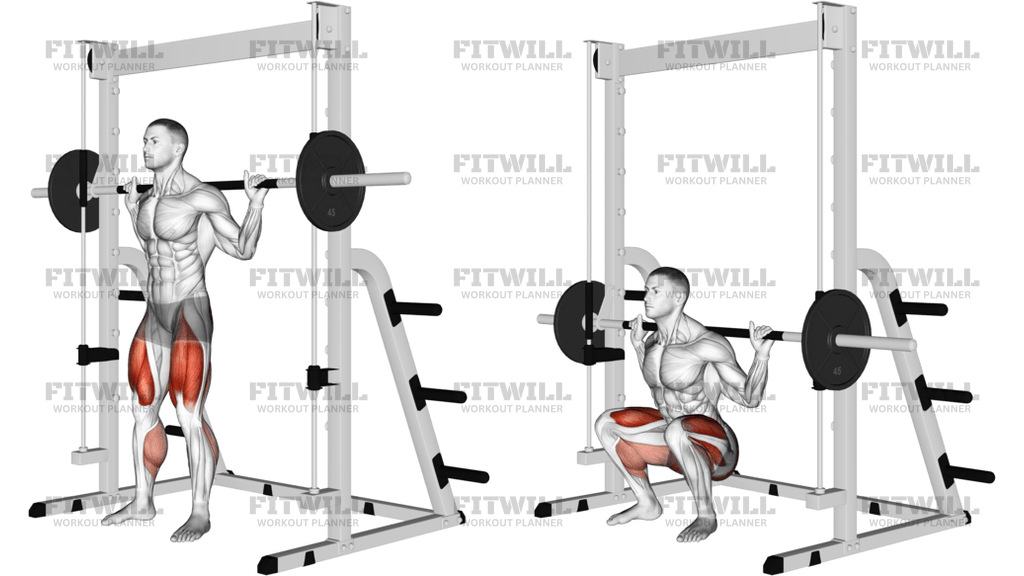
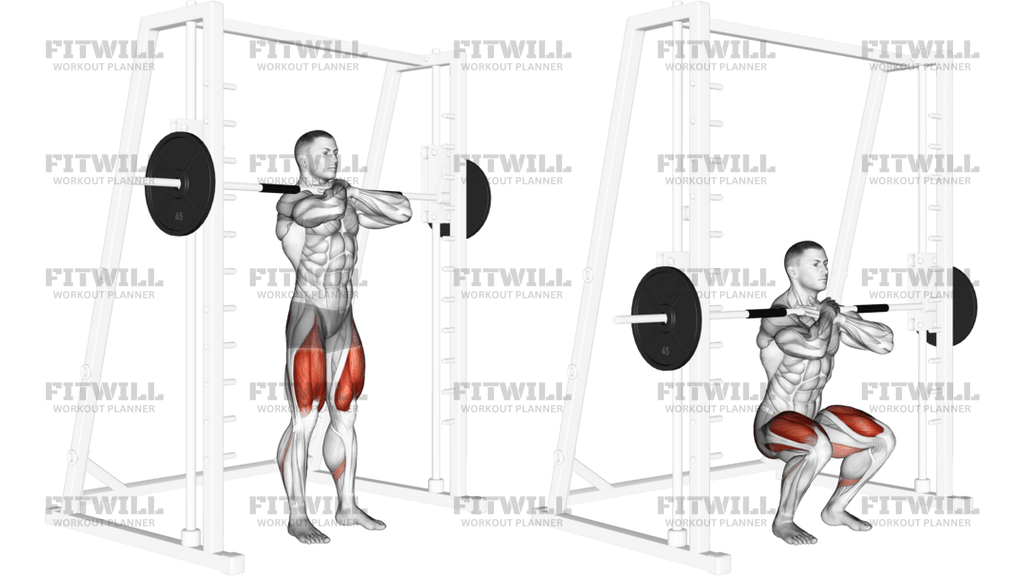
Smith Front Squat is a guided squat pattern that keeps the bar moving on a fixed vertical track while you hold it on the front of the shoulders. In this version, the torso stays much more upright than in a back squat, so the quads usually do most of the work while the glutes, adductors, upper back, and trunk help keep the rep organized. The image shows a front-rack style setup with the elbows lifted and the feet slightly in front of the bar path so the lifter can stay balanced through the whole descent.
The setup matters more here than in many lower-body exercises because the Smith machine removes side-to-side freedom but does not remove the need to line up your body. If your feet are too far forward, the squat becomes a hinge; if they are too far back, the knees and torso can get crowded under the bar. The best setup is one where the bar sits cleanly on the front delts or across the shoulders, the elbows stay high, the ribs stay stacked over the pelvis, and the heels remain planted as the knees travel forward.
Each repetition should feel like a controlled drop between the hips and a strong drive back up through the midfoot. Descend by bending the knees and hips together, keep the chest tall, and let the knees track in line with the toes. At the bottom, the thighs can go to parallel or slightly below if your mobility and balance allow it without losing posture. Drive up without letting the elbows collapse or the lower back take over. The bar should stay smooth and centered over the working foot, not drift into a forward lean or a bounce.
This exercise is useful when you want a quad-dominant squat with a more predictable bar path, such as during accessory work, hypertrophy training, or when balance is the limiting factor in free squats. It can also help lifters practice front-squat mechanics with a lower coordination demand, but it still rewards careful load selection and honest range of motion. If the front rack position irritates the wrists, shoulders, or upper back, use a cross-arm hold or reduce load and depth before forcing the position.
Treat Smith Front Squat as a precision exercise, not a way to chase load at any cost. Clean knee tracking, stable foot pressure, and a controlled descent are what make the set productive. When the rep starts to fold forward, the heels lift, or the elbows drop, the set is usually over for quality work even if you could keep moving the bar.
[ Workout Log & Planner ]
Put your next workout in Fitwill
Keep your plan and training log ready when you are.


Instructions
- Set the Smith bar at about upper-chest height, step in under it, and place the bar across the front delts or in a cross-arm front rack.
- Stand with your feet shoulder-width apart and slightly in front of the bar path so you can squat down without tipping forward.
- Lift your elbows high, keep your chest tall, and unrack the bar with a short stand-up to clear the hooks.
- Take a breath, brace your trunk, and keep pressure spread across the whole foot before you start the descent.
- Lower by bending the knees and hips together, letting the knees travel forward and slightly out in line with the toes.
- Keep the torso upright and the bar stacked over the midfoot as you descend to parallel or slightly below if you can stay organized.
- Drive up by pushing the floor away through the midfoot and heels while keeping the elbows up and the knees tracking cleanly.
- Finish tall without leaning back, then guide the bar back into the Smith hooks under control.
- Reset your breath and stance before the next rep instead of rushing straight into another descent.
Tips & Tricks
- If the front rack bothers your wrists, use a cross-arm hold or lower the load before forcing the position.
- Keep the feet a little ahead of the bar so the Smith track does not shove you into an awkward upright-only squat.
- Think about sitting between the heels, not back onto the hips, so the quads stay loaded and the torso stays tall.
- Let the knees travel forward as long as the heels stay down and the knees still follow the toes.
- A small heel wedge or lifting shoe can make depth easier if ankle mobility limits the bottom position.
- Use a slower lowering phase to keep tension on the quads instead of dropping into the bottom and bouncing.
- Stop the set if the elbows fall, the chest collapses, or your lower back starts doing the work.
- Choose a stance width that lets you hit depth without the knees caving inward at the turn-around.
- Re-rack deliberately at the top; do not twist your torso or relax under the bar before the hooks catch.
Frequently Asked Questions
What muscles do Smith Front Squats work most?
The quads are the main drivers. The glutes, adductors, upper back, and core help keep the front-rack squat stable and upright.
How should the bar sit on my shoulders?
It should rest across the front delts or collarbone area with the elbows lifted. If that feels awkward, a cross-arm front rack is a common alternative.
Where should my feet be relative to the Smith bar?
Usually a few inches in front of the bar path. That lets your knees travel forward while your torso stays balanced and upright.
Can beginners use the Smith machine for front squats?
Yes. It is often easier to learn with because the bar path is fixed, but beginners should still start light and keep the rack position controlled.
What is the most common mistake?
Letting the elbows drop or placing the feet too far under the bar. Both usually shift the squat into a forward lean and take tension off the quads.
Do I need to squat below parallel?
Not necessarily. Go only as deep as you can while keeping the heels down, the chest tall, and the bar path smooth.
Is this better than a free front squat?
It is not better or worse, just different. The Smith version reduces balance demands and can make quad-focused work easier to repeat.
What should I do if my heels come up?
Shorten the load, widen or narrow the stance slightly, or raise the heels with shoes or a small wedge so you can keep pressure through the whole foot.