Smith Sumo Squat
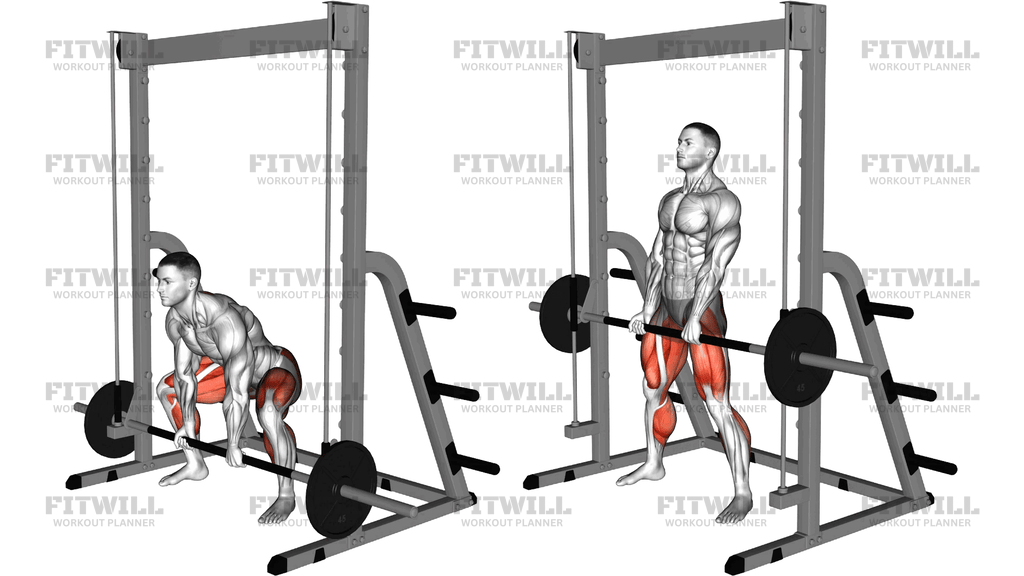
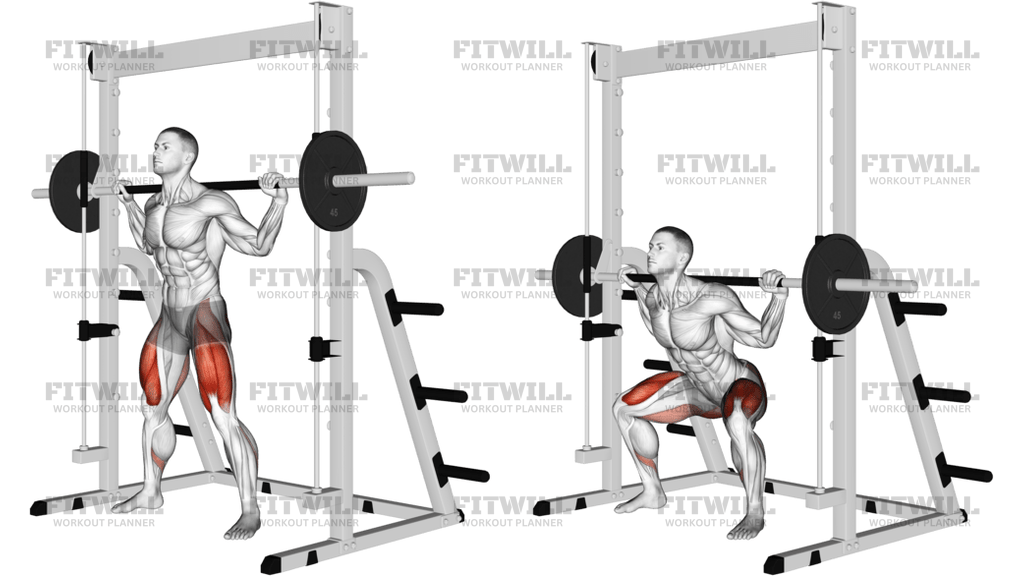
Smith Sumo Squat is a wide-stance squat performed on a Smith machine with the bar resting across the upper back. The fixed bar path gives you more stability than a free barbell squat, which makes this version useful for building lower-body strength while keeping the setup predictable. It is especially helpful when you want to load the glutes and inner thighs hard without having to balance the bar yourself.
The broad foot position and turned-out toes shift more work into the glutes, adductors, and quads while still demanding core tension to keep the torso stacked. In anatomy terms, the main work centers on the Gluteus maximus, with help from Biceps femoris, Rectus abdominis, and Erector spinae. Smith Sumo Squat is a strong choice for lifters who want a squat pattern that still feels athletic, but with less balance demand than a free-standing sumo squat.
Setup matters here because the bar path is fixed, so your feet need to be placed where your hips can drop between your legs without your knees crashing forward or your heels lifting. Stand with a wide stance, toes turned out, and the bar settled across the traps. Slide your feet slightly forward of the bar so you can sit down between your heels while keeping your torso tall and your chest open.
On each rep, unlock the hips and knees together, then lower under control until your thighs reach a comfortable deep squat position. Keep your knees tracking in line with your toes and let your hips travel straight down rather than shifting onto the balls of your feet. Drive up through the full foot, squeeze the glutes near the top, and keep the ribcage stacked over the pelvis so the lower back does not take over the finish.
Smith Sumo Squat works well as a lower-body strength movement, a glute-focused accessory, or a hypertrophy exercise when you want repeatable tension and a stable base. Because the machine guides the bar, it can be easier to learn than a free barbell sumo squat, but the wide stance still rewards disciplined depth, ankle mobility, and control. Keep the reps smooth, stop before the pelvis tucks hard at the bottom, and use a load that lets every rep look the same from the first to the last.
[ Workout Log & Planner ]
Put your next workout in Fitwill
Keep your plan and training log ready when you are.


Instructions
- Set the Smith bar across your upper back and step your feet into a wide sumo stance with toes turned out.
- Place your feet slightly forward of the bar so you can sit down between your heels without the machine forcing you onto your toes.
- Grip the bar evenly, lift your chest, and pull your shoulder blades down so the bar stays pinned to your traps.
- Brace your core, unlock your hips and knees together, and begin lowering in a straight, controlled path.
- Keep your knees tracking over your toes as you descend and let your hips drop between your legs.
- Lower until your thighs are at a comfortable deep squat depth or until your pelvis starts to tuck under.
- Drive through the whole foot to stand back up, squeezing your glutes as you pass through the top half of the rep.
- Exhale as you rise, then reset your brace before the next repetition.
- Rack the bar only after you finish the set and step out of the stance slowly.
Tips & Tricks
- If your heels lift, move your feet a little farther forward and slightly widen the stance before adding load.
- The Smith machine should guide the bar, not force your torso to tip forward; keep your chest tall as you descend.
- Think about pushing your knees out in line with your toes so the adductors and glutes can help at the bottom.
- Stop the descent when your lower back starts to round, even if your thighs have not reached parallel yet.
- A slower lowering phase usually makes this movement feel better on the hips and keeps the bar path cleaner.
- Do not let the bar roll up onto your neck; keep it anchored on the upper back or traps the whole set.
- Use a load that lets you pause briefly in the bottom without bouncing out of the hole.
- If your knees drift inward on the way up, reduce the weight and shorten the stance width slightly.
Frequently Asked Questions
What muscles does Smith Sumo Squat work?
It emphasizes the glutes and inner thighs while also training the quads, hamstrings, and core to support the wide squat position.
Is Smith Sumo Squat easier than a free barbell sumo squat?
Usually yes, because the Smith machine removes much of the balance demand. That makes it easier to focus on stance, depth, and leg drive.
Where should my feet be on the Smith machine?
Set them wide with toes turned out, then place them slightly forward of the bar so your hips can drop between your legs without tipping the torso.
How deep should I go in Smith Sumo Squat?
Go as deep as you can while keeping your heels down and your lower back neutral. Stop before your pelvis tucks hard or your knees cave inward.
Should the bar sit high or low on my back?
It should rest comfortably across the upper back and traps, not on the neck. Keep your hands even and your upper back tight so the bar stays stable.
Why do my knees hurt during Smith Sumo Squat?
The stance may be too narrow, too wide, or too far under the bar. Adjust foot placement so the knees track over the toes and the heels stay planted through the rep.
Can beginners use Smith Sumo Squat?
Yes. The guided bar path makes it a good beginner option as long as the load stays light enough to control the bottom position and the return.
What is the biggest mistake people make here?
A common error is letting the Smith bar force the body forward while the knees collapse inward. Keep the chest tall, brace hard, and drive up through the midfoot and heel.
Can I use Smith Sumo Squat for glute growth?
Yes. A controlled deep squat, a wide stance, and steady tension at the bottom make it a solid glute-focused hypertrophy movement.