Band Face Pull
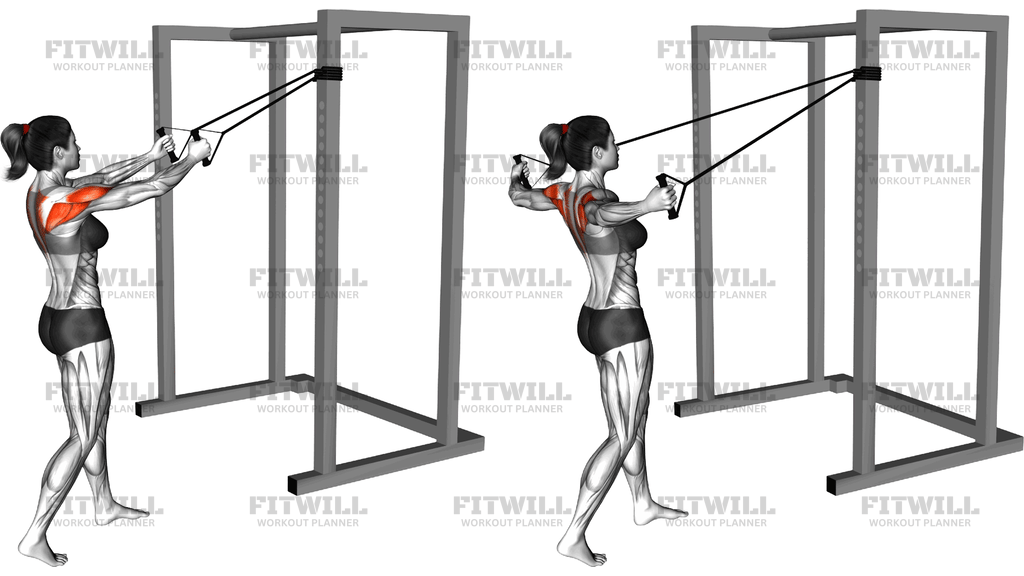
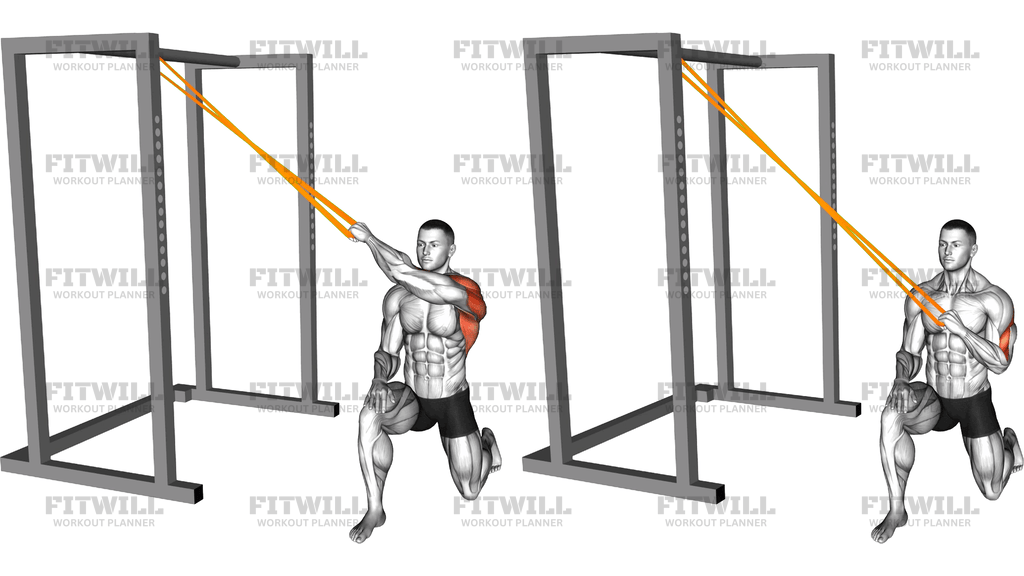
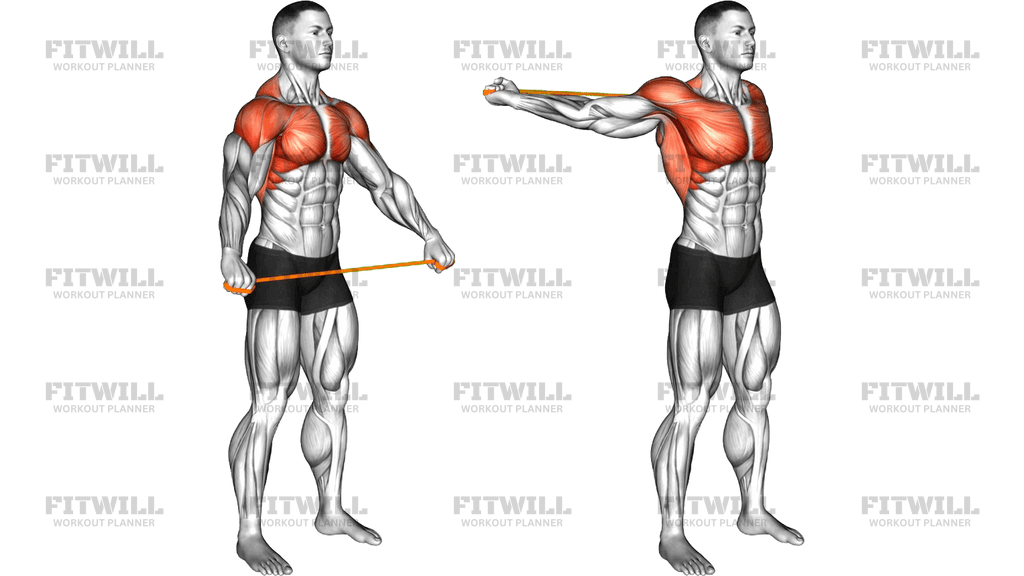
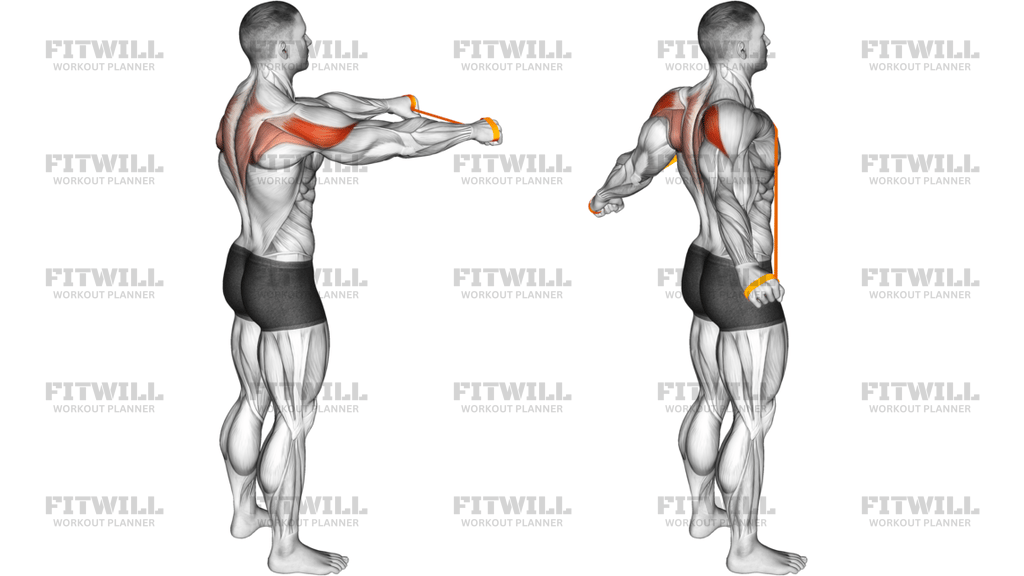
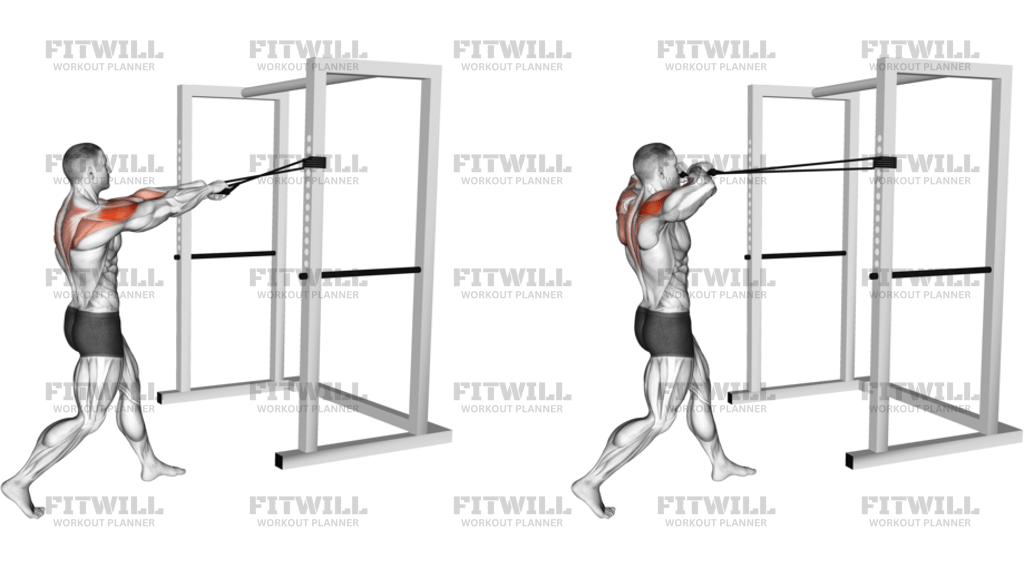
Band Face Pull is a standing shoulder and upper-back exercise built around pulling a band from an anchored point toward the face while keeping the elbows high and the torso steady. In the image, the band is fixed at about face height, the lifter uses a split stance, and the hands finish close to the cheeks and nose line with the upper back fully engaged. That setup matters because it keeps the line of pull aligned with the rear delts, mid traps, rhomboids, and rotator cuff instead of turning the movement into a loose row.
This exercise is especially useful when you want to train shoulder health, scapular control, and posture without loading the spine heavily. The primary emphasis is on the delts, especially the rear portion, while the traps, upper back, and arms help guide the pull and stabilize the shoulders. In anatomy terms, the main work centers on the Deltoids, with assistance from Trapezius, Rhomboids, and Triceps brachii. It is a good fit for warm-ups, accessory work, or higher-rep conditioning sets where clean shoulder mechanics matter more than heavy resistance.
The quality of the rep depends on the start position. Stand tall with a slight knee bend, set one foot back for balance, and hold the band with straight but not locked arms. Before you pull, stack your ribs over your pelvis and keep the neck long. The band should already have tension at the start so the first inch of the rep is controlled rather than jerky. If the anchor is too low, too high, or too far away, the finish position will drift and the shoulders will lose the clean face-pull path.
As you pull, lead with the elbows and bring the hands toward the sides of the face rather than low to the chest. Let the shoulder blades move back and slightly apart from the start, then finish with the upper back tight and the elbows flared. A brief pause at the end helps reinforce the rear-delt and upper-back contraction. On the way back, resist the band until the arms are long again, then reset without leaning backward or shrugging. Light to moderate resistance is usually the right choice, because the rep should look crisp, not forceful.
Use Band Face Pull when you want a joint-friendly pulling pattern that teaches better shoulder positioning and upper-back control. It can support pressing days, posture-focused training, and general shoulder prehab work. The exercise is beginner-friendly when the resistance is light and the anchor is stable, but it still rewards attention to detail. If your lower back starts helping, your elbows drop, or your hands finish far below the face, the band is probably too heavy or the anchor angle is off.
Fitwill
Log Workouts, Track Progress & Build Strength.
Achieve more with Fitwill: explore over 9600 exercises with images and videos, access built-in and custom workouts, perfect for both gym and home sessions, and see real results.
Start your journey. Download today!




Instructions
- Anchor the band at about face height and stand facing it with a split stance, one foot slightly behind the other.
- Hold the band with both hands at arm's length, palms facing down or slightly inward, and keep light tension before you start.
- Set your ribs over your pelvis, soften your knees, and keep your neck long so your torso stays stacked.
- Pull the band toward your face by driving the elbows out and back, not by shrugging your shoulders upward.
- Finish with your hands near eye or cheek level and the band close to your face, with the upper back tight.
- Pause briefly at the end of the pull to feel the rear delts, mid traps, and rhomboids working.
- Lower the band slowly until your arms are straight again and keep the tension smooth on the return.
- Reset your stance and repeat for the planned number of reps without leaning back or jerking the band.
Tips & Tricks
- Choose a band that lets you finish with elbows high and hands beside the face without pulling your torso backward.
- If the anchor sits below eye level, adjust your stance so the line of pull still meets the upper face instead of the chest.
- Keep the ribs down as you pull; flaring the chest usually turns the rep into a lower-back lean.
- Think about spreading the band apart slightly at the finish so the shoulders externally rotate instead of collapsing inward.
- A small split stance helps you resist the band better than standing with both feet together.
- Do not let the shoulders creep toward the ears; the neck should stay long through the whole set.
- Use a two-second return if the band is light enough, because the slow eccentric is where the control work happens.
- Stop the set when the hands can no longer reach face height without cheating the torso or dropping the elbows.
Frequently Asked Questions
What muscle does Band Face Pull target most?
The rear delts are the main target, with the mid traps, rhomboids, and rotator cuff helping finish the pull.
Can beginners perform this exercise?
Yes. Beginners usually do best with a light band, a fixed anchor at face height, and a shorter range that stays smooth.
Where should the band be anchored for a proper face pull?
Anchor it around eye or forehead height so the band travels straight toward the face instead of pulling down toward the chest.
Why does the image show a split stance?
The split stance helps you stay balanced and keep your torso from rocking when the band gets tight.
Should my elbows stay high during the pull?
Yes. High elbows keep the emphasis on the rear delts and upper back instead of turning the movement into a straight row.
What does a good finish position look like?
Your hands should end near the sides of the face with the band tight, the shoulders set back, and the neck relaxed.
What should I do if I feel it in my lower back?
Shorten the stance, use a lighter band, and keep the ribs stacked so you do not lean back to complete the rep.
How is this different from a band row?
A face pull finishes higher and wider, toward the face, with more external rotation and rear-delt emphasis than a row.